Measure What Matters

“Measure What Matters” by John Doerr is a compelling guide to the use of Objectives and Key Results (OKRs), a goal-setting system pioneered at Intel and later adopted by companies like Google and Amazon. Doerr demonstrates through numerous case studies and personal anecdotes how OKRs can drive alignment, focus, and accountability within organizations of any size or industry. The book emphasizes the importance of setting ambitious yet achievable objectives and measurable key results to track progress and drive innovation. Doerr argues that OKRs not only improve organizational performance but also foster transparency and empower employees to prioritize their work effectively.

Key Ideas:

  • OKRs (Objectives and Key Results): A goal-setting system that helps organizations define and track objectives along with measurable outcomes.
  • Ambitious Goals: Encouraging teams to set ambitious objectives that push boundaries and inspire innovation.
  • Transparency and Accountability: OKRs promote transparency by making goals visible to the entire organization, fostering accountability at all levels.
  • Continuous Improvement: The iterative nature of OKRs allows for ongoing adjustments and improvements based on real-time data and feedback.
  • Alignment: OKRs align teams and individuals towards common goals, ensuring that everyone is working towards the same objectives.
  • Focus and Prioritization: By setting clear priorities and focusing efforts on key results, OKRs help teams avoid distractions and achieve meaningful outcomes.
  • Cascading OKRs: The process of cascading OKRs from top-level objectives down to individual goals ensures alignment and coherence across the organization.
  • Learning from Failure: Embracing failures as opportunities for learning and growth, integral to the OKR process.
  • Examples and Case Studies: Doerr provides numerous examples from companies like Google, Intel, and others to illustrate the successful implementation and impact of OKRs.

“Measure What Matters” serves as a practical guide for leaders and managers looking to implement a structured and effective goal-setting framework that drives organizational success and fosters a culture of continuous improvement.

(summary created with the aid of AI)

I read the book at the recommendation of the training lead for the OKR class I took when I became a product owner. The class was interesting and using OKR to help set goals seemed like a nice transparent way to ensure that my team and I were aligned with our corporate OKR goals. Doerr went into great detail in this book with a lot of real world examples of OKR in use. While the theories were all sound I found trying to implement them to align with top level OKR was a struggle – but using the ideas in the book I pivoted and just set OKR for my team based on how I interpreted the higher level OKR – setting aggressive goals and reachable milestones that the whole team can work together to achieve.

I think it’s a bit early to determine the success rate of using this system, especially as the team hasn’t fully embraced them yet (it’s a learning process) – and I find I have to frequently refer back to the book to ensure we’re doing the work correctly. However, since the company I work for is all in on OKR I think I’m going to revisit it with my team as we have a few new people and that’s the perfect time to try to implement something new!

I think this book is a great introduction to objectives and key results and if you manage a team and are struggling to align your goals to your company’s strategies this might be a great way to break that roadblock. I recommend it for any leaders who are looking for a system to set goals that isn’t too laborious or punitive.

Spanish Tapas Pizza

This idea came from one of the many pizza cookbooks I own (I have a problem) – I tinkered with it a bit but the essentials are thin crust with spicy tomato sauce, chorizo, chunks of fresh mozzarella, and finished with a healthy grating of manchego. It really came together nice – the super thin chorizo I got from the deli crisped up nice and the manchego cheese added a nutty finish that really paired with the spicy pizza. Fired in the Ooni at 750.

I liked this combo – the flavors melded well – I think a good variation would be to replace the chorizo next time with jamon iberico added after the firing (no sense killing the delicate taste by cooking it!)

Making Fresh Mozzarella

I’ve tried making fresh mozzarella before but never really had much success. Since pizza making is kind of my thing I really wanted to learn so I could make the cheese fresh and top my pizzas with it. I did some research and found a local dairy farm that had cheese making classes and immediately signed up.

I rolled up on a warm April morning and waved to the cows thanking them for their contribution to the world of cheese – they didn’t wave back but I know they herd.  This class included fresh mozzarella as well as burrata – so… bonus cheese! The only drawback to that was they started with pressed curds as opposed to milk due to the time constraints. However – that being said the basic concept is the same (and I’ve made the curd before so it’s not that hard to make and you can buy it in 10lb bags that freeze really well).

The first step is to break the curds up into small crumbles in a large stainless steel bowl.   Once that is completed pour hot (under 170 degrees) water on top of the curds and wait a few minutes to let the hot water do it’s work. Put on a couple of pairs of plastic gloves (the water is really hot) and pull all the curds into a rough ball of cheese. Take this ball of cheese then stretch it out as much as you can then sprinkle it with some kosher salt fold it over itself, rotate, and repeat. Do this 5 or 6 times and you should have the makings of a ball of fresh mozzarella. If you can’t get it to seal right you can always pour some more hot water on the sides of the bowl and press the cheese against it to help seal the ball shut.

Take a deli takeout container and fill it with water – add a little more salt (to taste) and submerge the cheese in the water. If you are going to use it the same day leave it out to cool in the water. If you aren’t going to eat it that day you can put it in the fridge until you need it (make sure to change the water out daily to help keep it fresh)

For burrata you take some of the curds you broke up into small bits and mix them with heavy cream in a separate bowl. Once you stretch the cheese into a ball pull the edges of the ball to make a flat cheese square. Form a pocket in your hand and cup the cheese square in it – once that’s done fill it with the cream/curd mixture. Carefully fold up the edges of the cheese to cover the curds and seal the edges (using hot water on the steel bowl trick if it doesn’t seal correctly). Store it in the same deli container with salted water.

Overall I found the class very instructive and being able to stretch the cheese myself and understand how it’s supposed to look was the missing key for me. Last few times It tried it the cheese just didn’t stretch and I suspect it was the heat of the water wasn’t high enough. I haven’t tried to replicate at home yet but I’m eying a 10 pound Grande cheese bag of mozzarella curds that would make a LOT of cheese.

30 Year old scotch

Like Ron says – I love scotch. I rarely drink anything else and have developed quite a taste for it. That being said – I’m not one of those scotch snobs who waves the glass around talking about tasting notes in an affected tone of voice. However – I can taste the difference of scotches based on the region and sometimes even the maker (Macallan is my favorite) and have in the past done tastings of 20 and 25 year old scotch (notably in Vegas on the rooftop bar of the Rio – that was a good time) so I have a baseline of what good aged scotch tastes like.

I’ve always wanted to try a 30 year scotch – I’ve never pulled the trigger over the years due to the cost and the uncertainty (is this REALLY 30 year scotch?) so I knew I’d have to go to a reputable scotch bar in order to ensure I’m getting what I paid for. I did some research and found a really sophisticated scotch bar in the village in NYC called ‘The brandy library’. When I walked in I realized it was called that because it has library shelves all along the walls but instead of books they were bottles of scotch, bourbon, brandy, and other spirits. We had our own table and scotch expert to help us out. I explained I’m looking for a 30 year scotch with a preference for Speyside whiskeys but could be convinced to go Islay if he thinks there’s a 30 year worth it (the smokiness might be a bit much)

After some back and forth and explaining that as much as I’d love to have a Macallan 30 – I’m not about to drop $1,000 for a dram of it we settled on a highly rated 30 year from a distillery called Benriach which he said won some awards and punches way above it’s price.

Here’s what the tasting notes he gave me were:

COLOR:Mahogany

NOSE: Stewed plum, baked orange, smoked walnut and cinnamon cocoa

PALATE: Dark fruit, manuka honey and chocolate raisin, with a long and complex smoked honey finish

SMOKE LEVEL: Complex

He gave me a small sample (I love this place – letting me have a sip to see if it’s agreeable before giving me the full dram) and I really liked it so we agreed this would be my scotch and he poured me a healthy dram and the color was so dark I just spend the first few minutes just looking at it

When I took that first whiff I didn’t get all the tasting notes but it smelled strongly of honey with an undercurrent of caramel and a back current of smoke pervading the whole thing. It smelled amazing and way more complex than my usual 12 year scotches. The first taste hit me in the face and I actually gasped at how strong of a liquor hit it was but then once that cleared the flavors were all there and the complexity was on full display. This was a great scotch – I savored it for over 40 minutes with small sips and great conversation with my friends in this super relaxed atmosphere.

I really enjoyed this 30 year scotch – but it’ll have to be a rare treat as the cost puts casual drinking of it out of my budget. That being said – I now have tried all the standard scotch years and I still think Macallan 15 is my gold star – and maybe one day I’ll win the lottery and can taste that Macallan 30!

(I did have a glass of Macallan 15 at the bar because I was just enjoying myself immensely and wanted to keep the quality scotch flowing)

Leaders Eat Last

 Simon Sinek’s “Leaders Eat Last” is about how good leaders prioritize the well-being of their team. He uses the metaphor of a tribe, where leaders historically made sure everyone got fed before they did. This idea applies to today’s workplaces, where great leaders create a safe and supportive environment, looking out for their team’s needs first. It’s not just about giving orders but fostering a sense of trust and loyalty that boosts productivity and morale.

Here are the key takeaways from Simon Sinek’s “Leaders Eat Last”:

  • Create a Circle of Safety: Leaders should prioritize creating a safe and trusting environment where team members feel secure and supported.
  • Serve Others: True leadership involves serving the needs of others, ensuring their well-being and growth come first.
  • Build Trust: Trust is foundational. Leaders who build trust foster stronger relationships and higher performance.
  • Embrace Empathy: Understand and care about the personal challenges and aspirations of your team members.
  • Lead with Integrity: Act consistently with your values and principles, setting a positive example for others.
  • Encourage Growth: Foster an environment where individuals can develop and contribute their best talents.
  • Promote a Sense of Belonging: Cultivate a culture where everyone feels valued and included, enhancing collaboration and morale.
  • Focus on the Long Term: Successful leadership looks beyond short-term gains to sustainably achieve goals and create lasting impact.

These principles emphasize the importance of putting people first and nurturing a supportive workplace culture for long-term success.

(summary created with the help of AI)

I picked this book because I was promoted into a leadership role and I wanted to read as many leadership books as I could to help me develop my ‘style’ of leadership. I understand that there will be trial and error – especially with some of the against the grain recommendations Sinek makes in this book. I’m actually a pretty big fan of his – his TED talk ‘start with why’ really resonated with me and helped me pivot my career so I was excited to take on some of his books to see if he had any other insights I could leverage.

The ideas of this book are pretty simple – treat your employees like people – not resources on a spreadsheet. That intrinsic motivation will generate better results that authoritarian management. This resonated with me as I’ve had great managers and really BAD managers in my career so I was determined that if I ever led people I would strive to be a great manager. I’m just starting out but applying some of these methods has resulted in amazing productivity and my staff seems very happy to work on my team.

There’s a few more of Sinek’s books that I want to work through – but this is a good start and I heartily recommend it to anyone looking to up their management skills.

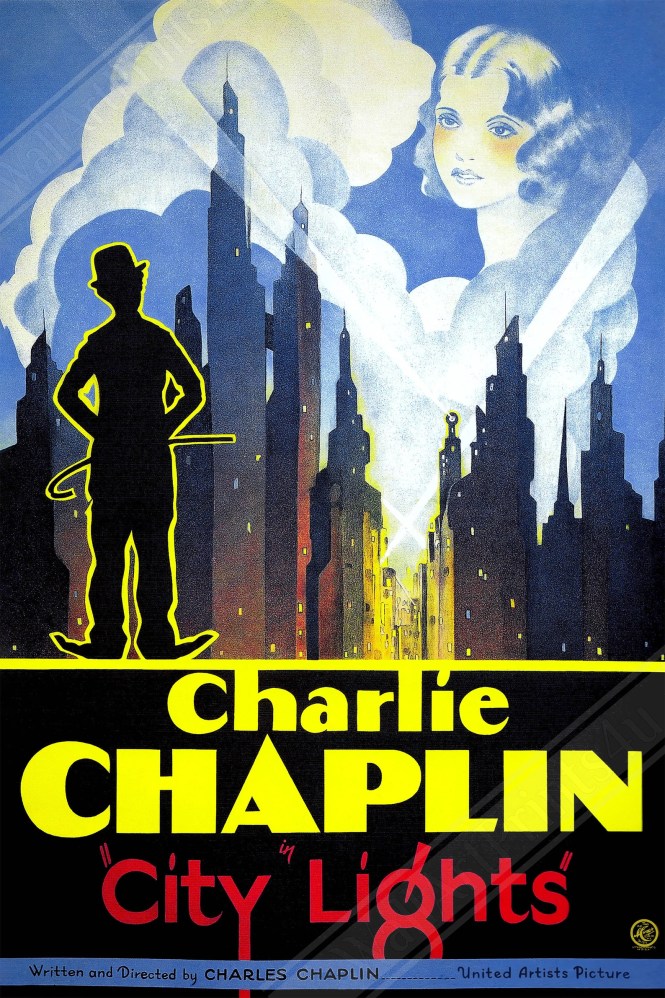
City Lights

Category: Silent Film, Comedy

Starring: Charlie Chaplin

Another Chaplin movie (a lot of his seem to make most ‘best movie’ lists and I can start to see why.  In this particular one he reprise the role of the tramp and the movie opens with him taking a nap under a tarp that is later revealed to be a statue that is having a big unveiling.  The usual slapstick shenanigans happen and he eventually escapes the authorities. He then meets a flower girl who is selling flowers and is instantly smitten.

As he’s leaving the flower girl hears a fancy car with a chauffeur and thinks it’s the tramp. Later that night the tramp is down by the water and he sees someone trying to kill themselves. He saves them from the attempt and it turns out the guy’s a millionaire and he takes the tramp back to his house to keep the party going. The guy’s a complete lush and when the tramp asks him for money to buy more flowers from the flower girl he peels off a few from a fat stack and sends him on the way telling him to take his car – a very nice Rolls Royce.

The thing is – the millionaire only really remembers the tramp when he’s hammered – once he’s sober he is a cruel and abrupt stereotype of a 1920’s tycoon.  It’s something that is repeated a few times with the millionaire who always seems to find the tramp when he’s sauced out of his mind.

Meanwhile the tramp keeps visiting his blind girl and one day she isn’t at her usual street corner. He eventually tracks her down and finds out that she is ill, so he keeps her company by reading her a newspaper. One of the articles is about a doctor who has a procedure to restore sight – the girl smiles and said it’d be wonderful because then she can see him. The tramp knowing he’s pretending to be rich and is aware of his looks isn’t enthused with this idea. However, as he’s leaving he finds an eviction notice and realizes her family is getting kicked out of the apartment.   Determined to help her he decides to get the money to pay her back rent.

The problem is he’s visited the blind girl too many times and the foreman fires him. One of his buddies ropes him into a fixed fight to make some cash but the crooked boxer takes off because the police are coming the his replacement is a giant of a man with murder in his eyes.  A comical drawn out boxing match happens which includes the tramp hitting the boxer with a shovel, the boxer punching the police, and general mayhem. However, the boxer eventually beats the tramp and he goes away without the money needed for the girl.

It’s at this time that the millionaire rolls up on the tramp, three sheets to the wind, and invites him to party (again). They have a good time and the tramp asks if he can give him the money for the girl. The rich guy says sure – and all seems to be solved, except that at that moment burglars break into the house and rob it – with the tramp making his getaway by running from the police (something he does quite frequently, to be honest)

Knowing that it’s a matter of time he runs to the girl and gives her the money – telling her that he’ll see her “in a while” shortly after the police find and arrest him. A while later he gets out of prison and goes to her street corner, only to find her gone.  One day as he’s walking down the street he looks in a store window and there she is! She runs a florist shop now and her sight has been restored! He nervously starts to approach but some newsboys who have taken a dislike to him start harassing him and she sees it through the window. She offers him a coin and a flower and when she touches his hand she realizes who he is and they share a smile.

4/5 – At this point the whole tramp gets the girl thing seems to have been done this is just another angle on it. The deranged millionaire was pretty funny and the slapstick bits are pretty consistent and humorous. Chaplin’s ability to express emotion without words is without peer and I can see why he dominated the silent film industry and his fame endures to this day.

NJ Devils vs Tampa Lightning

Final Score: Lightning 4, Devils 1

Great seats by the glass gave us a great view – but unfortunately the Devils seemed listless and uninspired – the goals that the Lightning scored were pretty straightforward – right through the defense (well, including one open net goal in the waning minutes).  I always like the vibe in the Prudential center – the crowds are always into the game and there’s lots of things going on when there’s breaks (like contests, t-shir cannons, etc.)  and since I had the kids with me that was important as they were starting lose interest in the game (to be honest, so was I)

The food was pretty good as well – plenty of options for the kids (chicken fingers for the win!) and the drinks are reasonably priced. However – when compared to MSG (which I visited shortly after) the Prudential came across as sparse – lots of empty space and the food options were pretty much the same at each station (I think they funnel almost everyone into the Fire and Ice Lounges). Most of the concession stands were closed which made for an odd dissonance between the raucous full arena and all the areas right outside. It’s a shame as there’s plenty of opportunity to do something like MSG where restaurants rent the space in the arena and provide a diverse selection of food and drinks. 

Overall it was a positive experience – the kids first pro hockey game they seemed to have an enjoyable time. The traffic and parking was not overly bad – it’s a shame they couldn’t bring us a win. They finished next to last in the division even with some promising stars on the roster (Hughes) – here’s hoping they get it straightened out for next season!

Citizen Kane

Category: Drama
Starring: Orson Welles

Widely considered one of the greatest movies of all time it was hard to go into this fresh as the move has entered and somehow stayed in the zeitgeist (Rosebud is a classic example) and I have seen this movie before a very very long time ago, so it wasn’t like I was going into it blind. That being said – Welle’s acting is magnetic and draws you into whatever character he’s playing – and the film, even with it’s 1930’s sensibilities, is eminently watchable.

The movie starts with Kane as an old man on his deathbed in a palatial estate called Xanadu – he’s holding a snow globe and as he shuffles off this mortal coil he mutters a single last word “Rosebud” – setting up the mystery of why this great man would choose that as his last words. It’s such a mystery that a newspaper assigns an investigative reporter to do a story on Kane which sets up the framework of the movie.

The reporter (Thompson) tries to talk to Kane’s ex wife – a bitter alcoholic who refuses to speak to anyone about him. He then investigates Kane’s business manager’s office and reads some old records showing how Kane came into his fortune and how he squandered it.

It starts with Kane as a child. His parents have a mining claim that is producing and they arrange for him to go to a boarding school and have his money managed by the aforementioned business manager. When they went to send him off to boarding school – he hits them with the sled he was happily riding before the family broke apart.

When Kane turned 25 he got access to the money and responsibly and sensibly invested it using sound strategies to grow his portfol.. Ahh who are we kidding he wasted almost the entire fortune with poor decisions on booze, news, and flooze(ies).  He buys a newspaper and immediately goes full Murdoch – building influence and power through the press. He marries the niece of the president and seems like he’s riding high.

He decides to run for political office (well that sounds familiar) and during his run he meets a woman (Susan) and begins a torrid affair. He is discovered and because this isn’t 2024 the affair ruins his political career (and marriage). Kane, determined to prove his choice to have an affair was a good one, pushes poor lounge singer Susan into singing opera.  She.. Doesn’t have the vocal range for opera and even though she tells him this he blithely ignores here and builds an entire opera house for her debut – which was as awful as you imagine it was.  Kane’s best friend Leland who runs the arts column for their paper, writes a scathing review of Susan and the opera and Kane finds the review before print and fires Leland but then for some reason publishes the poor review

The reported manages to convince Susan to speak to him and she tells him that she begged him not to have to continue, but Kane makes her and eventually they have a big enough argument that Kane strikes Susan and she leaves him. He’s finally all alone – having driven away everyone who cared for him.

Thompson speaks to the butler who confirms the incident and say Kane went into a rage and only calmed down when he grabbed a snow globe.. At which point he whispers ‘rosebud’

Then the famous ending – where they’re going through his things and burning some of it (I’m not really sure why) and as the camera pans the pile of detritus you see a sled with the name ‘rosebud’ on it.

5/5 – great movie.. Deserves it’s flowers. Welle’s acting is superb and the story (apparently loosely based on Randolph Hurst) is compelling and keeps you interested. I liked the bittersweet ending where you can’t help but feel that Kane is longing for the time in his life when he was truly happy – riding that sled in the snow before his parents sent him away.

Pan Pizza (Pizza Hut Clone)

I’ve always had a special place in my stomach for Pizza Hut Pizza. It was a focal part of my childhood. We’d go a couple of time a month to the one the next town over and get some delicious bread sticks and pizzas with the family and it was always a great time full of laughter and great pizza (I swear to you, in the 80’s the pizza there was fire). Sometimes if there was a wait my brother and I would drop a quarter or two into the ninja turtles game in the lobby until our table is ready. It’s a core memory from my childhood and one I’d like to replicate (food wise at least – I have the ninja turtles game in my arcade cabinet so I can play that whenever I want!)

The problem is Pizza Hut has gone downhill. The last few times I tried the pizza there is was a pan full of disappointment. They changed the dough recipe and the sauce and are using some weird cheese and the entire texture and taste is way off from what it used to be. So that’s why I’m determined to crack the code on replicating that 80’s Pizza Hut pie.

All that being said – this wasn’t it. I mean.. it was still a good pizza and the dough was flaky and buttery but the sauce and cheese just didn’t hit like I expected. Time to go back to the drawing board – one day I’ll recreate that 80’s nostalgia bomb – and when I do I’ll fire up a game of ninja turtles first to complete the experience.

DOC Margherita Pizza

The first thing I did when I got back from Italy was try to recreate the pizzas I had when I was in Naples. It was amazing. Crispy crust that was soft inside with fresh vibrant tomato sauce and buffalo mozzarella, topped with basil, olive oil and fired in a 900 degree oven. I had three pizzas in three different popular spots and they all were delicious but the one I had the first night was cooked perfectly and really set the tone for my pizza tour of the greater Naples area.

I got some authentic 00 pizza flour, imported San Marzano tomatoes, and buffalo mozzarella and set to work. I mixed the dough entirely by hand (gentleness is key) and then let it sit for 48 hours in the fridge to let the yeast to their work. Once it came to room temp it opened up like a dream and I quickly dressed the pie and threw it in a piping hot Ooni Koda 16. 90 seconds later I pulled out this beauty and threw on a few more basil leaves and let it sit on a rack for a minute or two (to let the steam escape so it doesn’t get soggy)

It was.. just like I remembered from Italy. Sweet tomato base, tangy cheese and a perfect char on the pie. I tore into it and I say this without shame.. I ate the entire thing.