Bob Dylan – Blonde on Blonde

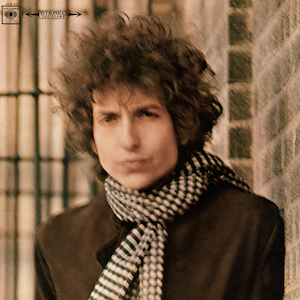
Alright, gather ’round, you jingle-jangle morning chasers and poetic puzzle enthusiasts. We’re about to dive into the lyrical labyrinth that is Bob Dylan’s “Blonde on Blonde.” This isn’t just an album; it’s a Rosetta Stone for decoding the human condition, wrapped in a double LP that’s as thick as a Midwestern accent and twice as intriguing.

Released in 1966, “Blonde on Blonde” hit the scene like a surrealist painting come to life, stumbling out of a smoky Greenwich Village café and into the mainstream. It’s as if Dylan took the English language, put it in a tumbler with some amphetamines and beat poetry, then poured out pure, distilled genius.

Let’s start with “Rainy Day Women #12 & 35,” shall we? This carnival of chaos kicks off the album like a drunken marching band crashing a funeral. With its woozy brass and Dylan’s gleeful proclamation that “Everybody must get stoned,” it’s either a coded drug reference or the world’s most rollicking Old Testament allusion. Either way, it sets the tone for an album that’s about as straightforward as a corkscrew.

“Visions of Johanna” slithers in next, a seven-minute fever dream that’s denser than a neutron star and just as likely to warp your perception of reality. Dylan’s stream-of-consciousness lyrics paint a picture so vivid yet so abstract, it’s like trying to describe a Dali painting to a blind man while high on laughing gas. “The ghost of electricity howls in the bones of her face”? I mean, come on! That’s not songwriting; that’s linguistic alchemy.

“I Want You” provides a brief respite of relatively straightforward desire, though in Dylan’s hands, even a love song becomes a kaleidoscopic journey through want and need. It’s catchy enough to be pop, but weird enough to remind you that you’re still in Dylan’s funhouse mirror world.

But let’s talk about “Stuck Inside of Mobile with the Memphis Blues Again.” This track is a parade of characters so colorful, they make Sgt. Pepper’s Lonely Hearts Club Band look like a bunch of accountants on casual Friday. It’s a song that manages to be both nonsensical and profound, like overhearing a philosophical debate in a madhouse.

And then there’s “Sad Eyed Lady of the Lowlands,” the epic 11-minute closer that takes up an entire side of vinyl. It’s a love song, a riddle, and a fever dream all rolled into one. By the time Dylan’s done spinning his web of imagery, you’ll feel like you’ve just read a Russian novel backwards while riding a merry-go-round.

Producer Bob Johnston deserves a medal for herding these musical cats into some semblance of an album. The sound is as mercurial as Dylan’s lyrics, shifting from raucous blues to tender balladry with the ease of a chameleon changing colors.

“Blonde on Blonde” isn’t just an album; it’s a Rorschach test in musical form. It’s the sound of the 1960s counter-culture distilled into a potent brew of folk, rock, blues, and pure, uncut Dylan. It’s an album that doesn’t just reward repeated listens; it demands them, revealing new layers of meaning with each spin.

In conclusion, “Blonde on Blonde” is like that weird dream you had after falling asleep reading Allen Ginsberg while a blues record played in the background. It’s confusing, exhilarating, and utterly captivating. It’s not just music; it’s a full-body experience that’ll leave your mind buzzing and your dictionary weeping.

So, should you listen to “Blonde on Blonde”? Does a one-legged duck swim in circles? Of course you should! Just don’t expect to understand it all on the first… or fiftieth listen. This album isn’t a quick fix; it’s a lifelong companion that’ll keep you company on rainy days, sunny days, and those strange, in-between days when reality seems just a bit off-kilter. Kind of like Bob himself.

Beyonce – Lemonade

Buckle up, Beyhive, because we’re about to dive into the sweet, sour, and downright electrifying world of Beyoncé’s “Lemonade.” This isn’t just an album; it’s a cultural reset, a visual feast, and a masterclass in turning personal pain into artistic triumph.

When “Lemonade” dropped in 2016, it didn’t just break the internet – it made the internet its personal lemonade stand. Queen Bey took her marital strife, mixed it with black feminism, stirred in some Southern gothic imagery, and served it up with a side of “boy, bye.”

“Pray You Catch Me” opens the album like a quiet storm, all hushed vocals and simmering tension. It’s the calm before the hurricane, with Beyoncé’s vulnerability on full display. You can almost hear the sound of a marriage cracking beneath the weight of suspicion and betrayal.

Hold up (they don’t love you like I love you)! “Hold Up” swings in with a baseball bat and a sunny disposition, demolishing expectations and fire hydrants with equal glee. It’s a jealous woman’s fever dream set to a Caribbean beat, with Beyoncé channeling both rage and playfulness in a yellow Roberto Cavalli dress.

“Don’t Hurt Yourself” is where things get really heated. Featuring Jack White and sampling Led Zeppelin, this track is a molotov cocktail of rock and soul. Beyoncé isn’t just angry; she’s incandescent with fury, her voice a blowtorch of emotion that threatens to burn the whole patriarchy down.

Let’s talk about “Formation” for a hot second. This isn’t just a song; it’s a manifesto. It’s Beyoncé planting her flag in the cultural landscape and daring anyone to try and remove it. From “I got hot sauce in my bag (swag)” to “I like my baby heir with baby hair and afros,” every line is quotable, meme-able, and absolutely essential.

The production on “Lemonade” is as varied as Bey’s emotional journey. From country twang (“Daddy Lessons”) to piano balladry (“Sandcastles”), from trap beats (“6 Inch” feat. The Weeknd) to rock swagger (“Don’t Hurt Yourself”), the album refuses to be pinned down to any one genre.

“Lemonade” isn’t just an album; it’s a multimedia experience. The accompanying film is a visually stunning journey through Beyoncé’s psyche, mixing spoken word, poetry, and breathtaking imagery to create something truly unique in the pop landscape.

In essence, this album is like going to couples therapy with a stadium full of people, where the therapist is a goddess in designer clothes, and the session ends with everyone learning a new dance routine. It’s personal, it’s political, it’s pop culture at its most potent.

So, should you listen to “Lemonade”? Is water wet? Does the sun rise in the east? Of course you should! Just be prepared: this album might just inspire you to start your own revolution, smash some car windows (legally and safely, of course), or at the very least, upgrade your hot sauce game. Now, if you’ll excuse me, I’ve got a sudden urge to put on my most fabulous outfit and strut down the street like I’m in my own personal Beyoncé video. When life gives you lemons, you make “Lemonade” – and then you slay all day.

David Bowie – Ziggy Stardust

Alright, space cadets and glam rock aficionados, strap yourselves in. We’re about to blast off into the stratosphere of musical innovation with David Bowie’s “The Rise and Fall of Ziggy Stardust and the Spiders from Mars.” This isn’t just an album; it’s an intergalactic rock opera that’ll make you question your sexuality, your fashion choices, and possibly your entire existence.

Released in 1972, this record crash-landed onto Earth like a fabulous UFO piloted by a bisexual alien rock god. It’s as if Bowie looked at the music scene of the early ’70s and thought, “Needs more stardust and androgyny.” And boy, did he deliver.

Let’s start with “Five Years,” shall we? The album opener creeps in like an existential crisis wearing platform boots. Bowie’s voice, fragile yet powerful, delivers the news of Earth’s impending doom with all the drama of a Shakespearean actor who’s accidentally wandered onto a sci-fi movie set. By the time the strings swell to their climax, you’ll be ready to throw on some glitter and face the apocalypse in style.

“Moonage Daydream” swaggers in next, with a riff so chunky you could serve it on a platter at a glam rock buffet. Mick Ronson’s guitar work here is filthier than the floor of a dive bar after last call. And those lyrics? “I’m an alligator, I’m a mama-papa coming for you”? It’s like Bowie threw a dictionary in a blender and poured the results into a lava lamp.

Now, let’s talk about “Starman.” This track is catchier than the common cold at a kindergarten. That chorus will hook you faster than you can say “Hey babe, your hair’s alright.” It’s the musical equivalent of a warm hug from a sparkly alien – comforting, yet slightly unsettling.

“Ziggy Stardust,” the titular track, struts onto the scene like it owns the place – and honestly, it does. It’s a character study so vivid you can practically see the “screwed-up eyes and screwed-down hairdo.” Bowie paints a picture of rock ‘n’ roll excess so compelling that you’ll want to start your own band, if only to experience a fraction of Ziggy’s wild ride.

But the real knockout punch comes with “Rock ‘n’ Roll Suicide.” Starting as a quiet reflection and building to a life-affirming climax, it’s like watching a supernova in slow motion. When Bowie screams “You’re not alone!” it’s enough to make even the most jaded listener want to throw their hands up and embrace the nearest stranger.

Producer Ken Scott deserves a Nobel Prize in Chemistry for the way he alchemized these disparate elements into audio gold. The album sounds both intimately raw and cosmically polished, like it was recorded in a dive bar on Mars.

“Ziggy Stardust” isn’t just an album; it’s a portal to another dimension where rock stars are messiahs, guitars are interstellar communicators, and glitter is a basic food group. It’s a concept album that actually works, telling a story so compelling you’ll want to cancel your Netflix subscription and just listen to this on repeat.

In conclusion, “The Rise and Fall of Ziggy Stardust and the Spiders from Mars” is like that one wild night out that changes your life forever. It’ll reshape your musical taste, expand your mind, and probably inspire you to raid your mom’s makeup drawer. It’s not just ahead of its time; it exists outside of time altogether, in a glamorous pocket dimension where Bowie reigns eternal.

So, should you listen to “Ziggy Stardust”? Is water wet? Is space vast? Is Bowie the Starman waiting in the sky? The answer is a resounding yes. Just be prepared: once Ziggy gets inside your head, he’s not leaving anytime soon. And trust me, you wouldn’t want him to anyway. This album doesn’t just rock – it transcends.

Amy Winehouse – Back in Black

Get ready to dive headfirst into a pool of retro-tinged heartbreak and vodka, because we’re about to dissect Amy Winehouse’s “Back to Black.” This isn’t just an album; it’s a confessional booth draped in ’60s girl group harmonies and soaked in Jack Daniel’s.

When “Back to Black” dropped in 2006, it was like a glorious anachronism had elbowed its way onto the charts, sporting a beehive and cat-eye liner. Winehouse took the sounds of yesteryear, infused them with her raw, unfiltered experiences, and created something both timeless and achingly contemporary.

“Rehab” kicks off the proceedings with all the subtlety of a brick through a window. It’s a defiant middle finger to intervention attempts, wrapped in a melody so catchy it should be illegal. Winehouse’s delivery is part croon, part snarl, like Ronnie Spector raised on a steady diet of punk rock and bad decisions.

You’d be forgiven for thinking “You Know I’m No Good” was a long-lost nugget from the Stax vault. The horns punch, the drums shuffle, and Winehouse lays bare her infidelities and insecurities with a frankness that’s both refreshing and uncomfortable. It’s like eavesdropping on someone’s therapy session, if that session took place in a smoky jazz club.

The title track “Back to Black” is where things get really heavy. Winehouse’s voice drips with despair as she chronicles the end of a relationship with gut-wrenching honesty. The production, courtesy of Mark Ronson, is a masterclass in modern-retro, with a melody that Phil Spector would’ve killed for (too soon?).

“Tears Dry on Their Own” samples Marvin Gaye and Tammi Terrell’s “Ain’t No Mountain High Enough,” but this ain’t no uplifting ode to love conquering all. Instead, it’s a clear-eyed look at a relationship’s end that somehow manages to sound like the world’s most depressing party.

Let’s talk about that voice for a moment. Winehouse’s vocals throughout this album are nothing short of extraordinary. She growls, purrs, and wails, her voice crackling with emotion and smoky from too many late nights. It’s the kind of voice that makes you believe every word, even when those words are detailing behavior that would make Keith Richards blush.

“Back to Black” isn’t just an album; it’s a time machine with a broken emergency brake. It hurtles between past and present, mixing retro sounds with contemporary themes in a way that feels both nostalgic and frighteningly current.

In essence, this record is like stumbling upon a ’60s girl group gig in a modern dive bar, where the lead singer is spilling her guts between shots of tequila. It’s beautiful, it’s messy, it’s heartbreaking, and you can’t look away.

So, should you listen to “Back to Black”? Does a bear… well, you know the rest. Just be prepared: this album might just break your heart, make you want to dance, and inspire you to make some questionable life choices all at the same time. Now, if you’ll excuse me, I’ve got a sudden urge to tease my hair into a beehive and perfect my winged eyeliner. They tried to make me go to rehab, but I said… “Just one more spin of this record.”

Fried Zucchini Pizza

Not every brainchild is going to succeed. I had plenty of fresh zucchini and was looking for ways to integrate it into a pizza. In the past I’ve shaved some onto a pizza as a finisher.. but I wondered how I could find a new use for them. I thought maybe if I fried them like chips I could maybe add a crunchy element to a pizza. However, I couldn’t get the zucchini to be crunchy they were either burned in the oil or soggy.. and when I put them on the pizza they ended up burning. After all that the flavor of the zucchini was almost non existent. Time go back to the zucchini drawing board.

Worldwide Food Tour – Iran

Iranian Vegetable Stew – I’m a big fan of Ottolenghi and I’ve made quite a few of his recipes in the past. I was thumbing through one of his cookbooks and saw this really tasty stew and noted it was an Iranian recipe. Perfect! I’ll make a delicious vegetarian dish and satisfy one of my goals. The methodology was interesting – you start it in a pot then transfer it to a roasting pan in the oven to reduce the liquid and caramelize some of the vegetables. I made a few mistakes however – I cut the vegetables too large and they cooked unevenly – and I had the pan too low so it didn’t brown as much as it should have. That being said, the flavor was great and I’d make this again remedying those two issues.

Here’s the recipe if anyone wants to give this a shot

The Rolling Stones – Let it Bleed

Ah, “Let It Bleed” by The Rolling Stones. Buckle up, folks, because we’re about to dive into an album that’s grittier than Keith Richards’ liver and more intoxicating than Mick Jagger’s hip swivels.

Released in 1969, this record hit the scene like a molotov cocktail thrown into a church choir practice. It’s the aural equivalent of getting punched in the face by a velvet-gloved fist – painful, but oddly pleasurable.

Let’s start with “Gimme Shelter,” shall we? This track kicks off the album like a boot to the teeth, with Keith Richards’ opening riff slithering in like a venomous snake. Then Merry Clayton’s vocals come wailing in, sounding like she’s exorcising demons while gargling whiskey. It’s the kind of song that makes you want to either start a revolution or hide under your bed – possibly both.

Moving on to “Love in Vain,” we find Mick and the boys taking a Robert Johnson blues classic and dressing it up in rock ‘n’ roll drag. It’s as if they took the Delta blues, gave it a haircut, and taught it to strut down Carnaby Street. The result is bluesier than a jobless man’s Monday and smoother than Bill Wyman’s bass lines.

Now, let’s talk about “Midnight Rambler.” This track is so sleazy it probably needs a tetanus shot. Clocking in at nearly seven minutes, it’s a slow-burning ode to deviance that builds like a pressure cooker of sin. By the time it explodes into its climax, you’ll feel like you need a shower – but in a good way.

“You Got the Silver” gives us a rare treat – Keith Richards on lead vocals. His gravelly pipes sound like they’ve been marinated in Jack Daniel’s and left to dry in the sun. It’s a tender moment on an otherwise raucous album, like finding a rose growing in a junkyard.

The title track “Let It Bleed” is a rollicking good time, with piano that honky-tonks harder than a cowboy on payday. It’s the kind of song that makes you want to dance, drink, and make questionable life choices – often simultaneously.

But the pièce de résistance has to be “You Can’t Always Get What You Want.” Starting with a choir so angelic it could make an atheist consider confession, it then descends into a rock anthem that’s part philosophical musing, part hedonistic call to arms. It’s like Sunday school and Saturday night had a baby, and that baby grew up to be a rock star.

Producer Jimmy Miller deserves a medal (or perhaps a stint in rehab) for corralling this circus of sound into a cohesive album. The production is raw yet polished, like a diamond that’s been rolled in the mud – it sparkles, but it’s not afraid to get its hands dirty.

“Let It Bleed” is more than just an album; it’s a time capsule of an era when rock ‘n’ roll was dangerous, sexy, and had something to say. It’s the sound of a band at the height of their powers, teetering on the edge of excess but never quite falling off.

In conclusion, “Let It Bleed” is like that friend who always convinces you to stay out for one more drink – it’s probably bad for you, but damn if it isn’t a good time. It’s an album that grabs you by the collar, kisses you full on the mouth, and leaves you dizzy, disoriented, and desperate for more.

So should you listen to “Let It Bleed”? Absolutely. Just make sure you have a good lawyer and a sturdy liver first. This isn’t just an album; it’s a rite of passage. It might not always give you what you want, but I’ll be damned if it doesn’t give you what you need.

The Beatles – Rubber Soul

Alright, mop-top enthusiasts and Liverpudlian linguists, it’s time to twist and shout our way into the magical mystery tour that is The Beatles’ “Rubber Soul.” This isn’t just an album; it’s the sound of four lads from Liverpool collectively deciding to blow the minds of an entire generation.

Released in 1965, “Rubber Soul” hit the scene like a technicolor bomb in a black-and-white world. It’s as if The Beatles looked at their own cheery pop past and said, “Right, lads, time to get weird.” And boy, did they deliver.

Let’s kick things off with “Drive My Car,” shall we? This track revs up the album with a cheeky euphemism so thinly veiled it might as well be wearing cling film. The interplay between Paul and John’s vocals is tighter than Ringo’s drum skins, while the lyrics are saucier than a chippy on a Friday night.

“Norwegian Wood (This Bird Has Flown)” saunters in next, bringing with it a sitar and a story more mysterious than the contents of George’s meditation cushion. John Lennon spins a tale of extramarital almost-naughtiness with all the nonchalance of a man ordering a curry. It’s The Beatles dipping their toe into the waters of psychedelia, and finding it groovy, baby.

But let’s talk about “Nowhere Man.” This existential crisis set to a jaunty tune is like finding a copy of Sartre’s “Being and Nothingness” hidden inside a box of Corn Flakes. The harmonies are sweeter than a sugar butty, but the lyrics? They’re a peek into the void that’s catchier than the common cold.

“Michelle” brings some continental sophistication to the proceedings, with Paul McCartney doing his best “Allo Allo” impression. It’s the musical equivalent of wearing a beret and smoking Gauloises while reading Camus in a Parisian café. Pretentious? Maybe. Irresistible? Absolutely.

And then there’s “In My Life,” a song so beautiful it could make a statue weep. John Lennon reflects on loves past and present with all the wisdom of a man twice his age. George Martin’s Bach-inspired piano solo (sped up to sound like a harpsichord) is the cherry on top of this melancholic masterpiece.

Production-wise, this album is tighter than Pete Best’s grimace when he heard “Please Please Me” hit number one. George Martin’s fingerprints are all over this, guiding The Beatles as they expand their sonic palette faster than you can say “yeah, yeah, yeah.”

“Rubber Soul” isn’t just an album; it’s a pivotal moment in pop music history. It’s The Beatles growing up in public, trading moptops for mind expansion, and taking their audience along for the ride. It’s the sound of four musicians realizing they can do anything they damn well please, and the world will not only listen but ask for more.

In conclusion, “Rubber Soul” is like that friend who went backpacking across India and came back wearing harem pants and quoting Khalil Gibran. It’s familiar, yet exotic; comforting, yet challenging. It’s The Beatles saying goodbye to yeah-yeah-yeah and hello to a brave new world of artistic expression.

So, should you listen to “Rubber Soul”? Is the Pope Catholic? Do bears… well, you know. Of course you should! Just be prepared: this album might just expand your mind faster than you can say “Lucy in the Sky with Diamonds” (but that’s another album altogether). Don’t be surprised if you come out the other side with a sudden urge to grow your hair, learn sitar, and contemplate the nature of existence. Now, if you’ll excuse me, I’ve got a date with my turntable and a sudden, inexplicable craving for fish and chips. It’s all in the mind, you know.

Goal Accomplished – Run a 5K!

I’ve never particularly liked running for it’s own sake. I love playing sports so running for soccer or basketball is fine.. but running mile after mile is just monotonous to me. That being said I’ve always wanted to run in a race – if only for the challenge but I have absolutely no desire to run a marathon – so a 5K is more my speed (which, honestly, is slow)

I started by looking at various 5K events happening in my general area and decided to do one on my town which was a charity event for Samantha Josephson’s ‘What’s my name’ 5K – promoting ride sharing safety after the tragic death of Samantha as a college student. Please check out their site and consider donating [https://www.whatsmyname.org/foundation]

Since I had three months I decided to do a trial 5K to see how my time was and it wasn’t pretty – I was clocked in an uber slow 17 minute mile pace. That’s barely faster than someone walking so I knew I needed to speed that up. My goal was to get in under 40 minutes so I mixed in running with HIIT exercises in the gym and managed to get my practice runs down to around a 15 minute mile when i got the COVID which threw everything out the window. I was sick for two weeks and then dealt with exhaustion for two weeks after that – leaving me only two weeks to try to shave more time off that 15 minutes after being down and out for almost a month.

I knew if I tried to over train I would end up hurting myself or burning through my energy so I went hard for one week and tapered it back the next taking the mileage from 3 down to 1 as a warmup for the race. The night before the race I ate a giant bowl of pasta (Italian creatine baby!) and for breakfast a bagel sandwich for a nice carb/protein mix.

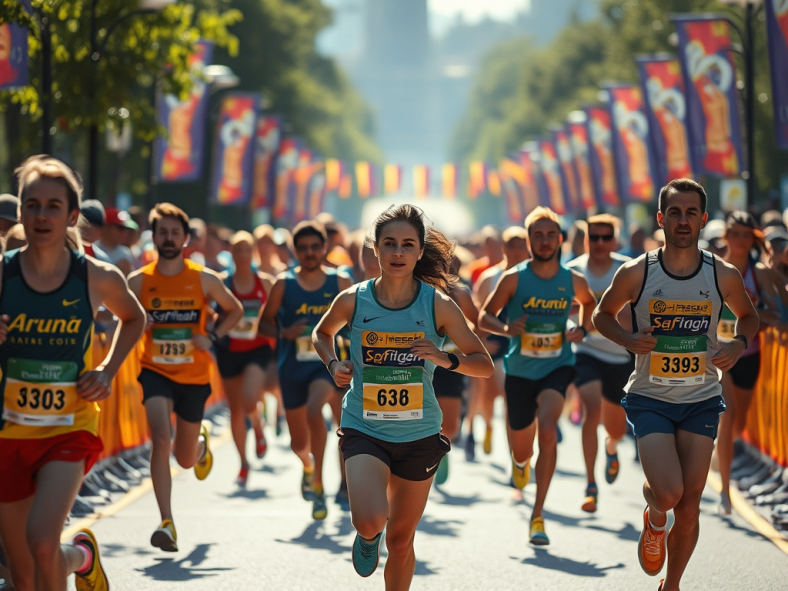
I had a lot of energy and was amped up by the crowd and all the other runners and when we all took off I was matching the pace in the middle of the pack which my Apple watch was telling me was a nice crisp 12 minute mile. I kept that pace for over 1.5 miles which was quite a surprise to me as that’s the fastest pace I managed since I was in my 20’s. However.. the back half I started to run out of energy and the pace dropped to around 14 minutes a mile (I think it was psychological as I hit the 1 mile mark the lead runners were already on the back end of the race)

In the last stretch I was greeted by my wife and kids with home made signs cheering me on and I found a well of energy to kick up my pace from plodding run to sort of speedy. I crossed the finish line just under 40 minutes (by just I mean maybe 3 seconds) and collapsed onto the grass gasping for breath.

I’m glad I did this – I’ve had ‘run a 5K’ on my goal list for almost 10 years now and it’s always one of the goals I don’t complete.. so getting this accomplished even with how out of shape I am was a big achievement for me and seeing my kids yelling support for me was an amazing moment I’ll treasure for a long time.