12 Angry Men

Ah, “12 Angry Men,” a cinematic masterpiece that proves the power of one man’s conviction can change the course of justice. This 1957 classic, directed by Sidney Lumet and starring the inimitable Henry Fonda, takes place almost entirely within the confines of a jury room, where twelve men must decide the fate of a young man accused of murder. What follows is a gripping exploration of the American legal system, the nature of prejudice, and the strength of the human spirit.

The story begins on a sweltering summer day in New York City, where twelve jurors are tasked with determining the guilt or innocence of a young Puerto Rican man accused of stabbing his father to death. At first glance, the case seems open and shut – the evidence is overwhelming, and eleven of the jurors are ready to convict. But one man, Juror 8 (Fonda), has his doubts.

As the deliberations begin, Juror 8 finds himself at odds with his fellow jurors, each of whom brings their own biases and preconceptions to the table. There’s Juror 3 (Lee J. Cobb), a hot-headed businessman with a personal vendetta against the accused; Juror 10 (Ed Begley), a bigoted garage owner who sees the defendant as nothing more than a “them”; and Juror 7 (Jack Warden), a wisecracking salesman more interested in catching a baseball game than serving justice.

But Juror 8 refuses to back down. In a series of powerful scenes, he methodically dissects the prosecution’s case, pointing out inconsistencies and raising doubts about the reliability of the witnesses. He challenges his fellow jurors to look beyond their prejudices and consider the possibility that the defendant may be innocent.

As the deliberations wear on, tensions mount, and tempers flare. In one particularly heated exchange, Juror 3 lunges at Juror 8, his face contorted with rage. But Juror 8 remains calm, his quiet strength a beacon of reason in a sea of chaos.

Slowly but surely, Juror 8’s arguments begin to sway his fellow jurors. One by one, they change their votes, until only Juror 3 remains steadfast in his belief of the defendant’s guilt. In a powerful moment of self-reflection, Juror 3 breaks down, revealing the true reason behind his bias – a troubled relationship with his own son.

In the end, the jury returns a verdict of not guilty, a testament to the power of reasonable doubt and the importance of impartial justice. The film ends with a poignant moment of connection between Juror 8 and Juror 9 (Joseph Sweeney), an elderly man who had been one of the first to change his vote. It’s a reminder that even in the darkest of times, there is always the possibility of understanding and compassion.

“12 Angry Men” is a film that resonates as powerfully today as it did over six decades ago. Its themes of prejudice, groupthink, and the importance of standing up for one’s beliefs are as relevant now as they ever were. Lumet’s direction is masterful, his use of claustrophobic close-ups and tense camera angles creating an atmosphere of almost unbearable intensity.

But it is the performances that truly make the film shine. Fonda is a revelation as Juror 8, his quiet strength and unwavering moral compass a beacon of hope in a world of cynicism and doubt. And the rest of the cast is equally impressive, each bringing a unique perspective and depth of character to their roles.

In the end, “12 Angry Men” stands as a testament to the power of storytelling to challenge our assumptions and change our hearts and minds. It’s a film that demands to be seen, a powerful reminder that justice is not always easy, but it is always worth fighting for. So if you’re in the mood for a thought-provoking, emotionally charged exploration of the human condition, look no further than this timeless classic. Just remember, as Juror 8 so eloquently puts it, “it’s always difficult to keep personal prejudice out of a thing like this. And wherever you run into it, prejudice always obscures the truth.”

5/5 – This is a classic for a reason – the way Juror 8 slowly brings people around their biases to see the evidence without that bias is a masterclass in persuasion. Seeing each of the jurors face themselves in the proverbial mirror and change their mind was a moving experience and hearkens back a time when people could have their minds changed instead of now where it seems people are committed to their dogmatic views and will not change for anything. I can’t see this happening in 2024 – the rest of the jurors would hold on to their biased views and it would end up a hung jury. Regardless of the current social mindset this movie was superbly acted and shot – it all happens in one room and it feels confined – so much that the actors open the windows to let in air and you feel what they must have felt in that hot room all day. One final note: for 30 years I thought it was Jimmy Stewart who was juror 8 and to my surprise when I watched it this time it was Henry Fonda!
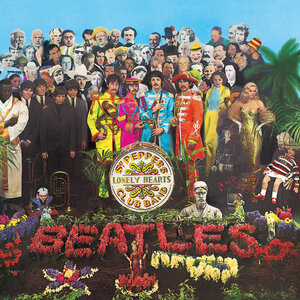
The Beatles – Sgt. Pepper’s Lonely Hearts Club Band

Sgt. Pepper’s Lonely Hearts Club Band: When Four Liverpudlians Decided to Drop Acid and Reinvent the Wheel

Let’s address the elephant in the technicolor room: Sgt. Pepper’s is simultaneously the most overrated and underrated album in history – a paradox that could only exist in the same universe where Ringo was actually a great drummer (spoiler alert: he was). It’s like watching Leonardo da Vinci paint the Mona Lisa while wearing a clown suit – absolute genius filtered through absolute absurdity.

First off, that concept album framework? It’s about as coherent as a cat’s diary. The title track introduces this whole “Sgt. Pepper’s Band” concept that they immediately abandon faster than Paul abandoned his “Paul is dead” denials. But here’s the thing: it doesn’t matter. It’s like showing up to a black-tie event wearing a tutu – if you do it with enough confidence and skill, suddenly everyone else looks overdressed.

“With a Little Help from My Friends” lets Ringo do his thing, which is basically being the musical equivalent of that friend who’s not the smartest in the group but is so lovable you’d take a bullet for them. The song is simple, charming, and more genuine than a puppy’s love. It works precisely because it doesn’t try to be “A Day in the Life.”

Speaking of “A Day in the Life” – good lord. This is what happens when you give genius a blank check and unlimited studio time. That final piano chord holds longer than most modern relationships. The orchestral climaxes are like listening to order and chaos slow dance. It’s the kind of song that makes other songs feel like they’re just playing with Fisher-Price instruments.

Let’s talk about “Lucy in the Sky with Diamonds.” Yes, yes, John claimed it wasn’t about LSD, and I claim I only drink coffee for the taste. But what a gloriously kaleidoscopic piece of songwriting. The imagery is more colorful than a peacock at a paint factory. The melody floats like a butterfly that’s been reading philosophy.

“She’s Leaving Home” is Paul in full music-hall mode, telling a story so British it probably drinks tea while queuing. The string arrangement is beautiful enough to make your grandmother cry, though the narrative is laying it on thicker than butter at a Yorkshire pudding convention.

“Within You Without You” – George’s contribution is either profound Eastern wisdom or what happens when you let someone explain their meditation app for too long. The Indian instrumentation is gorgeous, even if the lyrics sometimes sound like they were copied from a spiritual Instagram account. Still, it provides a necessary moment of reflection between all the circus-like musical gymnastics.

“When I’m Sixty-Four” is Paul McCartney showing off his ability to write your grandparents’ favorite song while simultaneously revolutionizing popular music. It’s like watching someone solve advanced calculus while skipping rope – the degree of difficulty is obscene.

The production? Good grief. George Martin and the boys basically invented half of modern recording technology because what they wanted to do was technically impossible. They’re in there sampling roosters and alarm clocks like cavemen discovering fire. Every sound on this record is polished until it sparkles like Elton John’s jewelry collection.

Even the “lesser” tracks shine. “Lovely Rita” turns a meter maid into a vaudeville show. “Getting Better” manages to slip domestic abuse references into a peppy pop song (very sneaky, John). “Mr. Kite” literally sounds like a circus having an existential crisis.

The album’s flaws? Sure, they exist. “Good Morning Good Morning” sounds like a farm had a collision with a rock band. Some of the whimsy ages about as well as milk left in the sun. The whole thing is so self-consciously arty it practically wears a beret. But criticizing Sgt. Pepper’s for being pretentious is like criticizing water for being wet.

Rating: 4.95 out of 5 Walruses 🦭

The Perfect:

  • “A Day in the Life” (obviously)
  • The production (revolutionarily excessive)
  • The ambition (stratospherically high)

The Peculiar:

  • The concept (abandoned faster than New Year’s resolutions)
  • Some of the music hall whimsy (your tolerance may vary)
  • That one chicken sound effect that probably cost more than most bands’ entire albums

Final Thought: Sgt. Pepper’s is like that friend who’s incredibly pretentious but so brilliant you forgive them – the one who quotes philosophy at dinner but also knows how to make the best cocktail you’ve ever had. It’s a magnificent mess, a brilliant disaster, and one of those rare albums that lives up to its own legend while simultaneously being nothing like what anyone says it is. They really were a band you might have heard of, and they really were getting better all the time.

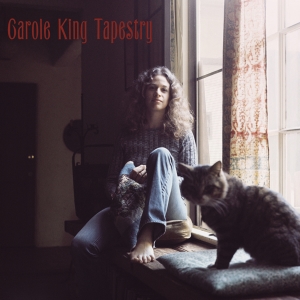
Carole King – Tapestry

Carole King’s “Tapestry”: When Perfection Sits Down at the Piano and Makes Everyone Else Look Like They’re Just Banging on Pots

Look, I’ve spent years dissecting albums where artists try to convince us that their emotional pain sounds like a timpani being thrown down a stairwell, but sometimes you need to bow down to straight-up songwriting sorcery. “Tapestry” isn’t just an album – it’s a masterclass in how to write songs that make other songwriters want to quit and open a hardware store.

Let’s start with “I Feel the Earth Move,” which kicks off the album with the confidence of someone who knows they’re about to serve you a ten-course meal of musical perfection. The piano riff hits like a freight train wrapped in velvet, and when that chorus drops, it’s like watching someone solve a Rubik’s cube with their eyes closed – you know it’s not magic, but damn if it doesn’t feel that way.

You want to talk structure? Let’s talk about “It’s Too Late.” This is what happens when mathematical precision has a love child with raw emotion. The verse-chorus progression is so perfectly calibrated it should be studied by NASA. The bridge? It doesn’t just bridge – it builds a whole golden gate of emotional resonance. And that jazzy instrumental break? Chef’s kiss. It’s like she’s showing off, but you’re too busy feeling feelings to be mad about it.

“Will You Love Me Tomorrow” takes a song King originally wrote for The Shirelles and transforms it from a teenage diary entry into a universal referendum on human vulnerability. The way she reconstructs her own composition is like watching da Vinci decide to touch up the Mona Lisa and somehow make it better. The arrangement breathes like a living thing, each instrument knowing exactly when to step forward and when to hang back, like the world’s most emotionally intelligent jazz ensemble.

“You’ve Got a Friend” is the kind of song that makes you realize most other songs are just making noise. The melody flows so naturally you’d think it was discovered rather than written, like it was just floating around in the ether waiting for King to pluck it out of the air. The chord progression holds you like your most emotionally available friend during a crisis.

Can we talk about “So Far Away”? Because this is where King proves she can make loneliness sound like a precious metal. The way the melody wraps around those lyrics is like watching an Olympic gymnast stick the landing in slow motion – you know you’re witnessing perfection even if you can’t explain the technical elements.

The production (shoutout to Lou Adler) is cleaner than a surgeon’s instruments but warm like a cup of tea your grandmother made you. Every piano note, every guitar strum, every bass line sits exactly where it needs to be in the mix, creating space for King’s voice to do its intimate conversational dance with your soul.

And that voice – let’s address it. It’s not technically perfect, and that’s exactly what makes it perfect. It’s honest like a handwritten letter, comfortable like your favorite sweater, and more authentic than a farmer’s market in Vermont. When she hits the high notes in “Way Over Yonder,” it’s not about vocal gymnastics – it’s about emotional truth.

“(You Make Me Feel Like) A Natural Woman” closes the first side like a closing argument in a court case where joy is on trial. By this point, resistance is futile. You’re either sobbing, calling your ex, or both.

The crazy thing about “Tapestry” is how it makes absolute perfection seem casual. It’s like watching someone parallel park a truck trailer on the first try while solving a crossword puzzle – the skill level is obscene, but it’s delivered with a shrug and a smile.

Rating: 5 out of 5 Perfect Chord Progressions 🎹

Essential Tracks: The whole damn thing. Picking favorites here is like choosing between breaths.

Technical Masterpieces:

  • “Beautiful” for its deceptively complex melodic structure
  • “Tapestry” for its novel-worthy narrative compression
  • “Where You Lead” for its hook-writing clinic

Final Thought: If this album were a piece of furniture, it would be a perfectly crafted oak desk that somehow also gives great emotional advice and bakes you cookies. They literally don’t make them like this anymore because they can’t. Carole King didn’t just raise the bar with “Tapestry” – she turned it into a limbo stick and made everyone else dance under it.

Treasure of the Sierra Madre

Ah, “The Treasure of the Sierra Madre,” a classic tale of greed, paranoia, and the corrupting influence of gold. This 1948 gem follows the adventures of three down-on-their-luck Americans as they seek their fortune in the rugged Sierra Madre mountains of Mexico. Directed by the legendary John Huston and starring the incomparable Humphrey Bogart, this film is a gritty exploration of the human psyche when faced with the temptation of untold riches.

The story begins in the bustling city of Tampico, where we meet Fred C. Dobbs (Bogart), a down-and-out American ex-pat struggling to make ends meet. Dobbs’ luck changes when he meets Bob Curtin (Tim Holt), a fellow vagrant, and Howard (Walter Huston), a grizzled old prospector with a nose for gold. The three men pool their resources and set out to strike it rich in the mountains, but little do they know that their journey will be fraught with peril, both external and internal.

As the intrepid trio makes their way through the unforgiving terrain, they encounter a host of colorful characters, each with their own hidden agendas. There’s Gold Hat (Alfonso Bedoya), a ruthless bandit with a penchant for philosophizing, and his gang of loyal followers. In a scene that has become iconic in cinematic history, Gold Hat confronts the Americans, demanding to see their badges. “Badges? We ain’t got no badges. We don’t need no badges! I don’t have to show you any stinking badges!” he sneers, a line that has been parodied and referenced countless times since.

As the men toil away in the mountains, their newfound wealth begins to take its toll on their psyches. Dobbs, in particular, becomes increasingly paranoid, convinced that his partners are plotting against him. In a chilling scene, Dobbs confronts Curtin, accusing him of stealing his share of the gold. The tension is palpable, the air thick with the stench of suspicion and betrayal.

Meanwhile, Howard, the wise old prospector, tries to keep the peace, but even he is not immune to the siren call of the gold. In a poignant moment, Howard reflects on the nature of greed, musing that “gold is a devilish sort of thing. Makes men do funny things.”

As the men’s paranoia reaches a fever pitch, the film takes a dark turn. Dobbs, consumed by his own madness, turns on his partners, leading to a shocking and violent confrontation. The once-strong bond between the men is shattered, their dreams of wealth and prosperity reduced to dust in the wind.

In the end, the treasure of the Sierra Madre proves to be a curse rather than a blessing. The gold, so coveted and sought after, brings nothing but misery and destruction to those who pursue it. It’s a powerful reminder that the true treasures in life are not material, but rather the bonds of friendship and the strength of one’s character.

“The Treasure of the Sierra Madre” is a masterful exploration of the human condition, a searing indictment of the corrupting influence of greed. Huston’s direction is masterful, his use of light and shadow creating an atmosphere of impending doom. Bogart’s performance is a tour de force, his portrayal of Dobbs a chilling reminder of the darkness that lurks within us all.

In the end, the film stands as a testament to the enduring power of cinema to explore the deepest recesses of the human soul. It’s a classic in every sense of the word, a film that rewards repeated viewings and leaves an indelible mark on all who experience it. So if you’re in the mood for a gritty, uncompromising tale of greed and betrayal, look no further than “The Treasure of the Sierra Madre.” Just remember, as Howard so wisely puts it, “the worst ain’t so bad when it finally happens. Not half as bad as you figure it’ll be before it’s happened.”

(Summary AI assisted)

4/5 – I’m a sucker for westerns and this kinda falls into that vein being set in the west and around the same time period. I enjoyed the tense interplay between the men once they found the gold and was shocked at the rapid decline into paranoia and fear that Bogart’s character had – I’m guessing a man down on his luck for so much time suddenly getting a fortune can change a man. Greed is the word of the day – and the fear of someone taking what is yours. I wasn’t expecting a psychological drama when I put this movie on but it was fascinating to see. I also chuckled extensively at the ‘Badges? We don’t need to stinkin’ badges line’ – I knew that was from an old movie but seeing it in real time was great.

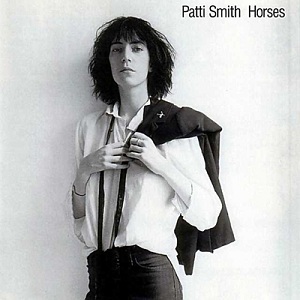
Patti Smith – Horses

Patti Smith’s “Horses”: When Poetry Slams Into Rock and Both Lose the Fight

Look, I get it. It’s 1975, and you’re at some Greenwich Village café where everyone’s wearing black turtlenecks and debating whether a urinal in a museum is the pinnacle of artistic achievement. Someone puts on Patti Smith’s “Horses,” and suddenly everyone’s nodding meaningfully while sipping overpriced espresso. But let’s cut through the intellectual smokescreen here.

“Jesus died for somebody’s sins, but not mine” – the album’s opening line – lands with all the subtlety of a freshman philosophy major who just discovered Nietzsche. What follows is 43 minutes of Smith alternating between speaking-singing poetry with the conviction of someone reading their diary at gunpoint and unleashing banshee wails that make Bob Dylan sound like Frank Sinatra.

Now, before the pitchfork-wielding art rock devotees show up at my door, let me acknowledge what “Horses” gets right. The backing band is tight when they’re allowed to be, particularly on “Gloria,” where they build a genuinely hypnotic groove before Smith decides to turn it into a stream-of-consciousness fever dream about… well, who really knows? The production by John Cale (yes, THAT John Cale) is crisp and spacious, proving that at least someone in the studio understood the concept of restraint.

“Land” is arguably brilliant – if you can wade through its nine minutes of beat poetry about horses, Johnny, and the sea of possibilities. It’s like “The Waste Land” crashed into “Louie Louie,” and somehow they both survived. The raw energy is undeniable, even when it feels like Smith is just throwing words at the wall to see what sticks.

But then we get to tracks like “Birdland,” where Smith’s free-form poetry about a boy watching his father’s funeral morphs into an improvised alien abduction narrative. It’s either genius or the result of someone leaving their coffee cup unattended at a beatnik café – I’m still not sure which. The music meanders behind her like a lost tourist in Manhattan, occasionally stumbling into moments of accidental brilliance.

“Break It Up” showcases what this album could have been if Smith had remembered that songs traditionally have things like “structure” and “choruses.” It’s almost – dare I say it – catchy, before dissolving into another bout of artistic self-indulgence.

Let’s talk about “Kimberly.” The genuine tenderness Smith shows for her sister is touching, even if it’s expressed through imagery about nuclear fallout and apocalyptic weather. It’s like getting a heartfelt birthday card that’s somehow also about the end of the world.

The musicianship deserves praise – these guys could really play when given the chance. Richard Sohl’s piano work adds genuine texture and depth, while Lenny Kaye’s guitar manages to both support and survive Smith’s vocal adventures. They’re like expert tightrope walkers maintaining their balance while someone’s vigorously shaking the rope.

“Horses” is undoubtedly influential, paving the way for punk, art rock, and countless coffee shop poets who mistake volume for profundity. It’s like a Rorschach test set to music – what you get out of it probably says more about you than the actual album. Is it groundbreaking? Absolutely. Is it enjoyable? Well, that depends on your tolerance for artistic revolution and your capacity for finding profound meaning in phrases like “the boy was in the hallway drinking a glass of tea.”

Rating: 2.5 out of 5 Pretentious Coffee Cups ☕

High Points:

  • When the band gets to actually play music
  • John Cale’s production
  • Moments of genuine emotional breakthrough
  • Historical importance to punk rock

Low Points:

  • Poetry that makes Allen Ginsberg sound like Dr. Seuss
  • Structural coherence apparently banned from studio
  • More pretension than a modern art gallery’s coat check

Final Thought: “Horses” is like that person at a party who won’t stop talking about their semester abroad in Paris – occasionally interesting, undeniably cultured, but my God, would you please just get to the point?

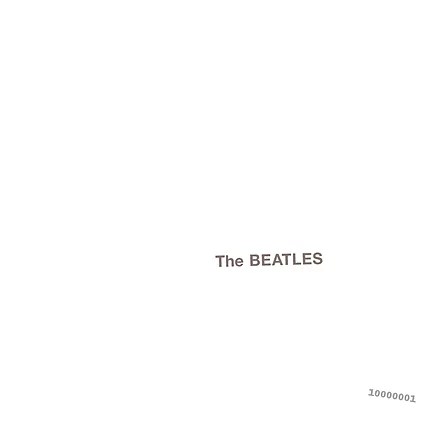
The Beatles – White Album

Alright, Beatlemaniacs and disciples of the Fab Four, it’s time to unpack the enigma wrapped in a white sleeve that is The Beatles’ self-titled album, affectionately known as “The White Album.” This isn’t just a double album; it’s a musical Rorschach test, a sprawling canvas of sonic experimentation that’s as brilliant as it is baffling.

When this blank-faced behemoth hit the shelves in 1968, it was like the Beatles had invited the world into their musical funhouse. Gone were the matching suits and mop-tops; in their place stood four distinct artists, each pulling the band in wildly different directions. The result? A 30-track odyssey that’s part genius, part indulgence, and entirely fascinating.

“Back in the U.S.S.R.” kicks things off with a Beach Boys pastiche by way of Cold War satire. It’s McCartney at his cheeky best, serving up a slice of rock ‘n’ roll with a side of geopolitical commentary. By the time the jet engines fade out, you’re strapped in for a ride wilder than a Magical Mystery Tour on steroids.

Jump a few tracks and you’ll find yourself in the midst of “While My Guitar Gently Weeps,” Harrison’s crowning achievement on the album. With a little help from his friend Eric Clapton, George delivers a song so achingly beautiful it could make even Ringo’s drumsticks weep. It’s the sound of the “quiet Beatle” stepping out of the shadows and into the spotlight.

But let’s talk about “Helter Skelter” for a hot second. This isn’t just a song; it’s McCartney’s middle finger to anyone who ever called him “the cute one.” It’s seven minutes of raw, unfiltered rock ‘n’ roll chaos, with Paul screaming his lungs out like a man possessed. By the time Ringo’s shouting about blisters on his fingers, you’ll be checking your own hands for calluses.

Then there’s “Revolution 9,” the avant-garde elephant in the room. This sound collage is less a song and more an audio Rorschach test. It’s eight minutes of “what the hell am I listening to?” that’s either genius, madness, or both, depending on your level of pretension and/or chemical enhancement.

The production on this album is as varied as the songs themselves. From the lush orchestration of “Dear Prudence” to the bare-bones acoustic “Blackbird,” from the music hall whimsy of “Martha My Dear” to the proto-metal crunch of “Helter Skelter,” it’s like the Beatles set out to cover every genre known to man, and invent a few new ones along the way.

“The White Album” isn’t just a collection of songs; it’s a musical buffet where the Beatles laid out every idea they’d ever had, threw in a few they’d never even considered, and said “dig in.” It’s the sound of the world’s biggest band stretching the very definition of what a band could be.

In essence, this album is like rummaging through the collective junk drawer of four musical geniuses. It’s messy, it’s eclectic, it’s occasionally baffling, but it’s never, ever boring. It’s the Beatles at their most experimental, their most indulgent, and, paradoxically, their most human.

So, should you listen to “The White Album”? Does Ringo have a big nose? Is John’s glasses game on point? Did Paul really die and get replaced by a lookalike? (Spoiler: No, but it’s fun to pretend.) Of course you should listen to it! Just be prepared: this album might just make you question everything you thought you knew about the Beatles, about music, and possibly about reality itself. Now, if you’ll excuse me, I’ve got a sudden urge to meditate with the Maharishi, adopt a walrus, and try to decode the hidden messages when you play “Revolution 9” backwards. Number 9… Number 9… Number 9…

Wu-Tang Clan – 36 Chambers

Enter the Wu-Tang (36 Chambers): When Nine MCs Cast a Shadow Over Hip-Hop That Still Looms

Like a kung-fu master emerging from a misty Shaolin temple to unleash devastating techniques, Wu-Tang Clan’s debut album didn’t just enter hip-hop – it kicked down the door, threw everyone’s expensive leather jackets out the window, and redefined what raw could sound like in rap music.

The RZA, hip-hop’s own mad scientist, crafted a soundscape that makes Dr. Frankenstein’s experiments look like a kid’s chemistry set. Dusty soul samples clash with martial arts movie snippets while drums hit harder than Kareem Abdul-Jabbar in “Game of Death.” Every beat feels like it was assembled in a grimy Staten Island basement with equipment held together by duct tape and pure conviction. And somehow, it’s perfect.

When Method Man growls through “M.E.T.H.O.D. Man” like a gravelly-voiced demon who just gargled with battery acid, you realize this isn’t your uncle’s hip-hop collection of “Rapper’s Delight” and “The Message.” This is something grittier, something that would make your parents not just question your music taste but possibly your life choices.

The album plays like a cipher where each MC is trying to outdo the last, creating possibly the greatest posse cut collection in hip-hop history. “Protect Ya Neck” feels less like a song and more like watching eight ninjas perform increasingly impossible moves, each verse leaving you wondering “How are they gonna top THAT?” And then they do.

Ghostface Killah and Raekwon trade bars on “Can It Be All So Simple” like they’re playing verbal chess while everyone else is stuck on checkers. ODB (rest in peace) crashes through tracks like a hurricane in a china shop, his unhinged energy providing the perfect chaotic counterpoint to GZA’s surgical precision.

The production value might sound like it was recorded in a bunker during an apocalypse, but that’s exactly what makes it timeless. While other albums from ’93 were trying to sound clean and radio-ready, 36 Chambers embraced its muddy mix like battle scars. The result? It sounds as grimy and authentic in 2024 as it did when it dropped.

Every track is quotable to the point where you could probably write a graduate thesis just breaking down the metaphors in “C.R.E.A.M.” The way the group weaves together street knowledge, Five Percenter philosophy, and pop culture references makes Shakespeare look like he was writing nursery rhymes.

Let’s be real – this album hits harder than a sock full of quarters. It’s the kind of record that makes you want to wear Timbs in the middle of summer and practice kung-fu moves in your bedroom mirror. Twenty-plus years later, “36 Chambers” still makes most modern rap albums sound softer than a Care Bear convention.

For the uninitiated, this album might seem as accessible as a trigonometry textbook written in Sanskrit. But that’s the beauty of it – Wu-Tang wasn’t trying to hold anyone’s hand. They created their own universe with its own rules, slang, and mythology, and simply invited us to catch up.

Rating: 6 out of 5 Shaolin Swords 🗡️

Essential Tracks: Who are we kidding? The whole album is essential. Trying to pick standout tracks on “36 Chambers” is like trying to pick your favorite child – theoretically possible but spiritually wrong.

Final Thought: If this album were a kung-fu move, it would be the one that kills you, brings you back to life, and then makes you its disciple. Wu-Tang forever, indeed.

D’Angelo – Voodoo

D’Angelo’s Voodoo: When Neo-Soul Goes Neo-Nap Time

Let me start with a confession that might get me excommunicated from the Church of Music Criticism: I’m not entirely sold on D’Angelo’s supposedly revolutionary “Voodoo.” Yes, I know – this is like admitting you think the Mona Lisa is “just okay” or that Shakespeare could’ve used an editor. But hear me out.

Released in 2000, “Voodoo” is widely hailed as neo-soul’s holy grail, but listening to it feels like being invited to a party where everyone’s moving in slow motion and the host keeps insisting “it’ll pick up soon.” Spoiler alert: it rarely does.

The album’s production, helmed by D’Angelo and Questlove, is undeniably impressive on a technical level. The layered instrumentation creates a thick, humid atmosphere that’s about as close as audio can get to actually being in New Orleans during August. But like that Louisiana humidity, it can sometimes feel suffocating, with songs that meander so much they could file for citizenship in three different countries.

Take “The Line” – it’s like watching someone try to parallel park for seven minutes. Sure, they’ll get there eventually, but did we need to witness the entire process? The track showcases D’Angelo’s masterful understanding of groove and space, but sometimes space needs to be filled with, you know, something.

However – and this is where I’ll probably save myself from complete professional exile – when “Voodoo” hits, it hits like a ton of particularly funky bricks. “Devil’s Pie” is an undeniable masterpiece, a scathing critique of materialism wrapped in a bass line so thick you could spread it on toast. “Send It On” demonstrates D’Angelo’s ability to channel the spirits of soul giants past while creating something entirely his own.

The much-celebrated “Untitled (How Does It Feel)” deserves its flowers, even if those flowers are being thrown very, very slowly. It’s a master class in tension and release, though I can’t help but feel that some of its reputation rides on that infamous music video. (Not that I’m complaining about that particular piece of cultural history.)

What frustrates me most about “Voodoo” is that its flaws and virtues spring from the same well. The loose, improvisational feel that makes tracks like “Spanish Joint” so intoxicating is the same quality that makes “The Root” feel like it’s being performed underwater in zero gravity. The intentionally murky mix that gives “Left & Right” its distinctive character makes other tracks sound like they were recorded through a wall.

D’Angelo’s vocals, while technically impressive, often feel like they’re playing hide and seek with coherence. Yes, I understand that the mumbled, buried-in-the-mix approach is intentional, but so is modern art, and I don’t have to pretend to enjoy that either.

To be fair, the album’s influence is undeniable. You can hear echoes of “Voodoo” in everything from Frank Ocean to Anderson .Paak. But being influential doesn’t automatically make something enjoyable – just ask anyone who’s had to read James Joyce’s “Ulysses.”

Rating: 6.5/10

High Points:

  • “Devil’s Pie” (A genuine masterpiece)
  • The innovative production techniques
  • Those moments when the funk really hits
  • “Untitled (How Does It Feel)” (Both song and video)

Low Points:

  • Pacing that makes continental drift look speedy
  • Occasionally too-murky mix
  • Lyrics that play harder to get than a cat at a dog park
  • The sense that some songs could’ve ended three minutes earlier

Final Verdict: “Voodoo” is like that friend who’s absolutely brilliant but also exhausting – you respect their genius, but you don’t necessarily want to hang out with them every day. While it’s undoubtedly an important album that pushed the boundaries of what R&B could be, it sometimes feels like it’s pushing those boundaries right into a musical quicksand of its own making.

For fans of: Watching paint dry (but in a really sophisticated way), trying to read books in dark rooms, and pretending to understand wine terminology.

Worldwide Food Tour – Spain

Tortilla w/Chorizo and Scallions – not a Mexican tortilla although that does sound tasty, the spanish version which is just scrambled eggs mixed with a variety of ingredients. In this case I added chorizo, tomatoes, peppers, and scallions to make this traditional tapas dish.

It wasn’t hard to make (After all you’re just cooking eggs then finishing in the oven) but the tricky part is to set the eggs just right before you finish them off so they don’t overcook and get rubbery. Having worked at a. breakfast restaurant in my youth I can sling some eggs so I had no issues with the instructions and was able to reliably create a passable version of this Spanish tortilla

The issue is – I don’t really care for omelettes or other add ins to scrambled eggs. I like my scrambled eggs to be just eggs and a copious amount of butter so while this had a nice flavor profile I didn’t really feel the need to add it to the regular rotation.

Goal Met: 60 hour fast

I’ve gone in and out with IF (intermittent fasting) over the last 4-5 years with the longest being around 30 hours but I was reading about the benefits of longer fasts (namely autophagy) and really wanted to try it. I settled on 60 hours because that means two whole days plus part of another day so I could stop after lunch on a Friday then power through the weekend and be ready to go early Monday morning.

The first day was a breeze – I had a normal sized lunch and was able to just go home and skip dinner and get ready for the weekend. Saturday wasn’t too bad the hunger pangs showed up but I managed to stay the course. I did notice I was fatigued and had a low motivation but it was a football weekend so I could just relax on the couch with the family watching football.

The only drawback to that was every other commercial was for food. I’m sitting there with hunger pangs and its a nonstop cavalcade of pizzas, burgers, pasta and beer. It got so bad I had to just stop paying attention during the commercials as I wasn’t sure I could take anymore.

This is also the time my wife noticed some over ripe bananas and asked me to make banana bread – one of my favorite things to eat. She winced as soon as she said it but the kids heard and started the banana bread chant so I ended up making a delicious banana laden loaf of banana bread – oh the aroma!

Sunday was more of the same – did some things around the house but the energy was at a really low point – I drank some tea and other caffeinated beverages but they didn’t seem to move the needle much I think my body was just using its energy for fast related things. I was so tired I ended up napping at my desk then shuffling upstairs to sleep it off.

Monday was better – I had a clearer head and work was distracting for me so I could just put my head down and get a lot of work done.. but when it was time to break the fast I was ready – I knew you had to break a long fast with something light so I had a bottle of Huel and a slab of that aforementioned banana bread.

I took a selfie right before I broke my fast: