Artwork – Sketch with Dad Book

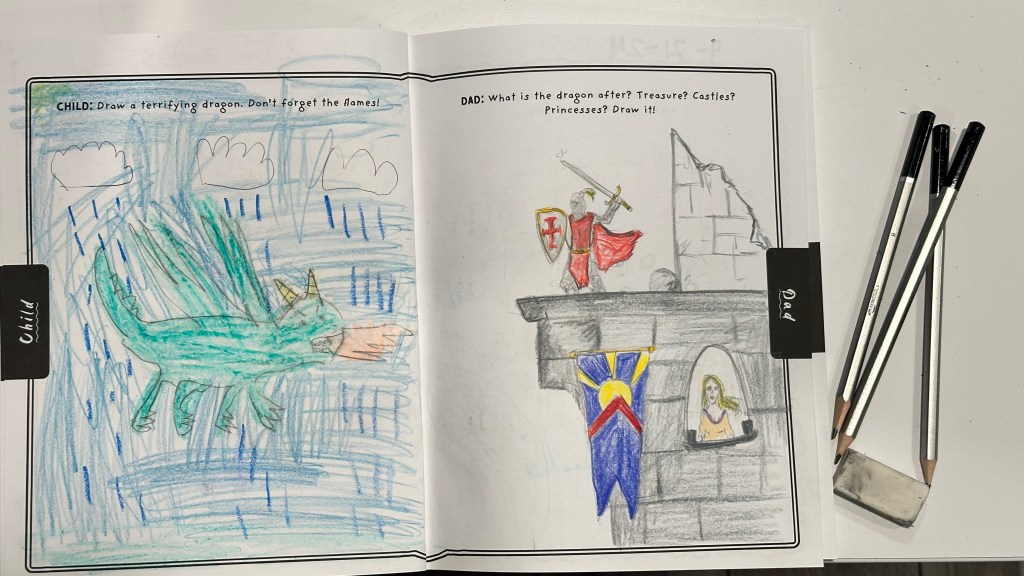
Since my daughter was really into drawing, I wanted to encourage her to practice and expand her creativity. While looking into ways to do this, I found this book – where there’s a prompt for her to draw something then a prompt for me to draw something to build on her drawing. I really enjoy this collaborative drawing and it does encourage me to get my sketching goals done because it makes her happy and I think it’s creating cherished memories she’ll carry with her into her artistic endeavors in the future.

Here’s drawings 1-5

Worldwide Food Tour: Mexico

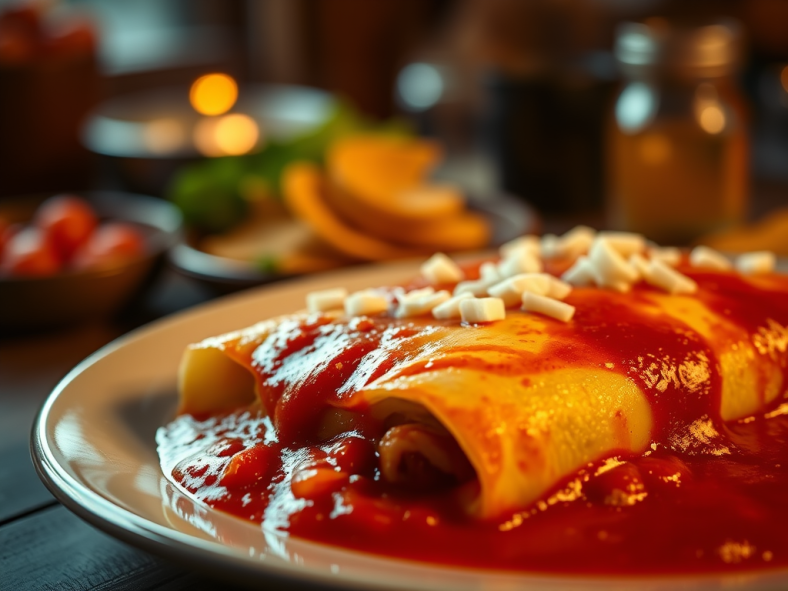
[Note: Stock Photo Used as I didn’t take photos of this dish for some reason]

Now, I love Mexican food. I don’t eat it as often as I’d necessarily like but it always hits the spot. The thing is, other than Tacos I rarely make Mexican food at home. Which is a shame, because it’s a simple food that relies a lot on quality ingredients (much like cucina Italia). This was the first country I hit on the 50 country tour and it was because I was really craving some cheese enchiladas but instead of ordering them from the local Mexican place I decided to make them on my own.

The process wasn’t that terrible hard – just some Mexican cheese, monterrey jack cheese, and the wrappers and a quick tomato based sauce and toss it in the oven. Finish with onions (hold the cilantro please.. yes I’m one of those people) and there you go.

It was a simple dish to put together but very filling on a cold winter night – a nice cerveza to go with it and I’d call that buenos noches.

The Great Dictator

In what might be history’s most audacious case of “dress for the job you want, not the job you have,” Charlie Chaplin plays both a mild-mannered Jewish barber and his exact doppelganger, Adenoid Hynkel, the power-hungry dictator of Tomania (subtle, Charlie, real subtle). Our story begins in the trenches of World War I, where our unnamed barber heroically bumbles his way through a series of military mishaps, including accidentally piloting a plane upside down while carrying an important officer. Because apparently that’s how you survive war – with slapstick.

Fast forward to the barber waking up in 1939, after spending twenty years in the hospital with convenient plot-device amnesia. He returns to his barbershop in the Jewish ghetto, completely oblivious to the fact that his hometown has become the center stage for Hynkel’s anti-Semitic regime. Talk about missing a few newsletters during your hospital stay.

The ghetto sequences showcase some of Chaplin’s finest moments of resistance-through-comedy. Our barber befriends Hannah (Paulette Goddard), who’s made it her personal mission to bonk storm troopers with frying pans. He also gains the protection of Schultz, a high-ranking officer who recognizes him as the soldier who saved his life during the war (in that upside-down plane, no less – funny how these things come full circle).

Meanwhile, in a palace that looks like what would happen if you let a megalomaniac loose in IKEA, Dictator Hynkel is busy being a walking parody of Hitler. He practices speeches in mock German (which is really just gibberish peppered with occasional words like “wiener schnitzel” and “sauerkraut”), dances with an inflatable world globe in a scene that somehow manages to be both hilarious and terrifying, and throws temper tantrums that would make a toddler say “maybe dial it back a bit.”

The political satire kicks into high gear when Benzino Napaloni (Jack Oakie), the dictator of Bacteria, comes to visit. Their relationship is a masterclass in fragile masculinity, with both dictators trying to out-dictator each other. They compete over chair heights during a barbershop scene (yes, really), engage in a food fight at a formal dinner, and generally behave like schoolyard bullies who’ve been given countries to run. Their mustache-to-power ratio is off the charts.

Things take a turn when Schultz objects to Hynkel’s increasingly aggressive policies and ends up fleeing to the ghetto with a death sentence on his head. He and the barber organize a resistance movement, which goes about as well as you’d expect from a group led by an amnesiac barber and a defected officer with questionable planning skills. They end up in a concentration camp, but manage to escape wearing soldier uniforms (because apparently security protocols in Tomania were somewhat lax).

Through a series of coincidences that would make Charles Dickens say “that’s a bit much,” Hynkel goes duck hunting, falls into a lake, and gets arrested by his own troops who mistake him for the barber. Meanwhile, the barber, in stolen military gear, is mistaken for Hynkel just as the dictator is about to give a victory speech about invading Austria. Instead of doing the sensible thing and running for the hills, our barber-turned-accidental-dictator decides to give an impassioned speech about democracy, peace, and human dignity.

The film ends with Hannah listening to the speech on the radio in her new home in recently-invaded Austria. She’s inspired by the message of hope, though one might question the long-term viability of a resistance plan that involves accidentally replacing a dictator with his look-alike and hoping nobody notices the sudden personality change and complete reversal of all policies. But hey, in for a penny, in for a pound.

Chaplin’s film manages to be simultaneously slapstick comedy, pointed political satire, and earnest humanitarian plea. Released in 1940, when America was still officially neutral in World War II, the film was either an act of incredible courage or spectacular madness – or perhaps the special kind of genius that comes from being both. While some of the plot turns might require Olympic-level suspension of disbelief, the film’s core message about the absurdity of hatred and the power of human dignity remains as relevant as ever. Plus, where else are you going to see Hitler and Mussolini caricatures having a food fight?

(caption AI assisted)

I’d give this 4/5 stars. Mostly because it’s an audacious film and relevant to modern times. I can just imagine Trump and Putin having the chair size fight and it makes me giggle (which helps keep the night terrors away) Chaplin still has comedic chops especially with his physical comedy and although the plot contrivances are hard to believe they do land pretty well. After watching most of Chaplin’s silent movies during this project it was neat to see him speaking and he really does a great job. I’m a bit sad to not have any more of his films on my viewing schedule this year but I might loop back when this over and fill in the gaps.

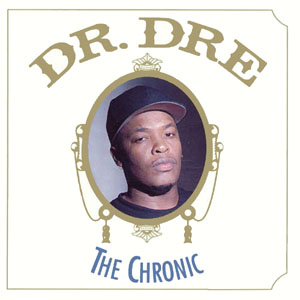
Dr. Dre – The Chronic

Alright, homies and hustlers, strap in and pass the dutchie, ’cause we’re about to dive deep into the smoky, bass-heavy world of Dr. Dre’s “The Chronic.” This ain’t just an album; it’s the sonic equivalent of California rolling up the entire early ’90s in a blunt and hotboxing hip-hop for generations to come.

Dropped like a bomb in December ’92, “The Chronic” hit the streets harder than a lowrider with hydraulics. It’s as if Dre took the funk, sprinkled it with some OG Kush, and served it up with a side of gangsta lean so hard it’ll make your neck hurt.

Let’s kick it off with “Nuthin’ but a ‘G’ Thang,” shall we? This track slides in smoother than a greased-up eel at a waterslide competition. Snoop Dogg’s lazy drawl over Dre’s funk-drenched beat is like watching silk flow over a subwoofer. It’s the kind of song that makes you want to cruise down Crenshaw with the top down, even if you’re actually stuck in traffic on the 405 in a beat-up Civic.

“Let Me Ride” rolls up next, a G-funk odyssey that samples Parliament’s “Mothership Connection” so effectively, you half expect George Clinton to pop out of your speakers wearing a diaper and a cosmic sombrero. Dre’s flow here is as laid-back as a Sunday afternoon BBQ, but don’t get it twisted – there’s steel underneath that velvet.

But let’s talk about “Fuck Wit Dre Day (And Everybody’s Celebratin’).” This diss track is so cold it could freeze Hell over. Dre and Snoop trade bars like heavyweight champs, each punchline landing with the force of a Mike Tyson right hook. It’s the kind of track that makes you feel invincible, even if you’re just mean-mugging your reflection in the bathroom mirror.

“The Chronic” isn’t just about the bangers, though. Tracks like “Lil’ Ghetto Boy” show Dre’s softer side – well, as soft as you can get while still keeping it streets ahead. It’s like watching a pit bull cuddle a kitten – heartwarming, but you know it could still rip your face off if provoked.

Production-wise, this album is tighter than Fort Knox on lockdown. Dre’s beats are cleaner than a surgeon’s scalpel and twice as incisive. He takes the funk of the ’70s, strips it down, beefs it up, and creates a sound so distinctively West Coast you can practically smell the ocean and weed through your speakers.

The guest spots on this album read like a Who’s Who of early ’90s West Coast hip-hop. Snoop Dogg, obviously, but also Nate Dogg, Kurupt, Lady of Rage – it’s like Dre was assembling the Avengers of G-funk. Each feature adds another layer to the chronic-infused cake, creating a high so potent it should come with a warning label.

“The Chronic” isn’t just an album; it’s a time machine, a history lesson, and a party starter all rolled into one. It’s the sound of the West Coast rising, of hip-hop evolving, of Dr. Dre stepping out from behind the N.W.A. shadow and into the spotlight as a solo artist and producer extraordinaire.

In conclusion, “The Chronic” is like that first hit from a fresh blunt – smooth, potent, and guaranteed to leave you fiending for more. It’s an album that defined a genre, launched careers, and probably sold more subwoofers than any car audio ad ever could. It’s not just music; it’s a lifestyle, a mood, a whole damn vibe.

So, should you listen to “The Chronic”? Does Snoop Dogg love green? Is the Pope Catholic? Does a bear… well, you get the idea. Just make sure you’ve got a good system to handle those bass lines, ’cause this album doesn’t just bump – it earthquakes. Now if you’ll excuse me, I’ve got some G-funk to blast and some chronic-related activities to attend to. Stay up, playas.
Goal Met: Visit my family’s hometown [Day 1]

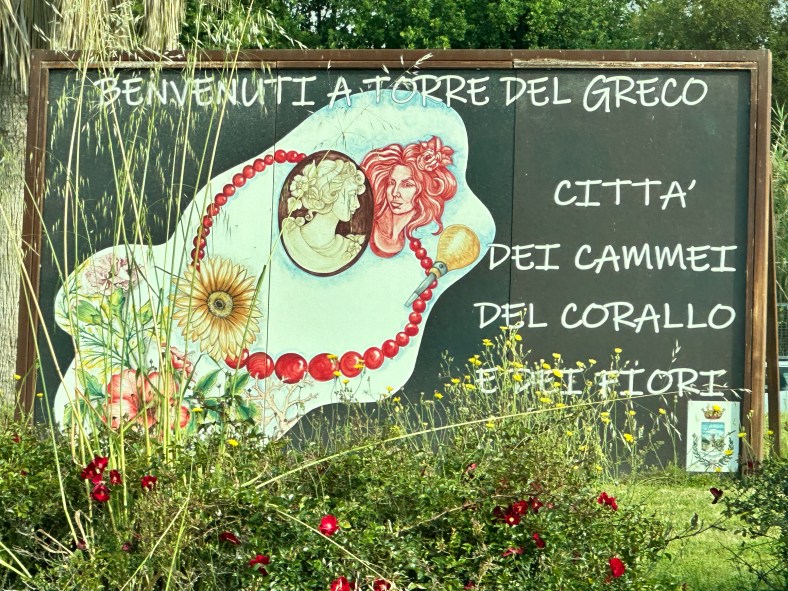
My father is an immigrant from a town near Naples called ‘Torre Del Greco’ or Tower of the Greek in English. I’ve seen old black and white photos of the place and have heard a few stories but I’ve always wanted to go to there. Especially since I have family there I’ve met only once, or extended family I’ve never met at all. It’s not really a tourist hot spot so the couple of times I’ve been to Italy it didn’t make sense to find my way there but I knew this bucket list item needed to be done this year. It’s one of the ones I truly wanted to check off my list.

So I reached out to my dad and convinced him to go back (it has been close to 15 years for him), be the de facto tour guide and help me to meet all my extended family that still live in this beautiful region. We booked the flight (step-mom decided to tag along which was great) arranged all the visits and were lucky enough that my dad’s cousin insisted we stay with her at her town home in downtown Torre Del Greco (right by the port).

We landed in Naples International after our red eye flight. It was a relatively small airport all things considered and we met my dad’s cousin’s son Fabio who then drove us to her townhouse where we decompressed from the long flight with some espresso and Italian cookies (which will be a theme the whole week) which was needed because we immediately left the place to go visit some more family.

But first – we had to stop for a pastry and a coffee! We went to one of Samina’s favorite pastry shops where I got a cornetto filled with nutella and some more coffee (even ordered in Italian which I was inordinately proud of). I also determined during my stay here that I really need to lean into Italian pastry making – something I’ve struggled with in the past but after a week of eating there I’m determined to master

We then stopped by the house of more relatives – Mary Ann and her son Rafaele (who will come into this story later) and we had more coffee and cookies as my dad caught up with everyone. I struggled to understand a lot of it because although I was learning Italian, they were speaking a thick dialect commonly used in Naples. Still, I managed to get the gist of the conversation and it was a lovely time. I explained that I wanted to see where my dad grew up and explore the town and Rafaele quickly volunteered to drive us around and show me all the places from their childhood.

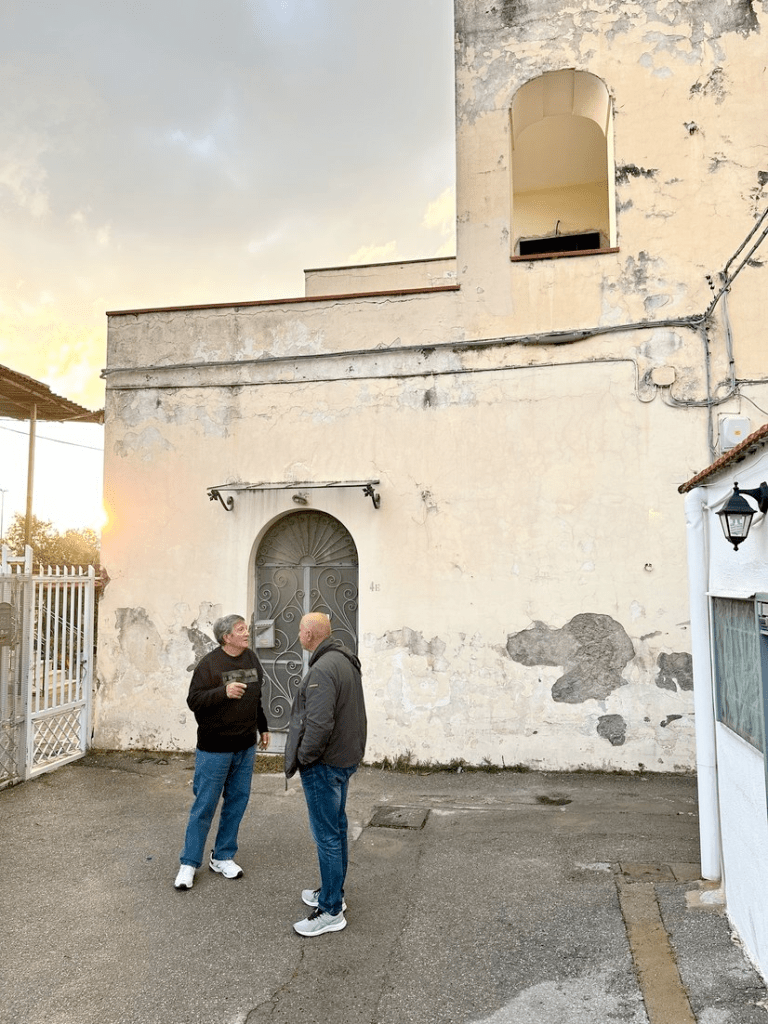
We started with the apartment my dad grew up in – it was along a winding road and up the mountain a bit then down a very small lane.

Oh, I should note that Mt. Vesuvius is everywhere you look in this town it’s a prominent part of the history of the town and I spent a lot of time on it but that’s for a different part of this story.

We then visited the church they went to which seemed abandoned which is a shame because there’s an organ in there that my grandfather helped pay for and there’s a plaque thanking him and I really wanted to see it – however I didn’t want to break into a church so I settled for just looking in.

We then visited a bigger church where the priest that serviced my dad’s church was based and where they had some of the bigger celebrations. It has a statue of padre pio – the patron saint of the area and kind of a big deal (I remember my great aunt had a picture of him on her nightstand) this church was also a bit run down but seemed active and the grounds were well maintained.

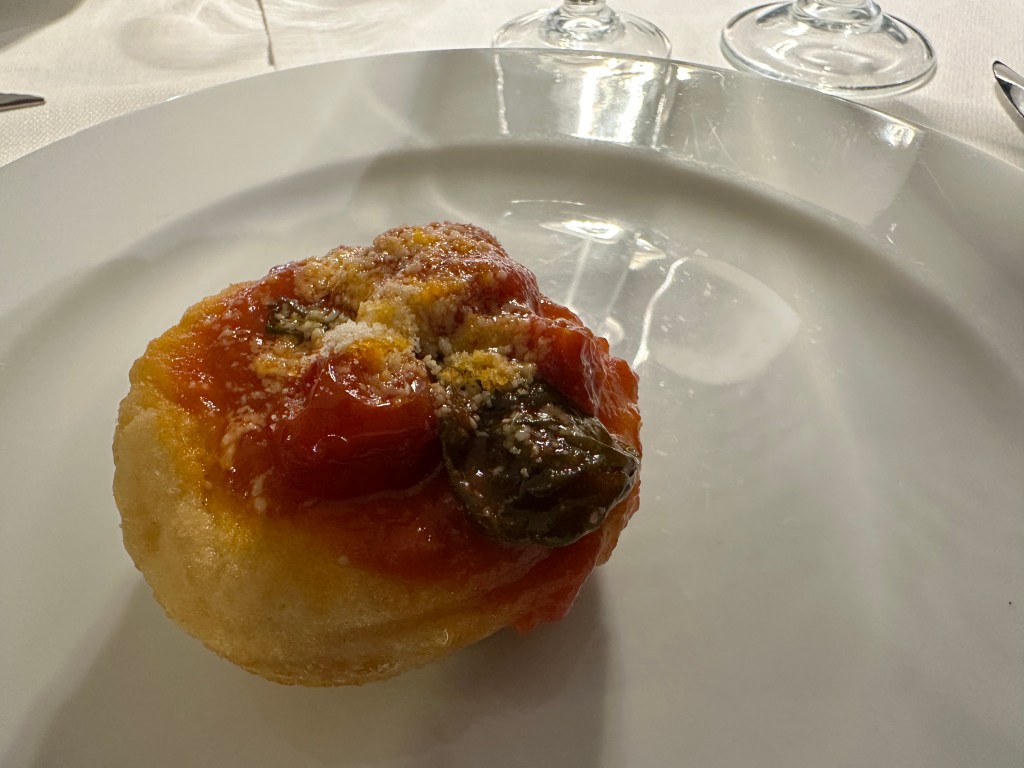
Having run around the town all day we decided to all go out to dinner so they brought me to a pizza place that I swear was called ‘New York Pizza’ – I thought they were messing with me but they insisted the pizza was good. I was very excited to have my first real neapolitan pizza in southern Italy and they made an amazing margherita pizza and I was exposed to the wonders of the pizza fritte (which I’m still going to try to make this year as one of my 50 pizzas)

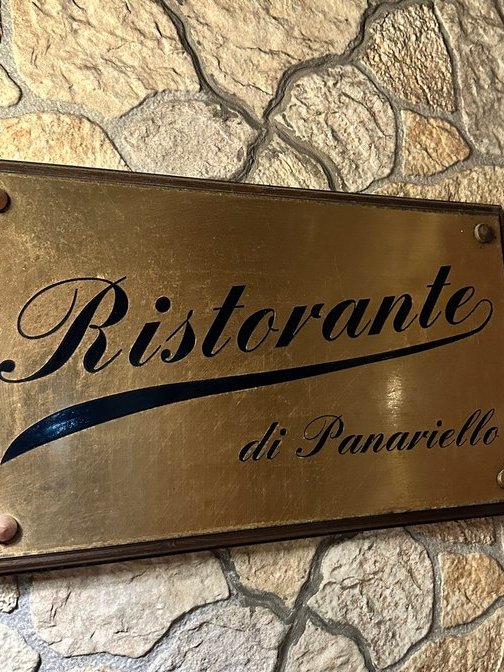
Now very tired from a long flight and a long day we walked out of the pizza place and I was stopped short by a large gold sign that took me a few seconds to process – did I somehow own a pizza place in Italy? Was I destined to be a pizzaolo?

General Notes and observations from day 1:

In Torre Del Greco is there’s lots of ‘death sign’s everywhere – when someone dies, they make a big poster of them with a photo and some details and then stick on a random wall in town. Some are just paper, others are legit plaques. It’s a bit – strange, but who am I to judge local customs?

Barely slept during the flight in – because I was seated next to a literal giant who took up all the available space and made it extremely difficult to get any sleep.  I did manage a quick nap in the middle of the day due to some downtime waiting for the crew at Ann Marie’s to assemble. That nap helped quite a bit as we ended up getting dinner at 9:00 pm at night. 

The roads are a mix of cobbles and concrete blocks with the rare paved road. The cars are all small compact versions (Fiat 500 is the most popular) and there’s nary a stoplight to be found – the cars all just kind of go and figure it out on the fly. Although, I did witness a few accidents – small bumper scrapes (probably from the very very narrow roads that we had to traverse). Mt. Vesuvius is ever present but the rainy weather obscured  the top of the mountain. The islands of Capri and Ischerra are clearly visible from the port area and the sea looks beautiful (if a bit choppy)

The Scooters.. oh man. They are a menace – weaving in and out of traffic with absolute disregard for the very idea of traffic laws. Kids hanging off the sides of scooters. Three people riding on a vespa. weaving in and out of traffic in very tight margins. I’m guessing it’s just the way it is in this part of the world but it sure is nerve wracking to watch!

Goal Met: Read 50 books

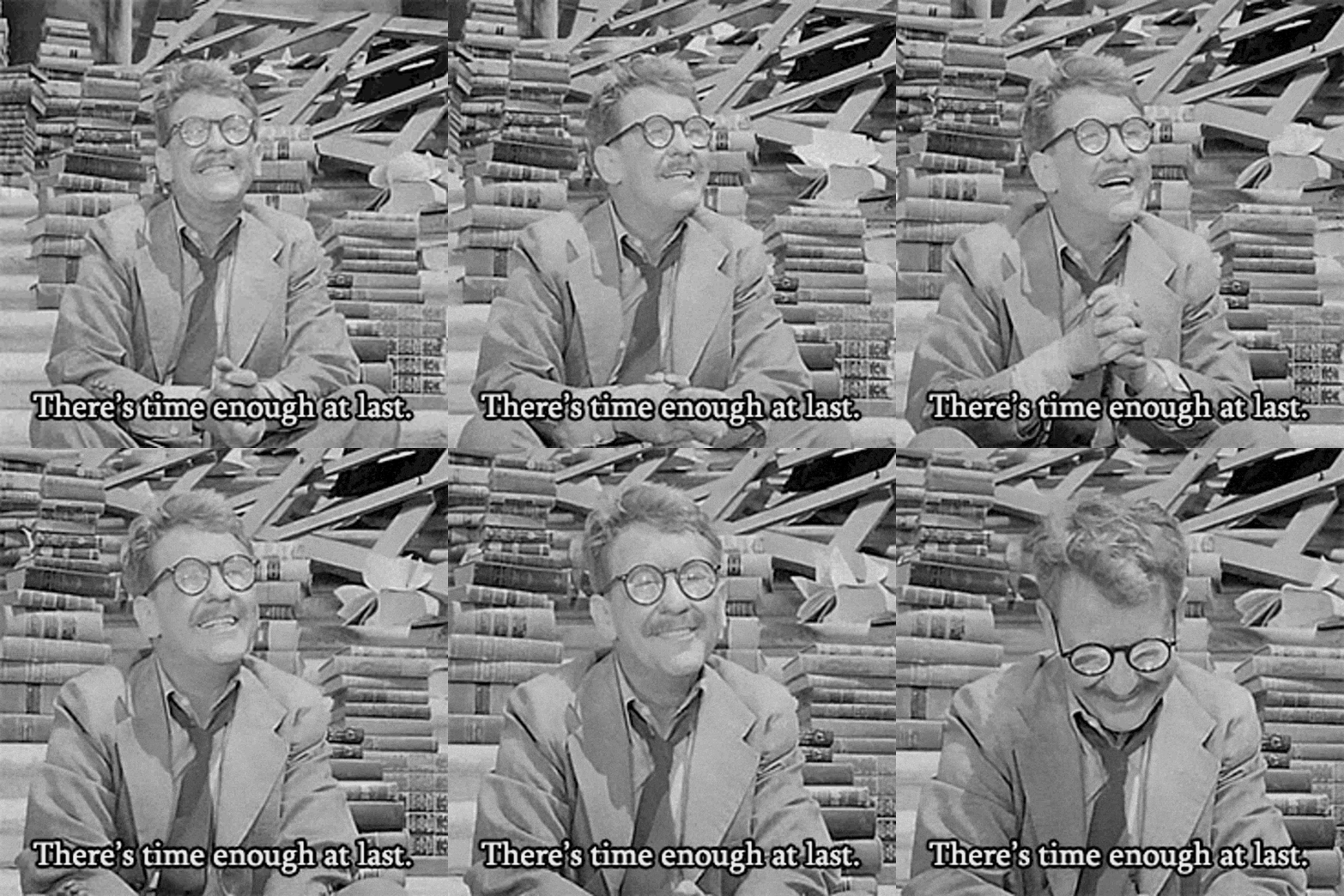
OK – this one was a gimme. In fact, I was seriously considering making it 100 books since I’ve always been a heavy reader – as a small kid I remember sitting up at night with a flashlight reading cheesy sci-fi novels under the covers to get that little bit of adventure before going to sleep way too late and nodding off at my desk at school the next day. Not much has changed other than my kindle has it’s own light now, so I no longer need the flashlight.

I decided to lean into non-fiction information books a bit more. I usually go through 3-5 non fiction books a year but wanted to broaden my knowledge a bit more and started selecting books that I thought were interesting or were recommended one of the many podcasts that I was listening to.

I ended up with 15 non fiction books out of 50 total – considering how dry some of these books were I thought that was a pretty good clip. I also tended to take those kinds of books out from the library so I don’t have the convenience of the kindle ecosystem – making it a bit harder to find time to read them.

See, the thing with a kindle (and the kindle app on my phone) is that I can read anytime I have a free moment. Lunchtime at work? Sandwich and a story. Long train ride? Story time! Relaxing on the beach? Why yes, I’ll read this ‘summer reading’ selection thanks for asking. This really came into focus when I started removing social media from my phones – leaving me with blocks of time I had spent doom scrolling that needed to be filled. So I filled them with words.. thousands of words.. 27,000 words to be exact.

You see I don’t go for thin books, don’t get me started on those slim novels.. I like my books Thicc. Epic fantasy series? Yes please. Long complicated science fiction novel? Beam me up. Multi book series are my jam – I’ll rip through the whole series one after another. I can’t help myself. My lifetime of reading has trained me to read fast and still comprehend everything I’ve read. (Although There have been times when the prose was so beautiful I felt the need to go back and savor it)

Now the funny thing is I hit 50 books only 7 months into this so I’ve still got 5 months left of reading and I’m not committing to 100 books but it’s in the realm of possibility.

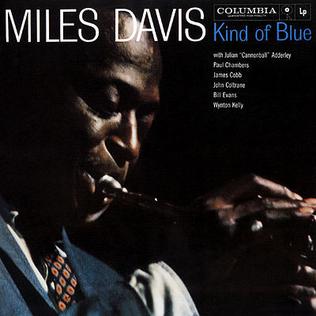
Miles Davis – Kind of Blue

Alright, cool cats and jazz aficionados, it’s time to dim the lights, pour a finger of whiskey, and lose ourselves in the sublime soundscape of Miles Davis’ “Kind of Blue.” This isn’t just an album; it’s a portal to a smoky, late-night realm where time slows down and every note hangs in the air like a fragrant wisp of cigarette smoke.

When “Kind of Blue” first graced turntables in 1959, it didn’t so much drop as it oozed into existence, like spilled ink spreading across the fabric of jazz history. Miles and his all-star sextet took the concept of modal jazz, ran it through a filter of pure cool, and emerged with something so effortlessly hip it makes even your coolest uncle look like a square.

“So What” kicks things off with Paul Chambers’ iconic bass line, a musical question mark that sets the tone for the entire album. Miles’ trumpet enters like a smooth-talking stranger at a bar, and before you know it, you’re five drinks deep in a conversation about the meaning of life. It’s the musical equivalent of a perfectly tailored suit – timeless, elegant, and oh-so-cool.

Coltrane takes center stage on “Blue in Green,” his saxophone weaving a tapestry of melancholy so beautiful it could make a statue weep. This track isn’t just sad; it’s existential crisis sad, it’s “staring out the window on a rainy day questioning every decision you’ve ever made” sad. But, you know, in a good way.

“All Blues” swings in with a groove so laid-back it’s practically horizontal. This is the sound of five masters at the top of their game, having a musical conversation so intimate you almost feel like you should leave the room. Miles’ muted trumpet here is like a whisper in a crowded room – soft, but impossible to ignore.

Let’s talk about the improvisational nature of this album for a hot second. Legend has it that the sextet had minimal rehearsal before recording, with Miles giving only basic instructions. The result is jazz in its purest form – spontaneous, alive, and utterly captivating. It’s like watching a tightrope walker perform without a net, knowing that any misstep could spell disaster, but instead witnessing pure magic.

The production on “Kind of Blue” is as crisp and clear as a winter morning. Every instrument has room to breathe, every note rings true. It’s the kind of album that makes audiophiles weep with joy and reach for their most expensive headphones.

“Kind of Blue” isn’t just an album; it’s a mood, a vibe, a state of mind. It’s the soundtrack to every late-night contemplation, every rainy Sunday morning, every moment when you need to just… be. It’s jazz distilled to its very essence, stripped of pretension and delivered with an almost supernatural cool.

In essence, this record is like finding a hidden jazz club where the greatest musicians in history are just jamming for the hell of it. It’s intimate, it’s profound, it’s the very definition of timeless.

So, should you listen to “Kind of Blue”? Does a bear… ah, you know what, let’s not even finish that tired old phrase. Of course you should listen to it. It’s not just recommended; it should be prescribed by doctors for the treatment of chronic uncoolness. Just be prepared: this album might just ruin all other music for you. Now, if you’ll excuse me, I’ve got a sudden urge to don a beret, snap my fingers rhythmically, and use the word “cat” unironically. Because after “Kind of Blue,” we’re all a little bit cooler, a little bit more introspective, and a whole lot more aware of the boundless possibilities of five musicians in a room, creating magic out of thin air.