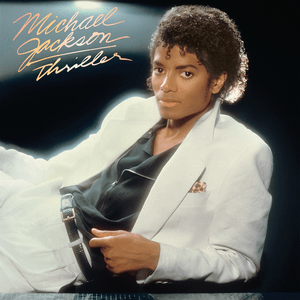
Michael Jackson – Thriller

When Pop Music Reached Its Final Form

Let’s address the elephant in the room: discussing Michael Jackson’s music in the modern era feels like trying to appreciate a da Vinci while the museum’s on fire. But we’re here to talk about “Thriller” – the 1982 album that didn’t just move the goalposts for pop music, it strapped rockets to them and launched them into orbit.

Here’s the thing about “Thriller”: it’s so ubiquitous, so woven into our cultural fabric, that it’s almost impossible to hear it with fresh ears. It’s like trying to objectively evaluate oxygen. But let’s try anyway, shall we?

The album opens with “Wanna Be Startin’ Somethin'” – a track that builds like a pressure cooker of funk until it explodes into that “mama-se, mama-sa, ma-ma-coo-sa” chant that would later spawn a thousand samples. It’s Jackson and Quincy Jones showing their homework (the chant borrowed from Manu Dibango) while simultaneously graduating with honors.

Then there’s “Billie Jean” – good lord, “Billie Jean.” That bass line should be in a museum, preferably with armed guards protecting it. It’s the kind of groove that makes atheists believe in intelligent design. The paranoid lyrics, the rhythmic breathing, the way the strings creep in like suspicion – it’s a perfect pop record. Not good, not great: perfect.

“Beat It” somehow made rock and R&B kiss and like it. Eddie Van Halen’s guitar solo drops into the song like an alien spacecraft landing in the middle of a block party, and somehow it works. It’s the kind of cross-genre pollination that shouldn’t work on paper but ends up creating a new primary color.

The title track is basically its own Halloween franchise at this point, but strip away the zombie makeup and Vincent Price monologue, and you’ve still got a masterpiece of tension and release. The way it builds, layer by layer, is like watching a master chef construct the world’s most dangerous cake.

“Human Nature” is so smooth it makes silk feel like sandpaper. It’s the kind of ballad that makes you forget ballads became uncool. Those synthesizers float like clouds on a summer day, while Jackson’s vocals remind us why he could make even the most cynical critic believe in magic.

Production-wise, this album is basically Quincy Jones showing off. The mix is cleaner than an operating room, but it still manages to feel warm and alive. Every instrument has its place, every effect has its purpose, every finger snap is exactly where it needs to be. It’s like the audio equivalent of a perfectly solved Rubik’s cube.

Let’s talk numbers, because they’re ridiculous: seven singles out of nine tracks. Seven. That’s not an album, that’s a greatest hits compilation in disguise. The fact that “The Lady in My Life” wasn’t a single tells you everything you need to know about this album’s depth.

Rating: 10/10 – Some albums are timeless. This one owns time.

Essential Tracks: All of them. Yes, even “The Lady in My Life.”

Side Note: If this album were a meal, it would be a Michelin-starred chef making the best burger you’ve ever had, then garnishing it with gold leaf and serving it on the moon.

Production MVP: Quincy Jones, proving that sometimes the real genius is knowing how to frame genius.

Historical Context: In 1982, MTV was still figuring out whether they wanted to play black artists. After “Thriller,” they didn’t have a choice. This album didn’t just break racial barriers – it moonwalked through them.

Look, separating art from artist is a personal choice, and everyone’s got to draw their own lines. But “Thriller” as an album is like the Great Pyramid of Giza – regardless of how you feel about who built it or how it came to be, you can’t deny its perfect engineering, its cultural impact, or its enduring influence on everything that came after.

In the end, “Thriller” isn’t just an album that sold a lot of copies (though oh boy, did it ever). It’s proof that pop music can be both commercially successful and artistically brilliant. It’s that rare moment when the most popular thing is also the best thing. Whether that’s enough to overcome its creator’s legacy is up to you, but the album itself? It’s literally as good as pop music gets.

Aretha Franklin – I Never Loved a Man Like I Love You

Where Soul Music Found Its Queen and Never Looked Back

Some albums capture lightning in a bottle. This one captured a whole damn thunderstorm. Aretha Franklin’s 1967 Atlantic Records debut isn’t just an album – it’s the moment soul music found its constitution, its declaration of independence, and its crown jewel all at once. And honey, that crown fit perfectly.

From the moment the organ growls and Aretha’s voice claims its territory on “Respect,” you know you’re not just listening to music – you’re witnessing a coronation. Sure, Otis Redding wrote it, but Aretha OWNS it. She takes his plea for domestic recognition and transforms it into a revolution in two minutes and twenty-eight seconds. That spell-it-out bridge (“R-E-S-P-E-C-T”) isn’t just spelling – it’s soul music’s equivalent of carving your name into history with a diamond.

The title track, “I Never Loved a Man (The Way I Love You),” is the kind of torch song that could burn down a rain forest. Recorded in Muscle Shoals, Alabama (before the sessions famously imploded), it’s a master class in tension and release. The way Aretha wraps her voice around “I don’t know why I let you do these things to me” feels like overhearing someone’s most private thoughts, set to a groove that won’t quit.

“Do Right Woman, Do Right Man” might be the most sophisticated relationship counseling ever set to wax. The gospel-tinged piano (played by Aretha herself – let’s not forget she was a killer musician) lays down the law while her voice preaches a sermon about reciprocity that ought to be taught in schools.

Even when she’s covering other artists, Aretha doesn’t so much interpret songs as she does annex them into her kingdom. Ray Charles’ “Drown in My Own Tears” becomes a masterpiece of controlled emotion – like watching someone turn heartbreak into high art. And her version of Sam Cooke’s “Good Times” feels less like a cover and more like a conversation between old friends about what joy really means.

The backing band, including the legendary Muscle Shoals Rhythm Section and King Curtis on saxophone, provides the perfect musical foundation – present enough to carry the weight but smart enough to know who the real star is. It’s like watching the world’s greatest supporting actors all deciding to make someone else look good.

What’s remarkable about this album isn’t just its individual parts – it’s how it all comes together to create something bigger than itself. This isn’t just Aretha’s Atlantic debut; it’s the moment soul music grew up. The production is crisp but never slick, raw but never sloppy. It’s like they found the exact sweet spot between Saturday night and Sunday morning.

Rating: 10/10 – As essential as oxygen

Essential Tracks: “Respect,” “I Never Loved a Man (The Way I Love You),” “Do Right Woman, Do Right Man,” “Soul Serenade”

Side Note: If this album were weather, it would be that perfect storm that ends a drought and makes flowers grow through concrete.

Historical Impact: This isn’t just a great album – it’s a document of an artist claiming her power. The fact that it was released in 1967, as America was grappling with civil rights, women’s liberation, and cultural upheaval, makes it all the more remarkable. Aretha didn’t just make a soul album; she made a statement about what it meant to be alive, aware, and unafraid in America.

When we talk about perfect albums, we’re usually engaging in hyperbole. This time, we’re just stating facts. “I Never Loved a Man the Way I Love You” isn’t just Aretha Franklin’s arrival – it’s soul music’s finest hour and eleven minutes. They should teach this album in schools, right between American History and Advanced Mathematics, because it’s both historical and precisely calculated to hit you right where you live.

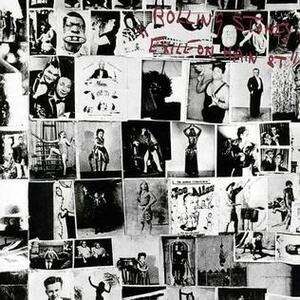
Rolling Stones – Exile on Main Street

When Messy Production Meets Muddled Genius

Look, I get it. “Exile on Main Street” is supposed to be the holy grail of rock and roll excess turned into artistic triumph. It’s the album where the Rolling Stones, holed up in a French mansion like debauched aristocrats avoiding the revolution, somehow stumbled into greatness. But after multiple listens, I’m left wondering if we’ve all been a bit too generous with our rose-tinted headphones.

Let’s start with what works, because there’s undeniably some magic here. “Tumbling Dice” is a perfect fusion of gospel, blues, and rock that feels like sin and salvation holding hands on their way to church. The way Jagger’s vocals weave through the guitar lines is like watching a master pickpocket work a crowded street – you know you’re being robbed, but you can’t help admiring the technique.

“Sweet Virginia” captures something so authentically American that it’s almost absurd coming from a bunch of British guys hiding from the tax man in France. It’s like they distilled every country-western bar in Texas into five minutes of acoustic glory. And “Happy,” with Keith Richards’ weathered vocals, is probably the most honest thing on the album – a simple rock song that knows exactly what it is.

But then there’s the problem of production, or should I say, the lack thereof. The album often sounds like it was recorded underwater while the mixing board was having an existential crisis. Some call it atmosphere; I call it audio mud. Sure, “Let It Loose” is a great song… if you can hear it through what sounds like several layers of vintage denim.

The bloat is real. At 18 tracks, “Exile” feels like someone couldn’t make the tough decisions in the editing room. For every “Rocks Off” that kicks like moonshine, there’s a “Turd on the Run” that, well, lives up to its name. “Casino Boogie” feels less like a finished song and more like a jam session that accidentally got pressed onto vinyl.

What’s frustrating is how the album’s flaws and virtues are often the same thing. The loose, sloppy production that makes “All Down the Line” feel alive and dangerous makes “I Just Want to See His Face” sound like it was recorded in a haunted shower stall. The raw, unfinished quality that gives “Ventilator Blues” its edge makes other tracks feel half-baked.

The album’s influences are worn so openly they’re practically indecent – blues, gospel, country, soul – but they’re filtered through such a uniquely dissipated lens that they become something new, if not necessarily improved. It’s like watching someone make gumbo while drunk: the ingredients are right, but the proportions are questionable.

Here’s the thing: the album’s mythology has become inseparable from its music. The tax exile, the heroin, the basement studio, Keith Richards’ pharmaceutical adventures – it’s all become part of how we hear these songs. Strip away the legend, and you’re left with an album that’s brilliant about 60% of the time, interesting 20% of the time, and a muddy mess the rest.

Rating: 6.5/10 – Like a party that peaks too early but refuses to end

Highlights: “Tumbling Dice,” “Sweet Virginia,” “Happy,” “Rocks Off”
Lowlights: “Turd on the Run,” “I Just Want to See His Face,” “Casino Boogie”

Side Note: If this album were a person, it would be that friend who shows up to your house party already wasted, breaks some furniture, tells three brilliant jokes, passes out on your couch, and somehow makes you feel like you had a philosophical breakthrough in the process.

Worth Noting: My opinion here puts me at odds with many rock critics who consider this album the Stones’ masterpiece. Maybe they’re right. Maybe the chaos is the point. Or maybe we’ve all agreed to pretend that confusion is complexity and mistakes are innovation. Either way, “Exile” remains a fascinating mess of an album that you should probably hear at least once, if only to join the debate.

Public Enemy – It Takes a Nation of Millions

A Sonic Revolution in 98 BPM

If a bomb went off in a recording studio while a political science lecture, a James Brown concert, and a Black Panther rally were simultaneously taking place, the resulting explosion might sound something like Public Enemy’s “It Takes a Nation of Millions to Hold Us Back.” Released in 1988, this album didn’t just raise the bar for hip-hop – it took the bar, bent it into a weapon, and used it to assault everything the mainstream music industry held dear.

Producer Hank Shocklee and the Bomb Squad created a wall of sound that makes Phil Spector look like a minimalist. The production is a chaotic masterpiece, a carefully orchestrated car crash of samples, squeals, and sirens that somehow coalesces into head-nodding beats. It’s like they threw a block party in the middle of a revolution and decided to record both.

Chuck D’s voice booms through the chaos like a prophet’s bullhorn, delivering rhymes with the force of a heavyweight’s right hook. His flow on “Bring the Noise” hits you at 98 BPM (beats per minute, though it might as well stand for “bombs per minute”). Meanwhile, Flavor Flav isn’t just comic relief – he’s the yang to Chuck’s yin, the court jester speaking truth to power while wearing a giant clock that seems to say, “Time’s up for the status quo.”

Take “Don’t Believe the Hype” – a track that simultaneously criticizes media manipulation while being catchier than the flu in a kindergarten classroom. Or “Black Steel in the Hour of Chaos,” which turns a prison break narrative into a meditation on conscientious objection and systemic racism, all while sampling Isaac Hayes so effectively it should count as musical alchemy.

The album’s political commentary hits harder than a caffeine addiction. “She Watch Channel Zero?!” dissects media control with the precision of a surgeon wielding a sledgehammer. But it’s not just anger for anger’s sake – there’s a methodology to the madness, a carefully constructed critique wrapped in layers of funk and fury.

What’s remarkable is how fresh it still sounds today. While some political albums of the era now feel like dated time capsules, “Nation of Millions” feels more like a time machine that accidentally landed in the future. The issues it tackles – systemic racism, media manipulation, government surveillance – read like today’s headlines, just with better wordplay and more interesting beats.

The album’s influence is so vast it’s practically geological. Without it, we might not have the political consciousness in modern hip-hop, the dense production techniques of contemporary music, or the courage to make art that’s both provocative and populist. It’s like they created a blueprint for musical revolution and then set the blueprint on fire to light the way forward.

Is it perfect? Well, if you’re looking for easy listening, you might want to keep looking. This album grabs you by the collar and demands attention like a caffeine-addled professor who knows they’re running out of time to change the world. But that’s exactly what makes it perfect – it’s not trying to be comfortable. It’s trying to be necessary.

Rating: 9.5/10 – A sonic Molotov cocktail that somehow gets more flammable with age.

Essential Tracks: “Bring the Noise,” “Don’t Believe the Hype,” “Black Steel in the Hour of Chaos,” “Rebel Without a Pause”

Side Note: If this album were a sandwich, it would be everything in the kitchen thrown between two slices of bread, somehow resulting in the most delicious meal you’ve ever had while simultaneously teaching you about food inequality.

The Clash – London Calling

London Calling: When Punk Found Its Library Card

Look, let’s get something straight – most punk bands in 1979 were still trying to figure out how many safety pins they could stick through their ears before tetanus became a real concern. Meanwhile, The Clash dropped “London Calling,” an album so ambitious it makes most rock operas look like nursery rhymes.

Here’s a band that started out as punk rock firebrands, and somehow ended up creating a double album that casually strolls through reggae, ska, rockabilly, hard rock, and whatever genre you want to call “Train in Vain.” It’s like watching your anarchist cousin suddenly reveal they’ve been taking ballroom dancing classes on the side – shocking, but somehow it works.

The title track kicks things off with that iconic bass line that sounds like doomsday doing the cha-cha. Strummer’s voice comes in like a newspaper headline being shouted through a megaphone during a riot – urgent, raw, and impossible to ignore. The apocalyptic imagery might be bleak, but somehow they make the end of the world sound like something you could dance to.

What’s truly remarkable about “London Calling” is how The Clash managed to expand their musical palette without losing their bite. The reggae influences on tracks like “Guns of Brixton” don’t feel like tourism – they feel essential, organic, like the band absorbed the soul of Caribbean music and filtered it through their distinctly British rage.

The production, courtesy of Guy Stevens (who apparently conducted the sessions like a mad orchestra director on a three-day espresso binge), is nothing short of miraculous. Every instrument sounds like it’s been dragged through the streets of London and emerged stronger for it. The drums crack like gunshots, the guitars slash and burn, and the bass… oh, that bass work by Paul Simonon (immortalized on the album cover smashing his instrument) holds the whole beautiful mess together.

And can we talk about the songwriting? The Clash tackle everything from unemployment to drug addiction to corporate corruption, all while making it sound like the most urgent party music ever recorded. It’s like reading the morning news while doing the Two-Tone ska step – sobering content, but your feet won’t stop moving.

Rating: 4.9 out of 5 Smashed Bass Guitars 🎸

Highs:

  • Genre-bending ambition that somehow all holds together
  • Raw, urgent energy that never feels forced
  • Production that captures lightning in a bottle
  • Political commentary that doesn’t sacrifice danceability

Lows:

  • Some genre experiments work better than others
  • A few tracks that feel like B-sides
  • The nagging feeling that the band would never quite reach these heights again

Final Thought: “London Calling” is the sound of punk rock graduating from throwing bottles to organizing a revolution – and somehow managing to make both seem equally vital. It’s a masterclass in how to expand your horizons without losing your edge, proof that growing up doesn’t have to mean selling out. The Clash didn’t just make a great album – they made a blueprint for how rebellion can age gracefully.

Kanye West “My Beautiful Dark Twisted Fantasy”

My Beautiful Dark Twisted Fantasy: When Ego Achieves Its Final Form

Look, let’s address the elephant-sized ego in the room right off the bat – Kanye West might be the most insufferable human being to ever grace a VMAs stage (and that’s saying something). But sometimes, just sometimes, an artist’s messiah complex actually delivers something approaching divine. “My Beautiful Dark Twisted Fantasy” is what happens when someone’s god complex accidentally produces something godlike.

The album opens with “Dark Fantasy,” and immediately you realize this isn’t just another hip-hop record – it’s more like hip-hop’s answer to a Broadway musical directed by Stanley Kubrick while high on baroque architecture. When that choir kicks in asking “Can we get much higher?” the answer is clearly no, because we’re already in the stratosphere, and Kanye’s just warming up.

Then “Gorgeous” drops, and Kid Cudi’s hook sounds like it was recorded in some alternate universe where melancholy is actually a physical substance you can smoke. Kanye’s verses here are sharper than a surgeon’s scalpel, proving that when he’s not busy tweeting about being the next Walt Disney, he can actually rap his absolute ass off.

“POWER” might be the most accurate sonic representation of megalomania ever recorded. It’s like someone turned a god complex into sound waves. That King Crimson sample isn’t just a flex – it’s Kanye basically saying “Yeah, I can make progressive rock work in hip-hop, what are YOU doing with your life?”

And then there’s “All of the Lights” – a song so maximalist it makes Phil Spector’s Wall of Sound look like a garden fence. Rihanna’s chorus sounds like it was recorded in the midst of a supernova, while that horn section could wake the dead and make them dance. It’s utterly ridiculous, completely over-the-top, and somehow absolutely perfect.

“Monster” is where things get really interesting. Nicki Minaj’s verse isn’t just great – it’s the kind of performance that makes you want to throw your phone into the ocean and never attempt to rap again. Even Jay-Z showing up and comparing himself to a sasquatch somehow works, because at this point, why not?

“So Appalled” is basically a luxury rap fever dream, while “Devil in a New Dress” might be the most beautiful thing Rick Ross has ever been adjacent to. That guitar solo comes in like it got lost on its way to a Pink Floyd album and decided to stay because the accommodations were nice.

“Runaway” is the centerpiece, and good lord, what a piece it is. It’s nine minutes of the most beautiful self-awareness about being an absolutely terrible person ever recorded. That distorted outro sounds like what regret would sound like if it learned to sing – assuming regret took AutoTune lessons first.

But here’s the thing – for all its undeniable brilliance, this album is also completely bonkers. It’s like watching someone build the Sistine Chapel while occasionally stopping to eat the paint. The production is maximal to the point of absurdity, the lyrics swing between profound and profoundly narcissistic, and the whole thing feels like it’s constantly on the verge of collapsing under the weight of its own ambition.

Rating: 4.8 out of 5 Solid Gold Ego Trips 👑

Peaks:

  • Production so lush it makes the Gardens of Babylon look like a window box
  • Verses that range from hilarious to heartbreaking, sometimes in the same line
  • Features list that reads like a hip-hop infinity gauntlet
  • Actually earning its own grandiosity

Valleys:

  • Occasionally disappears up its own artistry
  • Some interludes that feel like Kanye just couldn’t bear to cut anything
  • The lingering knowledge that this album probably made Kanye even more Kanye

Final Thought: “My Beautiful Dark Twisted Fantasy” is like watching someone successfully juggle chainsaws while reciting Shakespeare and doing quantum physics – it shouldn’t work, it’s definitely dangerous, and you kind of want to tell them to stop, but you also can’t look away. It’s an undeniable masterpiece created by an occasionally unbearable mastermind. In the end, it’s proof that sometimes the line between genius and madness isn’t just thin – it’s nonexistent. And sometimes, just sometimes, that’s exactly what we need.

P.S. – The fact that this album came with a short film that looks like what would happen if Matthew Barney directed a hip-hop video is just chef’s kiss perfect. Because of course it did.

Goal Met: 50 Hours of Learning

Learning is subjective. I learn from reading, from podcasts, from observing and listening but to actively seek out learning for its own sake is something that not a lot of people do. Throughout my life I’ve learned quite a few things simply because of my ADHD – I find something interesting, hyperfocus on it for a few months until I become somewhat knowledgeable/good at it then switch my focus to something else and start the process again. I am very aware of the learning loop needed to become proficient at something and it goes something like this:

This loop repeats until you hit an exit condition – usually when you have satisfied your curiosity, or it becomes too hard to penetrate further into a subject and the time needed to pass that hurdle doesn’t seem worth the trouble. 

Some things I put into the feedback loop I kept going with well after my hyperfocus period:  playing guitar, computer programming/administration (I once wrote a program freehand in a notebook because computers in the library had a time limit), cooking/baking (although I would argue that it broke off into smaller hyperfocus things like pizza, sourdough, grilling, sous vide, smoking, etc.), gardening, and now 3D printing. The list of things I’ve tried that didn’t pan out and are now littering my poor brain is too numerous to count but every now and then some bit of learning becomes relevant to what I’m doing so it’s good to know it isn’t all wasted!

I’ve set learning goals in the past but after a strong start they’ve always tailed off as other things fought for my already scattered focus – I did have a list of the things I wanted to learn that carried over year to year and for this project I was determined to hit that 50 hour mark (arbitrarily picked 50 for most goals because well, I turned 50 – as Thanos would say ‘ perfectly balanced as it should be’ )

I didn’t want to break out work related training vs. personal training since a few of the things I wanted to learn crossed both categories, so I lumped them both into the 50 hour category. I did tag each one with what I thought was the right category (work or personal) just for my own metrics but for the purpose of this post we’re just going to lump them all together. It was a varied bunch of training. I kicked it off with some guitar/music theory classes to better understand music and work on getting my solo skills refined.  There were quite a few pizza related videos as I explored different techniques to refine my pizzaolo skills. In the middle of the year there was a huge chunk of AI training which I found super interesting and as soon as that week of training was done, I was looking for ways to incorporate AI into this effort.  A nice percentage of the 50 hours was spent on application training to help me upskill at work (and at home since a lot of it carried over to home projects). Finally to prepare me to write the short story/novella that has been bouncing in my head for a few years I’m following Brandon Sanderson’s lectures on writing which are fascinating. 

The biggest thing I learned? You need to carve out time for learning. I picked the slowest day on my work calendar and blocked out an hour for work-related training. It didn’t always work as I was really busy this year but enough times it gave me the space to learn the things I needed to. I also blocked out an hour once a week at home to work on the personal stuff and again sometimes that didn’t work but it did enough times for me to hit the 50 hour mark and keep going. I won’t stop at 50 – there’s still some things I need to learn and there’s 4 months left so I’ll come back and update this at the end of the project. 

Goal Met: No Sugar for 30 Days

Well OK this one was hard, not because I’m a sugar junkie (although I do enjoy a treat now and then) I have two small kids who always want a little sweet dessert and a wife who helpfully bring home leftover treats from events and just leaves them on the counter in plain view. So, I knew I couldn’t do the tried and true ‘get all the sugar out of the house’ methodology. 

I did however remove the one treat that my brain craves more than all others: Reese’s peanut butter cups. I collected up all the Reese’s in the candy jar and put them deep in the pantry where I couldn’t see them (oddly enough next to the jar of Nutella I was hid from myself a few months back) hoping that one day a curious hobbit would find them and after a battle of wits with a dragon… 

My preeeeecious stored away where I couldn’t be tempted, I set about finding what everyday items secretly had sugar in them and sadly – it’s almost all of them. Sucrose, High Fructose Corn Syrup, Sugar, Dextrose.. all fancy names but all meaning you have processed sugar in your food. I knew this would be an uphill battle, but my cooking skills helped me by allowing me to make more wholesome varieties of food without the added sugar that I could eat. The overwhelming consensus of my kids after eating my ‘real’ macaroni and cheese was; “Daaaaaad we want the boxed version with the pooooowder” so I knew that I couldn’t drag them along on this journey. [Author note: We generally feed our kids whole foods and really limit sugar but there’s just some things that are a key part of childhood and Kraft mac and cheese is one of them] 

Armed with the secret knowledge of the sugar in foods I started the journey. The first few days were fine but then I developed a headache and general malaise that lasted for almost a week. I didn’t have a cold or other illness and had no other explanation other than sugar withdrawal. I did some research, and it backed up my initial hypothesis (Scientific Method Yo!). It was… alarming that I was eating enough sugar to cause physiological reactions when I stopped.  It took almost two full weeks before I started to feel normal again and the cravings which were highest that first week finally dipped off into almost nothing. 

There were a few temptation points that required a force of will – mostly around making banana bread for my kids and kids birthday parties where there were cookies, cakes, cupcakes, and other treats being handed out and I had to verbally say no requiring a stronger exercise of will. One work event had a tray of brownies that were still warm from the kitchen and were right in front of me for almost a full hour as I tried to focus on what the speaker was saying but the smell of brownies was making my brain misfire. 

Other than those few inflection points I was able to control the sugar intake and make it well past the 30 days – it was around 7 weeks total that I broke down and had a slab of fresh baked banana bread because dammit – I just spent a half hour making this thing I’m going to enjoy it! Enjoy it I did… almost ¾ of the loaf scarfed down like a sugar goblin. About an hour later I was having stomach pains and really needed a nap. I guess coming off of a sugar fast and eating a bunch of sugar is bound  to make your body go haywire 

I’ve watched enough documentaries and read enough articles to understand fully how damaging excess sugar intake can be. I had real world experience by experimenting on myself to show that yes – it does have a physiological effect.  However – there is a simple joy (and a nice hit of dopamine) in an Italian pastry or slice of pie and that joy is valuable to quality of life.  I’m lucky in that I’m not prediabetic and not at risk so I can have sugar without immediate harm but I want to stay that way so I’ve really cut back on my intake. I rarely have sugar during the week easily turning away when offered and, on the weekend, if I want something sweet I don’t turn to prepackaged candy or chemical laden treats I make it myself. I get the joy of cooking/baking, I can ensure quality whole ingredients are used and I get to spend time with my kids teaching them how to bake which is the tiny dollop of awesome on the top of this whole experiment. 

Goal Met: No Diet Soda for 30 days

I’m not sure what this was going to be like – I was a diet soda fiend. I had a diet coke for breakfast, for lunch, and a couple with dinner. Was it the caffeine? The bubbles? The familiarity? I was going to find out – and the results were.. inconclusive. 

The first thing I did was change the scope of this to include all diet drinks (not just soda) so no diet ice teas, zero sugar Gatorade or other sugar free drinks. This also crossed over with the no sugar month so I really was limited to water or unsweetened iced tea. Why I decided to do both is a mystery. I guess go hard or go home? Scientific principle? Lack of planning? Masochism?

I quickly learned to love unsweetened iced tea and specifically McDonalds iced tea. It just hit different than a lot of the bottled teas. I made my own iced tea using various blends and had a few hits and a lot of misses (there’s just some teas that don’t blend well) and quickly became an aficionado of sparkling waters. Which led me down a rabbit hole into BPA, can linings and which canned seltzers were the best to drink (Waterloo is my acqua frizzante of choice) 

The sparkling water was clutch for this as the habit of cracking open a can with my meals was hardwired into my brain and by replacing it with something that is also fizzy went a long way to reducing the cravings. The mouthfeel and texture of diet coke is hard to replace but it wasn’t enough to put me off seltzers as a replacement. Over time I got used to the seltzers as a stand in and as the weeks went by the urge for soda kept decreasing. 

So, I got to the end of the 30 days and I wasn’t really sure what, if any, changes giving the diet soda up made on my health or mood. One of the major factors is that without my nightly two diet coke dinner I was getting tired a lot early and even falling asleep at my desk which was alarming to me. Were my sleep habits that bad? Was all that caffeine at night altering my sleep patterns? I suspect being out of shape at the beginning of the year was a big culprit and that all that caffeine was propping me up and masking the need for me to work out more and get better rest. [This turned out to be true: regular exercise and diet changes led to more energy.  I still fall asleep on the couch watching sports but that’s a middle-aged man’s right and I refuse to relent it!]

Other than the tiredness nothing else really changed – but I just felt like reducing the overall consumption can only be good for my health. So, while I still drink diet soda occasionally, it’s mostly at night with my dinner or when I’m out at a restaurant. I’ve replaced most of the other occasions with plain or sparkling water. 

Overall, I’m glad I did it just so I could see for myself if my consumption of diet soda was impacting my health in any way. While the scientific data out there seems to back me up I still can’t shake the feeling that reducing my intake is a good thing so my plan is to keep it to the 1-2 can a day habit I have now and maybe over time phase that out as well. 

Goal(s) Met – Visit the Martin Museum / Obtain Dream Guitar

When I saw the Nirvana unplugged set on MTV I fell in love with the Martin D-18 guitar. The sounds coming out of it were mesmerizing and the tone was so pure in how it blended with Kurt’s voice. I swore that one day I would own a D-18. At the time I could definitely not afford a Martin so I kept hacking away at my Yamaha guitar. I bought a few guitars over the 30 years since that unplugged show – including one of Martin’s DX line – a made in Mexico laminate wood line that was nice but just didn’t reach the levels that true D-18 could. I enjoyed playing these and even put an electric guitar into the mix but I still remembered my vow to one day own that guitar. Not the one that Kurt played obviously – that went for six million dollars at auction which is a bit out of my budget!

Sometime during that 30 years I learned that there’s a Martin museum and factory tour that’s only about two hours away. I kept telling myself I should go up there, see how guitars are made and maybe play some of the high end guitars in the pickin’ room for a bit to scratch that itch but the years ticked by and I never found time to go and I kept playing the guitars I had but secretly wishing they were a Martin D-18 (shh.. don’t tell them)

So for the 50for50 goal I decided I was going to go to the museum, play those guitars and then go get that Martin I’ve wanted for 30 years as a 50th birthday gift for myself.

I took the long drive to Nazareth PA and rolled up to the museum and was surprised at how modern and high tech it was. While I was waiting in the lobby I grabbed a Martin OM off the wall (they were available for play) and strummed a few tunes. There it was.. that Martin sound. The day was starting off good!

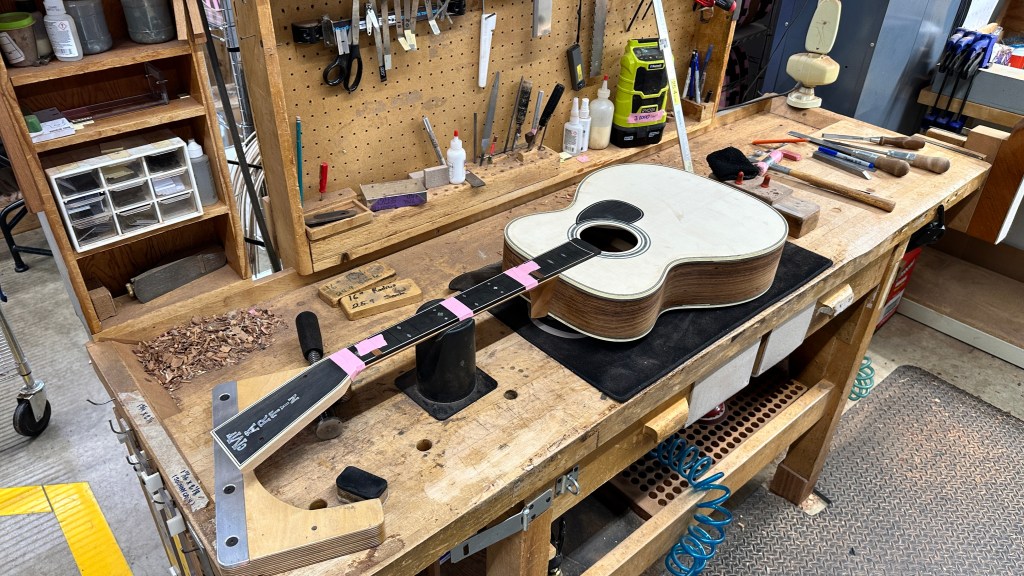
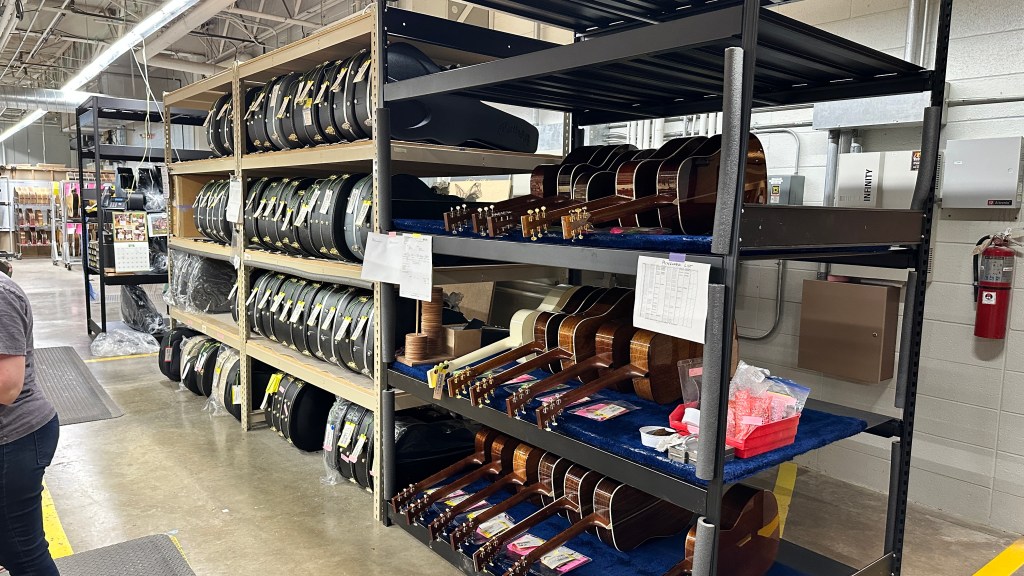
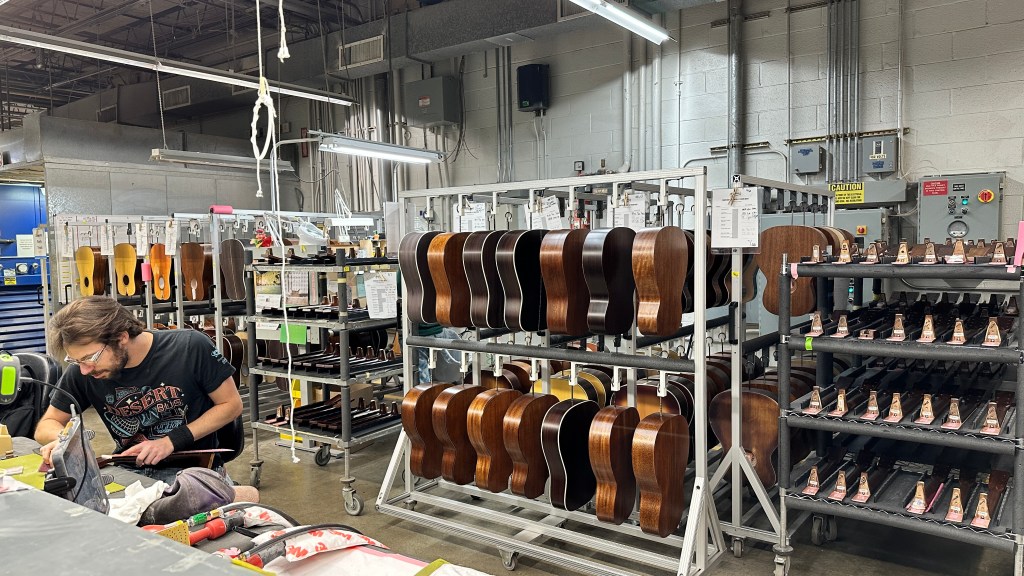
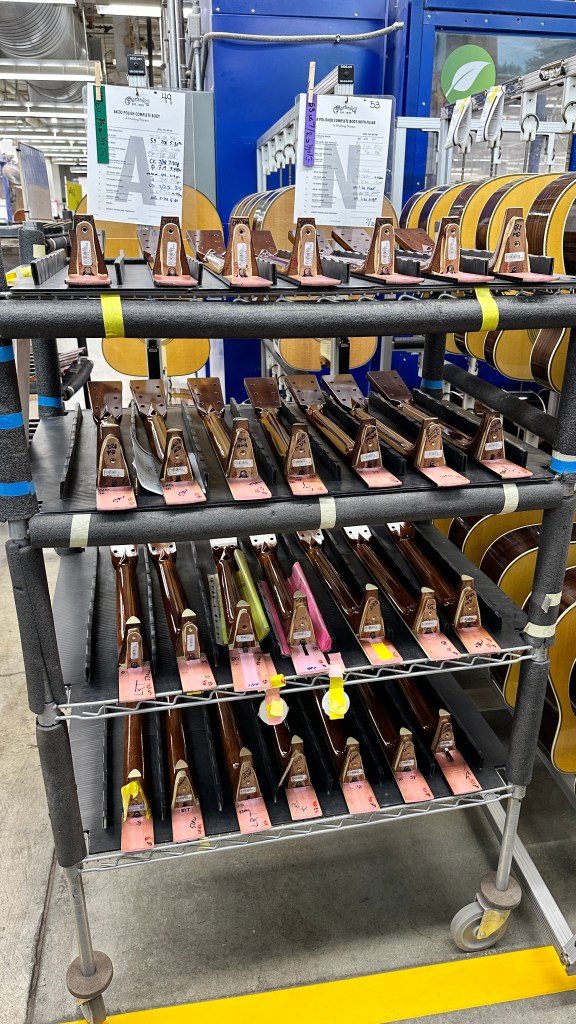
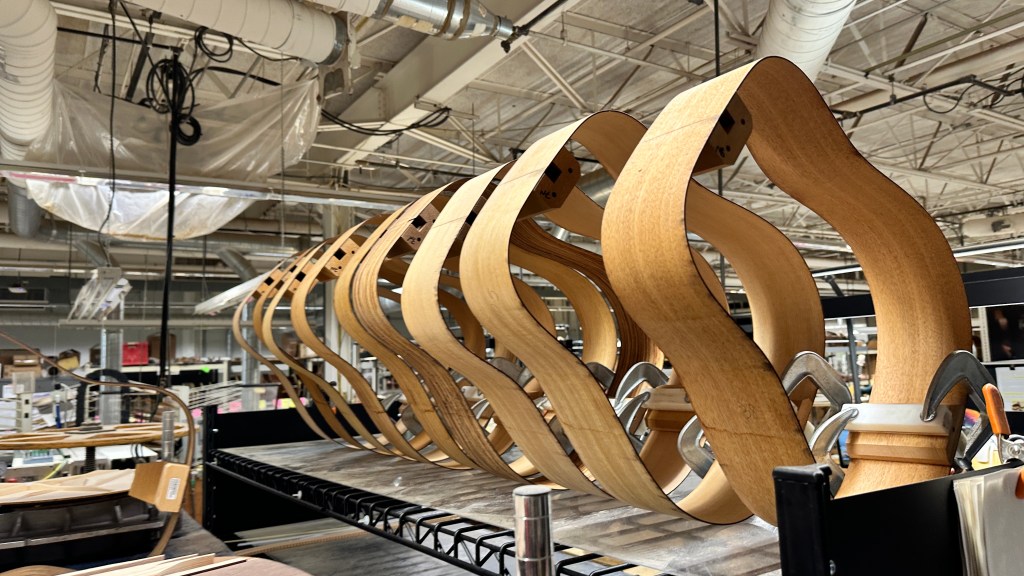
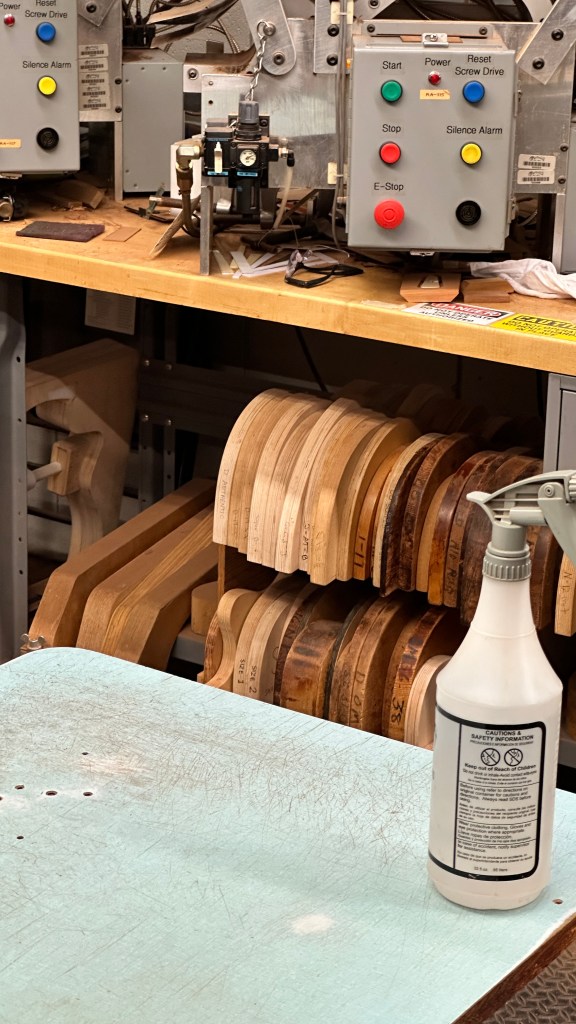
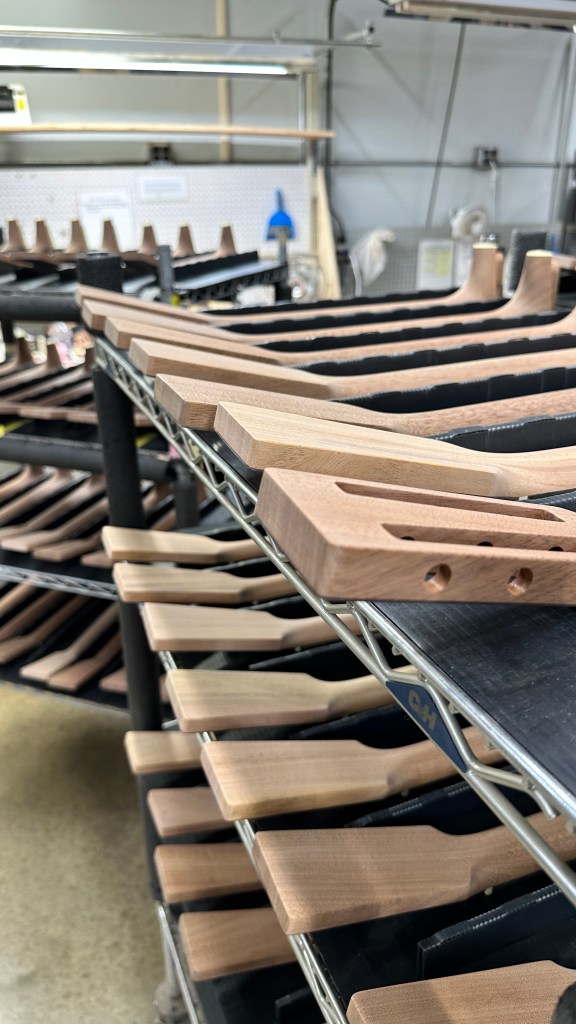
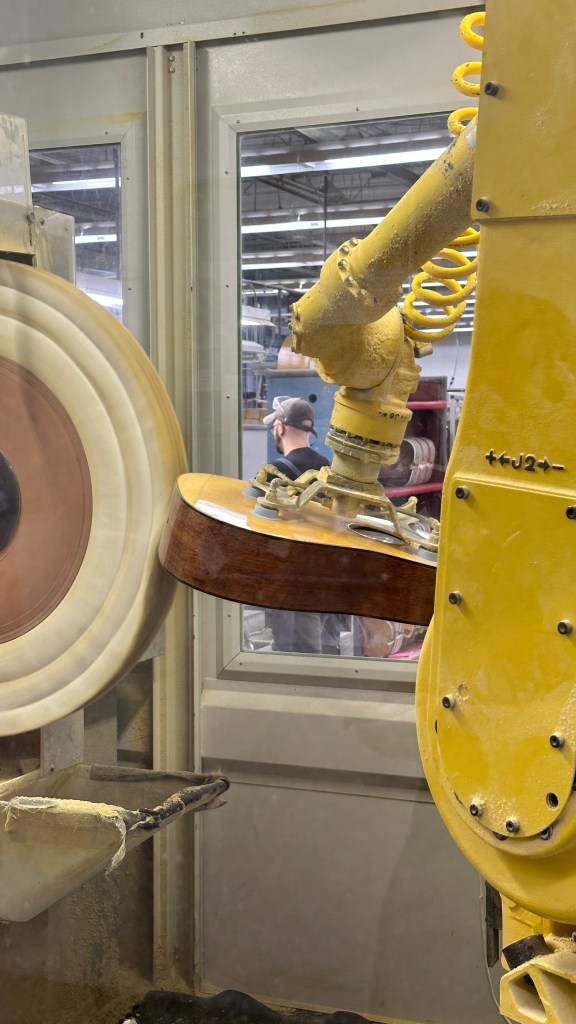
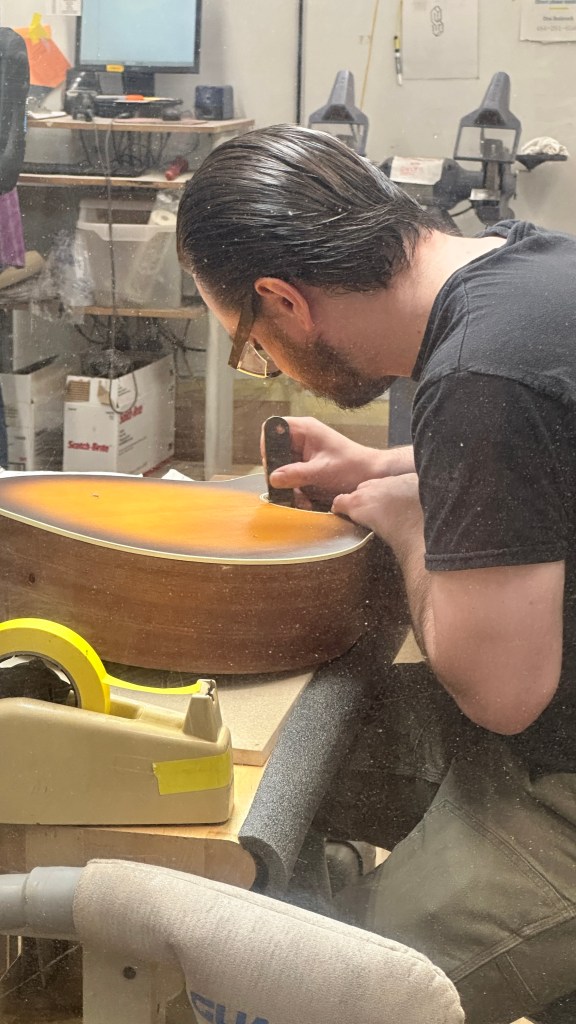
The tour was great – they had a tour guide walk us through the factory floor speaking to the history of the Martin family and the care they take to hand make all their guitars. It was really cool to see how all the individual parts are fabricated and then how they are all put together by hundreds of craftspeople. It was interesting to see how they did leverage a bit of technology (robot buffers/polishers) to perform functions that didn’t really require a specific skill set.

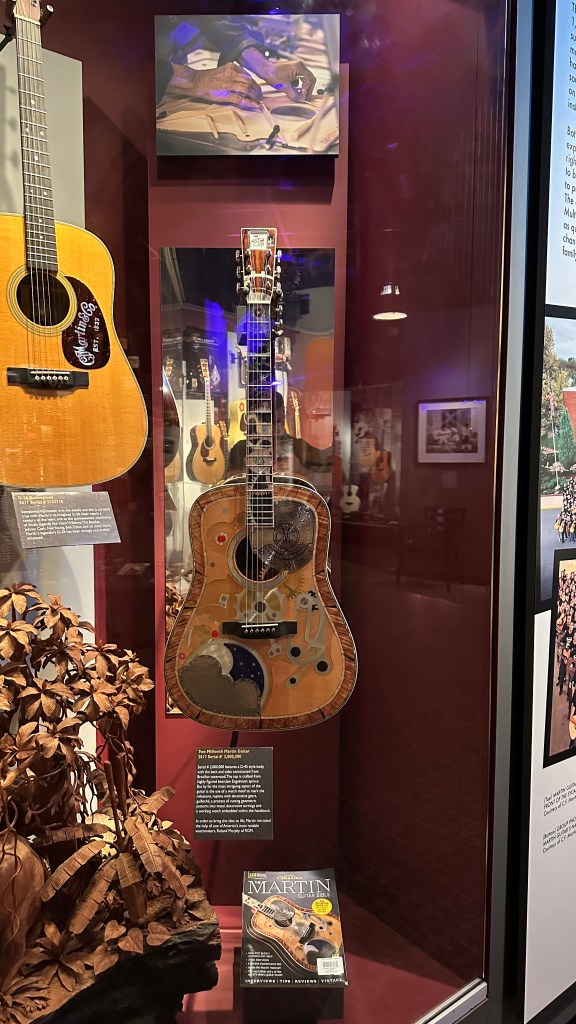
Once the tour was over I went to the museum to see all the artifacts on display -especially the one millionth and two millionth showpiece guitars. Simply gorgeous inlays and artwork. Once I was done learning about the history of Martin I popped into the Pickin’ room to strum out some tunes and test drive some of the guitars they had in the room. The D28 was really nice but I preferred the mid tones of the D-18 to match my voice better.

Inspired by the tour I arranged to buy and pickup a D18 from my local Music store – I took it home and proceeded to, as John C Mellancamp says, play it ’til my fingers bled. I love that guitar and I don’t play anything else now. I’m learning a few Nirvana unplugged songs just as a tribute to what started my love of this guitar.

Here’s my new baby (don’t worry kids I still love you more.. but it’s close!)

Here’s a variety of shots from the factory tour and museum in no particular order