NY Rangers vs St Louis Blues

Blues 5, Rangers 2

I’ve always enjoyed watching Hockey at MSG knowing that a day ago it was a basketball court. It’s always amazing to me that they manage to switch over the entire arena in such a short amount of time. (https://www.wsj.com/video/quick-change-artists-transform-the-garden/86D21535-0721-4EB7-AB8F-DB3F9371921E)

For this game I scored some nice seats through my Chase visa card – they were in the upper area but they had a TV at my seat so I could watch the highlights and replays but then I noticed that I could change the channel and also get.. Monday Night Football?! What a great sports night! MSG is always a fun place to visit. Super easy to get to as it’s right off Penn Station and lots of food choices and upscale drink options (Why yes, I’d love a whiskey and soda to go with my Paulie G’s slice and hot honey chicken sando.)

The game started out great with an early Rangers score. This is only the second time I’ve ever seen a Rangers game and my favorite part each time is the crowd singing after each goal

However it quickly fell apart as the Blues kept up the attack – it was relentless and the Rangers just didn’t seem to have an answer for it. When they went up 5-2 I checked the train schedule and saw a train leaving in 15 minutes and made the executive decision to speedwalk out of the stadium back into the train station just making the train – walking on right before the doors closed.  The only clutch performance in NY that night.

I’ll be honest – I’m not a hockey guy so I wasn’t expecting much from these games but I found I really enjoyed being there as the energy was electric and hockey fans are just.. Salt of the earth. Sometimes they are more entertaining than the game.  The time flew by and I found myself invested in the game and cheering at certain points when the home team did something awesome. Not much of that here tonight unfortunately but I can respect the hockey arena experience more now for certain.

Goal Met – Learn 10 new songs

I’ve been playing guitar for over 30 years. I would say I’m an intermediate guitarist, mostly in that I can play a lot of songs, I can sight read a tab and pick it up quick.  I know my scales and chords, circle of fifths and all that jazz but I never really took that leap as time to play was almost always limited.

It wasn’t so in the beginning. I bought a guitar when I first moved out into the wide world and was living on my own (for the young folks who might be reading this: There was a time you could have an entire apartment to yourself and still have money left over for stuff like buying a guitar). It was a green Yamaha acoustic that was on clearance at Sam Ash and since the price was right I walked out the store took it home and to quote Bryan Adams ‘played it until my fingers bled’

Since I had moved to a new area and didn’t have may friends yet I would come home from work, put on the Yankee game and just practice. That amounted to 2-3 hours a day for almost six months. I took a few weeks of lessons but eventually stopped going as the teacher and I didn’t really vibe and there wasn’t anyone else in the area giving lessons. I turned to the internet and guitar books (this was before YouTube)  and got pretty good at playing and even started coming up with my own tunes.

The only thing I couldn’t do for some reason was sing while I played. It just seemed terribly difficult because if I focused on my singing my guitar playing would suffer and vice versa. It wasn’t until maybe 10 years in that I understood I needed to KNOW the guitar parts, anticipate the chord changes and riffs. Practice so much that it was completely automatic. Once I did that I found I could focus on singing the song and the my hands would handle the guitar part on their own.

Around this time I got together with some friends for an impromptu jam band where we’d get together and play songs and that really taught me more about music and timing that almost all the time I spent practicing alone. It really drove home the fundamentals of music. I think mostly it was the singer yelling at me that I’m in the wrong key or tempo.

The issue I wanted to solve is that  I would sing from the tabs or lyric sheets since it was easier. I mean, I was at home practicing and I’d just print out music and words and use them. I’d bring printouts of tabs to the jam sessions (in almost all the videos everyone else is jamming out and I’m staring at my music stand). Whenever I was out or someone asked me to play something, I couldn’t. I could play them the music but I couldn’t dredge up the words without bringing them up on my phone. I also notice that without memorizing the songs you miss some of the distinctive vocal parts that make the song unique and it wasn’t as dynamic as it should be.

I determined that I was going to change that – and this year I was going to memorize at least 10 songs so I could play them all from memory. I know I put it as 10 new songs but there were a few songs I already knew  that I really wanted to master. It’s a bit of an eclectic list but here’s the songs I masted this year and a little bit on why I chose them.

Brown Eyed Girl – Van Morrison: The ultimate campfire song. The opening riff is iconic and the chord progression is really simple. The vocal parts weren’t demanding and everyone loves belting out the ‘sha-la-la’ parts.  The lyrics weren’t overly complex and there weren’t any technical parts to bog down the learning process so this one was a good one to start with.

Stick Season – Noah Kahan: I was perusing some guitar website looking for tabs for other songs when I noticed this song was suddenly in the top 10 most visited tabs on the whole site. I popped over to YouTube to see what the fuss was and I absolutely loved it. It was a complicated song to pick up as it starts with an annoyingly complicated finger picking part, has some frustrating barre chords and the vocals had a syncopated rhythm to them that was very difficult to pickup. I ended up just listening to it over and over during my commute to work until I nailed down the timing. Once that all came together it’s now one of my favorite songs to play and sing

A Bar Song (Tipsy) – Shaboozy: This was the song of the summer for 2024. It was all over the radio and for some reason my kids absolutely love this song (my son crushed it during a Karaoke party). It was super catchy and only had 4 chords so I decided to entertain my son I’d learn the song so he could sing along with me.  I picked up the song in a couple of days. It was probably the quickest I learned a song this year but I just clicked with it and it stuck in my memory better than any of the other songs. It’s super fun to play and a really good singalong song (also a Karaoke staple for me now)

Elderly Woman Behind a Counter in a Small Town – Pearl Jam: I’m of an age where grunge was the formative music of my generation and Pearl Jam was one of my favorite bands. This song off their second album quickly became one of my favorite songs so I wanted to add it to my repertoire.  The chords were pretty basic and it was a fun challenge trying to replicate Eddie Vedder’s complex voice.

Wild World – Cat Stevens: Ok Ok, I’m a junkie for 1970’s singer songwriters. Cat Stevens, Carole King, Harry Chapin, James Taylor and their contemporaries. I just always loved Cat’s voice and this song always resonated with me for some reason. This one was a bit more complicated as there were a lot of chord changes and the riff during the chorus gave me fits.  I had learned it in the past as part of the jam band but never tried to sing and play at the same time and it was a real challenge. It took me a long time to figure out how the vocals laid over the chords but it was a really great feeling the first time I nailed it start to finish.

Merry Christmas – Ed Sheeran / Elton John: I needed a holiday song in my catalog and this one is such a great tune and the lyrics are full of hope and love. It’s my wife’s favorite Christmas song so I wanted to learn it for her. It was a challenge transposing the piano chords into guitar chords but I dug up a few vides on YouTube that explained it and after a little trial and error I was able to work it out. I found that as I was singing I would modulate my voice to better match Ed Sheeran then drop it a bit to be closer to Elton John during his parts. It was subconscious but I decided I really liked that contrast and kept singing it that way. The intro and outro were a bit different but the rest of the song used the same chords so it was pretty easy to learn.

Norwegian Wood – The Beatles:  I mean, I have to have a Beatles song, right? I was in the mood for some music from the fab four and was streaming their songs when Norwegian wood started playing and I remember 30+ years ago that it was one of the very first songs I tried teaching myself how to play. I wondered how much of it I remembered so I grabbed my guitar and I was shocked that I could play that little melodic riff on the first try. I guess that lived in my brain somewhere permanent! I spent a week or so memorizing the words and learning how to sing over the melody and chords.

Black – Pearl Jam: My absolutely favorite song of all time. Such a powerful performance and the lyrics are so stark and painful. This one is a bit of a more vocal challenge as Vedder really pushes his voice on the bridge and completely commits to the random noises.  The chords were super easy to learn but the vocal timing was a big pain as he draws out certain words over two bars instead of one and I needed to figure out how he worked that into the overall song. It took some time but I figured it out. It’s still a challenge to belt out “You’ll be the star in someone else’s sky but whyyyy whyyyyyy can’t it be miiiiIIIiiine” I find I can’t start with this song. I need to be warmed up and maybe have one or two teas with honey before I can commit to that level of anguished yelling.

The Book of Love: The Magnetic Fields / Peter Gabriel: Steven Merrit of Magnetic Fields adds a gravitas to this song that I found poignant but man did Peter Gabriel crush this song when he covered it (Check out the final episode of Scrubs where the song is featured). It’s such a simple song but the lyrics are beautiful. My favorite part is “the book of love is filled with music, in fact that’s where music comes from, some of it’s transcendental some of it’s just really dumb.. I love it when you sing to me” the song has only 4 chords that repeat but are played in a pretty complicated way. Once I figured out how to replicate that (with a mix of plucking and strumming) it all came together.

Perfect – Ed Sheeran: One of my wife’s favorite songs. I really wanted to learn this one to play for her. It helps that Sheeran’s voice is well within my vocal range and he tends to keep the guitar parts pretty straightforward. It was actually really difficult to memorize the vocals as in each section they are similar but he changes the wording a bit and I keep messing up and repeating the first verse instead of the correct words. It took a really long time before I was able to get it right and I was annoyed that he shoehorned in a  few extra syllables in the second chorus “Darling, just hold my hand, be my girl, I’ll be your man” I mean it took a long time for me to try to replicate the timing of that (I had to just keep doing that part over and over until I worked it out). It seems small but it upsets my timing and rhythm a bit so I wanted to ensure I transitioned into the next line with the right timing.

Overall I’m excited at the progress I made. I make sure at least a couple times a week I practice the entire set and if I make an error I stop and practice the part I made the mistake at over and over until I’m sure it’s resolved. I also made a playlist and a few times a week I’ll just listen to it on my commute and sing along to try to keep my memory sharp.

Oh, and I also bought a metronome – you’d be surprised at how effective it can be in keeping you in time.

[I have a few more I’m working on but haven’t completed yet and I’ll update this list as appropriate. ]


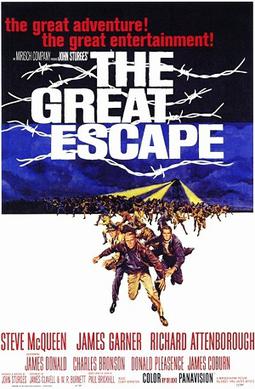
The Great Escape

The Great Escape: When “Sorry, Wrong Tunnel” Isn’t an Option

You know a movie’s going to be good when it opens with the Germans essentially creating their own all-star team of escape artists by putting all their most troublesome POWs in one camp. Talk about a self-fulfilling prophecy! Based on a true story from World War II, “The Great Escape” follows a group of Allied prisoners planning the mother of all prison breaks from a supposedly escape-proof German POW camp.

Enter Squadron Leader Roger Bartlett (Richard Attenborough), nicknamed “Big X,” who’s basically the Steve Jobs of escape planning, minus the turtlenecks. His ambitious plan? Not just to get a few men out, but to orchestrate a mass exodus of 250 prisoners. The goal isn’t just escape – it’s to cause such massive disruption that the Germans will have to devote valuable resources to hunting them down. Now that’s what I call thinking big!

The plan involves not one, not two, but THREE tunnels (dubbed Tom, Dick, and Harry – because apparently “Eenie, Meenie, and Miney” were taken). The film introduces us to a fantastic ensemble cast, each with their own specialty. There’s Flight Lieutenant Danny Velinski (Charles Bronson), the “Tunnel King,” who can probably dig his way out of anything except a bad movie contract. Captain Virgil Hilts (Steve McQueen), the “Cooler King,” spends so much time in solitary confinement he probably has his mail forwarded there. And let’s not forget Flight Lieutenant Bob Hendley (James Garner), the “Scrounger,” who could probably get you a five-course meal in the middle of a desert.

The movie excels at showing the painstaking detail of the escape preparation. They’re not just digging tunnels; they’re running a full-scale underground operation (pun intended). The prisoners create a complete intelligence network, manufacture civilian clothes, forge documents, and even build a hidden railway system for removing dirt. It’s like watching a very serious episode of “MacGyver” set in the 1940s.

The actual escape sequence is a masterclass in suspense. After months of preparation, things naturally don’t go quite according to plan (because what fun would that be?). The tunnel comes up short of the woods, leading to one of the most nerve-wracking scenes as prisoners have to make breaks for it in full view of the guard towers. It’s like the world’s deadliest game of “Red Light, Green Light.”

The film then follows various escapees as they attempt to make their way through Nazi Germany. Some succeed, most don’t, and the film doesn’t shy away from showing the brutal consequences of the escape attempt. The famous motorcycle chase scene with Steve McQueen (actually performed by both McQueen and stunt rider Bud Ekins) is pure Hollywood additions to the true story, but it’s so incredibly cool that we’ll give them a pass.

The Verdict

“The Great Escape” is that rare breed of war film that manages to be both entertaining and respectful of its serious subject matter. Director John Sturges strikes a perfect balance between showing the ingenuity and sometimes even humor of the prisoners while never letting us forget the deadly stakes of their endeavor.

What I Love:

  • The phenomenal ensemble cast, each bringing their character to vivid life
  • The meticulous attention to detail in showing the escape preparation
  • Elmer Bernstein’s iconic and jaunty musical score that you’re probably humming right now
  • The way the film builds tension gradually but relentlessly
  • How it manages to inject moments of humor without undermining the gravity of the situation

What Could’ve Been Better:

  • The 172-minute runtime might test some viewers’ patience (though I’d argue every minute is necessary)
  • Some historical liberties taken, particularly with the American presence in the camp
  • The motorcycle sequence, while awesome, is pure Hollywood fantasy

The film serves as both a testament to human ingenuity and determination, and a memorial to the real men who risked (and in many cases gave) their lives in the actual escape. It’s a perfect example of how to make an entertaining war film that doesn’t trivialize the actual history it’s based on.

If you haven’t seen it yet, what are you waiting for? But maybe don’t watch it right before a long flight – all that tunnel footage might make you a bit claustrophobic.

Rating: 4.5 out of 5 dirt-filled trouser legs

Worldwide Food Tour – Brazil

Pão de queijo, or Brazilian cheese bread, is a delightful small, round bread roll that’s remarkably crispy on the outside and wonderfully chewy and soft on the inside. What makes it particularly special is that it’s naturally gluten-free, made with tapioca flour (also called manioc or cassava flour) instead of wheat flour.

The bread gets its distinctive taste and texture from the combination of tapioca flour, eggs, milk, oil, and generous amounts of cheese – traditionally Minas cheese, though parmesan is commonly used today. When baked, the tapioca flour creates a uniquely chewy, slightly elastic texture that’s quite different from traditional wheat breads.

The history of pão de queijo dates back to Brazil’s colonial period in the 18th century. It originated in the state of Minas Gerais, where African enslaved people working in the mines would sift cassava root to make tapioca flour. Initially, the rolls were made simply with tapioca flour and water. As dairy became more available in the region, cheese was incorporated into the recipe, creating the beloved snack we know today.

Today, pão de queijo is enjoyed throughout Brazil and beyond, particularly for breakfast or as an afternoon snack with coffee. It’s sold everywhere from corner bakeries to coffee shops, and many Brazilians make it at home. The rolls are best enjoyed warm, right out of the oven, when the cheese is still gooey and the exterior is at its crispiest. Their popularity has grown internationally, particularly as awareness of gluten-free diets has increased.

NY Jets vs Seattle Seahawks

Seahawks 26, Jets 21

Life is tough as a Jets fan. The team hasn’t been to the playoffs in 15 years. They continually botch the draft and no premium free agents want to play for this clown show of a team. I thought that when they signed Aaron Rodgers and drafted Sauce Gardner, Breece Hall and Garrett Williams they would at least make the playoffs (I wasn’t delusional enough to have Super Bowl aspirations) but for Rodgers to blow up his Achilles 4 minutes into game 1 of the 2023 season was the most Jets thing to ever happen.

So cut to 2024 – Rodgers is back and they’re looking pretty good in training camp. Then Hassan Reddick decides to hold out leaving us without a premium edge rusher. He holds out until almost 3/4 of the season is over and comes in very rusty and has little impact at all. They fire Saleh 5 games into the season and elevate Jeff Ulbrich as head coach. That is not the move of a serious team. That’s the move of a petulant owner in Woody Johnson whose ego can’t stand the team continuing to lose.

So the Jets who up to that point were playing well and with a few lucky bounces would be 4-1 instead of 2-3 (These are facts – against my better judgement I watch every game) fall off a cliff. The defense which was good under Saleh starts to degrade.  The offense is still putting up scores but not enough. They usually hang around in games but find small ways to lose (Well the bills put up 40 on them but that’s an outlier.. Oh wait the Steelers put up 37? My mistake)

Then they go full Jets and win a few of the final games to fall further back in the draft. That’s a classic Jets move that they pull out at the end of almost all their terrible seasons.

Take all this backstory and lets focus in on this game. It’s December and it’s really cold. Mid 20’s at MetLife feels like planet Hoth due to the constant wind. We were in the upper deck for this one and even chemical hand warmers weren’t doing much to keep the frostbite at bay.

The Jets go up early with a classic Rodgers to Davante Adams touchdown. The extra point is blocked (classic) They follow this up with a shovel pass for a touchdown. The Seahawks counter with a long drive for a touchdown then on the ensuing kickoff it’s returned by the jets for 98 yards and the touchdown. On the kickoff the Seahawks receiver fumbles the ball, picks it up starts to run and fumbles it again – Jets recover! So exciting.. I was pumped up – barely feeling the cold!

That’s when my friend turned to me and said “Hey man.. Hey. I know how you’re feeling it right now and yes this is exciting. But these are the jets and they will fuck this up”. I refused to let his negativity affect my good mood and told him “Nah man – this game is all Jets we’re gonna go up 28-7 here and that’ll be that”

Two plays later Leonard Williams picks off Rodgers and rumbles all the way down the field for a pick 6.  Let me be clear: a 291 DE Picked off Rodgers and managed to return it all the way down the field for a touchdown. I mean – that’s peak Jets. He’s an ex-Jet too which makes it even more depressing. (To add a cherry to this insult Sundae Leonard Williams also sacked Aaron Rodgers late in the 4th quarter to end a pretty exciting comeback attempt. )

The second half was all Seahawks – they tacked on a touchdown and the Jets couldn’t muster any more points and the game ended on a 4th and forever that Rodgers had to launch early because the defensive line was about to murder him.

This game as an instant Jets classic and I mean that in the worst way.

At least we’re getting a new coach, a new GM, and probably a new QB unless Aaron returns from the darkness 20 years younger somehow.. But I doubt that’s going to happen.

NYFC vs. Philadelphia Union

Philadelphia 5, NYFC 1

Soccer shouldn’t be played in baseball stadiums. It should be played in stadiums designed for the sport. The sightlines at this game were poor and the seating was weird as some people were right on top of the action and others were too far away. They did close the upper deck at Yankee stadium for this however which was the right call. The game wasn’t that crowded and I think the stadium might be why (getting to the Bronx on a weeknight can be a nightmare sometimes)

That out of the way lets talk about the game. Philly took it to NYFC they scored early and often and it seemed like they had no answers for Philly’s attack. Philly’s keeper was unreal stopping some amazing shots and Freese made so many mistakes gifting Philly goals.  I suspect my bad Yankees luck bled into this game as I was technically at Yankee stadium and for that I apologize to NYFC fans.

I did like the energy that the drum section brought to the game they were out there the entire game with chants and songs just pumping up the crowd – even when NYFC was down 5 goals. I was there with a Philly fan who was secretly cheering on their team and since I’m more of a Red Bull fan (if I had to pick an MLS team – my true fandom is SSC Napoli in Serie A)  I just enjoyed that is was a high scoring game with a lot of action. I got a chance to go to field level to watch warmups which was a really cool experience. The food was good (I mean it’s the same food as Yankee stadium) but nothing that was a signature item like some teams have. I think aside from the weird configuration of stuffing a soccer pitch in a baseball stadium they took pains to make it a good fan experience and I appreciated all the little touches they made to try to imprint their brand on a place that wasn’t really theirs.

I read that NYFC is creating a soccer only stadium (https://www.newyorkcityfc.com/stadiumgallery) in Willets Point which looks pretty fantastic. It’s three years out but once it opens I may make the trek to Queens to check it out! (Hopefully on a day the Queens night market is active!)

Lawrence of Arabia

Let me take you through this monumental epic, which manages to feel both impossibly vast and deeply personal at the same time.

The story begins with Lawrence’s death in a motorcycle accident (ironically, after surviving all his desert adventures), before rewinding to show us the eccentric British Army lieutenant in Cairo, where his insubordinate attitude and scholarly interests make him stick out like a sore thumb in the military bureaucracy. When he’s assigned as a liaison to the Arab Bureau, it’s partly because his superiors just want him out of their hair – though this “punishment” ends up changing the course of history.

The film really hits its stride when Lawrence meets Prince Feisal (Alec Guinness, doing his best with a role that really should have gone to an Arab actor). Here we get our first glimpse of Lawrence’s growing infatuation with Arab culture and his emerging messiah complex. His first major achievement – crossing the “uncrossable” Nefud Desert to attack Aqaba from the unprotected landward side – establishes his reputation for achieving the impossible. The scene where he returns alone into the desert to rescue a lost man perfectly encapsulates his character: equal parts messiah, madman, and military genius.

The film takes a darker turn after Lawrence’s capture in Daraa. The sequence where he’s “entertained” by the Turkish Bey (though the film leaves the specifics of his torture and possible sexual assault ambiguous) marks a crucial turning point. O’Toole’s performance becomes increasingly unhinged after this – his eyes take on a wild gleam, and his actions become more brutal. The massacre of the Turkish column at Tafas, where Lawrence orders “no prisoners,” shows just how far he’s fallen from the idealistic officer we met in Cairo.

What makes the film particularly fascinating is how it refuses to either fully condemn or celebrate Lawrence. Was he a liberator or another kind of colonizer? A friend to the Arab people or someone playing at being Arab? The film suggests all these things might be true simultaneously. There’s a brilliant scene where Lawrence stares at his reflection in a dagger’s blade, seemingly unsure of who he’s become – it’s worth the price of admission alone.

The political machinations in the background are equally compelling. While Lawrence is leading his Arab army to victory, the British and French are already carving up the Middle East in the Sykes-Picot Agreement. There’s a devastating moment when Lawrence realizes his promises of Arab independence were hollow – he was just another tool of colonial policy, despite his genuine belief in the Arab cause.

The film’s technical achievements are staggering. Consider the famous cut from Lawrence blowing out a match to the rising desert sun – it’s taught in every film school for a reason. The battle sequences are enormous in scale (no CGI armies here – those are thousands of real extras), yet Lean never loses sight of the human drama. The scene where Lawrence walks atop a captured Turkish train, soaking in the adulation of his men, tells us everything about his psychological state without a word of dialogue.

Special mention has to go to the supporting cast. Omar Sharif’s Sherif Ali transforms from would-be assassin to Lawrence’s closest friend and voice of reason. Anthony Quinn’s Auda abu Tayi steals every scene he’s in, bringing a magnificent swagger to the Bedouin chief who fights “because it is my pleasure.” Even smaller roles, like Claude Rains as the craftily pragmatic Mr. Dryden, add depth to the political intrigue.

The film’s handling of Lawrence’s sexuality and gender expression was remarkably ahead of its time, even if it couldn’t be explicit about it. His famous line “The trick is not minding that it hurts” takes on multiple meanings, and his delight in wearing Arab robes speaks to someone finding freedom in a different cultural identity.

Most impressively, “Lawrence of Arabia” manages to be both a celebration and critique of the heroic narrative. It shows us Lawrence’s achievements in all their glory while simultaneously questioning the very nature of Western intervention in the Middle East – questions that remain painfully relevant today. By the end, when Lawrence returns to England in his British uniform, looking uncomfortable and out of place, we understand that he’s a man who belongs nowhere – too Arab for England, too English for Arabia, and perhaps too mythologized to ever be truly understood.

The film’s nearly four-hour runtime might seem daunting, but like the desert itself, it operates on its own sense of time. This is cinema at its most ambitious and accomplished – a character study painted on the largest possible canvas, where the spectacular desert vistas serve as both backdrop and mirror to Lawrence’s internal journey. It’s a reminder of what movies can achieve when they aim for true greatness.

★★★★★ David Lean’s sweeping masterpiece “Lawrence of Arabia” swallows you whole like the endless sea of sand that serves as its majestic backdrop. Peter O’Toole, in his career-defining role, brings T.E. Lawrence to life with a hypnotic intensity that borders on feverish – watching his transformation from prissy British officer to messianic desert warrior feels like witnessing someone slowly lose their grip on sanity under the merciless Arabian sun. The supporting cast is a feast of powerhouse performances, with Omar Sharif’s dignified Sherif Ali and Anthony Quinn’s thunderous Auda abu Tayi practically vibrating with barely contained energy. Yes, this epic runs longer than a camel can go without water (216 glorious minutes), but every frame of Freddie Young’s cinematography is a painting come to life, from shimmering mirages to the most famous match cut in cinema history. Maurice Jarre’s sweeping score doesn’t so much accompany the film as possess it. While modern viewers might raise an eyebrow at white actors playing Arab roles (a problematic Hollywood tradition that persisted far too long), the film’s exploration of colonialism, identity, and the price of greatness remains startlingly relevant. Lean’s direction transforms what could have been a stuffy biographical film into a psychological odyssey that’s both intimate character study and grand spectacle. Like the desert itself, “Lawrence of Arabia” seems to exist outside of time – massive, mesmerizing, and absolutely essential.

Worldwide Food Tour – Russia

Shchi is a traditional Russian cabbage soup that has been a cornerstone of Russian cuisine for over a thousand years. The basic version combines fresh or fermented cabbage with meat broth (typically beef), root vegetables like carrots and potatoes, onions, and aromatic herbs. In leaner times or during Orthodox fasting periods, a meatless version called “empty shchi” was common.

The soup has a hearty, tangy flavor profile, especially when made with sauerkraut. The long, slow cooking process allows the flavors to meld together, creating a rich broth where the sweetness of carrots balances the sourness of cabbage. It’s often finished with fresh dill and a dollop of sour cream (smetana).

Russian black bread (černyj xleb) is the traditional accompaniment to shchi. This dense, dark sourdough rye bread gets its distinctive color and complex flavor from a combination of rye flour, molasses, and sometimes coffee or dark beer. The bread often includes caraway seeds and has a slightly sour taste with a thick, chewy crust and moist interior.

The history of these foods is deeply intertwined with Russian culture. Shchi was so fundamental to Russian diet that there’s an old saying: “Щи да каша – пища наша” (Shchi and porridge are our food). The soup’s popularity was partly due to cabbage being one of the few vegetables that could be preserved through the long Russian winters.

Black bread similarly became a staple because rye could grow in the harsh Russian climate where wheat often failed. During the Siege of Leningrad in World War II, the recipe for the city’s black bread was adjusted to include sawdust and other fillers, becoming a symbol of both survival and suffering.

Together, shchi and black bread represent the resourcefulness and endurance that characterized much of Russian peasant cuisine, creating deeply nourishing food from available ingredients that could sustain people through harsh winters and difficult times.

NY Mets vs Atlanta Braves

Braves 4, Mets 0

The Mets were on a five game winning streak and looking great. Then  I rolled into town and brough my bad sports luck with me, Goodbye 5 game win streak hellooo losing streak!

I had went with some Mets fans to the game as they were celebrating the 25th anniversary of the Mercury Mets. An ill-fated promotion in 1999 where the Mets pretended they were from the planet Mercury coming to earth to play baseball (https://www.mlb.com/video/taking-a-look-back-at-the-mercury-mets) – with some really awful uniforms and hilarious graphics on the big board.

Since I had no horse in the race I sat back and just enjoyed the nice summer day as Marcel Ozuna and Matt Olsen took it to the Mets back-to-back. Citi Field is really nice and I like that its walkable all around the stadium. Around the fourth inning we got up and went out to the center field patio which we discovered to our delight had a whiskey bar. We hung out there watching the game and enjoying our scotches for a while being entertained by the drunken Mets fans just doing their Mets thing.

After an inning or two hanging out with the people we went back to our seats (picking up some 40’s on the way) an caught the rest of the game which was quiet until the bottom of the ninth when the Mets started to rally putting a few men on base for Pete Alonso. My friends started to get excited – were they going to be present for an epic Mets comeback? Sadly no, as Alonso struck out stranding the runners Mets lose.

Overall the vibe at Citi Field was great I’d go to more games there but getting to Queens is a major hassle. After the game we popped over to the Queens night market and I highly recommend it. There was such a variety of different cuisines offered up at a reasonable cost. I sampled about 10 different cuisines while I was there taking furious notes for my ‘cooking around the world’ goals (although I doubt I could source Yak meat locally)

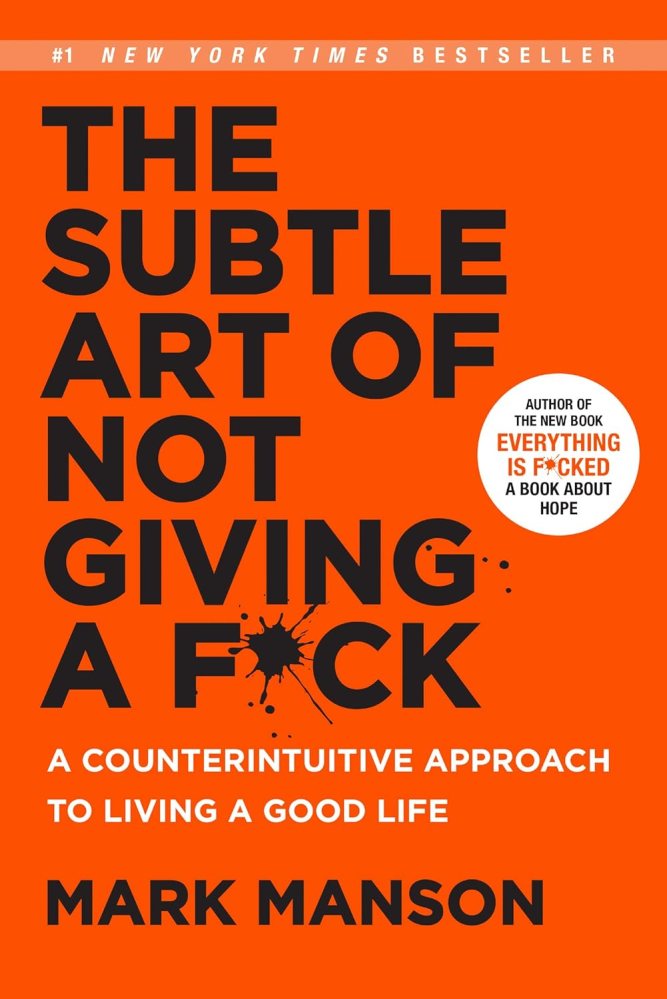
The Subtle Art of Not Giving a Fuck: Mark Manson

Ever had that friend who tells you to “just chill” while you’re having a meltdown? Mark Manson is that friend, except he’s actually making sense – most of the time. His counterintuitive self-help book has sold millions of copies, proving that people really do give a fuck about not giving a fuck.

Manson’s central premise is refreshingly blunt: life is hard, you’re not special, and that’s perfectly okay. In a world saturated with toxic positivity and Instagram-perfect lives, his message hits like a cold shower – uncomfortable at first, but oddly refreshing once you get used to it.

The book’s core argument is that we should be selective about what we care about rather than trying to not care at all (plot twist!). It’s like having a limited number of fucks to give, and Manson is teaching us how to invest them wisely. Think of it as mindfulness for the cynical millennial.

Key Takeaways:

  • Happiness comes through solving problems, not avoiding them
  • Values are the key to meaningful living, but many of us have garbage values (ouch)
  • Suffering is inevitable and useful; it’s what gives life meaning
  • You’re not special, and that’s liberating
  • Taking responsibility for everything in your life is the real key to not giving a fuck

The Good:
Manson has a gift for making complex philosophical concepts digestible through crude humor and pop culture references. He’s basically what would happen if Nietzsche wrote for BuzzFeed, and somehow it works. His writing style is engaging, and his use of personal anecdotes adds authenticity to his arguments.

The book succeeds in cutting through the noise of traditional self-help wisdom. Instead of promising the moon, it tells you to be content with your slice of earth. It’s anti-self-help self-help, and there’s something deeply satisfying about that paradox.

The Critical Points:
Here’s where things get interesting (and where I might ruffle some orange-covered feathers):

  1. The Irony Paradox: For a book about not giving a fuck, it spends an awful lot of time telling you exactly what to give a fuck about. It’s like a zen master who won’t stop talking about silence.
  2. Oversimplification: While the book’s accessibility is a strength, it sometimes veers into oversimplification territory. Complex psychological concepts get reduced to quippy one-liners, which might leave readers with an incomplete understanding of deep-seated issues.
  3. Privilege Blind Spots: Manson’s perspective sometimes comes across as that of a relatively privileged person who has the luxury of choosing what to care about. Not everyone has that freedom.
  4. Repetitive Arguments: By the halfway point, you’ve basically got the message. The rest feels like variations on the same theme – kind of like this criticism about repetition being repetitive.
  5. The Style Can Be Grating: The constant profanity and forced casualness might work for some readers, but it can feel like your uncle trying to be “hip with the kids.”

The Bottom Line:
Despite its flaws, “The Subtle Art” is a valuable addition to the self-help genre, if only for its willingness to punch holes in the bubble of relentless positivity. It’s like a literary version of that friend who tells you what you need to hear rather than what you want to hear.

The book isn’t perfect, but then again, that’s kind of its point. It’s a self-help book for people who are skeptical of self-help books, and in that niche, it excels. Just don’t expect it to revolutionize your life – and again, that’s kind of the point.

Rating: ⭐⭐⭐⭐ out of 5
Perfect for: Millennials tired of being told to manifest their best life
Not for: Those who can’t handle profanity or prefer their self-help with a side of crystals

Final Thought: In a world where everyone’s trying to sell you the secret to eternal happiness, there’s something refreshing about a book that tells you to lower your expectations – even if it does so while secretly raising them.