NY Yankees vs. Tampa Bay Rays

Tampa Bay Rays 9, Yankees 1

Let me start by pointing out I’m a huge Yankees fan. I’ve been one since I was a kid and I always try to go to a few games each year even after I moved pretty far from the stadium. I managed to get to three Yankees game this year and they lost every one.  Not close games either – they got curb stomped each time and one of them was a world series game!

This was one of the few games I saw this year where I had a bunch of friends with me and I was hoping for an exciting game but was got was an epic meltdown by Nestor Cortes and a Yankee offense that completely disappeared. Now I’ll give Bradley his due – he was on fire leading up to this game and he continued that by shutting down the Yankees but they looked completely lost out there (a worrying trend that continued into the post season)

Watching the Rays tee off on Yankee pitching gave me Bugs Bunny vibes [insert gif] – It was frustrating to watch all parts of the team fail to show up. It’s like this all the time against Tampa – it seems like the Rays have the Yankees number. In fact – I usually try not to go to games when Tampa is in town for that very reason but when you are trying to coordinate the schedules of actual adults with actual responsibilities you take what you can get!

I mean it was still a day game at Yankee stadium with my boys so we had made our own entertainment since the product on the field wasn’t doing it for us and enjoyed the time we were there  – anytime I’m at the stadium is a good time in my book and the Yankees did eventually end up in the world series…

Which they lost to the Dodgers in embarrassing fashion. 

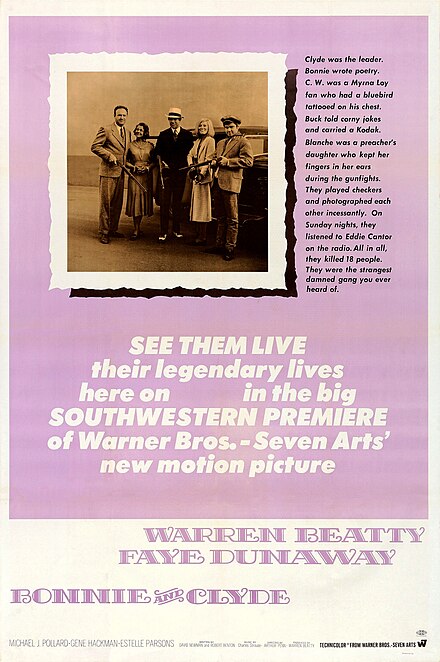
Bonnie and Clyde

In 1931 West Dallas, Bonnie Parker finds Clyde Barrow attempting to steal her mother’s car. Rather than being alarmed, she’s intrigued by his dangerous edge. When Clyde reveals his prison time and shows off his gun (subtlety isn’t his strong suit), Bonnie is captivated. He seals the deal by robbing a store just to impress her, and suddenly this small-town waitress sees her ticket out of a life of serving coffee and settling for mediocrity.

Their early crime spree is more comedy than criminal masterstroke. Clyde’s first attempt at a bank robbery goes sideways when there’s no money in the bank – turns out the Depression hit everyone hard. They start small, knocking over grocery stores and gas stations, with Clyde fumbling his way through hold-ups while Bonnie cheers from their stolen getaway cars. There’s a particularly telling scene where Clyde can’t even park properly during a robbery, much less shoot straight.

The Barrow Gang really takes shape when they pick up C.W. Moss, a gas station attendant who knows cars better than he knows common sense. Then comes Clyde’s brother Buck, fresh out of prison himself, with his wife Blanche, a preacher’s daughter who’s about as suited for crime as a penguin is for the Sahara. Her constant hysteria provides an interesting counterpoint to Bonnie’s cool-as-a-cucumber approach to their lifestyle.

The film delves into some fascinating character dynamics, particularly around Clyde’s impotence (both literal and metaphorical – the film’s not exactly subtle about this symbolism). Bonnie’s frustration with their physical relationship leads to one of the most intimate scenes in the movie – and it involves a Coca-Cola bottle, of all things.

Their rise to fame is meticulously detailed. They take photos like celebrities, with Bonnie hamming it up with a cigar and gun, creating iconic images that would make their way into newspapers across the country. They even have a brief encounter with a farmer whose house has been repossessed by the bank – a scene that positions them as Robin Hood figures, even though their robberies were more self-serving than philanthropic.

The violence escalates gradually but significantly. What starts as warning shots turns into casualties, with each death hardening them a little more. There’s a particularly brutal scene where they kidnap a young cop, share laughs with him, then have to kill him – a moment that shows how far they’ve fallen from their early romantic notions of being outlaws.

The beginning of the end comes at their hideout in Joplin, Missouri. A shootout with the police leaves two officers dead, but they escape with rolls of film that would later become famous photos of their gang. However, their luck starts running thin. A subsequent shootout at a motor court proves catastrophic – Buck takes a bullet to the head but doesn’t die immediately, leading to scenes of Blanche’s devastating breakdown as she watches her husband slowly slip away.

The final act is set in motion by C.W.’s father, Malcolm Moss, who makes a deal with the authorities. The ambush is meticulously planned by Frank Hamer and his team, who wait by the side of a rural road in Louisiana. The famous ending sequence shows Bonnie and Clyde sharing a look – a moment of unspoken understanding – before their car is riddled with enough bullets to make Swiss cheese jealous. Director Arthur Penn films their deaths in a balletic slow motion that somehow manages to be both brutal and beautiful.

Throughout the film, there’s a recurring theme of Bonnie’s desire for fame and recognition. She writes poetry about their exploits, ensures their stories make the papers, and seems more concerned with how history will remember them than with the morality of their actions. In a darkly ironic twist, she gets her wish – just not quite in the way she imagined.

The film also weaves in subtle commentary about the media’s role in creating celebrities out of criminals, the economic desperation of the Depression era, and the death of the American frontier spirit – all themes that resonate surprisingly well even today. Though at its heart, it remains a story about two kids playing at being outlaws until the game becomes all too real.

★★★☆☆ “Bonnie and Clyde” revolutionized American cinema with its bold blend of violence and romance, even if some of its performances now feel as theatrical as a high school production of “Romeo and Juliet.” Warren Beatty and Faye Dunaway attack their roles with the subtlety of a tommy gun, chewing through scenes with wild-eyed abandon that occasionally threatens to overshadow the film’s groundbreaking narrative. Gene Hackman provides a more measured performance as Buck, though Estelle Parsons as Blanche seems determined to shatter every window in Texas with her piercing screams. Yet despite these melodramatic tendencies, the film’s importance cannot be overstated – it helped usher in New Hollywood with its frank depiction of violence, sexuality, and moral ambiguity, while its influential editing techniques and unflinching finale remain powerful even today. The story of these Depression-era outlaws may be heightened by its performances, but its examination of celebrity culture, violence, and American mythology laid the groundwork for countless films to follow, making it an essential piece of cinema history, even if you occasionally need to turn down the volume.
Pacers at Nets

Nets 115, Pacers 111

I remember when the Nets were in Jersey – they were kind of a second class team for most of my childhood memory but I always kinda rooted for them as one of the two Jersey teams (them and the Devils) and they had a few good years that were exciting to watch (I really enjoyed how Jason Kidd moved the ball).  When they moved to Brooklyn I stopped paying attention. They didn’t get a lot of TV time and the Barclay’s center was a pain to get to. They had a small resurgence in the first few years when they signed Durant, Irving, and Harden but while they were all transcendent players, as a team it just never clicked and after a few years that big three broke apart.

I was going to be in NYC for another event so I decided now’s a good a time as any to check out the Barclays center. I grabbed a resale ticket and hopped on the subway to begin my trek out to Brooklyn. I had to switch a few times but it was nice that the subway station is right under the stadium so all I had to do was walk out and it was right there.

I must say the arena really is beautiful – I really liked the curved architecture and the interiors were modern and had some really diverse food and drink choices. I was pleasantly surprised at how easy it was to walk around and get to my seat (compared to some arenas where it felt like a cattle chute)

The game was pretty exciting – a back and forth affair that was fast paced and high scoring (a good palette cleanser for that awful sixers/knicks game). It was interesting to me how interactive the non-game elements were compared to more conservative teams. They had dance crews, flag teams, contests, and at the half they had some local rappers come out and spit some verses. I felt like they were intentional in making it a more local grounded product than those guys over at MSG. I felt like they understood that young fans need constant entertainment to stay engaged and they were leaning into it.

As much as Halliburton annoys me as a fan he was on fire and pretty much carrying the Pacers. There were a few really standout plays – notably the fake pass/windmill dunk by Claxton and the full court alley-oop that Toppin slammed down. The score was close at the end and Halliburton tried to bring them back but a long three pointer clanged off the rim and the Nets got the board sealing the win and stopping the furious comeback attempt.

I enjoyed my first visit to the Barclay’s center – it is a good place to watch some basketball. Too bad it’s such a pain to get to from where I live.

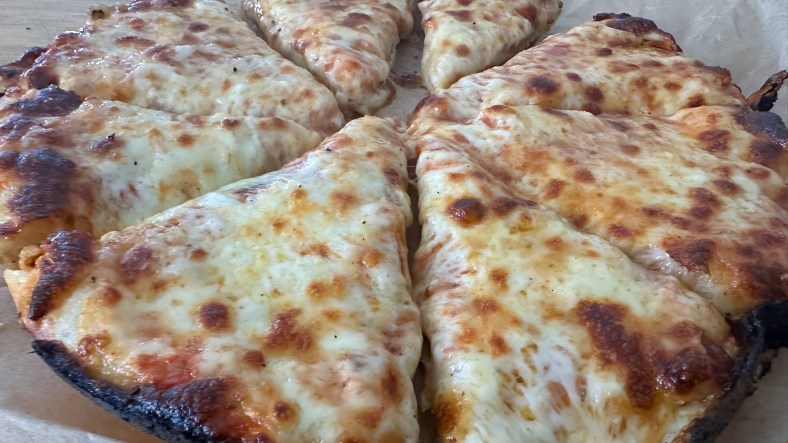
Argentinian Pizza

In Buenos Aires, pizza isn’t just food – it’s a cultural institution that rivals the city’s famed steakhouses. Born from the massive Italian immigration wave of the late 19th and early 20th centuries, Argentine pizza evolved into something distinctly its own, reflecting both its Italian roots and the abundance of its new home.

The defining characteristic of Argentine pizza is its cheese – and lots of it. While Neapolitan pizzas use a restrained amount of mozzarella, Argentine pizzerias pile on thick layers of mozzarella, often using locally produced quesillo that creates the signature chewy, stretchy texture locals call “correoso.” The cheese doesn’t just cover the pizza; it blankets it completely, often approaching a half-inch in thickness.

The crust provides another point of departure from Italian tradition. Argentine pizza bases are thicker than Neapolitan style but thinner than Sicilian, with a texture closer to focused bread. This hearty base is necessary to support the generous toppings that characterize the style. The dough is often enriched with fat, creating a more tender crust that still maintains enough structure to handle the weight of its abundant toppings.

Perhaps most distinctive is the “media masa” (half dough) variant, where the usual crust is doubled in thickness. This style, particularly popular in Buenos Aires’ pizzerias, creates something closer to a cheese-topped focaccia than a traditional pizza. It’s often served as a starter or late-night snack, demonstrating how thoroughly pizza has been integrated into Argentine dining culture.

Toppings reflect local tastes and ingredients. The “fugazza,” a direct descendant of Genoese focaccia, comes loaded with sweet onions and sometimes without tomato sauce. The “fugazzeta” adds that distinctive thick layer of cheese to the onion-laden base. Another popular variant is the “fainá,” a chickpea flatbread served atop the pizza slice – a custom that originated in Genoa but has been preserved in Argentina while fading in its homeland.

The pizza is typically eaten at traditional pizzerias where it’s served on metal trays and often consumed standing at high tables. Unlike the individual pies common in Italy and America, Argentine pizzas are generally large and shared, reflecting the communal dining culture of the country. The slices are cut smaller than their American counterparts, encouraging sharing and sampling of multiple varieties.

This adaptation of Italian pizza represents more than just culinary evolution – it’s a metaphor for Argentine culture itself, where European traditions were transformed by local abundance and preferences into something uniquely porteño. In every overflowing slice of mozzarella and generous portion of fainá, you’ll find the story of immigration, adaptation, and the creation of a new culinary tradition that pays homage to its roots while proudly asserting its own identity.

This went over very well – who knew that loading an entire block of cheese onto a pizza would be a hit? The dough was chewy but with crispy edges providing a counter texture. The sauce was tangy and reminiscent of NY pizza. It was one of the pizzas that is likely to enter a more permanent rotation once I go back to my regularly scheduled pizza program.

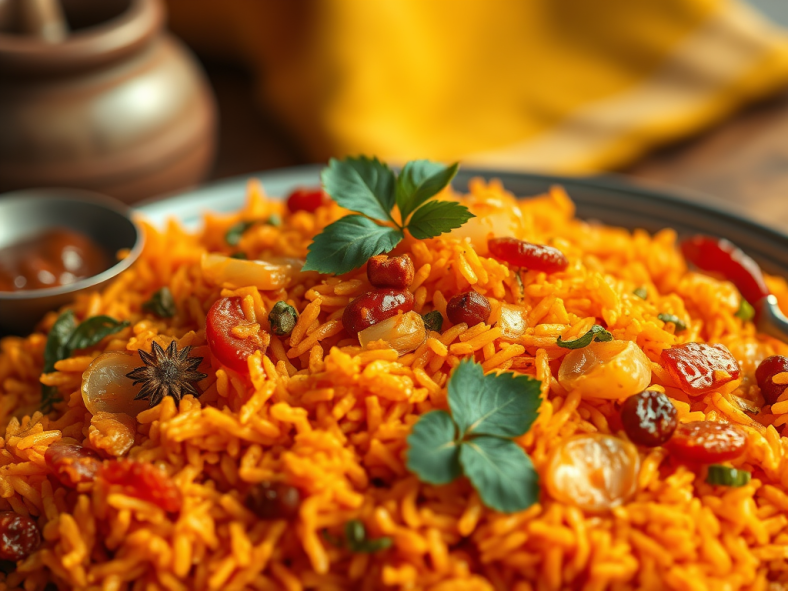
Worldwide Food Tour – Nigeria

Jollof rice is a beloved West African dish consisting of rice cooked in a rich tomato-based sauce with onions, peppers, and a complex blend of spices. The rice absorbs the sauce as it cooks, taking on a distinctive orange-red color and intense flavor.

The dish typically includes garlic, ginger, thyme, curry powder, and sometimes Scotch bonnet peppers for heat. Regional variations exist – Nigerian Jollof often uses long-grain rice and a smokier flavor, while Ghanaian Jollof tends to use jasmine rice and a different spice profile.

Jollof’s origins are traced to the Wolof people of Senegal, where it was known as “thieboudienne.” It spread throughout West Africa during the Mali Empire’s trading period. Today, it’s a source of friendly rivalry between West African nations, particularly Nigeria and Ghana, over who makes the best version.

The dish is essential at celebrations and gatherings, from weddings to family dinners. Its popularity has spread globally, becoming a symbol of West African cuisine and cultural identity.

Detroit Pizza

Detroit-Style Pizza: Motor City’s Square Slice Revolution

In the pantheon of American pizzas, Detroit-style stands apart – a testament to industrial ingenuity and the city’s automotive heritage. Born in the post-war boom of the 1940s, this distinctive square pie first emerged at Buddy’s Rendezvous, where automotive parts trays, originally used to store small machine parts, were repurposed as pizza pans. These blue steel pans, with their high sides and excellent heat conductivity, would become the cornerstone of a new pizza tradition.

What sets Detroit-style pizza apart is its architectural approach to layering. Unlike traditional pizzas, it begins with a thick, high-hydration dough that, when baked, creates a light, airy crumb structure reminiscent of focaccia. The high edges of the industrial pans allow the dough to climb during baking, creating a caramelized crust that pizza enthusiasts call “the crown.” This crust, when properly executed, offers a satisfying crunch that gives way to a chewy interior.

Perhaps most iconoclastic is the layering sequence. Wisconsin brick cheese, a semi-soft cheese with a high butterfat content, is cubed rather than shredded and spread edge to edge. During baking, the cheese melts into every corner of the pan, creating the signature caramelized edges that Detroit pizza is famous for. The sauce, rather than forming the base, is typically applied last in thick, bold stripes across the top – a technique known as “racing stripes” in homage to the city’s automotive culture.

This reversal of the traditional pizza construction isn’t mere novelty. The cheese-first approach allows the fats to protect the dough from becoming soggy, while its direct contact with the hot pan creates a lacy, crispy cheese crust that has become the style’s hallmark. The late application of sauce ensures it remains bright and vibrant, providing a fresh contrast to the rich, caramelized underpinnings.

The style remained a regional specialty for decades, beloved in Michigan but relatively unknown elsewhere. However, in the past decade, Detroit-style pizza has emerged as a national phenomenon. Artisan pizzerias across the country now offer their interpretations, while major chains have introduced Detroit-style options to their menus. This expansion hasn’t diluted its character – if anything, it’s strengthened the appreciation for the technical precision required to achieve those perfectly caramelized edges and airy crust.

Detroit-style pizza embodies its city’s spirit – practical in its origins, innovative in its execution, and unapologetically bold in its presentation. It’s a reminder that great food often emerges from the intersection of necessity, available materials, and the creative spirit of working-class communities. In every pan-formed corner and racing stripe of sauce, you’ll find a slice of Detroit’s industrial heritage, transformed into something uniquely delicious.

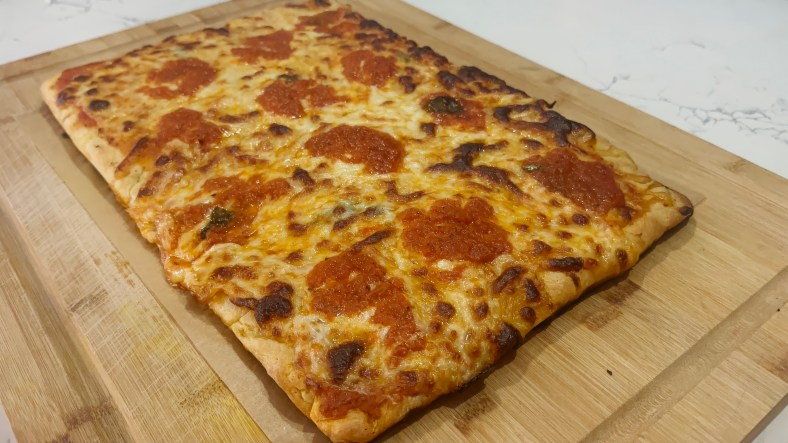
I’ve always been a fan of Sicilian pizzas – especially the sweet sauce that usually accompanies it. The issue here is that it’s so hit and miss when it comes to local pizzerias. There was a spot where I used to live called Joe’s pizza that crushed the Silician pie. I used to crave it and sometimes, even after I moved 40 minutes away, I’d swing back and get it just to scratch that itch. I haven’t been able to find a good Sicilian pizza around me so I’ve been tinkering with different combos of dough, sauce, and cheese to try to recreate that memory of the perfect square slice.

76ers at NY Knicks

Sixers 79 – Knicks 7

I’ve been a Knicks fan since the 90’s with Ewing, Oakley, Starks, and Mason. I’m sure if it wasn’t for Michael Jordan they would have at least one chip from those years. Frustrating as those losses were, the team was so much fun to watch. However, once that team all retired the Knicks proceeded to trot out terrible teams for over 20 years (other than the brief Linsanity period of time which was fun) so I stopped watching them especially when we cut cable and it was difficult to watch them on TV.

So it as surprising to me when they started to get good the last few years. Hiring Thibs as a coach turned out to be inspired and then assembling an all Villanova team was fun (while it lasted) and Brunson turning into a superstar was really great to see. They were exciting again and the team of Brunson, Hart, DiVencenzo, OG, and Hartestein showed amazing chemistry. I started watching games again (When they were streamed on TBS / Max) and when they tore off 10 wins in a row I decided I needed to see them – this could be the year they go to the finals! So I  bought good seats for what should have been a premiere game – the 76’ers coming into MSG and a battle for the East.

What I got was the most godawful game of basketball I’ve ever seen. I’ve see better play at my old man’s pickup league. The score was the lowest total score in the NBA in 15 years. There were more bricks than the third little pig’s house. Airballs all over the place, turnovers, bad fouls and overall poor play dominated the floor like MJ dominated the Knicks in the 90s.  The people next to me in the seats started making bets on who would manage to actually sink a basket. I’m sure Fanduel probably had a prop bet open you could wager on.

Some would say “What a defensive game!”. They would be wrong – there was no defense shots were going up uncontested and they were still clanging off the rims with disturbing frequency. I stayed to the bitter end because the score, as low as it was, was pretty close.

So not only did I witness the bad kind of basketball history – the Knicks lost on top of it. That’s OK though because come playoff time they bested the sixers and this sequence will live on in my memory forever (also damn you for trading the Italian GOAT)

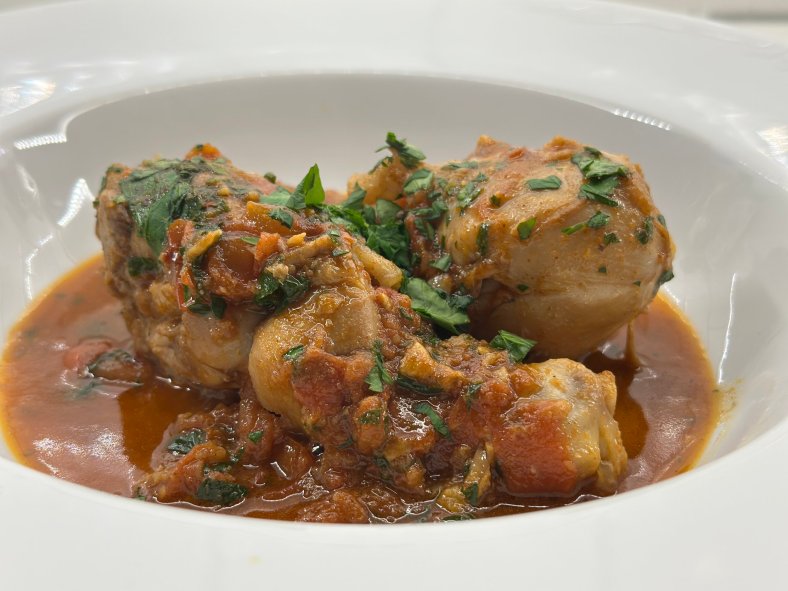
Worldwide Food Tour – Pakistan

Karahi (also spelled Kahari or Kadai) is a rich, aromatic Pakistani/North Indian dish named after the deep, circular cooking pot it’s traditionally prepared in. The dish features chicken cooked in a thick tomato-based gravy with ginger, garlic, and fresh green chilies.

The sauce is characterized by its concentrated, intensely spiced flavor profile, typically featuring whole spices like cumin, coriander, and black peppercorns. Fresh tomatoes are cooked down until they form a thick, clingy sauce that coats the tender chicken pieces.

The dish originated in the North-West Frontier Province (now Khyber Pakhtunkhwa) of Pakistan and gained popularity throughout the subcontinent. It’s typically served sizzling hot in its namesake karahi vessel, garnished with fresh coriander, julienned ginger, and served with naan or roti to scoop up the rich gravy.

Unlike many Indian curries, Karahi uses minimal ground spices and doesn’t typically include onions in its base, giving it a distinctively fresh, bright flavor that highlights the tomatoes and aromatics.

NY Sicilian Pizza

Lets start with a little history lesson.

Step into any New York pizzeria, and among the rotating carousel of thin-crust slices, you’ll likely spot a distinctive rectangular pie with a thick, pillowy crust that commands attention. This is Sicilian pizza – a style that has evolved from its Mediterranean origins to become a beloved fixture in the American pizza landscape.

Unlike its round Neapolitan cousin, Sicilian pizza traces its lineage to sfincione, a focaccia-like bread topped with tomatoes, anchovies, and hardy mountain cheese that sustained workers in Palermo’s ancient streets. The word sfincione itself comes from the Latin “spongia,” meaning sponge – an apt description for the light, airy dough that characterizes this style.

When waves of Sicilian immigrants arrived in New York in the late 19th and early 20th centuries, they brought this hearty tradition with them. But like all immigrant foods, it adapted to its new home. American abundance meant more cheese – typically a generous layer of mozzarella rather than the traditional caciocavallo. The anchovies often disappeared, replaced by more familiar toppings. What remained constant was the distinctive thick crust, achieved through a long fermentation process that creates a bread-like base sturdy enough to support a generous layer of toppings while maintaining its characteristic lightness.

In New York, the Sicilian slice underwent another transformation. Pizzerias began baking it in well-oiled square pans, creating a crispy bottom that contrasts beautifully with the fluffy interior. This technique, combined with the generous portions typical of American pizzerias, turned the Sicilian slice into a filling meal that could sustain workers during long shifts – much like its ancestor did in the streets of Palermo.

Today’s New York Sicilian pizza is a study in textural contrasts. The bottom crust develops a golden-brown crackle from its contact with the oil-slicked pan. The interior crumb stays tender and airy, while the top crust becomes a canvas for sauce and cheese, which often caramelizes at the edges during baking. A proper Sicilian slice should have corners worth fighting over, where the cheese has become one with the crust in a feat of delicious alchemy.

While some pizzerias treat their Sicilian pies as an afterthought, the best practitioners approach them with the same reverence as their round pies. The dough requires careful attention – too much handling will deflate the precious air bubbles that give it its characteristic texture. The sauce needs to be thick enough to avoid soggy bread but not so heavy that it weighs down the crust. It’s a delicate balance that, when achieved, creates something greater than the sum of its parts.

This transformation – from Sicilian bread to New York slice – represents the beautiful evolution of immigrant foods in America. It honors its origins while embracing new ingredients and techniques, creating something both familiar and distinctive. The Sicilian slice is more than just pizza; it’s a testament to the way food cultures can adapt and thrive in new environments while maintaining their essential character.

In an era where artisanal pizza-making often focuses on Neapolitan authenticity, the Sicilian slice remains proudly Italian-American, neither fully Italian nor typically American, but something uniquely its own. It’s a reminder that some of our most beloved foods come from this cultural interchange, where old-world traditions meet new-world abundance to create something entirely unique.

I’ve always been a fan of Sicilian pizzas – especially the sweet sauce that usually accompanies it. The issue here is that it’s so hit and miss when it comes to local pizzerias. There was a spot where I used to live called Joe’s pizza that crushed the Silician pie. I used to crave it and sometimes, even after I moved 40 minutes away, I’d swing back and get it just to scratch that itch. I haven’t been able to find a good Sicilian pizza around me so I’ve been tinkering with different combos of dough, sauce, and cheese to try to recreate that memory of the perfect square slice.

Rick Rubin – The Creative Act: A Way of Being

You know those zen masters who somehow manage to say profound things while sounding like they’re talking about what they had for breakfast? That’s Rick Rubin for you. The legendary music producer (who’s worked with everyone from Johnny Cash to Jay-Z) has written a book that’s essentially a meditation on creativity disguised as a series of fortune cookies. And I mean that in the best possible way.

Let’s get one thing straight – if you’re looking for a behind-the-scenes tell-all about how Rubin convinced the Beastie Boys to ditch their leather pants, or how he got Black Sabbath to sound like Black Sabbath again, this isn’t that book. Instead, what you get is something far more valuable: a philosophical guide to unleashing your creative potential that’s so simple it’s profound, and so profound it’s simple.

The book is structured as a series of short chapters, each focusing on different aspects of the creative process. It’s like a choose-your-own-adventure book for your artistic soul, except every path leads to some form of enlightenment. Or at least a really good idea for your next project.

Rubin’s central thesis is that creativity isn’t something you do – it’s something you are. It’s less about technique and more about awareness. He suggests that the creative act is less about forcing something into existence and more about becoming receptive to what’s already there. It’s like he’s teaching us to be creative by teaching us how to get out of our own way. As someone who regularly trips over their own mental furniture, I found this perspective particularly refreshing.

One of the book’s most compelling ideas is what I like to call the “cosmic radio station” concept. Rubin suggests that creative ideas are always broadcasting, like radio waves, and our job is simply to tune in to the right frequency. It’s a beautiful metaphor that makes the creative process feel less like pulling teeth and more like adjusting an antenna. Though I must say, some days my antenna feels more like a coat hanger wrapped in tinfoil.

Throughout the book, Rubin emphasizes the importance of process over product. He argues that true creativity comes from a place of playful experimentation rather than rigid goal-setting. It’s about embracing uncertainty and treating every creative endeavor as an experiment rather than a test. As someone who once spent three hours deciding on the perfect font for a grocery list, this was both a relief and a challenge.

What’s particularly striking about the book is its universal applicability. Whether you’re a musician, writer, painter, or someone who arranges their sock drawer with artistic flair, Rubin’s insights apply. He strips creativity down to its essential elements: observation, experimentation, and the courage to follow your curiosity.

The book also tackles the thorny issue of creative blocks, though Rubin might argue that there’s no such thing. Instead, he suggests that what we call “blocks” are actually opportunities for deeper exploration. It’s like when you hit a wall while jogging – maybe it’s not the wall that’s the problem, but your relationship with walls. (Yes, I’m starting to sound like him now. It’s contagious.)

One potential criticism of the book might be its somewhat abstract nature. If you’re looking for specific techniques or step-by-step guides, you might find yourself frustrated. But that’s kind of the point. Rubin isn’t giving us a map; he’s teaching us how to navigate by the stars.

The Creative Act isn’t just a book about making art – it’s a book about being alive to the possibilities around us. It’s about developing a practice of attention and curiosity that enriches not just our creative work, but our entire experience of being human. Rubin has managed to write something that’s simultaneously a creativity guide, a philosophical treatise, and a spiritual handbook, all while maintaining the casual air of someone explaining how to make a really good cup of tea.

In conclusion, The Creative Act is like a Swiss Army knife for the soul – multi-functional, surprisingly simple, and invaluable once you learn how to use it. Rubin has created something special here: a book that doesn’t just inform but transforms, assuming you’re willing to sit with its ideas and let them work their magic.

While it might not give you the secret formula for producing a platinum record (sorry, aspiring music moguls), it offers something far more valuable: a way of seeing the world that makes creativity not just possible but inevitable. Just don’t expect to be the same person you were when you started reading it. As Rubin might say, that’s kind of the point.

Rating: ⭐⭐⭐⭐½ out of 5
Perfect for: Artists of all stripes, creative professionals, and anyone who’s ever stared at a blank page and wished it would stare back.
Not for: People looking for technical how-tos or industry gossip.