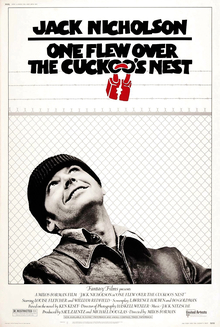
One Flew Over The Cuckoos Nest

When Your Prison Escape Plan Needs a Second Draft

Ever had one of those days where you try to dodge work by checking yourself into a mental hospital? No? Well, meet Randle Patrick McMurphy, a guy whose attempt to escape manual labor makes “quit your job and start a pottery business” look like a solid life choice.

McMurphy (played by Jack Nicholson, in a role that probably had method actors everywhere wondering if they should also get themselves committed) isn’t crazy – he’s just crazy like a fox who really didn’t think his plan through. After faking mental illness to dodge prison work duty, he finds himself in a psychiatric ward run by Nurse Ratched, a woman whose bedside manner makes Darth Vader look like a customer service trainer.

The ward is divided into two groups: the Acutes (potentially curable patients) and the Chronics (permanent residents who make the furniture look dynamic). Among the Acutes, we’ve got Billy Bibbit, whose stutter would give The King’s Speech’s Geoffrey Rush job security; Dale Harding, a man so deeply closeted he probably has winter coats in there; and Charlie Cheswick, whose emotional regulation makes a toddler at Toys “R” Us look zen. The Chronics include Chief Bromden, a Native American giant who’s perfected the art of playing deaf and mute – basically the world’s tallest mime.

McMurphy bursts into this environment like a food fight at a wine tasting. He immediately starts questioning everything: Why can’t they watch the World Series? Why does the ward’s music sound like elevator muzak composed by depressed snails? Why do their group therapy sessions feel like Twitter arguments in slow motion?

His battle with Nurse Ratched escalates from minor skirmishes over card games and TV privileges to full-scale warfare. It’s like watching a chess match where one player insists on using the pieces to act out scenes from WWE. McMurphy’s shocking discovery that many patients are there voluntarily leads to the greatest “wait, what?” moment since someone first explained cryptocurrency.

The plot thickens faster than institutional oatmeal when McMurphy organizes a ward party that makes your average college dorm shindig look like afternoon tea with the Queen. He smuggles in women and alcohol, and even gets Chief Bromden to break his silence – turns out the big guy was basically playing the world’s longest game of charades.

But because we can’t have nice things in this ward, everything goes sideways faster than a cafeteria jello cup. Billy Bibbit’s post-party encounter with Nurse Ratched proves that some people shouldn’t be allowed to weaponize guilt – it’s like watching your mom, your therapist, and your high school principal team up for an intervention, with tragic results.

The Verdict

What I Love:

  • Jack Nicholson’s performance, which makes other movie rebels look like hall monitors
  • Louise Fletcher turning passive-aggressive behavior into an Olympic sport
  • A supporting cast that could make group therapy actually worth attending
  • Direction so good it probably got Miloš Forman banned from hospital administration meetings
  • The most compelling argument against institutional healthcare since the invention of leeches

What Could’ve Been Better:

  • Might make you suspicious of every nurse offering medication
  • Will ruin your plans to fake mental illness to escape prison
  • Likely to make your next doctor’s visit more anxiety-inducing than it already was

This film swept the Academy Awards like Nurse Ratched sweeps away contraband cigarettes, winning all five major categories. It’s a masterpiece that will make you laugh, cry, and seriously reconsider any plans to avoid manual labor through institutional commitment.

Rating: 5 out of 5 suspiciously calm orderlies

P.S. – If you ever hear someone sweetly say “medication time,” run. Just run.

NY Giants vs. Minnesota Vikings

Viking 28, Giants 6

I don’t even know where to start with this game. It was the first game of the season and there was much pomp and circumstance for the Giants 100th season. They had on.. What could charitably be called a throwback uniform and I’m not sure what was worse the play on the field or those uniforms.

I suspect Metlife stadium was cursed at some point in the last few years by an angry witch or warlock because it defies belief that the JETS and the Giants are this bad. I’m not even a Giants fan and I was getting angry at how bad the Giants were playing. I mean that pick six from their own 5 yard line was just a signal of how the season was going to progress (although in true Giants fashion they won a few games at the end to drop out of the top of the draft)

In this case I had nicer seats so at least I could enjoy this debacle from the comfort of a padded chair and with an open bar and free food but man was the football product on the field terrible. Watching Jets castoff Sam Darnold tear it up was adding insult to injury – what could have been if the organization wasn’t so inept.

We did a bit of tailgating – hanging out in the lot and enjoying some fresh cut Philly cheesesteaks and some craft beers to help get us into the mood to watch terrible football. Metlife stadium continues to be the most boring stadium in all of sports and seeing it decked out in Giants blue instead of the Jets green I’m used to was pretty neat but overall it had nothing notable about it at all. It’s amazing to me how they decided that THAT was the design they were going to go with.

I remember seeing architecture mockups of what a new Jets stadium in Manhattan would look like and being really impressed with the designs. They opted to not do that, return to a partnership with the Giants and build a stadium with all the panache of a soviet housing block.

Still – it as a nice day and we were watching a football game with lots of food and drink so it still was a good day. I mean most of the fans left in the third quarter to beat the traffic and I kind of wish we were one of them as getting out of the stadium lots is a 40 minute endeavor sometimes.

https://www.nfl.com/games/vikings-at-giants-2024-reg-1?active-tab=highlights

Goal Met: Dopamine Detox

So.. I listen to a lot of podcasts and something that kept popping up across some of them was this idea of a dopamine detox. A dopamine detox is basically hitting the reset button on your brain’s reward system. Think of dopamine as your brain’s “feel good” chemical – it spikes when you do anything pleasurable, from scrolling social media to eating junk food. The problem is, we’re constantly bombarding ourselves with these quick dopamine hits in our modern world, which can make normal activities feel boring and unsatisfying.

During a dopamine detox, you temporarily cut out highly stimulating activities – things like social media, video games, excessive Netflix, or processed foods. It’s like turning down the volume on life’s constant excitement to help your brain recalibrate. When you’re constantly chasing these high-dopamine activities, it’s similar to turning up the volume on your headphones – eventually, you need it louder and louder to feel the same effect.

The benefits kick in when your brain adjusts to lower stimulation levels. After a detox (usually lasting anywhere from 24 hours to a week), people often report better focus, more enjoyment from simple activities, improved mood, and better impulse control. It’s not about permanently giving up enjoyable things – it’s more like pressing pause to help your brain remember how to find pleasure in everyday experiences. Just imagine how much sweeter that first bite of chocolate tastes after not having any for a week.

So I looked at all the things in my life that fall under the dopamine bucket and I just cut them out for 7 days. No social media, no movies/shows or video games, turning off all notifications on my phone, no reddit, no YouTube, no sweets, fast food, or processed junk food. Living a spartan lifestyle as off the grid as possible (with the exception of screens for work – but work emails don’t hit those dopamine receptors like personal stuff)

It was.. actually pretty difficult. My brain actively fought me on this trying to sabotage me by overriding my conscious thought and steering me towards something sweet, or social media. Knowing this is how it sometimes happens I took steps by blocking all the sites on my router for my devices and removing any tempting foods from easy access (hard to do with kids, but I managed)

Once I made it to 7 days I did start to notice some differences in my mood – I was more even keeled and when I did partake of something that creates a dopamine hit it had a bigger reaction for me.

I’m not much for such a Spartan lifestyle so after 7 days I reintroduce some things back into my life but the one I didn’t was reddit. I realized that I doom scrolled reddit in an echo chamber of just depressing stories and angry people. I feel so much more optimistic now about things and don’t miss Reddit at all – and I genuinely believe my mental health is better now that I’m not constantly bombarded with negativity.

Worldwide Food Tour – Jamaica

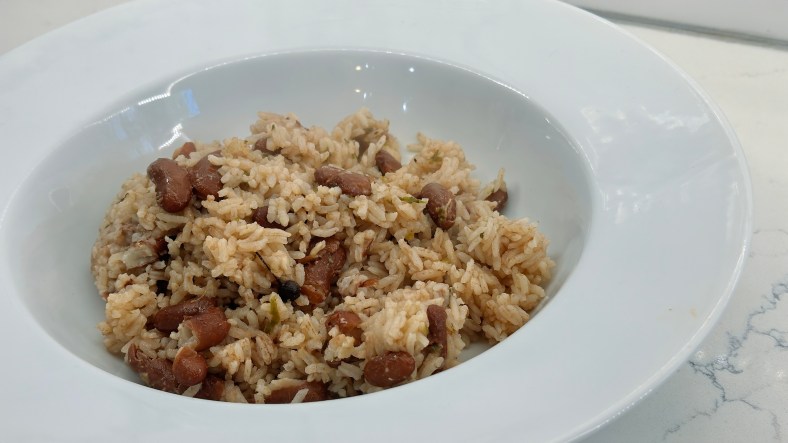
Jamaican rice and peas is a beloved staple of Caribbean cuisine, though interestingly, the “peas” in question are actually red kidney beans. This hearty dish combines rice and beans with coconut milk, giving it a rich, creamy texture and subtle sweetness that perfectly complements its savory elements.

The dish is flavored with aromatic ingredients including fresh thyme, scallions, garlic, and Scotch bonnet peppers (which are usually left whole to impart flavor without too much heat). A key ingredient is allspice (known as pimento in Jamaica), which adds a warm, distinctive flavor. The combination of coconut milk and these seasonings creates the dish’s characteristic aromatic and flavorful profile.

Traditionally served on Sundays and at special occasions, rice and peas has deep cultural roots tracing back to the days of slavery. The dish is believed to have West African origins, adapted by enslaved people using available Caribbean ingredients. The use of red kidney beans rather than black-eyed peas (which were more common in West Africa) represents this adaptation to local ingredients.

The dish is so fundamental to Jamaican cuisine that it’s often called “coat of arms” rice because of its ubiquity on Sunday dinner tables. While it’s traditionally a Sunday meal, it’s now enjoyed throughout the week and is a perfect accompaniment to other Jamaican dishes like jerk chicken, curry goat, or oxtail stew.

Fun fact: despite the common substitution of kidney beans, some traditional recipes still use pigeon peas (known as gungo peas in Jamaica), particularly around Christmas time, when they’re in season.

The Beatles – Revolver

The Beatles’ Psychedelic Revolution

Released: August 5, 1966

In the sweltering summer of 1966, The Beatles unleashed an album that would forever alter the landscape of popular music. “Revolver” isn’t just a collection of songs—it’s a declaration of artistic independence, a middle finger to the constraints of conventional pop, and quite possibly the moment when four mop-topped heartthrobs truly became legends.

Gone are the simple love songs and yeah-yeah-yeahs that defined their early career. In their place stands a kaleidoscopic journey through psychedelia, Eastern philosophy, orchestral arrangements, and tape loops that would make an avant-garde composer blush. The album opens with the biting taxation commentary of “Taxman,” George Harrison’s sardonic greeting to the British government, and from there, it’s clear we’re not in Hamburg anymore, folks.

Speaking of Harrison, “Revolver” marks his emergence as a songwriting force within the band. His contributions here are essential, not merely complementary. This is the album where George stopped being “the quiet one” and started being “the one you really need to pay attention to.”

McCartney’s contributions showcase his increasing sophistication as a composer. “Eleanor Rigby” pairs stark imagery with baroque strings, creating what might be pop music’s first legitimate art song. Meanwhile, “Here, There and Everywhere” proves he could still write a love song that would make your grandmother swoon—if your grandmother was into revolutionary chord progressions and sublimely complex vocal arrangements.

But it’s Lennon who pushes the envelope furthest into the bizarre and beautiful. His experiments with tape loops and reverse recordings on “Tomorrow Never Knows” created a template for psychedelic rock that artists are still trying to replicate today. It’s the sound of a man who’s discovered LSD and Indian mysticism, and decided that pop music needed both.

The production, helmed by George Martin, deserves its own chapter in recording history. The innovative use of ADT (Automatic Double Tracking), varied tape speeds, and close-mic techniques created sounds that engineers would spend the next decade trying to figure out. This is the album where the studio truly became an instrument in its own right.

What’s remarkable about “Revolver” is how it manages to be both experimental and accessible. Each sonic adventure is anchored by memorable melodies and harmonies that could only come from The Beatles. They’re pushing boundaries while remembering to bring their audience along for the ride.

The influence of this album cannot be overstated. Without “Revolver,” we might not have had Pink Floyd’s “Dark Side of the Moon,” Radiohead’s “OK Computer,” or any number of albums that dared to treat the recording studio as a playground rather than just a documentary tool.

⭐⭐⭐⭐⭐ (5/5 stars)

Final Thoughts: “Revolver” represents The Beatles at their creative peak—a perfect balance of innovation and accessibility, experimentation and pop craftsmanship. Its only flaw might be that it set the bar so high that rock bands have been struggling to reach it ever since. The album manages to sound both perfectly of its time and completely timeless, a rare feat that cements its place as one of the greatest albums ever recorded. If you only own one Beatles album (though why would you do that to yourself?), make it this one.

Goal Met: Intermittent Fast for 30 days

Now, I’ve done intermittent fasting (IF) a few times in the past, notably during covid out of necessity to stretch the groceries we had as we were only going one once a month to stock up. It’s a simple thing really – just don’t eat breakfast and stop eating at 6:00 pm every night. The food window was 12-6 and you can easily get all the food you need with a healthy lunch, a sizeable snack and dinner.

I had tried it in fits and starts before then – mostly inspired by a few Netflix documentaries I saw on the health benefits of fasting – specifically around autophagy and its role in disease control and weight loss. Armed with the knowledge that it was not just a diet but a way of aligning with how our bodies worked I did it for over two years until about halfway through 2022. I’m not sure what happened but I just kinda gave up on the idea and started eating breakfast again and sneaking in late night snacks.

I realized with this challenge that yes, I’m 50 now and the risk factors for certain diseases start rising – and I should be leaning into IF / periodic long fasts as a way to help control these risk factors. So I made sure there was a section in the goals for both of these fasting methods.

for the IF I used the free version of the zero app to help track the times. It’s pretty simple interface and allowed me to log fasts with a simple click of a button and it also tracked a countdown to my goal and when I started the different phases in a fast (glucose depletion, fat burning, autophagy). I found it helpful to keep me on track as I’d need to physically get my phone and click the button admitting that I didn’t fast as long as I wanted so it was a nice deterrent. I also used the streaks app to track how many days in a row I was doing (I used this app for most of my 30 day / 2 week goals) and getting to see that streak climb was another deterrent. I mean every little bit helps!

The first few days were filled with morning hunger pangs but on the third or fourth day my body remembers this is something we’re doing and I’m fine. I don’t feel hungry until lunch and I stop craving snacks at night. A week in and it was becoming routine again and something that I automatically did without thinking about it too much.

At the end of thirty days I felt a bit better – not much weight was lost (around 5 pounds) but I wasn’t focusing on lowering my caloric intake too much as I was playing basketball and training for a 5K and running a caloric deficit during this time would have impacted those activities.

I know that the things happening in my body during a fast have longer term metabolic effects so I wasn’t expecting some miracle where I suddenly felt 25 again but I was content with the knowledge that I was doing something good for my body.

After the 30 days I continued as best I could – usually doing IF during the week and enjoying a breakfast on Saturday morning (usually an egg sandwich on a bagel). Yes, there were days when I ate a snack late a night or grabbed some breakfast on the way to work because I was really hungry but overall I’m working IF into my life again and I hope to keep it that way for the foreseeable future.

On the Shortness of Life

Life, as it turns out, isn’t actually short—it’s just that most of us waste it. That’s the central argument of On the Shortness of Life by Seneca, a work that has remained startlingly relevant despite being written nearly 2,000 years ago. While the ancient Roman philosopher was addressing the concerns of his time—politicians chasing power, merchants obsessed with wealth, scholars lost in trivial studies—his words feel just as applicable in an age of social media, endless notifications, and the modern obsession with productivity. Seneca’s message is simple: we have more than enough time to live a meaningful life, but we squander it on distractions, meaningless pursuits, and worrying about things that don’t matter.

Unlike many modern self-help books that focus on “time management,” Seneca isn’t concerned with squeezing more hours into the day. His argument isn’t that we need to be more efficient—it’s that we need to be more intentional. He criticizes people who spend their lives chasing wealth, fame, or leisure without ever stopping to consider what truly matters. His famous warning that “it is not that we have a short time to live, but that we waste much of it” cuts through the excuses we use to justify our lack of fulfillment. We complain about not having enough time, yet we spend hours on trivial distractions, indulging in gossip, worrying about status, or numbing ourselves with entertainment. Sound familiar? Swap out the Roman baths and political scheming for Instagram feeds and Netflix binges, and suddenly, Seneca could be writing about modern life.

What makes On the Shortness of Life so powerful is that it’s not just a critique of wasted time—it’s a call to action. Seneca urges us to take ownership of our lives, to stop living as if we have unlimited time ahead of us. He warns against the trap of “living for the future,” something that resonates strongly with modern readers. How many people tell themselves they’ll be happy after they get the promotion, after they buy the house, after they retire? Seneca sees this as one of the greatest delusions—people plan for a future they might never even reach while neglecting the present, the only time they actually own. His solution is simple but profound: live fully now. Engage deeply in what truly matters, cut out meaningless pursuits, and treat every day as valuable rather than assuming you’ll always have more time.

When comparing Seneca’s advice to modern Stoic practices, there’s a striking overlap. Today’s Stoic thinkers—whether it’s Ryan Holiday’s The Daily Stoic or William B. Irvine’s A Guide to the Good Life—echo many of the same themes. Both ancient and modern Stoicism emphasize the importance of focusing on what we can control, avoiding distractions, and valuing time as our most precious resource. However, while modern Stoic methods often include structured routines, journaling, and practical exercises to cultivate mindfulness, Seneca’s approach is more direct: stop wasting time, recognize your mortality, and live with purpose.

One of the biggest differences between ancient and modern Stoicism is the way we approach productivity. In today’s world, self-improvement is often tied to efficiency—how can I get more done in less time? How can I maximize my schedule? Seneca would likely argue that this mindset still misses the point. It doesn’t matter how much you accomplish if what you’re accomplishing isn’t meaningful. Modern Stoicism often incorporates methods like digital detoxing, setting daily priorities, and practicing gratitude—things that align with Seneca’s philosophy but are packaged in a more structured way. The key takeaway from both approaches is the same: be intentional about how you live, because time is the one thing you can never get back.

Perhaps the most chilling reminder in On the Shortness of Life is Seneca’s observation that most people don’t even realize they’re wasting their lives until it’s too late. He warns that many people only understand the value of time when they’re near death, looking back with regret at how much of their existence was spent on things that didn’t matter. This is where his writing transcends philosophy and becomes something of a wake-up call. His words force the reader to ask uncomfortable but necessary questions: If I were to die tomorrow, would I be satisfied with how I’ve spent my time? Am I prioritizing things that truly bring meaning, or am I letting life slip by in trivial pursuits?

In a world that constantly demands our attention, where distractions are engineered to be irresistible and busyness is worn like a badge of honor, Seneca’s wisdom is more important than ever. Modern Stoic practices may provide tools to help us implement his advice, but the fundamental lesson remains unchanged: life is only “short” if you fail to use it well. The challenge isn’t to find more time—it’s to stop giving it away to things that don’t matter.

Worldwide Food Tour – Gambia

Domoda is a rich and hearty West African stew, particularly popular in The Gambia where it’s often considered the national dish. The star ingredient is ground peanuts (groundnuts) or peanut butter, which creates a thick, creamy sauce base.

The stew typically combines meat (commonly beef, lamb, or chicken) with a blend of tomatoes, onions, and garlic. The peanut-based sauce is enhanced with tomato paste and a mix of spices. Root vegetables like carrots, potatoes, or sweet potatoes are often added, making it a complete one-pot meal. Some versions include hot peppers for added heat.

The taste is complex and satisfying – simultaneously nutty, savory, and slightly sweet from the natural sweetness of the peanuts. The meat becomes tender through slow cooking, while the sauce develops a velvety texture that’s perfect for serving over rice.

As for its history, Domoda reflects the importance of groundnuts in West African cuisine and culture. Peanuts were introduced to Africa by Portuguese traders in the 16th century and quickly became a staple crop. The dish exemplifies how African cooks masterfully incorporated this “new” ingredient into their traditional cooking methods, creating something entirely unique and deeply flavorful.

I’m not sure what I did wrong here – but the peanut flavor didn’t really come through – all I tasted were the spices. I sourced the recipe from a cook in the country so I tried to be as authentic as possible. It’s not something I think I’ll make again but it was interesting to get a feel for West African cuisines.

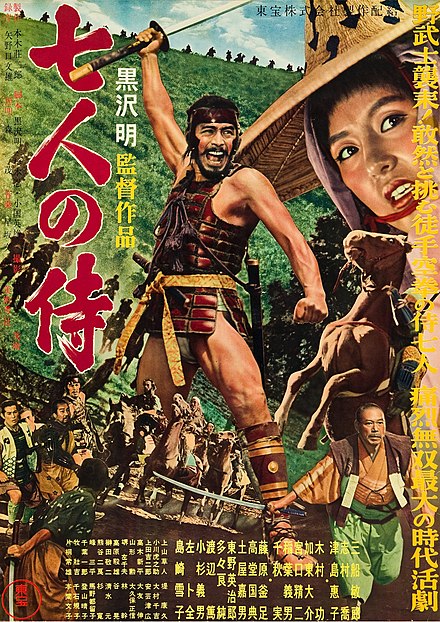
Seven Samurai

Ah, let me dive into Akira Kurosawa’s epic masterpiece about medieval gig work!

The story kicks off in 16th-century Japan, where a village of farmers discovers that bandits are planning to raid them once their harvest is ready. (Apparently, bandits in feudal Japan were considerate enough to give advance notice of their robberies.) The villagers, tired of being the medieval equivalent of a free grocery store, decide to hire samurai for protection. Their budget? Room, board, and all the rice they can eat – which, in feudal Japan’s version of a job posting, translates to “unpaid internship with meals included.”

Enter Kambei, a wise, experienced samurai who’s first seen shaving his head to rescue a kidnapped child. (If that’s not the definition of a perfect job interview, I don’t know what is.) Despite the less-than-attractive compensation package, Kambei takes pity on the villagers and agrees to help. He then starts assembling his team like it’s Ocean’s Eleven: Medieval Edition.

The recruitment process brings together a colorful crew: Katsushirō, an eager young samurai wannabe; Gorobei, who can catch arrows mid-flight (a skill that, surprisingly, does come in handy); Kyūzō, a serious master swordsman; Heihachi, the funny one who’s good with an axe; Shichirōji, Kambei’s old war buddy; and the scene-stealing Kikuchiyo (Toshiro Mifune), a wild card who’s clearly not a real samurai but makes up for it with enough energy to power a small village.

Once they reach the village, our samurai find that their job includes not just fighting bandits, but also being part-time therapists for a community with major trust issues. The farmers have hidden their women and valuables, because historically, samurai haven’t exactly been the most courteous house guests. Kikuchiyo, revealed to be a farmer’s son himself, calls out both sides for their prejudices in what must be feudal Japan’s first diversity and inclusion seminar.

While waiting for the bandits, the samurai turn the village into a fortress and train the farmers in the art of war, which goes about as well as you’d expect when teaching rice farmers to use spears. Meanwhile, young Katsushirō falls for a local farmer’s daughter, because apparently no one told him that workplace romances are complicated.

When the bandits finally attack, what follows is a series of increasingly intense battles in the rain (because Kurosawa never met a fight scene he couldn’t make more dramatic with weather). The samurai’s clever tactics and the farmers’ newfound courage turn the tide, but victory comes at a cost – four of the samurai die in the fighting, proving that even in medieval Japan, the mortality rate for temporary contract work was unreasonably high.

The film ends with the surviving samurai watching the farmers happily planting rice, leading Kambei to muse that the real winners are the villagers, while samurai just keep losing. (Though you could argue that the real losers were the bandits, who probably should have just applied for farming jobs instead.)

The whole thing serves as a poignant reminder that sometimes the best-paying jobs aren’t the most rewarding, and that if you’re going to hire security consultants, maybe offer better benefits than just rice.

In the end, “Seven Samurai” became so influential that it spawned numerous remakes, including “The Magnificent Seven,” proving that the concept of protecting villagers from bandits transcends both cultures and centuries – though the payment plans remain consistently poor.

5/5 Samurai Swords – Really just a classic movie. I love the idea of Samurai and have watched a LOT of these kind of movies (in addition to kung fu movies) such as Zatoichi and the Hidden Fortress. It’s really well acted and after a short while the subtitles became less obtrusive and and got pulled into the story. It was really well paced – the silences and ambient sounds were well placed and the on screen deaths were meaningful – hard to do character development with so many characters but Kurosawa pulled it off.

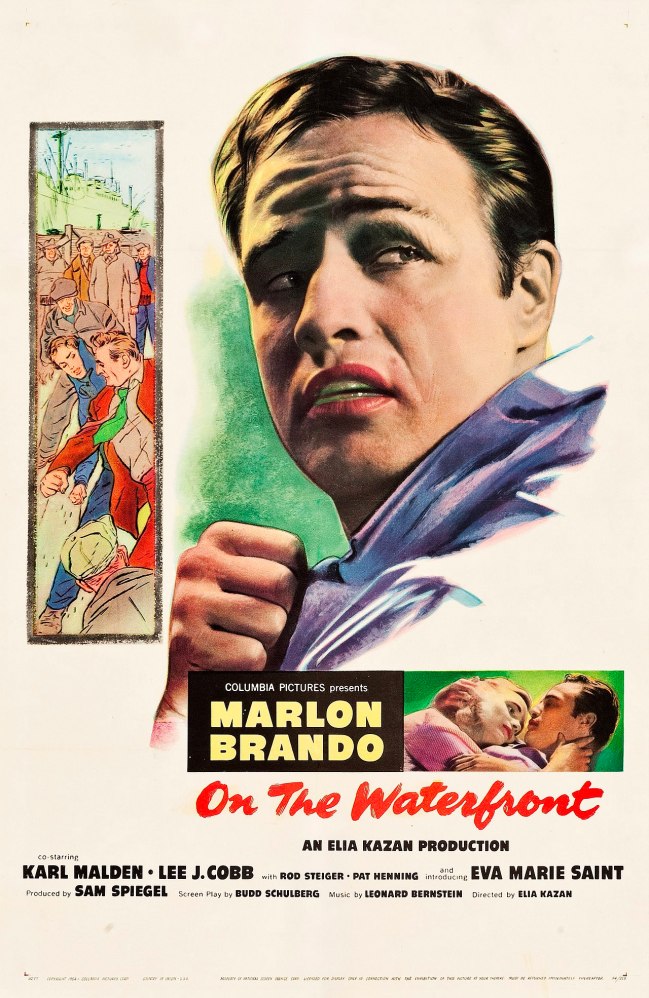
On the Waterfront

Ah, let me dive into Elia Kazan’s gritty masterpiece about corruption, conscience, and questionable career choices in the longshoremen industry!

The story follows Terry Malloy (Marlon Brando), an ex-boxer turned dockworker who spends his days doing the bidding of union boss Johnny Friendly – when he’s not tending to his rooftop pigeon coop, that is. (Nothing says “sensitive tough guy” quite like racing pigeons.) Terry’s brother Charley works as Friendly’s lawyer, making corruption a real family business.

The trouble starts when Terry unknowingly helps set up the murder of Joey Doyle, a dockworker who was planning to testify against Friendly’s corrupt union. Terry thought they were just going to “talk” to Joey, but instead, Joey takes an unscheduled flying lesson off a roof. Oops.

Enter Edie Doyle (Eva Marie Saint), Joey’s sister, who’s determined to find out who killed her brother. She’s also apparently the only person in this waterfront neighborhood who owns clothes that aren’t covered in grime. Terry starts falling for her, which really complicates his whole “pretend-nothing-happened” strategy. Meanwhile, the persistent Father Barry (Karl Malden) keeps popping up like a clerical whack-a-mole, giving waterfront sermons about standing up to corruption and making Terry feel guilty.

As Terry gets closer to Edie and more conflicted about his role in Joey’s death, Friendly starts getting nervous. More dock workers end up dead, including Kayo Dugan, who’s crushed by a “mysteriously” dropped load of whiskey cases. (OSHA would have had a field day with these working conditions.)

The turning point comes when Friendly orders Charley to make sure Terry doesn’t testify to the Crime Commission. In the famous taxi scene, Charley pulls a gun on his own brother, leading to Terry’s heartbreaking “I coulda been a contender” speech about how Charley ruined his boxing career by making him throw fights. Instead of killing Terry, Charley lets him go – and ends up dead himself, hung from a hook in an alley. (Friendly isn’t big on subtlety.)

This finally pushes Terry over the edge. He testifies against Friendly, which makes him about as popular on the docks as a punctured life vest. In the final showdown, Terry gets beaten to a pulp by Friendly and his goons, but refuses to stay down. He staggers to his feet and leads the other workers into the warehouse, breaking Friendly’s control over the dock.

The movie ends with Terry bloody but unbowed, having finally stood up for what’s right – though you have to wonder if maybe he should have considered a career change to something less dangerous, like professional alligator wrestling.

The whole thing serves as a powerful reminder that sometimes doing the right thing means getting punched in the face repeatedly, and that keeping pigeons is apparently the universal signal for “complicated character with a hidden soft side.”

5 punch drunk stars. I loved this movie – it’s got everything – romance! mobsters! Brando chewing the scenery! Brando quietly brooding! The famous ‘I could have been a contender!’ speech – just oozing 50’s cool guy vibes. The plot was a bit thin as a morality tale but it was overall well acted and engaging and worth the watch.