AI – Text to Image Generation Tools

One of the first things I explored in the realm of AI was text to image generation. It wasn’t my first interaction with this type of AI – I had checked out Firefly on my work account to generate a few things and even used Midjourney when it was first introduced. I wasn’t impressed really with either tool at the time and shelved the idea of using them for any real work. Two years later as I started really leaning into learning AI I decided to revisit the major text to image tools to see how far they’ve come along. To test them out I decided to feed them straight descriptions of some of the characters in the story/book I was writing. I created a prompt for each one and fed the identical prompt into each image generator.

The first thing I noticed was they really didn’t like making unattractive people. Even if the prompt specified that a person was older some models kicked out images of people in their 20’s. Even the old weathered warrior looked like he belonged on the cover of GQ. I know I could have tinkered with the prompt and really pushed it to the image I wanted but for this experience I wanted to use the straight descriptions from the book.

The tools I used for this were DallE3, MidJourney and Adobe Firefly. I know adobe is all about cutting edge design but their tool failed on almost every prompt. It ignored critical details in the prompt like ages, scarring, hairstyles, etc. and basically served up whatever it thought was close. Coming in second was DallE which tended to spit out anime leaning images (although to be fair, I did this before I learned how to craft hyper specific image prompts) and also couldn’t seem to handle more specific prompting. The clear winner was MidJourney – it came the closest on each character and the quality of it’s output was actually inspiring to me as it was how I viewed some of these characters in my head.

I know there’s other tools out there but I settled on the ‘big 3’ for this comparison so without further ado here’s the output from each tool for the major characters (so far)

After I got these results I did a deep dive into prompt crafting for images and got a lot better at directing the tools to produce what I wanted. I didn’t get a chance to go back and recreate all these characters but here’s some random images from the book that I created using these advanced prompts

Steamed Pizza (Pizza Gourmet)

Steamed pizza is one of the most unusual and under-the-radar styles of pizza out there, a method that flips the traditional idea of a crispy, blistered crust on its head in favor of something softer, almost pillowy. While most pizzas are baked in blazing-hot ovens, fried in oil, or even grilled over an open flame, steamed pizza is cooked using steam, resulting in a completely different texture and eating experience. Instead of the charred, crunchy bite you’d expect from a Neapolitan or New York slice, steamed pizza is all about softness, with a light, fluffy dough that feels almost cloud-like, yet still structured enough to hold up to toppings.

The origins of steamed pizza are difficult to pinpoint, as steaming isn’t a common technique in traditional Italian pizza-making. However, it’s not entirely unheard of, particularly in places where steaming is already a popular cooking method. In China and parts of Southeast Asia, for example, steamed buns like baozi and mantou share similarities with steamed pizza dough in terms of texture. Some variations of steamed pizza are also seen in certain regional Chinese street foods, where dough is steamed before being topped with ingredients, creating a unique fusion of pizza and dumpling-like softness.

The most well-known version of steamed pizza in the United States comes from Connecticut, where a small pizzeria called American Steamed Cheeseburgers in Meriden became famous for steaming not just their cheeseburgers but also their pizzas. Using a special steaming oven, the dough is gently cooked with steam instead of direct heat, allowing it to rise and cook evenly without forming a crispy crust. Instead of bubbling, browned mozzarella, the cheese melts into an ultra-creamy, almost fondue-like consistency that blends into the sauce in a way that’s completely different from the gooey pull of a traditional baked pizza.

The process of steaming changes not just the texture but also the overall balance of flavors. Without the caramelization that comes from high-temperature baking, the flavors of the ingredients remain purer, with a slightly more delicate taste. The tomato sauce, for example, stays bright and tangy rather than developing the deeper, jammy flavors that baking produces. The cheese, instead of forming a browned crust, turns into a smooth, velvety layer that melts into the dough rather than sitting on top of it. Toppings, depending on how they are applied, either steam along with the pizza or are added after cooking to maintain their freshness and crunch.

While steamed pizza remains a novelty, it has started to gain attention from food experimenters looking for new ways to reimagine pizza. Some home cooks and chefs have adapted the method using bamboo steamers, stovetop steam ovens, or even pressure cookers, experimenting with different dough hydration levels and steaming times to perfect the texture. Certain styles of Chicago deep-dish and Detroit-style pizza also incorporate an element of steaming, though unintentionally—because of their deep pans and thick layers of sauce and cheese, the dough often partially steams as it bakes, creating a fluffier interior beneath the crispy edges.

Though it may not have the widespread appeal of a crispy, fire-kissed Neapolitan or a classic New York slice, steamed pizza is an intriguing example of how pizza-making can evolve beyond the traditional oven. It offers a softer, almost comforting take on pizza, one where the emphasis is on lightness, tenderness, and melt-in-your-mouth textures rather than crunch. Whether it remains a niche curiosity or catches on as a legitimate pizza trend, one thing is certain—steamed pizza is proof that there’s always room for innovation in the pizza world.

Dessert Pizza (Nutella)

Nutella dessert pizza is the kind of indulgence that feels almost too good to be true, a perfect fusion of crispy, chewy pizza dough and rich, velvety chocolate-hazelnut spread. While it may seem like a modern Instagram-worthy creation, its roots can be traced back to Italy, where simple, dough-based desserts have long been a staple. Italians have always had a knack for transforming pizza into a sweet treat, whether through zeppole, bomboloni, or even fried pizza dusted with sugar. When Nutella entered the scene in the 1960s, it was only a matter of time before it became a natural companion to warm, freshly baked pizza crust. The combination is both effortless and irresistible, taking something already beloved and making it even more decadent.

At its core, Nutella pizza begins just like any other pizza—with a well-made dough. The best versions use a Neapolitan-style crust, light and airy with just the right amount of chew, baked at high temperatures to achieve that signature crispness on the outside while staying soft within. Some variations take inspiration from Roman-style pizza al taglio, using a thicker, more focaccia-like base. The key to a perfect Nutella pizza is achieving a balance between crispness and tenderness, ensuring that the dough can hold up to the weight of the rich chocolate-hazelnut spread without becoming too brittle or too soft. Some recipes call for baking the Nutella directly on the pizza, allowing the heat to melt it into a warm, gooey layer, while others opt for spreading it onto the crust after baking, letting the residual warmth do the work of softening the spread without making it too runny. Either method results in the same outcome: a luscious, chocolatey experience that satisfies any sweet tooth.

While Nutella alone is more than enough to make this dessert shine, the best versions of Nutella pizza incorporate additional toppings that elevate it beyond a simple spread-on-bread combination. Fresh fruit is a popular choice, with bananas adding a creamy, natural sweetness and strawberries or raspberries bringing a tart contrast to the rich chocolate. Blueberries, blackberries, and even thinly sliced pears can be used to enhance the flavor profile, adding a layer of brightness to every bite. For those who crave a bit of crunch, chopped hazelnuts, almonds, or even crushed biscotti provide a delightful contrast in texture, making each slice more dynamic. A dusting of powdered sugar is a classic finishing touch, giving the pizza an elegant, snow-dusted look, while a drizzle of honey or caramel adds an extra level of indulgence. Those looking to take Nutella pizza to the next level often serve it with a scoop of vanilla or hazelnut gelato, allowing the cold creaminess of the ice cream to melt slightly over the warm Nutella, creating a contrast that is nothing short of magical.

Some variations push the decadence even further by stuffing the crust with Nutella, ensuring that every bite is an explosion of melted chocolate. Others experiment with a balance of sweet and salty, adding a pinch of flaky sea salt or even crushed pretzels to enhance the chocolate’s depth. The beauty of Nutella pizza is its versatility—it can be as simple or as extravagant as desired, with endless possibilities for customization. Whether served as a dessert at an Italian trattoria, as a brunch treat at a trendy café, or made at home for a special occasion, it has an undeniable ability to bring joy to any table.

Though Nutella pizza is most commonly associated with Italy, where it appears in pizzerias and bakeries across cities like Naples, Rome, and Milan, it has spread far beyond its origins. It has become a staple in high-end dessert menus, food festivals, and home kitchens worldwide. The appeal is universal—after all, who can resist the combination of warm, fresh-baked dough and rich, chocolate-hazelnut spread? For those looking to recreate it at home, the process is remarkably simple. A basic pizza dough, rolled out and baked until golden, provides the perfect foundation. Once out of the oven, a generous layer of Nutella is spread over the warm crust, melting slightly as it meets the heat. From there, the toppings are limited only by imagination, whether it’s fresh fruit, nuts, powdered sugar, or an extra drizzle of something sweet. The result is a dessert that feels both effortless and luxurious, a perfect way to end a meal or simply indulge in a moment of pure chocolate bliss.

Nutella dessert pizza is more than just a sweet twist on a classic dish—it’s an experience. The contrast between the crispy, slightly chewy crust and the smooth, melted Nutella creates a textural harmony that is instantly satisfying. Whether enjoyed as a shared treat among friends, a romantic dessert for two, or even as a guilty-pleasure snack in the middle of the night, it is the kind of dish that brings instant happiness. It is a reminder that pizza doesn’t always have to be savory, that dough can be a vehicle for something beyond cheese and tomatoes, and that sometimes, the simplest combinations—warm dough and chocolate—can be the most unforgettable.

Goal Update: Visit 10+ Famous Pizza Places

I was at a work conference in Manhattan for a week and decided to seize this opportunity to squeeze in a few more famous pizza places into my year.

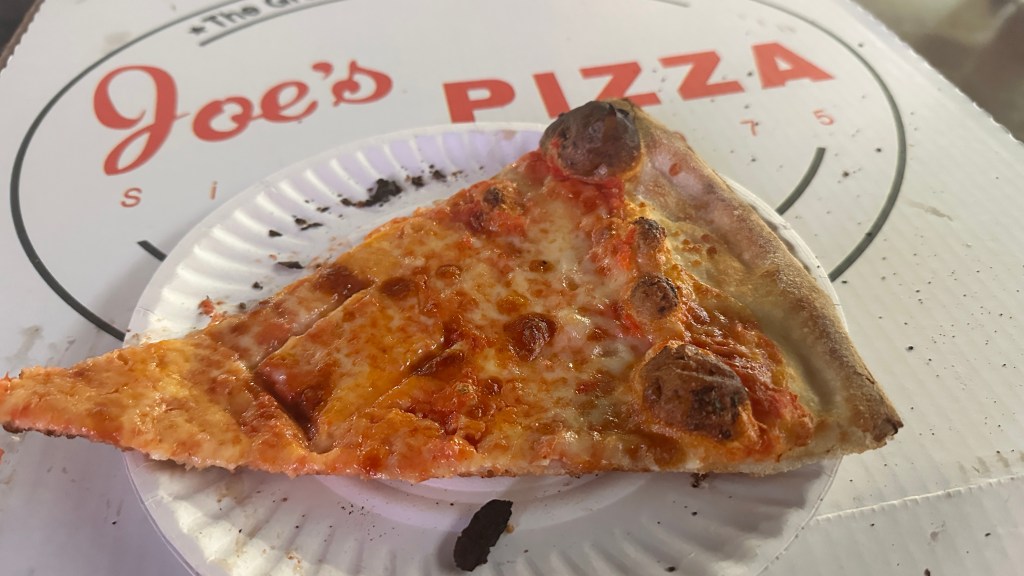
Joe’s Pizza on Broadway.
All the pizza people have a consensus that this is an exemplary NY slice and I was curious to give it a shot. The first thing you notice is the line – this was a random Tuesday in February and it stretched down the block. A quick peek inside showed that there were only a handful of tables and most people were sitting on the benches outside eating their pizza in the cold. I did some quick mental math and saw the line was going to be at least 45 minutes at the pace it was moving at so I did the logical thing and called in an order. I used the time to wander around and poke into some stores that were open and when I came back I walked in an grabbed my pie. However all the benches were taken and there were no seats available inside so I did the needful and ate with the box perched on the trash can outside on the sidewalk. The pizza was good – a perfect balance of sauce and cheese with a crispy crust with zero flop. I wasn’t blown away like some people were (perhaps because I’ve eaten a lot of NY style pizza over the years) but it was a really good slice that is a true representation of NY Style

Score 9.7

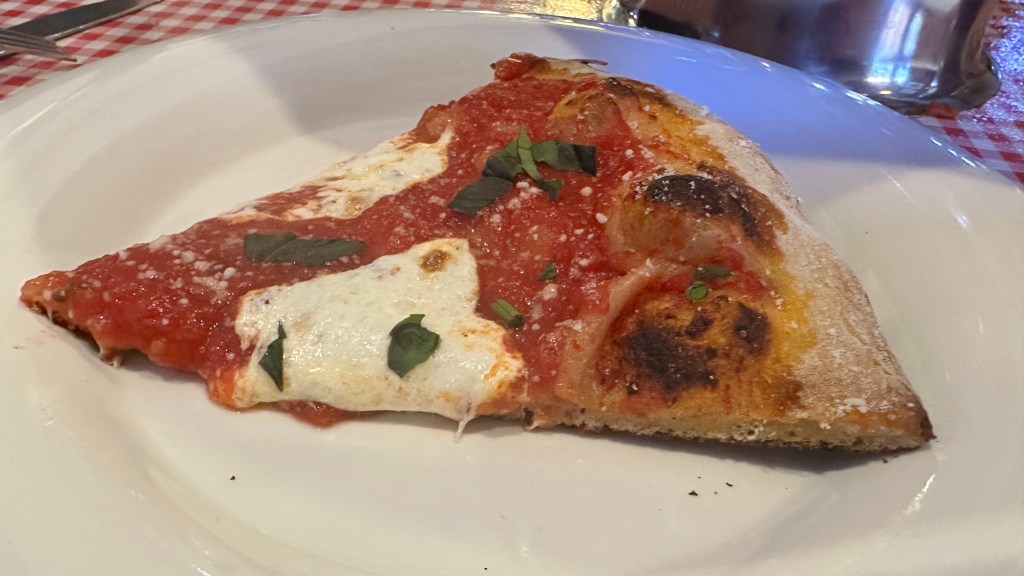
Lombardi’s – Little Italy
There are mixed reviews of this place – some state that they used to be great but when the owners changed it all went downhill. I decided that since it’s been there forever and is a landmark it still needed a visit. It’s a quaint place in the heart of little Italy and had the requisite red and white checkered tablecloths and pictures of celebrities who came to eat there. I ordered the margherita style pizza and a root beer (classic pairing) and he brought me a 8 ounce fountain root beer (no free refill signs are all over the place, mind you) so that’s not a great start. If you’re going to charge 4 bucks for a fountain soda make it at least 20 ounces. Then the pizza came out and it was tiny – I re-read the menu and the size of the pizza is mentioned there but 28 bucks for a 12 inch pizza? It also was dry and the sauce was too salty and the cheese was barely there. It’s obvious whoever owns it now is trading on the reputation of the original and is cost cutting wherever possible. If it was 10 bucks I’d have been more charitable – I’ve had NY dollar slices that had more flavor. The fact I was the only one there during prime lunch hour should have been my first clue.

Score 4.7

Rubirosa – Little Italy

This one snuck up on me – I had no idea this place was here but every reddit thread and pizza forum that talked about NYC pizza said this was the go to thin crust spot. It’s a small corner spot in little Italy and when I went they were pretty crowded – I got a spot at the bar and was waffling between the tie dye pizza and classic cheese when the bartender offered up that I could get half and half. I decided to give it a try so i could try both options. The pizza came out and it was huge and the crust was super thin and shattered when you bit into it. The cheese pizza was tasty but I felt like the sauce was a bit one note and the pesto glaze on the tye dye was good but it felt like there was something else in the pesto that gave it an off flavor. I still enjoyed the pizza for what it was – a good example of thin crust pizza. While I was there I noticed a lot of people were actually getting the pasta. If I wasn’t pressed for time and have eaten have a giant pizza I’d have tried some because it looked amazing. Next time I’m in the area I might need to stop in for some.

Eternal Sunshine of the Spotless Mind

Ah yes, Eternal Sunshine of the Spotless Mind, or as I like to call it, What If Breakups Were Even More Emotionally Devastating and Science Made It Worse? Michel Gondry and Charlie Kaufman basically took the universal human experience of heartbreak, ran it through a surrealist blender, and served it up as one of the most painfully beautiful movies ever made. This isn’t your typical rom-com where two quirky people bicker, break up, and then dramatically run through an airport to find each other again. No, this is what happens after the rom-com magic wears off, when love isn’t cute anymore, and the person you once adored now just reminds you of all your worst decisions.

Jim Carrey, in a move that shocked everyone who only knew him as “the guy who talks out of his butt in Ace Ventura,” plays Joel, a sad, introverted man who learns that his impulsive, free-spirited ex-girlfriend Clementine (Kate Winslet in her most chaotic form) has erased him from her memory using a weirdly casual brain procedure. Naturally, like any emotionally wounded man with access to experimental science, he decides to erase her too. But because Kaufman is a diabolical genius, we don’t just watch Joel go through the process—we watch his memories collapse in real time, a dreamlike rollercoaster where moments of love and pain literally melt away as he runs through his own mind, desperately trying to hold on to Clementine even as she disappears before his eyes.

And let’s talk about Winslet’s Clementine for a second, because she’s the ultimate manic pixie dream grenade. She’s not here to “fix” Joel—if anything, she’s just as lost as he is, if not more. She drinks too much, changes her hair color like it’s a mood ring, and makes impulsive decisions she regrets almost immediately. But she’s also brutally honest in a way that cuts through Joel’s passive existence like a knife. “Too many guys think I’m a concept, or I complete them, or I’m gonna make them alive,” she tells him in one of the movie’s many gut-punching moments. “But I’m just a fucked-up girl who’s looking for my own peace of mind.” That’s the magic of Eternal Sunshine—it doesn’t romanticize love; it unpacks it, deconstructs it, and reminds you that even the most passionate relationships come with baggage, misunderstandings, and heartbreak.

But what really elevates the film is how it turns the inside of Joel’s head into a surrealist funhouse of memories. The cinematography and practical effects make you feel like you’re inside his unraveling mind—books lose their words, faces blur, childhood memories bleed into romantic moments, and the world literally collapses around him. It’s beautiful and terrifying all at once, a visual representation of what it feels like to lose something you didn’t realize you wanted to keep until it was too late.

And yet, for all its existential dread, the film never fully sinks into cynicism. Because as much as it’s about heartbreak, it’s also about the inevitability of love. Even after all the pain, even after wiping each other from their minds, Joel and Clementine still find their way back together. The movie doesn’t promise a happy ending—it just suggests that love, in all its messy, flawed, heartbreaking glory, is worth the risk. And that’s what makes it such a masterpiece.

So yeah, Eternal Sunshine of the Spotless Mind is less of a movie and more of an emotional lobotomy in the best possible way. It’s the kind of film that leaves you staring at the ceiling at 2 AM, reevaluating every relationship you’ve ever had, and resisting the urge to text your ex. And honestly, what more could you ask for?

Goal Met – Create Sourdough Starter

Remember back during Covid when everyone was making sourdough? I kind of wish I got on that train as keeping this stupid thing alive would have been a lot easier if I was working from home every day and we didn’t go anywhere. Well – getting it started was a huge pain but even remembering to feed it once a day is a bit of a pain as I’m back at work now and don’t have time for baking really.

All that being said – it really does make some great bread once you get it strong enough. You can also use the discard for a lot of things like muffins, pretzels, pizza, and some damn tasty pancakes. So I don’t feel like I’m wasting the discard every time I feed the sourdough.

I did consider coming up with some corny names for my starter like some people did (some of my favorites were Clint Yeastwood or Bread Sheeran) but couldn’t decide which one I liked best so I just put it out of my mind because I had a million other things to do.

I’ve kept it alive for almost two months now so maybe it’s time to give this little guy a name. He’s given me so much deliciousness and get does get better with age.

Maybe Frodough baggins?

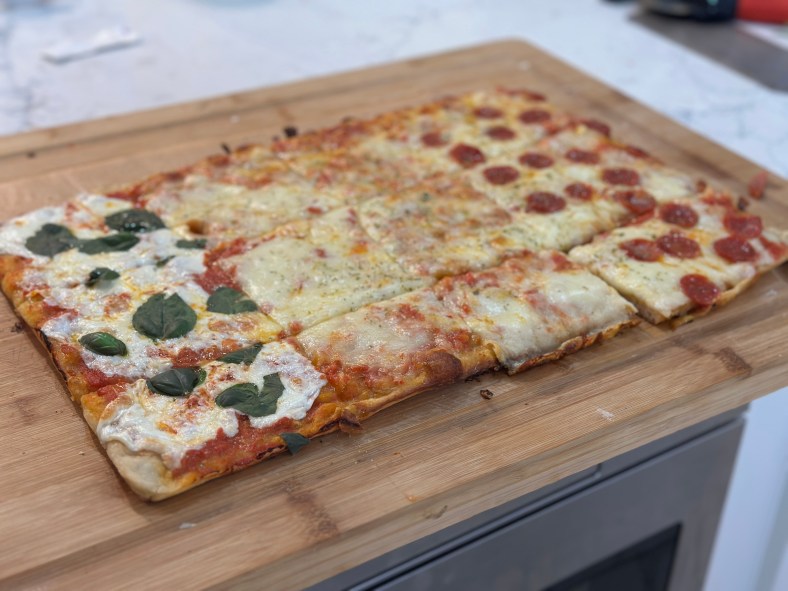
Pizza Al Taglio

If you’ve ever strolled through the streets of Rome, hungry and indecisive, there’s a good chance you’ve been saved by pizza al taglio. This Roman-style pizza—whose name literally means “pizza by the cut”—is the ultimate street food. It’s baked in large rectangular trays, displayed like edible works of art behind glass counters, and cut to order with a pair of scissors before being sold by weight. That’s right—no fixed sizes, no set slices. Just point, pay, and enjoy. It’s casual, customizable, and quintessentially Italian.

Unlike the more famous Neapolitan pizza, which is all about thin, floppy, charred rounds meant to be eaten immediately, pizza al taglio is designed for on-the-go indulgence. The dough is the real star here: a high-hydration, long-fermented masterpiece that bakes up with a crisp, airy bottom and a chewy, cloud-like interior. It’s almost focaccia-like, but with the unmistakable lightness and crispness that makes it pure pizza. This texture is achieved through a slow-rising process, often fermented for up to 72 hours, which develops deep, complex flavors while making it wonderfully digestible.

Pizza al taglio was born in the working-class neighborhoods of Rome in the mid-20th century, when bakers began using large, communal ovens to produce pizza in a way that was efficient, scalable, and—most importantly—affordable. Unlike traditional round pizzas, which required individual attention in a wood-fired oven, pizza al taglio was baked in electric ovens, making it easier to produce in bulk. Over time, it evolved into a beloved staple of Roman street food culture, found in bustling forni (bakeries), dedicated pizza shops, and even gas stations, where it somehow still manages to taste amazing.

One of the most exciting things about pizza al taglio is the sheer variety of toppings. Since it’s baked in large trays, pizzaiolos get creative, covering the dough with anything from classic Margherita-style tomatoes and mozzarella to seasonal vegetables, cured meats, cheeses, and even seafood. Some places lean into gourmet territory, using ingredients like truffle cream, burrata, or zucchini flowers. Others keep it old-school with patate e rosmarino (thinly sliced potatoes and rosemary) or pizza bianca, a simple but addictive combination of olive oil, salt, and crunch. And of course, there’s the Roman legend: pizza rossa, a saucy, cheese-free masterpiece that’s nothing more than slow-simmered tomatoes, olive oil, and a sprinkle of salt, proving that less is sometimes more.

One of the great things about pizza al taglio is that it’s not just a lunch or dinner food. Romans grab a slice for breakfast, a mid-morning snack, or a late-night bite after a few rounds of aperitivi. It’s the kind of food that fits any occasion, from a quick pit stop between sightseeing to a leisurely afternoon spent nibbling and people-watching in a sun-drenched piazza.

Beyond Rome, pizza al taglio has started gaining international fame, with high-end pizzerias and bakeries across Europe and the U.S. replicating its signature texture and style. Some places still stick to tradition, baking their pies in electric ovens just like in Rome, while others experiment with wood-fired or even gas ovens to add different flavor profiles. No matter where you find it, one thing remains constant: pizza al taglio is the perfect balance of crunch, chew, and endless possibility.

So, the next time you’re in Rome—or even in a Roman-inspired pizzeria somewhere far from the Eternal City—skip the full pizza, head to the counter, and order yourself a few scissor-cut slices of pizza al taglio. Whether you go for a classic or an inventive topping, you’ll be biting into a piece of Rome’s culinary soul—one crispy, chewy, perfectly portable square at a time.

Dopamine Detox

Modern life is a dopamine minefield. Every scroll, like, and notification triggers a tiny hit of pleasure, keeping us hooked in an endless cycle of instant gratification. Dopamine Detox by Thibaut Meurisse is a sharp, no-nonsense guide to breaking free from this cycle and regaining control over focus, motivation, and long-term satisfaction. While many books on productivity and self-discipline tend to throw overwhelming systems at you, this one is refreshingly straightforward: if you want to reclaim your attention and motivation, you need to reset your brain’s relationship with dopamine.

The core idea is simple: our brains are overstimulated. Dopamine, the neurotransmitter responsible for motivation and reward, is constantly being hijacked by modern technology, social media, junk food, and mindless entertainment. The more we indulge in these quick hits of pleasure, the less satisfaction we get from deeper, more meaningful pursuits. Meurisse explains that this is why activities like reading, deep work, or even just sitting with our own thoughts can feel “boring” compared to the instant thrill of a phone screen. Our brains have been trained to seek the easiest, most immediate rewards, making it harder to focus on anything that requires patience and effort.

The solution, according to Meurisse, is a dopamine detox—temporarily eliminating or drastically reducing high-dopamine activities to allow your brain to recalibrate. This isn’t about quitting fun things forever, but rather about resetting your baseline so that you can once again find pleasure in simpler, more fulfilling activities. He suggests cutting out common dopamine-spiking behaviors such as social media, excessive screen time, processed foods, and mindless entertainment, even if just for a short period. The goal isn’t to make life miserable, but to break the habit of constant stimulation and relearn how to enjoy slower, more rewarding experiences.

One of the book’s most interesting insights is that boredom is actually a good sign. In a world where we’re constantly entertained, we’ve lost the ability to just sit with discomfort. But boredom is what fuels creativity, deep thinking, and real personal growth. When you stop numbing yourself with easy distractions, your brain naturally starts seeking out more meaningful forms of engagement. This is why people who undergo a dopamine detox often find themselves reading more, coming up with new ideas, or rediscovering hobbies they once loved but abandoned in favor of endless scrolling.

Meurisse is also realistic about the process. A full detox—going completely cold turkey on all high-dopamine activities—can be tough, and he acknowledges that it’s not always practical. Instead, he offers a flexible approach, encouraging readers to start small by setting boundaries around their most addictive habits. This might mean turning off notifications, setting specific times for social media, or designating certain days as tech-free. The key is to create space for your brain to reset, rather than trying to white-knuckle your way through willpower alone.

Ultimately, Dopamine Detox is less about deprivation and more about intentionality. It’s about training your brain to enjoy life’s slower, more meaningful pleasures rather than chasing an endless cycle of fleeting highs. If you’ve ever felt like your attention span is shrinking, your motivation is fading, or you’re constantly restless and distracted, this book offers a practical way to break free. Meurisse doesn’t promise overnight transformation, but he does provide a clear and actionable strategy for regaining control over your own mind. In a world designed to keep us endlessly stimulated, learning to sit with stillness might just be the most radical thing you can do.

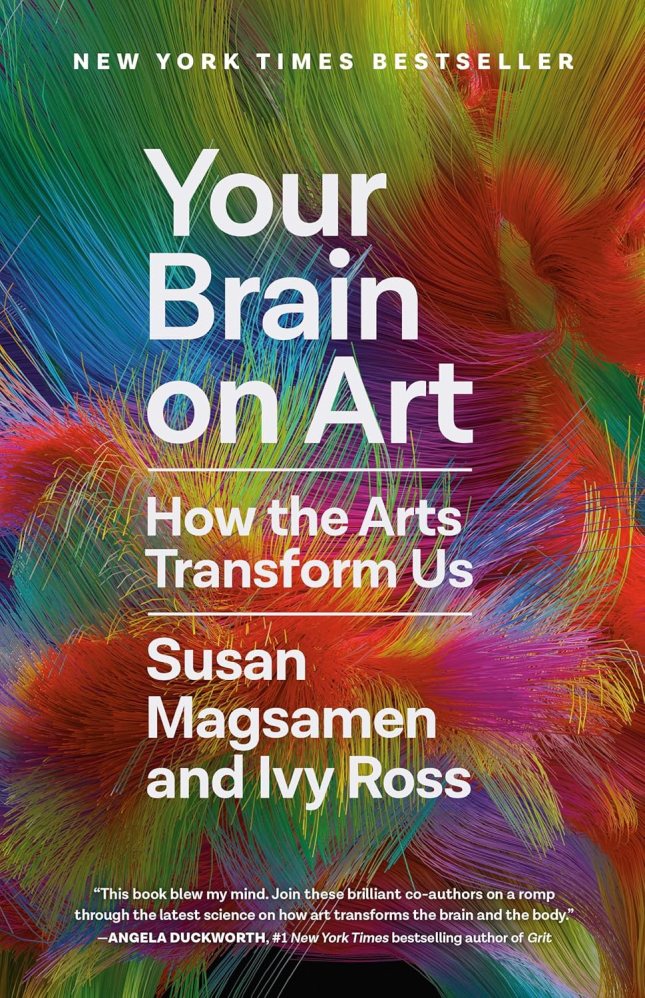
Your Brain on Art: How the Arts Transform Us

Art isn’t just something we admire in galleries or hear in concert halls—it’s deeply wired into who we are as humans. Your Brain on Art: How the Arts Transform Us by Susan Magsamen and Ivy Ross isn’t just another book about creativity; it’s a deep dive into what happens to our brains when we engage with art. The authors blend neuroscience, psychology, and real-world examples to show that art isn’t a luxury but a biological necessity, shaping how we think, feel, and even heal. It turns out that the arts—whether painting, music, literature, dance, or theater—do more than just entertain us. They literally rewire our brains, enhancing cognitive function, reducing stress, and making us more empathetic and emotionally resilient.

One of the book’s most striking revelations is that engaging with art activates multiple areas of the brain at once. When you listen to music, for example, different neural networks synchronize, improving memory, mood, and even problem-solving skills. Studies have shown that music therapy can help people with Alzheimer’s recall lost memories, while rhythmic movement in dance strengthens neural pathways that improve motor function. Literature, on the other hand, boosts empathy by simulating real-life social interactions in our minds, helping us understand perspectives outside our own. Even visual art engages the brain in unique ways—simply looking at a painting can increase dopamine levels, the chemical associated with pleasure and motivation, while creating art strengthens cognitive flexibility and emotional regulation. What’s fascinating is that the benefits of art aren’t limited to those who are “good” at it. The process of making art, regardless of skill level, has been shown to lower cortisol (the stress hormone) and increase neuroplasticity, meaning the brain becomes more adaptable and resilient. This is why activities like doodling, playing an instrument, or even just singing in the shower can have measurable effects on mental and emotional well-being.

The book also makes a compelling case for using art as a healing tool. Expressing emotions through painting, writing, or movement has been used in therapy to help people process trauma, recover from depression, and manage anxiety. Art therapy is now widely used to support patients with PTSD, offering a non-verbal way to process deep emotional wounds. Even outside of clinical settings, incorporating art into daily life can have profound effects. Reading fiction strengthens our ability to connect with others on an emotional level, listening to music can enhance focus and relaxation, and dancing—even if it’s just swaying in your living room—stimulates brain regions associated with memory and emotion.

What makes Your Brain on Art so engaging is that it’s not just an academic exploration; it’s a call to action. It challenges the modern obsession with productivity, arguing that we need to stop seeing art as an indulgence and start recognizing it as an essential part of our mental and physical health. We’ve been painting on cave walls, telling stories, and singing around fires for thousands of years, not because it was a luxury, but because it was essential to our survival. This book reminds us that creativity isn’t reserved for the talented—it’s something every brain craves. If you’ve ever hesitated to pick up a paintbrush, dance in your kitchen, or write something just for the joy of it, Your Brain on Art makes it clear: your brain is built for this. Engaging with the arts isn’t just about self-expression—it’s a way to think better, feel deeper, and connect more fully with the world around you.

Toppings Topping Toppings!

In the beginning, and some weeks through this year I didn’t feel up for the research and effort new styles of pizza required so I went to my standard New York style pizza dough and just played with different toppings. [Shout out to Tony Gemignani’s method for a great dough] This was usually informed by whatever was fresh at the grocer, leftover cheese in the fridge or sometimes even what I had in the pantry. Instead of making a bunch of different posts – I decided to collate them all into one post since they all share the same base.

Three Cheese Pizza
This is a pretty standard pizza found in the NJ/NY area but I mixed it up by starting with a heavy layer of Parmesan, then dry mozzarella, then finishing with chunks of fresh mozzarella. I liked the clean milky taste of the fresh mozzarella as a counterpoint to the salty parmesan. A healthy dusting of Sicilian oregano and we have a winner!

Brooklyn Pie
What to do when it’s tomato season and you have an amazing fresh tomato at peak ripeness? Make a Brooklyn pie of course. The sauce base is just pureed pure plum tomatoes, large slices of fresh mozzarella (having an Italian Deli in town sure is helpful),s ome thin slices of said tomato and basil leaves from the garden

Prosciutto Pizza
I had some delicious prosciutto left over from something and decided to use it on a pizza. I knew one thing up front, you shouldn’t fire the pizza with the prosciutto on it so I went with a simple sauce of just pureed tomatoes and I wanted a light cheese so fresh mozzarella was the pick here. I fired it in the ooni and as soon as it came out I layered on the paper thin prosciutto and watched the fat start to melt into the pizza and knew this was going to be amazing. The trick it the meat has to be thin – none of this grocery store prepackaged stuff – go to an Italian deli and get it sliced super thin for best results.

Roasted Red Pepper Pizza
I had a bunch of jarred red peppers left over from a recipe and decided they needed to end up on a pizza. I knew that they had a flavor punch and were oily so some dry mozzarella was the go to here and I knew I wanted to ramp up the flavor a bit so I made a more robust sauce and added some red pepper flakes to it to counter the sweetness of the red peppers with a bit of heat. The only notes I had was to cut the red peppers into smaller slices, the texture of an entire red pepper was a bit much

Tex-Mex Pizza
Jersey Corn is some good corn – sweet and plentiful in the early fall and what else utilizes a lot of corn? Tex Mex cooking, that’s what. I tinkered with this a few times as the first try was pretty bland and I learned that the high heat of the pizza oven just isn’t enough to cook the corn so charring it on a grill before it goes on the pizza was the key there. I used pepper jack as the cheese and thin sliced red onions to provide a sweet element. Adding a bit of salsa at the end was universally panned as a bad option so if I make this again that salsa will remain in the pantry!

Meat Lovers Pizza
I don’t know why I waited to long to bust this bad boy out – I love pizza and I love meat so this marriage seemed to be destiny. I didn’t want to have a greasy mess to I limited it to sweet Italian sausage, meatballs, pepperoni, and crumbled bacon. Hmmm.. healthy. I cooked the bacon in the oven until crisp and added it at the end because otherwise it would have been a greasy mess. This was amazing – every bit was a meat enhanced flavor experience and if my cholesterol would allow it, I’d eat this all the time!

BBQ Chicken Pizza
Have a bunch of leftover BBQ chicken? Throw it on a pizza (I mean, that’s my first thought for most leftovers really). I knew I wanted to have that summer BBQ vibe for this pizza so I started thinking what can I grill to add some smoky flavor to this and settled on some corn and red onions. Grilling them up until they were slightly charred and adding them right at the end of the firing turned out to work great. The general feedback was the flavors were good but it was missing something – I’ll keep working on this until I figure it out. I suggested BBQ sauce and we tried a little bit on a slice and that’s.. not the answer.

Pineapple Pizza
Pineapple on pizza is nothing short of an insult to the very soul of Italian cuisine, a culinary abomination that defies centuries of tradition and the fundamental principles of balance, flavor, and respect for ingredients. Italian cooking is rooted in the idea that simplicity, seasonality, and harmony between flavors create perfection, and yet this tropical atrocity throws all of that out the window by introducing an aggressively sweet, watery, and acidic fruit onto a dish that was never meant to accommodate such an outlandish ingredient. The sheer audacity of pairing pineapple’s syrupy sugariness with the rich, savory depth of tomato sauce and mozzarella is an assault on the palate, a chaotic clash that drowns out the natural umami of the cheese and ruins the delicate interplay of flavors that make pizza an art form. Italians have spent centuries perfecting pizza, from the humble Neapolitan Margherita to the crisp Roman al taglio, all with an emphasis on balance and authenticity—yet somehow, this foreign corruption has spread like a virus, defiling menus worldwide. It is an offense not only to taste but to history, a mockery of the craftsmanship and passion that goes into every true Italian pizza. If there were any culinary justice in the world, pineapple on pizza would be banned outright, confined to the realm of misguided food experiments never to be spoken of again in the presence of serious pizza lovers.

But my wife loves it, so here we are. Happy wife and all that.

Sun dried tomato and artichoke with hot honey and basil oil

While brainstorming on what pizza to make that week I decided to raid the pantry and see what we’ve got. I found a bottle of sundried tomatoes, some artichoke hearts, some hot honey and a mostly empty bottle of basil oil. I looked at my pantry haul and shrugged ‘yeah. these should all go on a pizza together’ I opted for a simple tomato sauce as the oil from the sun dried tomatoes packs a ton of flavor and would overpower any delicate flavors I had on there. Some mozzarella mixed with provolone provided a nice salty background note the artichoke hearts got slightly charred in the oven which was a nice flavor. I added the. honey and oil at the end to preserve their delicate fresh flavors. The pizza was.. OK there was just too much going on. Too many flavors and textures competing. Sometimes that works but in this case it detracted from the finished product. It wasn’t bad though, so I did eat it but next time I’d go simpler.

SIX Cheese Pizza
We did three cheeses – lets go bigger! Four cheese? NO! FIVE CHEESE? HAHA Try SIX CHEESE! Is this because you had a bunch of leftover cheese in your fridge you wanted to use up? Yes. That’s exactly how this came about. I had some provolone, fontina, mozzarella, fresh mozzarella, ricotta and parmesan. I used a standard tomato base and ensured an even mix of the fontina, provolone, and mozzarella to ensure a good coverage. I started with a heavy dusting of parmesan, added the mixed cheeses then fired that bad boy in the oven. When I pulled it out I dropped dollops of ricotta across the pizza and dusted with oregano and basil. This lactose bomb was delicious and I ate almost the entire thing somehow all the cheeses worked in synergy and created a singularity of cheese. 6/5 Stars

Tre Sugo
I stole this idea from a pizza place near me – they made a standard pizza cheese first then striped three different sauces over the pizza – Tomato sauce, Pesto, and vodka sauce. I really liked that idea. They did it with a spiral pattern with one of those spinning sauce dispenser things but that seemed like too much work so I just striped the entire pizza in strips of different sauces so every bite you got a bit of each. It was really good – the only drawback was that the pesto was really strong and tended to overpower the other two sauces. I think if I make this again, I’ll make it a pesto cream sauce which I think would complement the other sauces better.