
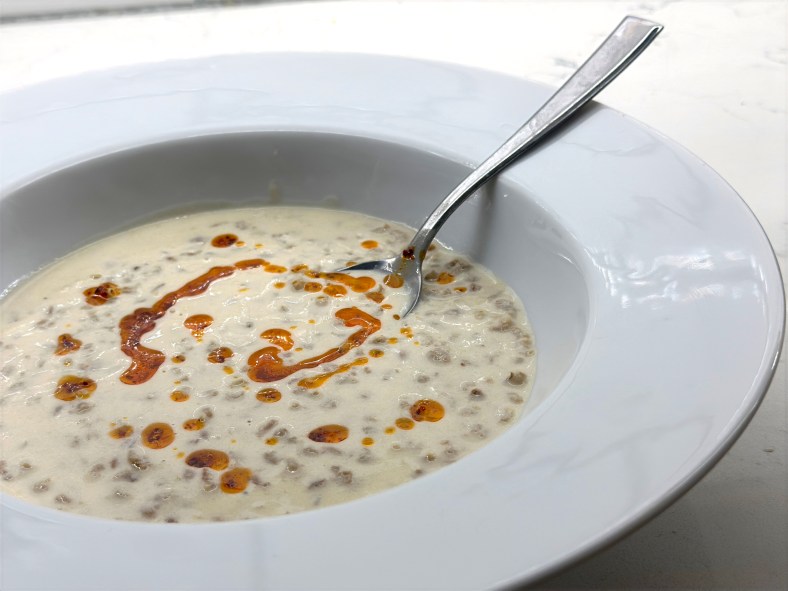
Worldwide Food Tour – Armenia

Tanabour (Թանապուր) is a tangy, creamy, and warming Armenian yogurt soup, made with matzoon (Armenian yogurt), grains, and fragrant herbs. It is a staple of Armenian cuisine, often enjoyed as a comfort food, a winter warmer, or even a light, nutritious meal year-round.

With its delicate balance of tanginess, earthiness, and warmth, Tanabour reflects Armenia’s rich culinary history, where fermented dairy, grains, and herbs play a crucial role. This dish is both deeply traditional and incredibly nourishing, making it a beloved meal across generations.


The History: A Dish Rooted in Armenian Heritage

Tanabour has origins in ancient Armenian cuisine, where dairy-based soups were a way to preserve yogurt and use local grains. The dish likely developed in the rural highlands, where fermented dairy (like matzoon) was a staple of shepherds and villagers.

Historically, Tanabour was often eaten as a fasting dish during Lent, made without meat but still providing protein and sustenance through yogurt and grains. Over time, it became a year-round comfort food, enjoyed both warm in winter and cool in summer.

Today, Tanabour remains a symbol of Armenian home cooking, often made by grandmothers and families for special gatherings or everyday meals.


What is Tanabour?

Tanabour is a creamy, slightly sour soup made from yogurt, grains (like wheat or rice), butter, and aromatic herbs. The tangy yogurt base is balanced by the earthy grains and bright herbs, creating a dish that is both hearty and refreshing.

Essential Ingredients of Tanabour:

  • Matzoon (Մածուն) or Yogurt: The foundation of the soup, providing its signature tanginess.
  • Egg & Flour Mixture: Helps stabilize the yogurt, preventing curdling.
  • Grains: Typically hulled wheat (dzavar), bulgur, or rice, giving the soup texture.
  • Butter: Adds richness and a silky mouthfeel.
  • Garlic: Infuses the broth with depth and aroma.
  • Dried Mint (or Fresh Herbs): A signature flavoring, bringing brightness to the soup.
  • Salt & Black Pepper: To enhance and balance the flavors.

Some variations include chickpeas or lentils, while others use dill or cilantro instead of mint, depending on family traditions.


Tasting Notes: A Creamy, Tangy, and Herbaceous Delight

Tanabour is a dish that balances multiple flavors and textures beautifully:

  • The yogurt base is creamy and slightly sour, providing a refreshing tang.
  • The grains add a gentle chewiness, making the soup filling yet light.
  • The garlic and butter create richness, coating the palate in warmth.
  • The dried mint (or fresh herbs) add a fragrant, slightly cooling contrast, rounding out the dish.

Each spoonful is comforting yet lively, making Tanabour a unique and deeply satisfying soup.


How Tanabour is Served

Tanabour can be enjoyed hot or cold, making it a versatile dish for all seasons.

Traditional Serving Styles:

  1. Warm Tanabour (Winter Version) – Served hot, with melted butter drizzled on top and sometimes with extra grains for heartiness.
  2. Chilled Tanabour (Summer Version) – Served cold, often with a squeeze of lemon juice and fresh herbs for a cooling effect.
  3. With Flatbread or Lavash – Traditional Armenian lavash bread is often torn and dipped into the soup.
  4. With Extra Butter & Garlic – Some families fry garlic in butter and drizzle it over the soup before serving.

Tanabour is light enough to be an appetizer but hearty enough to be a full meal, especially when paired with bread or side dishes.


Why Tanabour is a Timeless Armenian Classic

Rich Yet Refreshing – A creamy yet light dish, perfect for any season.
Nutritious & Filling – Packed with protein, probiotics, and fiber from yogurt and grains.
Deeply Traditional – A dish that connects generations of Armenian families.
Easy to Prepare – Simple ingredients, yet layers of flavor and comfort.
Versatile & Customizable – Enjoy hot or cold, with different grains and herbs.

From a cozy meal on a winter evening to a refreshing bowl on a summer day, Tanabour is a dish that represents Armenia’s love for simple, nourishing food.

Worldwide Food Tour – Australia

A Dessert as Light as a Cloud

Few desserts capture the elegance and simplicity of Australian cuisine like Pavlova—a stunning meringue-based dessert topped with whipped cream and fresh fruit. With its crisp outer shell, marshmallow-soft center, and vibrant toppings, Pavlova is a celebration of texture and flavor, making it a beloved dessert for special occasions, summer gatherings, and holiday feasts.

Although its origins are hotly debated between Australia and New Zealand, Pavlova has become a national treasure in both countries, with Australians proudly serving it at Christmas barbecues, birthdays, and family celebrations.


The History: A Dessert Fit for a Prima Ballerina

Pavlova is said to have been created in honor of Russian ballerina Anna Pavlova, who toured Australia and New Zealand in the 1920s. The dessert’s lightness and elegance were meant to reflect her graceful dance style, much like a ballerina’s delicate tutu.

Both Australia and New Zealand claim to have invented Pavlova, but food historians suggest that it likely evolved from European meringue-based desserts that were adapted in the Southern Hemisphere. Regardless of its true birthplace, Pavlova remains a quintessential Australian treat, often served as the ultimate summer dessert.


What is Pavlova?

At its core, Pavlova is a meringue dessert with a crisp crust and a soft, airy interior, topped with lightly sweetened whipped cream and fresh fruit.

Essential Ingredients of Pavlova:

  • Egg Whites: The key to achieving the dessert’s signature lightness and crisp texture.
  • Sugar: Whisked into the egg whites to create a glossy, stable meringue.
  • Cornstarch: Helps give Pavlova its marshmallowy center.
  • Vinegar or Lemon Juice: Adds stability and enhances the pillowy texture.
  • Vanilla Extract: Provides a touch of warmth and depth.

Classic Toppings:

  • Whipped Cream: Soft, lightly sweetened, and piled high.
  • Fresh Fruit: Typically passionfruit, kiwi, strawberries, and berries for a mix of tart and sweet flavors.
  • Optional Drizzles: Some versions include passionfruit coulis, berry compote, or a light caramel drizzle.

Tasting Notes: A Perfect Balance of Texture and Flavor

Pavlova is a dessert that delights the senses with every bite:

  • The outer shell is delicately crisp, giving way to a soft, airy, marshmallow-like center.
  • The whipped cream adds lightness, complementing the delicate meringue.
  • The fruit brings freshness and acidity, balancing the sweetness of the meringue.
  • The combination of textures—crunchy, creamy, and soft—is what makes Pavlova unforgettable.

How Pavlova is Served

Pavlova is a show-stopping dessert, often presented on a large platter and sliced like a cake. It is best enjoyed immediately after assembly, as the meringue can soften when exposed to moisture.

Variations and Modern Twists:

  1. Chocolate Pavlova – Cocoa powder is added to the meringue for a rich twist.
  2. Mini Pavlovas – Individual-sized portions, perfect for serving guests.
  3. Tropical Pavlova – Topped with mango, pineapple, and passionfruit for a tropical spin.
  4. Christmas Pavlova – Decorated with red berries, pomegranate seeds, and a dusting of powdered sugar.

Why Pavlova is Australia’s Favorite Dessert

Light Yet Indulgent – Crisp, creamy, and fruity, without being too heavy.
Versatile & Customizable – Can be adapted with different toppings and flavors.
Perfect for Celebrations – A beautiful, crowd-pleasing centerpiece for any occasion.
A Piece of Australian Culture – A dessert woven into the country’s culinary identity.

Whether enjoyed at a sunny backyard barbecue or a festive holiday table, Pavlova remains a timeless Australian classic.

Worldwide Food Tour – Switzerland

Swiss cheese fondue is a smooth, melted cheese dish, typically made with a blend of two or more cheeses, white wine, garlic, and seasonings, served in a fondue pot over a low flame.

Essential Ingredients:

  • Swiss Cheeses: The most traditional choices are:
    • Gruyère – Aged, nutty, and slightly sweet.
    • Emmental – Mild, slightly fruity, and smooth.
    • Vacherin Fribourgeois – A creamy cheese, used in moitié-moitié fondue (half Gruyère, half Vacherin).
  • White Wine: Helps melt the cheese smoothly and adds acidity to balance richness.
  • Garlic: Rubbed inside the pot for flavor.
  • Kirsch (Cherry Brandy): Adds a subtle kick (optional).
  • Cornstarch or Flour: Helps prevent the cheese from separating.
  • Nutmeg & Black Pepper: Traditional spices for warmth and depth.

Some regional variations use different cheese blends or add herbs, mushrooms, or even tomatoes for unique flavors.


Tasting Notes: A Rich, Creamy, and Savory Indulgence

A well-made cheese fondue delivers a perfect balance of creamy, nutty, and slightly tangy flavors:

  • The texture is silky and smooth, coating each bite perfectly.
  • The flavor is deeply savory, with the cheeses’ richness enhanced by the wine’s acidity.
  • Hints of garlic and nutmeg add complexity, making each bite warm and aromatic.
  • The crispy, toasted bread contrasts beautifully with the melted cheese.

Each dip into the pot is a comforting, decadent delight, making fondue a dish that satisfies both the palate and the soul.


How Cheese Fondue is Served

Fondue is traditionally enjoyed as a communal meal, with a pot of melted cheese in the center and various dipping ingredients around the table.

Traditional Dippers:

  1. Crusty Bread – The classic choice, cut into bite-sized cubes.
  2. Boiled Potatoes – Adds a hearty, starchy balance to the cheese.
  3. Steamed Vegetables – Broccoli, cauliflower, or asparagus work well.
  4. Pickles & Cornichons – Their acidity cuts through the richness.
  5. Dried or Cured Meats – Adds extra protein and texture (optional).

Serving Tip: Each person uses a long fondue fork to dip their food into the cheese, swirling gently to coat it evenly.


Fondue Etiquette: The Swiss Way

In Switzerland, cheese fondue is more than a meal—it’s a tradition with its own set of rules:

Stir the cheese in a figure-eight motion – Helps keep it smooth.
Never double-dip! – Each dip should be fresh.
If you drop your bread in the pot, there’s a penalty! – Often, the “punishment” is buying the next round of drinks.
Pair with dry white wine or tea – Avoid water, as it’s said to make the cheese sit heavy in the stomach.

These customs add fun and playfulness to the fondue experience, making it a true social event.


Beyond Switzerland: Cheese Fondue Variations

While traditional Swiss fondue remains the most famous, different regions and countries have created their own variations:

  • Fondue Savoyarde (France): Uses French cheeses like Comté and Beaufort.
  • Italian Fonduta (Italy): Made with Fontina cheese and egg yolks for a silkier texture.
  • Beer Fondue (Germany/Austria): Replaces white wine with beer for a maltier flavor.
  • Truffle Fondue: Some Swiss restaurants add black truffles for an elegant twist.

Despite these variations, classic Swiss cheese fondue remains the gold standard of this beloved dish.


Why Cheese Fondue is Switzerland’s Ultimate Comfort Food

Rich & Satisfying – A warm, melty cheese dish that is pure indulgence.
Perfect for Sharing – A social meal that brings people together.
Deeply Traditional – A dish with centuries of history and cultural significance.
Versatile & Customizable – Works with different cheeses, dippers, and flavors.
A Winter Essential – The ultimate cozy, cold-weather meal.

From Alpine chalets to urban fondue restaurants, Swiss cheese fondue remains a symbol of warmth, togetherness, and the simple joy of sharing good food.

Worldwide Food Tour – Hungary

Hungarian Ghoulash is one of Hungary’s most iconic and beloved dishes, a hearty, paprika-infused beef stew that has been enjoyed for centuries. Unlike thick, heavy stews, Hungarian goulash is a rich yet light dish, made with tender slow-cooked beef, sweet paprika, onions, and potatoes, resulting in a deeply flavorful, slightly spicy, and aromatic meal.

This dish is more than just food—it is a symbol of Hungarian culinary tradition, deeply rooted in the culture of Hungarian herdsmen, from whom it takes its name.


The History: A Dish of the Hungarian Great Plains

Goulash dates back to the 9th century, when Hungarian Magyar shepherds cooked slow-simmered meat stews over open fires, drying the meat to carry it on long journeys. When needed, they would rehydrate the dried meat with water, creating a simple but nourishing dish.

By the 18th century, paprika—introduced to Hungary from the Americas—became a staple ingredient, giving goulash its signature red color and rich depth of flavor.

Unlike the thicker, flour-thickened stews of Central Europe, authentic Hungarian goulash is brothy, aromatic, and rich with paprika, staying true to its humble pastoral origins.


What is Hungarian Goulash?

Hungarian goulash is a slow-cooked beef stew, flavored with sweet Hungarian paprika, onions, and other spices, often including potatoes, carrots, and sometimes csipetke (small Hungarian dumplings).

Essential Ingredients:

  • Beef: Traditionally shank, chuck, or shin, slow-cooked until fork-tender.
  • Onions: Provides a natural sweetness and thickens the broth.
  • Hungarian Sweet Paprika: The key ingredient, giving goulash its rich red color and smoky-sweet depth.
  • Carrots & Potatoes: Adds heartiness and texture.
  • Garlic & Caraway Seeds: Enhances the flavor.
  • Tomatoes (optional): Some modern versions include tomatoes, though traditional goulash relies on paprika for depth.
  • Csipetke (Hungarian Dumplings) (optional): Small pinched egg dumplings, added for extra texture.

Tasting Notes: A Perfect Blend of Savory, Smoky, and Sweet

Authentic Hungarian goulash is bold yet balanced:

  • The broth is rich and aromatic, infused with the warmth of sweet paprika.
  • The beef is fall-apart tender, soaking up the deep flavors.
  • The onions add a subtle sweetness, complementing the slight smokiness of the paprika.
  • The potatoes and carrots absorb the broth, making every bite satisfying.
  • The caraway seeds add an earthy, slightly citrusy note, elevating the dish.

Unlike thicker stews, Hungarian goulash has a light, broth-like consistency, making it both comforting and easy to eat.


How Hungarian Goulash is Served

Goulash is traditionally served as a main course, often accompanied by simple sides to absorb the flavorful broth.

Traditional Serving Styles:

  1. With Fresh Bread – A crusty Hungarian bread (kenyér) is perfect for soaking up the rich broth.
  2. With Csipetke Dumplings – Small, pinched flour dumplings added to the stew.
  3. With Pickled Vegetables – Tangy pickles contrast beautifully with the richness of the goulash.
  4. With Sour Cream (Optional) – Some regions add a dollop of sour cream for creaminess.

Though similar dishes exist across Austria, Germany, and Central Europe, Hungarian goulash remains distinct for its heavy use of paprika and lighter, brothier consistency.


Why Hungarian Goulash is a National Treasure

Rich Yet Light – A flavorful broth-based stew, not overly heavy.
Slow-Cooked Comfort – The long cooking process brings out deep, complex flavors.
Versatile & Customizable – Can be made with beef, pork, or even game meat.
Rooted in History – A dish that has been a staple of Hungarian life for centuries.
Perfect for Any Occasion – Served at family dinners, festivals, and even Hungarian restaurants worldwide.

Whether enjoyed in a traditional Budapest eatery or cooked at home, Hungarian goulash is a timeless dish that celebrates Hungary’s love for bold, heartwarming flavors.

Worldwide Food Tour – Canada

A Dish of Crispy, Cheesy, and Savory Goodness

Few dishes represent Canadian cuisine as distinctly as Poutine—a delicious, decadent mix of crispy fries, squeaky cheese curds, and rich brown gravy. Originally from Quebec, this dish has become a national favorite, enjoyed everywhere from fast-food joints to high-end restaurants.

Poutine is more than just a dish—it’s a Canadian cultural icon, embodying comfort, indulgence, and late-night cravings. Whether served in its classic form or reinvented with gourmet twists, poutine remains a beloved staple of Canadian food culture.


The History: A Humble Quebecois Invention

Poutine was born in rural Quebec in the 1950s, though its exact origin is hotly debated. According to legend, a customer at a restaurant in Warwick, Quebec, asked for cheese curds on top of his fries, prompting the owner to declare, “Ça va faire une maudite poutine!” (“That’s going to make a damn mess!”).

Later, gravy was added to help keep the fries warm, completing what is now known as the classic poutine. By the 1970s and 1980s, poutine spread beyond Quebec and became a Canadian fast-food staple, appearing in major chains like McDonald’s, KFC, and Burger King.

Today, poutine is enjoyed across Canada and internationally, with variations found in New York, France, and even Japan.


What is Poutine?

Poutine consists of three essential components:

  1. French FriesCrispy on the outside, fluffy on the inside, traditionally thicker-cut fries.
  2. Cheese CurdsSoft, fresh, squeaky white cheddar curds, which partially melt under the hot gravy.
  3. Brown Gravy – A rich, savory beef or chicken gravy, thick enough to coat the fries but thin enough to seep between them.

Optional Additions & Variations:

  • Meat Poutines: Topped with smoked meat (Montreal-style), pulled pork, or bacon.
  • Lobster Poutine: A luxurious East Coast variation with fresh lobster.
  • Breakfast Poutine: Topped with eggs, sausage, or hollandaise sauce.
  • Vegetarian Poutine: Made with mushroom-based or vegetarian gravy.
  • Foie Gras Poutine: A gourmet twist found in high-end Canadian restaurants.

Tasting Notes: A Perfect Balance of Crunchy, Gooey, and Savory

Poutine is rich, indulgent, and deeply satisfying:

  • The fries stay crispy yet absorb the rich, salty gravy.
  • The cheese curds are warm and slightly melted but still hold their shape and squeak when bitten into.
  • The brown gravy is smooth, umami-packed, and brings everything together in a deliciously messy harmony.

Each bite delivers a contrast of textures and bold flavors, making poutine one of the most comforting and crave-worthy dishes in Canada.


How Poutine is Served

Poutine is enjoyed as:

  1. A Classic Fast-Food Dish – Found in diners, food trucks, and fast-food chains.
  2. A Late-Night Snack – A staple of Canadian nightlife, perfect after a night out.
  3. A Gourmet Experience – Reinvented by chefs with premium ingredients.
  4. A Festival Staple – Celebrated at Poutine Festivals across Canada.

No matter how it’s served, poutine is best eaten hot and fresh, ensuring the perfect balance of crispy fries, melted cheese, and gravy.


Why Poutine is Canada’s Most Famous Dish

Crispy, Gooey, and Savory – A perfect mix of textures and flavors.
A Cultural Icon – Deeply rooted in Quebecois and Canadian identity.
Versatile & Customizable – Can be enjoyed classic or with endless toppings.
Comfort Food at Its BestRich, indulgent, and perfect for any craving.
Recognized Worldwide – A dish that has gained international fame.

From small-town Quebec to the streets of Toronto and Vancouver, poutine is a dish that unites Canada, bringing warm, cheesy, and gravy-filled joy to every bite.

Worldwide Food Tour – Yemen

A Staple of Yemeni Cuisine

Foul (or Ful) Medames is a beloved Middle Eastern and North African dish, and in Yemen, it takes on a unique rich, spiced, and aromatic flavor. This dish, made from slow-cooked fava beans, is a staple of Yemeni breakfasts, often served with fresh bread, eggs, and a variety of condiments.

Yemeni foul is more than just a meal—it’s a deeply cultural and social dish, bringing families and communities together, whether at home or in bustling street-side eateries.


The History: A Dish with Ancient Roots

Foul has been eaten for thousands of years, with origins tracing back to Ancient Egypt, where fava beans were a cheap and filling food for laborers. As trade routes expanded, different regions developed their own variations of foul, including Lebanon, Sudan, Ethiopia, and Yemen.

In Yemen, foul is influenced by the country’s spice-rich cuisine, incorporating garlic, tomatoes, chilies, cumin, and fragrant olive oil or ghee. It is commonly enjoyed as a hearty breakfast or street food, keeping Yemenis full and energized throughout the day.


What is Yemeni Foul?

Yemeni foul is a slow-cooked, mashed fava bean dish, often flavored with garlic, tomatoes, chilies, and spices, and served with warm flatbread for scooping.

Essential Ingredients of Yemeni Foul:

  • Fava Beans (Foul/Ful): Slow-cooked until soft and mashed slightly.
  • Garlic & Onions: For depth and fragrance.
  • Tomatoes: Adds acidity and sweetness.
  • Green Chilies: A key element in Yemeni cuisine, providing heat.
  • Cumin & Coriander: Earthy spices that enhance the beans.
  • Olive Oil or Ghee: For richness and flavor.
  • Lemon Juice: Adds brightness and balances the richness.

Optional Toppings & Accompaniments:

  • Chopped parsley & onions – For freshness.
  • Crumbled cheese or yogurt – A creamy contrast.
  • Boiled or fried eggs – Commonly served alongside.
  • Flatbread (Malawah or Tawa Bread) – Used to scoop up the foul.

Tasting Notes: Earthy, Spiced, and Satisfying

Yemeni foul is rich, hearty, and deeply flavorful:

  • The fava beans are creamy and earthy, absorbing the warm spices.
  • The garlic and chilies provide a bold, smoky kick.
  • The tomatoes add a slight sweetness and acidity.
  • The olive oil or ghee creates a smooth, velvety texture.
  • The lemon juice cuts through the richness, making each bite balanced and satisfying.

This dish is both simple and complex, a perfect balance of rustic flavors and fragrant spices.


How Yemeni Foul is Served

Yemeni foul is a communal dish, often served in a clay pot (madra) and eaten with hands or bread.

Traditional Serving Style:

  1. Foul is ladled into a deep dish or clay bowl.
  2. A drizzle of olive oil or melted ghee is added for richness.
  3. Toppings like onions, parsley, and chilies are sprinkled on top.
  4. Served with warm Yemeni bread (Tawa, Malawah, or Khubz).
  5. Boiled or fried eggs on the side for extra protein.

Yemeni foul is often paired with sweet spiced tea (Shai Adeni), balancing the dish’s savory and spicy flavors.


Why Yemeni Foul is a National Favorite

Nutritious & Filling – Packed with protein, fiber, and healthy fats.
Rich & Flavorful – A bold, spiced version of a traditional dish.
Easy to Make – Requires simple ingredients, yet delivers complex flavors.
Deeply Traditional – A dish enjoyed for centuries in Yemeni homes and cafes.
Perfect for Sharing – A communal meal that brings families together.

Whether enjoyed at a street-side stall in Sana’a or homemade in a village kitchen, Yemeni foul remains one of the country’s most cherished dishes.

Goal Met: Design and Print 5 3D Print Projects

So yeah – I work in a 3D print lab with access to the latest cutting edge technology and I got a 3D printer for my house when I got the job to really deep dive into the technology. I spent months printing out other people’s projects from various maker sites but I really wanted to learn how to make my own cool stuff. The only issue was I haven’t touched a CAD tool in a very long time and when I fired up the most recent version of Fusion 360 I was at a total loss.

The first step was getting some CAD training – LinkedIn learning came in handy here as there was a really informative Fusion 360 class that explained everything I needed to know in just a few hours, so I set to work doing CAD development for 3D printing.

The first thing I did was create a little tombstone for an application that I supported for over a decade as it was finally retired and removed from production. I can’t say I was sorry to see it go (as the software was 10 years old and a giant pain to support) but a little token in my office seemed like an appropriate send off.

Next up was creating some holders for the kid’s craft carts as they were always losing the glue and scissors so I got to work measuring and creating a holder that could hang off the side of the cart (only I got the sizes all wrong and the first version was way too small) it’s a pretty niche product but filled a need so I was kind of proud of it

Then I created a few Christmas Ornaments – one to commemorate our trip to Disney, and one for my nephew’s first birthday. These came together pretty quick and using Bambu print’s keychain maker allowed me to turn JPG images into 3D print objects which came in super handy for this project.

My daughter came to me and complained that her new backpack didn’t have enough space for all her keychains (that’s a thing now, I guess) so I surprised her by making this nifty keychain extender that allowed her to add as many keychains as she wanted!

Finally I was working with my son on his pinecar derby car and we needed a place to hide the weights to make it more aerodynamic so I printed a ‘cockpit’ for his car that could glue the weights to and hide them. It was fun learning the shell command to hollow out a solid object – that’s going to come in useful I’m sure!

I really enjoyed this process and learning how to use CAD to design and print things. I’m looking around my house now for things that 3D printing can solve and as I build my skills I’m hoping I can tackle more complex projects but for now I’m pretty excited for the things I made so far (this was one of the hobbies that kinda got put on the back burner once I was done so make time for other goals, but I hope to revisit it frequently this coming year)

Goal Met – Brew my Own Beer

OK – I cheated a little with this and bought a kit that had all the ingredients and equipment I’d need. I figured the whole point was to learn the process and being stepped through it and handed all the ingredients measured out still accomplished that! Besides – it was less expensive to just buy the kit than purchase everything else I needed.

I originally wanted the chocolate stout but they didn’t have that in stock – so I opted for the orange golden which sounded pretty tasty. The kit came with all the brewing stuff I’d need (bottles sold separately) and some pretty straightforward instructions.

I did do a bunch of research on YouTube to get some hints and things to watch out for and they all seemed to agree with the instructions provided so I set to work making some beer.

The first step was steeping the grains, then adding the malt and bitters and boiling for 60 minutes (creating the wort) adding the aromatics and orange peels right at the end. Then I had to rapidly cool the pot to cool off the wort – easily done with a big steel pot full of ice and water. Once cooled, I filled the brewing carboy and setup the off-gassing system (a tube going from the stopper on the carboy to a glass half filled with water).

Then came the waiting part – somewhere around three days the bubbling in the water will stop and you can switch to the interlock cap and then let the beer hang out in a dark place for about two weeks. There’s a complex siphoning kit that lets you fill the bottles with beer while avoiding the sediment on the bottom of the carboy – mix it with the priming sugar and you’ve got a yeast feast!

Once the bottles are filled they hang out for another two weeks while the carbonation starts happening – after two weeks they need to go to the fridge to slow down the carbonation or you’re going to have bottle bombs.

Overall not too complicated a process and I learned a lot about what it takes to make beer – why each step of the process is important and that the process is easy, you just need a couple of hours of actual work then let time and nature do its thing!

Books Read (Update)

34,752 pages read in total this year.
66 Books
17 Non-Fiction
39 Fiction

I didn’t write a review for all the fiction books I read this year because that would be an issue with how fast I go through them – it would cut into time I needed for other things, so I only wrote posts for the non fiction books but here’s a quick video showing all the books I read this year – enjoy!

Ikigai and Kaizen

Some books feel like an invitation to sit down with a warm cup of tea and rethink how you’re spending your days. Ikigai and Kaizen by Anthony Raymond is one of those books, blending two Japanese philosophies—one about purpose, the other about continuous improvement—into a digestible, motivating, and (at times) delightfully blunt reflection on how to live better. It doesn’t yell at you to wake up at 5 AM, build an empire, or bench press your own fears. Instead, it nudges you toward a more sustainable path, one where meaningful progress doesn’t require burnout.

Let’s start with ikigai, a concept that gets thrown around in self-help circles like a magic key to happiness. At its core, it’s the idea that life is most fulfilling when you find the intersection between what you love, what you’re good at, what the world needs, and what you can be paid for. That sounds simple enough, but Raymond does a great job of cutting through the fluff that often surrounds this idea. He doesn’t just present ikigai as an aspirational concept; he actually shows how it functions in real life, beyond the neat little Venn diagrams you see on Pinterest. The book makes it clear that ikigai isn’t necessarily some grand, world-changing mission—it can be something as simple as crafting furniture, teaching kids, or even making the perfect cup of coffee. The key isn’t in the scale of your purpose but in its ability to get you out of bed with a sense of meaning.

And then there’s kaizen, which is basically the quieter, less flashy cousin of hustle culture. Instead of urging you to overhaul your life overnight, kaizen is all about making small, incremental improvements over time. Raymond highlights how this philosophy, originally developed in the world of Japanese business and manufacturing, can be just as effective in personal growth. The magic of kaizen is that it sidesteps the all-or-nothing mentality that so many self-improvement books unknowingly reinforce. You don’t need to run a marathon next week, launch a startup in six months, or achieve inner peace by next Tuesday. You just need to improve by a tiny fraction today—and then do the same tomorrow. The book argues (quite convincingly) that small changes, when sustained, add up to something far more powerful than sporadic bursts of motivation.

Where Raymond really shines is in his ability to weave these two concepts together without making them feel like another formulaic “life hack.” The interplay between ikigai and kaizen makes for a refreshing approach to personal development—one that doesn’t demand immediate, radical transformation but instead encourages alignment and steady refinement. If ikigai helps you figure out where you want to go, kaizen keeps you moving without the exhaustion of trying to sprint the entire way there.

The book is also refreshingly realistic. While some self-help books sell you the fantasy that anything is possible with the right mindset (as if positive thinking alone will suddenly make you a concert pianist), Raymond is more grounded. He acknowledges that finding ikigai isn’t always easy and that continuous improvement isn’t always linear. There are detours, setbacks, and moments where progress feels painfully slow. But that’s where kaizen becomes invaluable—it reminds you that even when things don’t go as planned, you can still take one small step forward.

Beyond its philosophical grounding, Ikigai and Kaizen is also just an enjoyable read. Raymond’s writing is straightforward without being dull, encouraging without being saccharine. He doesn’t just hand you motivational quotes and send you on your way—he gives you something practical to hold onto, something that doesn’t fall apart under the weight of real-life challenges.

So, what’s the big takeaway? If you’re looking for a book that tells you to quit your job, move to Bali, and find your bliss, this isn’t it. But if you’re interested in a book that respects the fact that you have responsibilities, challenges, and a complicated life—and still want to make meaningful, lasting change—this one’s worth your time. Ikigai and Kaizen isn’t about chasing an unattainable ideal; it’s about crafting a life that feels rich in purpose and growth, one small step at a time. And honestly, isn’t that a more sustainable way to get where we’re going?