Worldwide Food Tour – Malaysia

Few dishes in Malaysian cuisine are as bold, complex, and soul-satisfying as Laksa—a rich, aromatic noodle soup that embodies the multicultural heritage of Malaysia. This dish is a culinary masterpiece, blending Chinese, Malay, and Indian influences into a bowl bursting with spices, coconut milk, tamarind, and fresh herbs.

Laksa is more than just a soup—it’s a symbol of regional diversity, with each Malaysian state boasting its own unique variation, from the spicy, coconut-rich Curry Laksa to the tangy, fish-based Asam Laksa. No matter the type, Laksa is a dish that warms the soul, excites the palate, and tells the story of Malaysia’s vibrant food culture.


The History: A Fusion of Cultures

Laksa’s origins can be traced back to the 15th and 16th centuries, when Malaysia was a bustling trade hub along the Spice Route. Chinese traders, known as the Peranakan (or Straits Chinese), settled in Malacca and Penang, intermarrying with the local Malay population. Their fusion of Chinese noodle dishes with Malay spices, herbs, and coconut milk gave birth to what we now know as Laksa.

Over time, Laksa evolved into regional variations, each reflecting the local flavors and ingredients of different Malaysian communities. While the dish has since spread to Singapore, Indonesia, and even Australia, Malaysia remains its true culinary heartland.


Types of Laksa: A Bowl for Every Mood

1. Curry Laksa (or Laksa Lemak) – The Coconut-Rich Favorite

A creamy, spicy, coconut-based Laksa that is deeply comforting and indulgent.

Key Ingredients:
✔ Coconut milk – Gives the broth its signature richness.
✔ Laksa paste – A blend of chili, lemongrass, galangal, shrimp paste, and turmeric.
✔ Rice noodles – Typically thick vermicelli or flat rice noodles.
✔ Toppings – Chicken, shrimp, tofu puffs, fish cakes, and bean sprouts.
✔ Garnishes – Hard-boiled egg, fresh herbs, and a dollop of sambal chili.

This version is widely loved in Kuala Lumpur and Singapore, often served with spicy sambal on the side for an extra kick.


2. Asam Laksa – The Tangy, Fish-Based Delight

A bright, tangy, and slightly spicy version made with flaked mackerel and tamarind broth instead of coconut milk.

Key Ingredients:
Tamarind and torch ginger flower – Give the broth a fragrant, sour complexity.
Fish broth – Usually made with mackerel or sardines, adding deep umami.
Thick rice noodles – Chewy and slippery, perfect for soaking up the broth.
Fresh toppings – Cucumber, pineapple, mint, onions, and chili slices.
Shrimp paste (belacan) – A must-have for the authentic, pungent depth.

Asam Laksa is Penang’s most famous dish, ranked as one of the world’s best dishes by CNN Travel. It offers an explosion of flavors, from the rich fishiness to the tangy tamarind and cooling fresh herbs.


3. Sarawak Laksa – The Elegant Borneo Version

A refined, slightly less spicy Laksa from Sarawak (Borneo), Malaysia, known for its balanced flavors and light coconut broth.

Key Ingredients:
✔ A complex broth made with prawns, chicken, and a medley of local spices.
Light coconut milk, creating a silky but not overly heavy soup.
Thin rice vermicelli noodles instead of thick ones.
Prawns, shredded chicken, omelet slices, and bean sprouts.

Sarawak Laksa is less fiery than Curry Laksa but deeply aromatic and flavorful, sometimes called “Breakfast Laksa” due to its popularity in morning markets.


Tasting Notes: A Flavor Explosion in Every Spoonful

No matter the type, a bowl of Laksa is an intense, multi-layered experience:

  • Coconut-based Laksas (Curry Laksa, Sarawak Laksa) are creamy, spicy, and slightly sweet, with a deep lemongrass and shrimp paste aroma.
  • Tangy, fish-based Laksas (Asam Laksa) offer a refreshing sourness, balanced by the umami of fish broth and the freshness of herbs and vegetables.
  • The noodles provide a slippery, chewy texture, whether thick vermicelli or thin rice noodles.
  • The toppings—from succulent shrimp to crispy tofu puffs and cooling cucumbers—add layers of crunch, juiciness, and silkiness.

Each spoonful is a perfect harmony of spice, sourness, sweetness, and umami, making Laksa one of Malaysia’s most addictive dishes.


How Laksa is Served and Enjoyed

Laksa is best enjoyed fresh, piping hot, and loaded with toppings.

  1. A steaming bowl of broth and noodles is served, topped with protein like chicken, shrimp, or tofu.
  2. Fresh garnishes—mint, chili, cucumber, and onions—are added for crunch and brightness.
  3. A dollop of sambal chili is mixed in for extra heat.
  4. A squeeze of lime enhances the tangy and spicy notes.

In Malaysia, Laksa is often eaten at hawker stalls, where locals gather to slurp up the aromatic broth with chopsticks and a spoon.


Beyond Malaysia: Laksa’s Global Popularity

Laksa has spread far beyond Malaysia, finding devoted fans in Singapore, Indonesia, Australia, and beyond. In places like Sydney and Melbourne, Laksa has become a beloved comfort food, often served with a modern twist.

Even in the West, restaurants are now incorporating Laksa’s bold flavors into fusion dishes, such as Laksa ramen, Laksa pasta, and even Laksa burgers!


Why Laksa is One of the World’s Most Beloved Noodle Soups

Bold & Complex Flavors – Each spoonful delivers a perfect balance of spice, creaminess, and tanginess.
Deeply Rooted in Malaysian Culture – A dish that showcases Malaysia’s diverse food heritage.
Versatile – From rich coconut Curry Laksa to tangy Asam Laksa, there’s a version for every taste.
Comforting & Satisfying – Whether for breakfast, lunch, or dinner, Laksa is deeply nourishing.

Laksa isn’t just a dish—it’s an experience that captures the heart of Malaysia’s culinary brilliance.

Goal Met – Create 50 Art Pieces

I’ve always like sketching and painting – when I was a kid my favorite class was art. I actually was good enough to get a few different scholarship offers to art school but was talked out of going and instead went into technology and the rest, they say, is history.

I have a few sketch pads on my shelves filled with honest efforts to start drawing and painting again but they usually only have a few pages in them before life just gets too busy and I need to start prioritizing where I spend my time. I’ve always wondered if downplaying the need to create is leading to a more stressful life as it’s one of the things I truly enjoy doing. However, I find myself in a cycle where I pick it up again, I suck at it, I keep trying and get some skills back, then put it away only to repeat this cycle the next time I feel the need to start drawing again.

So I thought if I forced myself to create 50 pieces of art this year I’d kickstart those old habits and maybe pick up something fun again. I didn’t limit it to sketching or drawing, I included things like videos but only if they required something creative (like rotoscoping, green screens, etc.)

As to what to draw? That actually was a bigger challenge. I searched out daily sketch idea websites and they seemed OK. I had a book ‘sketch with dad’ where my daughter and I would take turns drawing in the book and I did a bunch of directed draw videos with my son teaching him how to draw by following along with him.

One old sketchbook idea reared its head when I was digging out some old art books – I had planned to draw all the creatures in the D&D Monster Manual (original version, TYVM)I don’t know how long that project has been simmering but I thought hey – I need some inspiration on days when nothing else is working so I’d randomly pick a monster and then draw it using the book/websites as a source.

Here’s some things I learned: I absolutely suck at drawing human faces. I mean, it’s embarrassing how bad it is – like a knockoff version of the uncanny valley. One of the things I want to work on after this 50 for 50 thing is done is just drawing faces one after another until I can make a person not look like a homunculus.

That being said – I did enjoy drawing and even when it didn’t turn out good I learned something about proportion, anatomy, and texturing.

Goal Met – Cook 50 dishes from different countries

Embarking on a culinary journey to explore global cuisines is akin to unlocking a treasure trove of flavors, traditions, and stories from around the world—all within the confines of your own kitchen. It’s an adventure that transcends mere cooking; it’s about immersing oneself in diverse cultures, understanding their histories, and appreciating the unique ingredients that define their culinary identities.

Diving into unfamiliar recipes can be both exhilarating and humbling. There’s a certain thrill in sourcing exotic spices you’ve never encountered before or mastering a cooking technique that’s entirely new to you. Each dish becomes a lesson, not just in culinary arts, but in geography, history, and anthropology. It’s a hands-on way to experience the world, one plate at a time.

I first thought lets make it 50 countries I’ve never cooked a dish from before but when I checked my notes I saw that would make this pretty much impossible as I’ve been picking various dishes to cook from other countries for years and if I limited it that way I’d be hamstringing myself. I did set a rule that where I could, I would make something new from that country instead of repeating a dish (I broke this rule with Italy since I’ve been cooking Italian food my whole life and I’d need to dig deep to find something)

The first 10-15 countries were easy as I zeroed in on the most popular cuisines globally and did some light research to find dishes that were representative of that country. It was fun learning about why each food was relevant and cross referencing different recipes to see if there’s a common consensus (ChatGPT is great for this task) once I got past those low hanging fruits I actually found a few websites that would let you randomly pick a country and I rolled the proverbial dice each week and tried to cook a dish from whatever country it landed on (hence some of the more esoteric choices)

Most of the time I was able to identify a dish that was representative and source the ingredients locally but sometimes I had to special order ingredients for more exotic dishes which was fun as then I’d have to try to find a use for those ingredients after I made the dish (Soups, it was all soups)

I kept track of the countries via a map API in my google sheet and it was fun watching the countries fill in as I made each dish.

In essence, learning to cook new foods and experimenting with diverse ingredients is a celebration of cultural diversity and a testament to the unifying power of food. It’s an invitation to step out of your culinary comfort zone, to taste the world, and to bring a piece of it into your home. So, don your apron, gather those exotic spices, and embark on a gastronomic adventure that promises to enrich both your palate and your understanding of the world.

Marvin Gaye – What’s Going On?

f the 1900s produced a single album that defined not just a moment, not just a movement, but the entire human condition, it’s What’s Going On. This isn’t just Marvin Gaye’s masterpiece—it’s the masterpiece. It’s the album that took soul, R&B, and protest music and wove them together so seamlessly, so beautifully, that you almost forget it was born out of pure heartbreak and rage. It’s the most important album of its time, and the most hauntingly relevant album of ours.

Before What’s Going On, Marvin Gaye was Motown royalty—the voice behind silky, romantic hits like “Ain’t No Mountain High Enough” and “I Heard It Through the Grapevine.” But by 1971, he wasn’t in the mood for love songs. His brother had just come back from Vietnam, traumatized. The country was in turmoil—civil rights protests, police brutality, poverty, an endless war overseas. And Marvin himself was in crisis, mourning the death of Tammi Terrell and questioning everything, from his music to his faith to the very country he called home. Instead of giving the world another Motown hit, he gave them this: an album that asked the hardest, simplest question of all—what’s going on?

It starts with the title track, and from the first notes, you realize this isn’t just a song—it’s a spiritual awakening. Those saxophones don’t just play, they breathe. The layered, conversational vocals sound like ghosts speaking from another dimension. Marvin’s voice is smooth, pleading, aching as he delivers the line that still echoes half a century later: “You know we’ve got to find a way, to bring some lovin’ here today.” It’s not just a protest song—it’s a prayer.

Then comes “What’s Happening Brother,” a song so intimate it feels like a letter home from war. It’s about Marvin’s brother, yes, but it’s also about every soldier, every displaced person, every lost soul trying to find their way back to a country that no longer feels like home. And just when you think the album can’t get heavier, “Flyin’ High (In the Friendly Sky)” slides in, a devastating, jazz-soaked meditation on addiction, delivered so delicately that it almost feels like floating—until you realize it’s really about falling.

The genius of What’s Going On is that it never stops moving. The songs flow into one another, seamlessly, like a single unbroken thought. “Save the Children” is a desperate cry for the future, “God Is Love” is a hymn disguised as a groove, and then we hit the track—“Mercy Mercy Me (The Ecology).” Who else, in 1971, was making environmental protest music and making it sound this good? It’s as smooth as silk but as urgent as a siren, and the fact that it still applies today, maybe even more than it did then, is either proof of its timeless brilliance or an indictment of everything we’ve failed to fix.

And then there’s “Inner City Blues (Make Me Wanna Holler),” the album’s haunting, gut-punch of a finale. It’s not just a song—it’s an entire system breaking down in real time. Marvin lays it all bare: crime, poverty, war, systemic injustice. And yet, the groove is hypnotic. He’s telling us the truth, but he’s making sure we feel it. When that final, ghostly reprise of “What’s Going On” fades out, it feels less like the end of an album and more like a warning: this isn’t over.

Culturally, What’s Going On didn’t just shake the world—it changed it. It forced Motown to grow up. It paved the way for artists like Stevie Wonder, Curtis Mayfield, and Prince to be as socially conscious as they were musically innovative. It made soul music deeper, richer, more urgent. And five decades later, it still stands as the single greatest artistic statement ever made about America’s struggles—because tragically, so many of those struggles still exist.

There are albums that define genres. There are albums that define generations. And then there’s What’s Going On—the album that defines humanity itself. It’s the pinnacle of the 20th century, not because of its influence (though that’s undeniable), not because of its sonic brilliance (though it’s flawless), but because it speaks to something bigger than music. It’s the album that asks the right questions, the album that dares to care, the album that never stops being true.

And if we’re still asking what’s going on in the 21st century, maybe it’s because we still need to listen.

The Hurt Locker

Kathryn Bigelow’s The Hurt Locker isn’t just a war movie—it’s a 131-minute stress test for your central nervous system. This isn’t one of those big, sweeping, patriotic spectacles where war is just a backdrop for heroism, camaraderie, and some dude writing sentimental letters home while soft orchestral music swells. No, this is war as pure, undiluted anxiety. This is war as an abusive relationship between a man and a bomb suit. This is war where every trash bag, abandoned car, and suspiciously placed goat could be the last thing you ever see. And the best part? You get to spend all of it inside the increasingly unhinged mind of Staff Sergeant William James, played with reckless brilliance by Jeremy Renner.

Renner’s James is not your typical movie soldier. He’s not here to brood about the morality of war or deliver grand monologues about duty and sacrifice. No, this man treats bomb disposal the way a daredevil treats BASE jumping, except instead of a parachute, he has a pair of wire cutters and a questionable amount of impulse control. He’s the guy who looks at a bomb that could level a city block and thinks, “I wonder how close I can get before this thing turns me into confetti.” He sweats adrenaline, makes every safety protocol weep, and approaches each explosive like it just insulted his mother. The man is addicted to war, which the movie kindly reminds us is “a drug.” Yeah, no kidding.

And while James is out here treating life like a Call of Duty lobby, his team—played by Anthony Mackie and Brian Geraghty—spends most of the movie vacillating between barely concealed terror and wanting to punch him in the face. Mackie’s Sanborn is the no-nonsense professional who, shockingly, does not appreciate James’ bomb-defusing-by-vibes-only approach. Meanwhile, Geraghty’s Eldridge is the poor guy who looks like he wandered into this war zone by accident and now can’t figure out how to leave. Their dynamic is basically “daredevil maniac and the two exhausted guys who have to keep him from dying,” which would be hilarious if it weren’t also completely terrifying.

But what really makes The Hurt Locker stand out isn’t just the tension—it’s how relentlessly it drags you into the chaos. Bigelow’s direction makes you feel like you’re right there in the dirt, sweating through your shirt, wondering if the old man watching you from a rooftop is just a guy enjoying the sunset or someone about to set off an IED with his Nokia brick phone. The handheld camerawork, the rapid cuts, the eerie silence that hangs in the air right before everything goes to hell—it all adds up to a film that doesn’t just depict war; it immerses you in it.

And yet, for all its high-octane suspense, The Hurt Locker isn’t about action—it’s about obsession. It’s about how, for some people, the war never really ends, even when they leave the battlefield. James might be able to dismantle bombs with his bare hands, but he can’t dismantle the part of himself that craves the rush. There’s a moment near the end where he stands in a grocery store aisle, staring blankly at an endless row of cereal boxes, completely lost. The choices are overwhelming. The stakes are non-existent. There’s no life-or-death tension, no adrenaline, no purpose. He looks more afraid in that moment than he does when he’s facing down a car bomb. Because the truth is, war is the only place he truly feels alive.

So yeah, The Hurt Locker is a masterpiece, but it’s the kind of masterpiece that leaves you slightly nauseous, vaguely anxious, and questioning whether you should have watched something with talking animals instead. It’s a film that doesn’t glorify war, but it does understand the terrifying allure of it. It grabs you by the collar, drags you into the dirt, and doesn’t let go until you’re just as rattled as the men on screen. And if you somehow make it through the whole thing without stress-eating an entire bag of chips, congratulations—you’re either a robot or William James himself.

Worldwide Food Tour – Ukraine

A Dish That Defines Ukrainian Heritage

Borscht (борщ) is Ukraine’s national dish, a rich, deeply flavorful beet soup that has been enjoyed for centuries. Known for its brilliant red color, complex sweet-sour taste, and nourishing ingredients, borscht is more than just food—it is a symbol of Ukrainian identity, hospitality, and resilience.

Though variations of borscht exist across Eastern Europe and Russia, Ukraine is widely recognized as its true birthplace. Each Ukrainian household has its own unique version, passed down through generations, making borscht both deeply personal and culturally significant.


The History: A Dish with Centuries of Tradition

Borscht has been a staple of Ukrainian cuisine since at least the 14th century, originating in Kyivska Rus’ (modern-day Ukraine and surrounding regions). Originally, borscht was made with hogweed (борщівник, borshchivnyk), a wild plant that gave the soup its name. Over time, beets replaced hogweed, creating the signature red color and slightly sweet flavor that defines modern borscht.

During the Soviet era, borscht was promoted as a pan-Slavic dish, but Ukrainians have always fiercely defended it as their national culinary treasure. In 2022, UNESCO officially recognized Ukrainian borscht as part of Ukraine’s cultural heritage, affirming its deep historical roots and cultural significance.


What is Borscht?

Borscht is a beet-based soup, often made with a rich meat broth, root vegetables, cabbage, and sour flavors like vinegar or fermented beet kvass.

Essential Ingredients of Ukrainian Borscht:

  • Beets (Red Beetroots): The star ingredient, giving borscht its deep ruby-red color and slightly sweet, earthy taste.
  • Cabbage: Adds heartiness and texture.
  • Potatoes & Carrots: Provide additional body and natural sweetness.
  • Onions & Garlic: Essential aromatics for depth of flavor.
  • Tomatoes or Tomato Paste: Adds richness and acidity.
  • Meat (Optional): Beef, pork, or chicken for a hearty version, though vegetarian borscht is also common.
  • Sour Component: Vinegar, lemon juice, or fermented beet kvass for the signature tangy-sweet balance.
  • Dill & Bay Leaves: Traditional herbs for fragrance.
  • Smetana (Sour Cream): A must-have topping for creamy contrast.

Some versions also include beans, mushrooms, or smoked meat, depending on regional traditions and personal preference.


Tasting Notes: Sweet, Savory, and Slightly Tangy

Borscht is richly complex, deeply satisfying, and uniquely balanced:

  • The beets provide a natural sweetness, creating a distinct earthy undertone.
  • The cabbage and root vegetables absorb the flavorful broth, making every bite hearty.
  • The sour component adds a mild tang, preventing the soup from being overly sweet.
  • Fresh dill gives a bright, herbal contrast, enhancing the dish’s depth.
  • A dollop of sour cream melts into the soup, creating a luxurious creaminess.

The flavors intensify overnight, making borscht even better the next day.


How Borscht is Served

Borscht is enjoyed year-round, served either hot in winter or chilled in summer (Kholodnyk borscht).

Traditional Serving Styles:

  1. With a Dollop of Sour Cream (Smetana): The most classic way to enjoy borscht.
  2. With Pampushky (Garlic Bread Rolls): Soft, fluffy rolls brushed with garlic oil, perfect for dipping.
  3. With Fresh Dill & Black Pepper: Enhancing the flavors with herbal notes.
  4. With a Side of Salo (Cured Pork Fat) & Rye Bread: A traditional Ukrainian pairing.
  5. Vegetarian Borscht (Pісний Борщ): A meatless version, often eaten during Orthodox fasting periods.

Borscht is best enjoyed slowly, savoring its deep, layered flavors, often accompanied by a warm conversation among family or friends.


Beyond Ukraine: Borscht’s Global Influence

Though borscht is deeply Ukrainian, variations exist in neighboring countries:

  • Poland: Barszcz, a thinner beet soup often served with dumplings.
  • Russia & Belarus: Sometimes made with fermented beets for a stronger sour flavor.
  • Lithuania: Cold beet soup (Šaltibarščiai) with kefir and eggs.

Despite its regional variations, Ukrainian borscht remains the gold standard, with its perfect balance of richness, acidity, and sweetness.


Why Borscht is Ukraine’s Most Beloved Dish

Deep, Complex Flavor – A perfect harmony of sweet, sour, and savory.
Nutritious & Hearty – Packed with vitamins, fiber, and protein.
A Cultural Symbol – Represents Ukrainian resilience and national pride.
Versatile & Customizable – Can be made meaty, vegetarian, hot, or cold.
Perfect for Sharing – A warm, communal dish enjoyed by generations.

Borscht is not just a soup—it’s a story, a tradition, and a taste of Ukraine’s soul. 🇺🇦

Worldwide Food Tour – Portugal

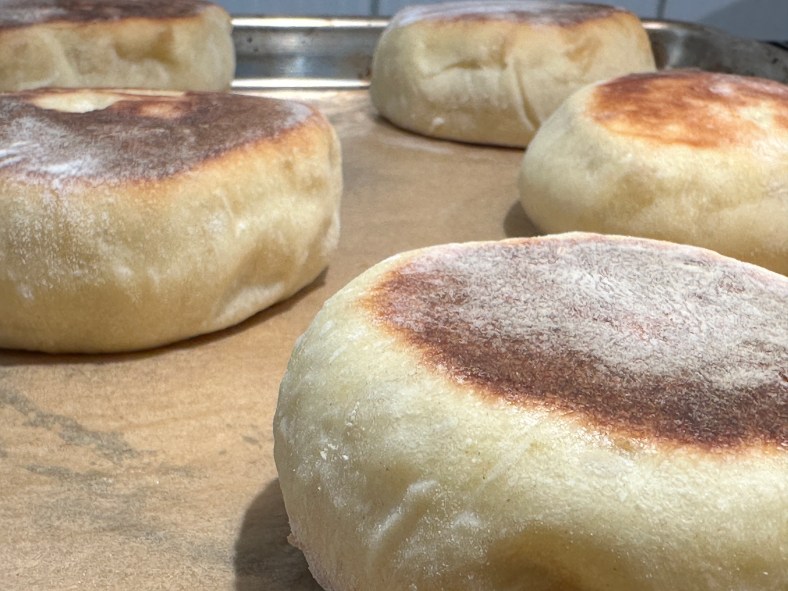
olos Lêvedos are sweet, fluffy, and lightly golden Portuguese muffins originating from the Azores, particularly the island of São Miguel. These yeast-raised, pan-cooked breads are similar in texture to English muffins but sweeter and softer, making them a beloved treat for breakfast, snacks, or as a sandwich bread.

Unlike traditional baked bread, Bolos Lêvedos are cooked on a griddle or iron pan, giving them their signature golden crust and tender interior. Whether enjoyed warm with butter, jam, or paired with savory fillings like cheese and ham, these slightly sweet, pillowy-soft breads are a staple in Portuguese households and bakeries.


The History: A Tradition from the Azores

Bolos Lêvedos date back centuries to the Portuguese Azores, a volcanic archipelago in the Atlantic Ocean. These islands have a strong bread-making tradition, with Bolos Lêvedos likely developing as a simpler alternative to oven-baked bread in home kitchens, where large ovens were not always available.

Over time, São Miguel Island became famous for these sweet griddle muffins, which were originally made for special occasions, religious festivals, and family gatherings. Today, Bolos Lêvedos remain a symbol of Azorean baking and are popular throughout Portugal and even Portuguese communities abroad.


What are Bolos Lêvedos?

Bolos Lêvedos are round, slightly flattened bread rolls made from a lightly sweetened, yeasted dough, then cooked on a griddle instead of baked.

Essential Ingredients of Bolos Lêvedos:

  • Flour – Gives the bread its soft structure.
  • Milk – Adds richness and moisture.
  • Butter – Provides a tender texture and slight richness.
  • Eggs – Contribute to the bread’s fluffiness.
  • Sugar – Makes Bolos Lêvedos lightly sweet, distinguishing them from other breads.
  • Yeast – Helps the dough rise, making the muffins soft and airy.
  • Salt – Balances the sweetness.

Tasting Notes: Light, Sweet, and Slightly Buttery

Bolos Lêvedos have a unique texture and flavor:

  • Soft and pillowy inside, with a slight chew.
  • Golden-brown exterior, thanks to the slow griddle cooking.
  • Lightly sweet and buttery, making them delicious on their own or with spreads.
  • A subtle richness, with hints of milk and eggs.

These muffins are not overly sweet, making them versatile for both savory and sweet pairings.


How Bolos Lêvedos are Served

Bolos Lêvedos can be enjoyed in many ways, making them a go-to bread for any meal.

Traditional Serving Styles:

  1. Plain or Toasted – Served warm, straight from the griddle, or toasted with butter and jam.
  2. With Cheese & Ham – A classic Azorean snack, often paired with Queijo São Jorge (Azorean cheese).
  3. As a Breakfast Bread – Served with honey, cinnamon, or Nutella.
  4. As a Sandwich Bread – Used for hearty sandwiches with meats, eggs, or tuna salad.
  5. With Coffee or Tea – A perfect pairing for a morning or afternoon snack.

Some modern recipes even use Bolos Lêvedos as burger buns, adding a sweet, soft contrast to savory fillings.


Why Bolos Lêvedos are a Portuguese Favorite

Light, Sweet, and Fluffy – A unique cross between bread and a muffin.
Versatile – Can be enjoyed with sweet or savory toppings.
Easy to Make at Home – No oven needed, just a griddle or pan.
A Taste of the Azores – A classic dish that reflects Portuguese island heritage.
Perfect for Any Time of Day – Great for breakfast, snacks, or sandwiches.

Whether enjoyed on São Miguel Island or in a Portuguese café, Bolos Lêvedos are a taste of Azorean tradition and home-baked warmth.

Worldwide Food Tour – Ireland

A Dish Steeped in Irish History and Comfort

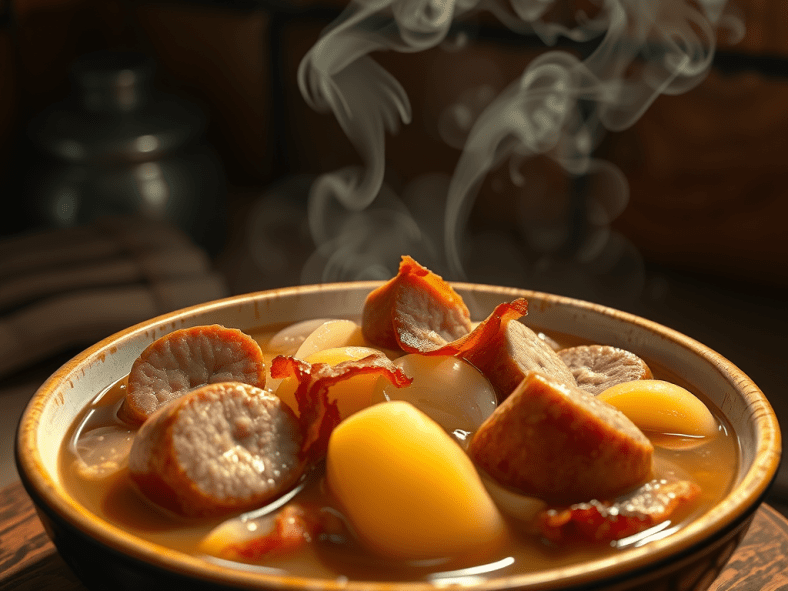
Dublin Coddle is a rich, slow-cooked stew made with sausages, bacon, potatoes, and onions, originating from Dublin, Ireland. Known as a working-class meal, this dish has been enjoyed for centuries, especially on cold evenings or after a night at the pub.

Unlike the more famous Irish stew (which uses lamb or beef), Dublin Coddle is a celebration of pork, using ingredients that were commonly available in Irish households. The slow simmering process allows the flavors to meld beautifully, creating a dish that is simple, hearty, and deeply comforting.


The History: A Traditional Dublin Dish

The origins of Dublin Coddle date back to at least the 18th century, when it became a staple of working-class families in Dublin. The name “Coddle” comes from the cooking method—slowly simmering ingredients in a pot (coddling), allowing them to become tender and flavorful.

Historically, this dish was a practical way to use up leftovers, particularly sausages and rashers (bacon). Since it could be left to simmer for hours, it became a popular meal for Irish families on Thursday nights, when Catholic households avoided eating meat the following day (Friday).

Dublin Coddle is also famously associated with Irish writers like Jonathan Swift and James Joyce, who referenced it in their works, reinforcing its status as a true Dublin classic.


What is Dublin Coddle?

Dublin Coddle is a simple but flavorful dish, made by slow-cooking pork sausages, thick-cut bacon, potatoes, and onions in a broth until everything is soft and infused with savory goodness.

Essential Ingredients of Dublin Coddle:

  • Pork Sausages: Traditionally, Irish pork sausages are used, slightly browned before simmering.
  • Bacon Rashers: Thick-cut Irish bacon (back bacon) or streaky bacon, cut into chunks.
  • Potatoes: The heart of the dish, absorbing all the rich flavors.
  • Onions: Sliced thick, adding sweetness and depth.
  • Stock or Water: Often flavored with beer, herbs, or a bouillon cube.
  • Salt & Black Pepper: For seasoning.
  • Parsley (Optional): For garnish and freshness.

Some modern versions include carrots, garlic, or even Guinness for extra depth of flavor, but the classic Dublin Coddle remains simple and rustic.


Tasting Notes: Rich, Savory, and Comforting

Dublin Coddle is a dish of deep, slow-cooked flavors:

  • The sausages are tender and juicy, having absorbed the flavors of the broth.
  • The bacon adds a smoky, salty richness, balancing the mild potatoes.
  • The onions become soft and slightly sweet, enhancing the overall depth.
  • The potatoes soak up all the savory juices, making them rich and flavorful.

Unlike stews that rely on herbs and spices, Dublin Coddle’s flavors come from the quality of its ingredients, making it a truly satisfying and comforting dish.


How Dublin Coddle is Served

Dublin Coddle is typically served straight from the pot, with its flavorful broth soaking into the ingredients.

Traditional Serving Styles:

  1. With Irish Soda Bread – Perfect for soaking up the rich broth.
  2. With a Pint of Guinness – A classic pub pairing.
  3. With Fresh Parsley Garnish – Adds color and brightness.
  4. With Mustard or Brown Sauce (Optional) – Some enjoy adding a touch of tanginess.

Dublin Coddle is best enjoyed on a chilly evening, at a family gathering, or after a night out, making it one of Ireland’s most comforting and traditional dishes.


Why Dublin Coddle is a True Irish Classic

Simple, Rustic, and Hearty – Uses basic ingredients to create deeply satisfying flavors.
Rich in Irish History – A dish that has been loved in Dublin for centuries.
Perfect for Cold WeatherWarm, filling, and ideal for chilly evenings.
One-Pot WonderEasy to make, requiring minimal effort.
Authentic Irish Pub Fare – Found in Dublin pubs and home kitchens alike.

Whether you’re enjoying it in a cozy Dublin pub or cooking it at home, Dublin Coddle is a true taste of Ireland. 🇮🇪

Goal Met – Paint Bob Ross Painting

Now this may, on its head, seem like an odd goal. But I’ve always wanted to do this and part of this 50 for 50 thing was to realize this dreams and goals that have been subsided by bigger things in life.

I need to preface this by telling a story. My mother was a painter – she used it as therapy after she had a stroke and she’s the one who taught me how to draw and paint and encouraged me to create and explore art.  One thing I knew each week was that Bob Ross would be on the TV when I got home from school and we’d watch it together and I would be absolutely fascinated how he’d just create a stunning landscape out of nothing – just slapping paint on the canvas and *bam* clouds! Pallete knife? *bam* mountains.. It was like magic.

Even at that young age I wanted to try, but we didn’t have oil paints and the things we needed so I kind of just shelved the idea but I still watched the show each week with my mom and tried to guess what Bob would be up to that week.

I didn’t think about it for a while until I was looking at something else online and saw that they released a bunch of Bob Ross videos onto YouTube and I was immediately taken back to that 1980’s couch (you know the one – we all had it in fact if I googled 1980’s couch it’s the FIRST RESULT) eating my after school snack and watching bob on the ol’ 32 inch color TV

I knew I wanted to try to recreate a Bob Ross painting and this goal series seemed like a good place to make that happen. I had some canvas and brushes and some oil paints so all I needed was the ‘magic white’ and a few colors I was missing and I followed along with a Youtube tutorial and I learned very quickly that Bob Ross makes it look easy, but it isn’t. I struggled so much with the mountains that they look terrible but when I tried to fix them they ended up looking worse than when that one lady ‘fixed’ that Jesus painting

The rest of the painting wasn’t too bad actually – I had to pause and rewind frequently but I managed to get most of the process down. Other than the horrid mountains, the rest of it was adequate.

But you know what Bob ross would say?

Thanks Bob – I think I’m going to try again but do some research first – maybe watch some tutorials or something that can give me more pointers but I really enjoyed the experience of painting this and will definitely try a different one

Selma

Here’s the thing about Selma: it’s a movie that takes one of the most pivotal moments in American history and refuses to wrap it in the usual Hollywood gloss. No, this isn’t a feel-good, triumphal march where the music swells and justice is delivered with a bow on top. This is history as it was—messy, brutal, defiant, and driven by people who were not mythic figures but human beings who got tired of waiting for America to live up to its own promises.

Ava DuVernay, the mastermind behind this historical gut-punch, directs with such precision that you almost feel like you’re sitting in the rooms where Martin Luther King Jr. (played by David Oyelowo, who, let’s be honest, deserved every award that year and then some) and his fellow activists are making impossible decisions. The film doesn’t deify King; instead, it shows him as a leader who carried the weight of a movement on his shoulders while still being a husband, a father, and a man who, for all his strength, had moments of doubt. This isn’t the King of sanitized history books, but a flesh-and-blood person with an impossible mission. And somehow, Oyelowo nails every note of it, capturing the gravity, the exhaustion, and that unmistakable power in his voice.

The supporting cast is equally incredible. Carmen Ejogo as Coretta Scott King doesn’t just stand by his side—she holds her own, radiating both grace and quiet strength. Tom Wilkinson as LBJ? Oh, he plays the complicated, not-quite-the-ally-he-should’ve-been president with the right balance of charm and political calculation. And Tim Roth as George Wallace? Slimy as ever, which means he did the job right. But it’s not just about individual performances; it’s about how every person on screen embodies the weight of the moment.

Let’s talk about the march itself—the one from Selma to Montgomery. This movie does not pull its punches when it comes to showing the violent resistance these protesters faced. The Edmund Pettus Bridge sequence is one of the most harrowing moments put to screen—tear gas, batons, bodies trampled—and DuVernay films it in a way that makes you feel the impact of every blow. It’s not over-dramatized; it’s just raw and real. And it’s a stark reminder that these fights for civil rights weren’t won with speeches alone but with blood, resilience, and an unwavering belief in justice.

And can we take a moment to talk about the cinematography? Bradford Young, the cinematographer, gives this film a look that feels intimate yet grand, capturing both the quiet moments of personal struggle and the large-scale protests with equal beauty. The lighting, the framing—everything feels deliberate and urgent, like a call to action rather than a history lesson.

By the time you get to the end, when King delivers his “How Long? Not Long” speech, if you don’t feel something stirring deep in your soul, check your pulse. Because this is not just a movie; it’s a necessary reminder of what happens when people refuse to sit down and shut up in the face of injustice. It doesn’t matter if you know the history—this film makes you feel it. And that, more than anything, is what makes Selma great.