I Did It.

Wow. That was quite a journey. I’m honestly still processing the fact that I managed to complete everything. Looking back, I’ve spent over two decades setting goals, and the highest I ever reached before was maybe 60% completion—and that was with a modest list of just ten goals. When I first considered taking on this challenge, I almost talked myself out of it, remembering past failures. But turning 50 flipped a switch in me. I figured I might not succeed, but I knew I’d regret it if I didn’t even attempt it. Maybe not the most optimistic mindset to start with, but if this experience has taught me anything, it’s that with discipline and structure, you can fundamentally shift how you approach things.
Coming up with 50 goals was an adventure in itself. The first few were easy—I pulled from old, unfinished goals and added new ones that felt both exciting and challenging. But once I hit the 30-goal mark, I struggled. That’s when I had to shift my perspective. I started thinking about what turning 50 really signified. I reflected on what I had accomplished, what I had always wanted to do but never got around to. And then it hit me: I had spent years assuming there would always be time. But what if there wasn’t? Shouldn’t I seize the moment now, while I still had the energy to truly enjoy it? That realization changed everything. Suddenly, the list filled itself. Visiting my father’s hometown in Italy. Buying my dream guitar. Sipping on really old Scotch. Once I reframed the process, it became much easier to round out the list. I even left a few open slots, which I later filled with “Explore AI” and “Complete a Bob Ross painting tutorial.”


As I got deeper into rounding out the 50, I found myself turning to the internet for inspiration. Seeing what others had on their goal lists helped me refine mine. Some ideas resonated, some didn’t, but the process helped me think outside the box. And ironically, one of my late additions—learning about AI—ended up being a game-changer. AI became an essential tool throughout the year. With a goal of blogging about my experience, I faced an immense workload, closing in on nearly 300 posts. Without AI’s help in researching topics, I would have been buried under the effort. I even used AI to critique my writing, offering an unfiltered, sometimes ego-bruising editorial lens that ultimately improved my work.
To keep myself accountable, I knew I needed rules. Once the 50 goals were set, I committed to not altering them to make things easier. But I’m also pragmatic—life happens. In the early months, I tore something in my shoulder, which derailed my fitness-related goals. So, I built in a contingency: I allowed myself to swap out five goals if necessary. This gave me a degree of flexibility while ensuring I didn’t just swap out challenges for convenience. I ended up using four swaps (documented on my website), and two of them were due to physical limitations rather than avoidance.


So how did I pull this off while managing a full-time job, two small kids, and a marriage? With structure. I built a framework that allowed me to make progress without compromising what truly mattered.
The first rule: priorities first. My family always comes first—no exceptions. I didn’t pursue these goals at the expense of time with my kids or my wife. I still coached my kids’ teams, played with them on weekends, and handled all the usual parenting duties. I made sure my wife and I kept our Friday lunch dates, giving us uninterrupted time together. And work? That stayed a priority too. I enjoy my job and wasn’t about to let this project interfere with my professional commitments. With those priorities locked in, anything else became negotiable.


The second rule: do something every day. Even on chaotic days—work was crazy, the kids had back-to-back activities, and my wife was out of town—I could still do something. Read a few pages of a book. Practice Italian on Babbel for five minutes. Write a quick gratitude journal entry. Even brushing my teeth at night, I could squeeze in a small action. The consistency was the key. After a few months, it became so ingrained that skipping a day felt like a glitch in my system. These small, daily efforts accumulated, creating momentum that accelerated progress over time.


The third rule: find hidden time. It’s there if you look for it. That hour-long commute? Perfect for listening to educational podcasts or checking off an album from my music list. Instead of doom-scrolling my phone during lunch, I’d read, write, or learn something new. Even waiting for my kids to finish practice became an opportunity—reading on my Kindle, researching goals, or sketching ideas. Once I stopped treating time as something to kill and started seeing it as something to use, my productivity skyrocketed.


The final rule: track everything. This was huge. I needed to see my progress at a glance, so I built a spreadsheet with progress bars and a dashboard to keep me motivated. If one goal was lagging, I’d shift focus to bring it up to speed. As the months passed and those bars turned blue, I felt the inertia pulling me forward. That visual reinforcement made a huge difference. I also used OneNote to collect ideas, notes, and drafts, which kept me organized and efficient. These tools gave me a comprehensive view of where I stood at any given moment.


As the year progressed, I started identifying areas of wasted time and replacing them with intentional actions. Little by little, I started to see myself as someone who followed through, rather than someone who set goals only to abandon them. That shift in self-perception was a turning point. Once I hit 75% completion, I could see the finish line. In the last 60 days, I went into overdrive, laser-focused on getting everything to 100%. I don’t think I could have sustained that level of intensity for an entire year, but as I neared the end, it felt like shifting from marathon pace to an all-out sprint.


But of course, there were downsides. Sustaining focus for an entire year was mentally exhausting. Between work, family, and this challenge, there were weeks when I was completely burned out. Fortunately, some of my goals—meditation, hiking, drawing—helped counteract the stress. On particularly rough weeks, I leaned into those activities, taking long hikes with my kids to reset. Still, there were stretches, especially in the summer, where I did nothing, and guilt crept in. Eventually, I realized that guilt was unnecessary. I wasn’t trying to become a productivity guru or a social media influencer—I was just a 50-year-old guy trying to accomplish something meaningful. And as I watched my goals falling one by one, I realized that even with breaks, I was still on track.


Another major downside? Free time took a massive hit. Movies, TV, video games—I barely engaged with any of them. I didn’t play a single hour of video games all year, missed most new film releases, and barely kept up with my sports teams. (Not that the Jets gave me much to miss.) These things might not be “productive,” but they’re enjoyable, and I realized I missed them. Sometimes, you just want to unwind and watch your favorite team blow a late lead.


Ultimately, I learned so much from this experience—not just about discipline and productivity, but about balance, adaptability, and what really matters. There were tough moments, but overall, I’m glad I did it. And now, looking ahead, I’m excited to see where these lessons take me next.


The Power of Discipline

Self-discipline is often seen as something reserved for high achievers—athletes, CEOs, military leaders—people with an almost superhuman ability to resist temptation and power through obstacles. The Power of Discipline by Daniel Walter dismantles that myth, arguing that discipline isn’t an inborn trait but a skill that anyone can develop. The book makes a strong case that success isn’t about motivation or talent—it’s about consistently doing what needs to be done, even when you don’t feel like it.

At its core, The Power of Discipline is a guide to understanding why we struggle with self-control and how to build habits that make discipline automatic. Walter explains that most people rely too much on willpower, which is both unreliable and finite. When you force yourself to resist temptation through sheer willpower, you’re fighting an uphill battle that you’re bound to lose eventually. Instead, discipline is about setting up systems that make good decisions easier and bad decisions harder. The key isn’t to have endless self-control—it’s to remove the need for self-control in the first place.

One of the most important takeaways from the book is the idea that discipline isn’t about making radical changes overnight. People fail at self-improvement because they try to do too much at once, burning out before real progress happens. Walter argues that discipline is built through small, consistent actions. Whether it’s waking up earlier, cutting out distractions, or sticking to a workout plan, the trick is to start small and build momentum. By doing something every day—even if it’s just a tiny step—you train your brain to follow through, making discipline a habit rather than a struggle.

Another powerful concept Walter explores is the role of delayed gratification. In a world of instant everything—instant entertainment, instant communication, instant food—it’s easy to get trapped in short-term thinking. But true success comes from prioritizing long-term rewards over immediate pleasure. The book reinforces this idea with research on how the most successful people are the ones who can consistently delay gratification, choosing to do what’s beneficial in the long run rather than what feels good right now. Whether it’s saving money instead of spending it, choosing a healthy meal over fast food, or putting in extra work when no one is watching, self-discipline is about making choices today that your future self will thank you for.

Walter also challenges the common belief that motivation is the key to discipline. The problem with motivation is that it’s unreliable—it fluctuates based on mood, environment, and external circumstances. People wait for motivation to strike before taking action, which is why they struggle to stay consistent. The book flips this thinking on its head: action comes first, and motivation follows. The more you take action—even when you don’t feel like it—the easier it becomes to keep going. Discipline isn’t about waiting to want to do something; it’s about doing it anyway, and letting motivation catch up later.

Another major insight from the book is the impact of environment on discipline. Most people fail not because they’re weak-willed, but because they set themselves up for failure without realizing it. If your phone is next to you while working, of course you’re going to get distracted. If junk food is in your kitchen, of course you’ll be tempted to eat it. Walter emphasizes that discipline isn’t just about resisting temptation—it’s about removing temptation altogether. Setting up an environment that supports good habits is one of the most effective ways to stay disciplined without constantly battling distractions.

Perhaps the most encouraging aspect of The Power of Discipline is that it reassures readers that self-control is a muscle that can be strengthened. No one is born naturally disciplined, but by practicing small acts of discipline daily, you build the mental toughness needed to achieve long-term goals. It’s not about perfection—it’s about persistence. You will slip up, you will have days where you don’t follow through, but the key is to keep going. Discipline isn’t about never failing—it’s about getting back on track every time you do.

What makes this book stand out is that it strips away the excuses people use to justify their lack of discipline. It doesn’t sugarcoat the fact that discipline requires effort, but it also makes it clear that anyone—regardless of background, personality, or past failures—can develop it. If you’ve ever felt like you lack the willpower to stick to your goals, The Power of Discipline offers a straightforward, practical roadmap for developing the habits and mindset needed to take control of your life. In a world where distractions are everywhere and self-control feels harder than ever, this book serves as a much-needed reminder that discipline isn’t a talent—it’s a choice.

Dopamine Detox

Modern life is a dopamine minefield. Every scroll, like, and notification triggers a tiny hit of pleasure, keeping us hooked in an endless cycle of instant gratification. Dopamine Detox by Thibaut Meurisse is a sharp, no-nonsense guide to breaking free from this cycle and regaining control over focus, motivation, and long-term satisfaction. While many books on productivity and self-discipline tend to throw overwhelming systems at you, this one is refreshingly straightforward: if you want to reclaim your attention and motivation, you need to reset your brain’s relationship with dopamine.

The core idea is simple: our brains are overstimulated. Dopamine, the neurotransmitter responsible for motivation and reward, is constantly being hijacked by modern technology, social media, junk food, and mindless entertainment. The more we indulge in these quick hits of pleasure, the less satisfaction we get from deeper, more meaningful pursuits. Meurisse explains that this is why activities like reading, deep work, or even just sitting with our own thoughts can feel “boring” compared to the instant thrill of a phone screen. Our brains have been trained to seek the easiest, most immediate rewards, making it harder to focus on anything that requires patience and effort.

The solution, according to Meurisse, is a dopamine detox—temporarily eliminating or drastically reducing high-dopamine activities to allow your brain to recalibrate. This isn’t about quitting fun things forever, but rather about resetting your baseline so that you can once again find pleasure in simpler, more fulfilling activities. He suggests cutting out common dopamine-spiking behaviors such as social media, excessive screen time, processed foods, and mindless entertainment, even if just for a short period. The goal isn’t to make life miserable, but to break the habit of constant stimulation and relearn how to enjoy slower, more rewarding experiences.

One of the book’s most interesting insights is that boredom is actually a good sign. In a world where we’re constantly entertained, we’ve lost the ability to just sit with discomfort. But boredom is what fuels creativity, deep thinking, and real personal growth. When you stop numbing yourself with easy distractions, your brain naturally starts seeking out more meaningful forms of engagement. This is why people who undergo a dopamine detox often find themselves reading more, coming up with new ideas, or rediscovering hobbies they once loved but abandoned in favor of endless scrolling.

Meurisse is also realistic about the process. A full detox—going completely cold turkey on all high-dopamine activities—can be tough, and he acknowledges that it’s not always practical. Instead, he offers a flexible approach, encouraging readers to start small by setting boundaries around their most addictive habits. This might mean turning off notifications, setting specific times for social media, or designating certain days as tech-free. The key is to create space for your brain to reset, rather than trying to white-knuckle your way through willpower alone.

Ultimately, Dopamine Detox is less about deprivation and more about intentionality. It’s about training your brain to enjoy life’s slower, more meaningful pleasures rather than chasing an endless cycle of fleeting highs. If you’ve ever felt like your attention span is shrinking, your motivation is fading, or you’re constantly restless and distracted, this book offers a practical way to break free. Meurisse doesn’t promise overnight transformation, but he does provide a clear and actionable strategy for regaining control over your own mind. In a world designed to keep us endlessly stimulated, learning to sit with stillness might just be the most radical thing you can do.

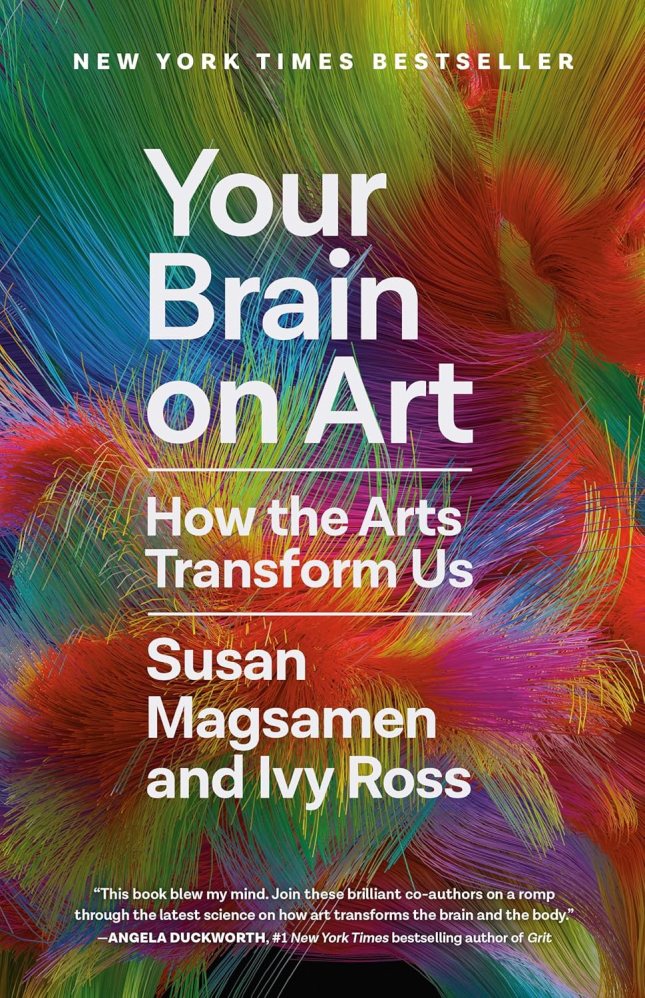
Your Brain on Art: How the Arts Transform Us

Art isn’t just something we admire in galleries or hear in concert halls—it’s deeply wired into who we are as humans. Your Brain on Art: How the Arts Transform Us by Susan Magsamen and Ivy Ross isn’t just another book about creativity; it’s a deep dive into what happens to our brains when we engage with art. The authors blend neuroscience, psychology, and real-world examples to show that art isn’t a luxury but a biological necessity, shaping how we think, feel, and even heal. It turns out that the arts—whether painting, music, literature, dance, or theater—do more than just entertain us. They literally rewire our brains, enhancing cognitive function, reducing stress, and making us more empathetic and emotionally resilient.

One of the book’s most striking revelations is that engaging with art activates multiple areas of the brain at once. When you listen to music, for example, different neural networks synchronize, improving memory, mood, and even problem-solving skills. Studies have shown that music therapy can help people with Alzheimer’s recall lost memories, while rhythmic movement in dance strengthens neural pathways that improve motor function. Literature, on the other hand, boosts empathy by simulating real-life social interactions in our minds, helping us understand perspectives outside our own. Even visual art engages the brain in unique ways—simply looking at a painting can increase dopamine levels, the chemical associated with pleasure and motivation, while creating art strengthens cognitive flexibility and emotional regulation. What’s fascinating is that the benefits of art aren’t limited to those who are “good” at it. The process of making art, regardless of skill level, has been shown to lower cortisol (the stress hormone) and increase neuroplasticity, meaning the brain becomes more adaptable and resilient. This is why activities like doodling, playing an instrument, or even just singing in the shower can have measurable effects on mental and emotional well-being.

The book also makes a compelling case for using art as a healing tool. Expressing emotions through painting, writing, or movement has been used in therapy to help people process trauma, recover from depression, and manage anxiety. Art therapy is now widely used to support patients with PTSD, offering a non-verbal way to process deep emotional wounds. Even outside of clinical settings, incorporating art into daily life can have profound effects. Reading fiction strengthens our ability to connect with others on an emotional level, listening to music can enhance focus and relaxation, and dancing—even if it’s just swaying in your living room—stimulates brain regions associated with memory and emotion.

What makes Your Brain on Art so engaging is that it’s not just an academic exploration; it’s a call to action. It challenges the modern obsession with productivity, arguing that we need to stop seeing art as an indulgence and start recognizing it as an essential part of our mental and physical health. We’ve been painting on cave walls, telling stories, and singing around fires for thousands of years, not because it was a luxury, but because it was essential to our survival. This book reminds us that creativity isn’t reserved for the talented—it’s something every brain craves. If you’ve ever hesitated to pick up a paintbrush, dance in your kitchen, or write something just for the joy of it, Your Brain on Art makes it clear: your brain is built for this. Engaging with the arts isn’t just about self-expression—it’s a way to think better, feel deeper, and connect more fully with the world around you.

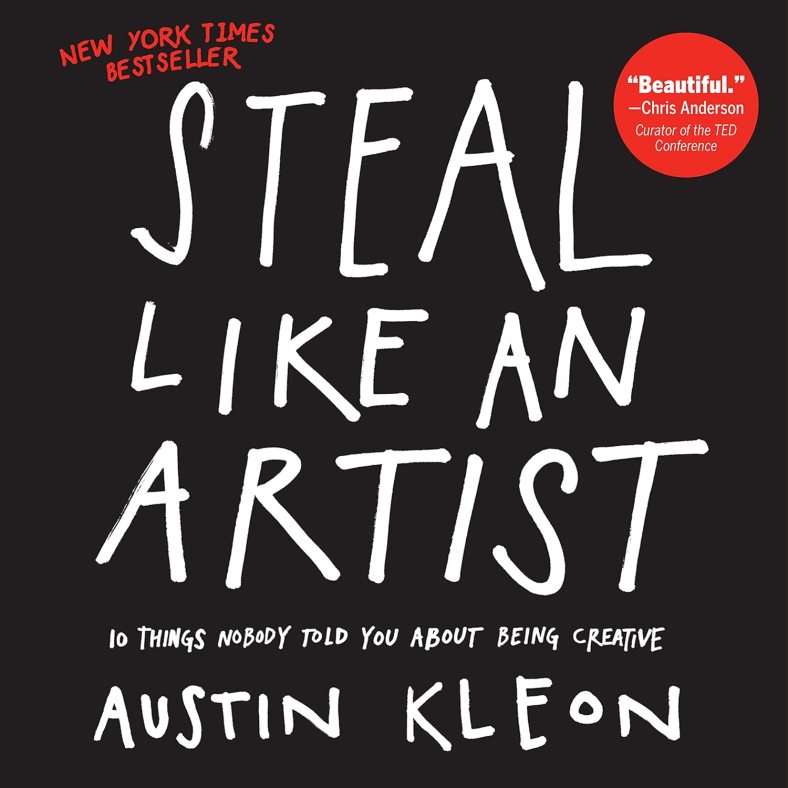
Steal Like an Artist

Creativity has a mythology around it, a belief that great ideas strike like lightning, gifted only to a lucky few. Steal Like an Artist by Austin Kleon tears that myth apart, replacing it with a much more practical—and liberating—truth: creativity isn’t about originality, it’s about remixing, borrowing, and transforming what already exists. Kleon makes the case that no artist, writer, musician, or creator of any kind operates in a vacuum. Every idea is influenced by something that came before, and instead of fearing that, we should embrace it.

The title itself is a bit of a provocation. Kleon isn’t advocating for plagiarism but for the idea that “stealing” in a creative sense means absorbing the work of others, studying it deeply, and using it as a foundation to create something new. Every great artist, from Picasso to The Beatles, has borrowed from those who came before them. The trick isn’t to copy blindly but to steal with purpose—to take inspiration and make it your own. He encourages creatives to build their own “artistic family tree,” tracing the lineage of their influences and using that knowledge to refine their own unique voice. If you love a certain writer, filmmaker, or musician, don’t just admire their work—study who they were influenced by, follow that trail, and let it shape your own development.

One of the book’s biggest takeaways is that waiting for inspiration is a waste of time. Kleon argues that creativity isn’t about sitting around waiting for a genius idea to arrive—it’s about showing up every day and doing the work. He pushes against the notion that artists need to be tortured or struck by divine inspiration, instead advocating for a more blue-collar approach: work with what you have, start before you’re ready, and trust that creativity happens through action, not contemplation.

Kleon also dismantles the fear of not being original enough. Too many people hold themselves back because they believe their ideas aren’t groundbreaking or new. But the truth, he points out, is that nothing is truly original. Every book is built on the books that came before it, every song has echoes of previous music, and every painting is part of a conversation stretching back centuries. The goal isn’t to be completely original—it’s to take existing ideas and filter them through your own perspective, creating something fresh in the process.

Another key idea in the book is the power of constraints. Instead of seeing limitations—whether they’re financial, time-related, or skill-based—as obstacles, Kleon suggests embracing them as creative fuel. Some of the most innovative work comes not from unlimited resources, but from necessity. A lack of money, time, or tools forces creativity in unexpected ways, and instead of waiting for the perfect conditions, Kleon urges creators to start with what they have and make the most of it.

The book is also a reminder that creativity isn’t limited to traditional art forms. Whether you’re a writer, designer, entrepreneur, or just someone trying to think differently about your work, the principles of creativity apply everywhere. The way you approach problems, the way you combine ideas, and the way you express yourself are all forms of creative work. The key is to stay curious, keep learning, and most importantly, keep making things—no matter how imperfect they might feel at first.

What makes Steal Like an Artist so refreshing is that it strips creativity of its mystique and gives it back to the people. You don’t need permission to create, and you don’t need to be a genius to make something worthwhile. The book encourages readers to build on what inspires them, embrace their influences without shame, and most importantly, start making things now rather than waiting for the perfect moment. Creativity, as Kleon reminds us, isn’t about having a completely original idea—it’s about taking the ideas around you, reshaping them through your own lens, and putting something new into the world.

Books Read (Update)

34,752 pages read in total this year.
66 Books
17 Non-Fiction
39 Fiction

I didn’t write a review for all the fiction books I read this year because that would be an issue with how fast I go through them – it would cut into time I needed for other things, so I only wrote posts for the non fiction books but here’s a quick video showing all the books I read this year – enjoy!

Ikigai and Kaizen

Some books feel like an invitation to sit down with a warm cup of tea and rethink how you’re spending your days. Ikigai and Kaizen by Anthony Raymond is one of those books, blending two Japanese philosophies—one about purpose, the other about continuous improvement—into a digestible, motivating, and (at times) delightfully blunt reflection on how to live better. It doesn’t yell at you to wake up at 5 AM, build an empire, or bench press your own fears. Instead, it nudges you toward a more sustainable path, one where meaningful progress doesn’t require burnout.

Let’s start with ikigai, a concept that gets thrown around in self-help circles like a magic key to happiness. At its core, it’s the idea that life is most fulfilling when you find the intersection between what you love, what you’re good at, what the world needs, and what you can be paid for. That sounds simple enough, but Raymond does a great job of cutting through the fluff that often surrounds this idea. He doesn’t just present ikigai as an aspirational concept; he actually shows how it functions in real life, beyond the neat little Venn diagrams you see on Pinterest. The book makes it clear that ikigai isn’t necessarily some grand, world-changing mission—it can be something as simple as crafting furniture, teaching kids, or even making the perfect cup of coffee. The key isn’t in the scale of your purpose but in its ability to get you out of bed with a sense of meaning.

And then there’s kaizen, which is basically the quieter, less flashy cousin of hustle culture. Instead of urging you to overhaul your life overnight, kaizen is all about making small, incremental improvements over time. Raymond highlights how this philosophy, originally developed in the world of Japanese business and manufacturing, can be just as effective in personal growth. The magic of kaizen is that it sidesteps the all-or-nothing mentality that so many self-improvement books unknowingly reinforce. You don’t need to run a marathon next week, launch a startup in six months, or achieve inner peace by next Tuesday. You just need to improve by a tiny fraction today—and then do the same tomorrow. The book argues (quite convincingly) that small changes, when sustained, add up to something far more powerful than sporadic bursts of motivation.

Where Raymond really shines is in his ability to weave these two concepts together without making them feel like another formulaic “life hack.” The interplay between ikigai and kaizen makes for a refreshing approach to personal development—one that doesn’t demand immediate, radical transformation but instead encourages alignment and steady refinement. If ikigai helps you figure out where you want to go, kaizen keeps you moving without the exhaustion of trying to sprint the entire way there.

The book is also refreshingly realistic. While some self-help books sell you the fantasy that anything is possible with the right mindset (as if positive thinking alone will suddenly make you a concert pianist), Raymond is more grounded. He acknowledges that finding ikigai isn’t always easy and that continuous improvement isn’t always linear. There are detours, setbacks, and moments where progress feels painfully slow. But that’s where kaizen becomes invaluable—it reminds you that even when things don’t go as planned, you can still take one small step forward.

Beyond its philosophical grounding, Ikigai and Kaizen is also just an enjoyable read. Raymond’s writing is straightforward without being dull, encouraging without being saccharine. He doesn’t just hand you motivational quotes and send you on your way—he gives you something practical to hold onto, something that doesn’t fall apart under the weight of real-life challenges.

So, what’s the big takeaway? If you’re looking for a book that tells you to quit your job, move to Bali, and find your bliss, this isn’t it. But if you’re interested in a book that respects the fact that you have responsibilities, challenges, and a complicated life—and still want to make meaningful, lasting change—this one’s worth your time. Ikigai and Kaizen isn’t about chasing an unattainable ideal; it’s about crafting a life that feels rich in purpose and growth, one small step at a time. And honestly, isn’t that a more sustainable way to get where we’re going?

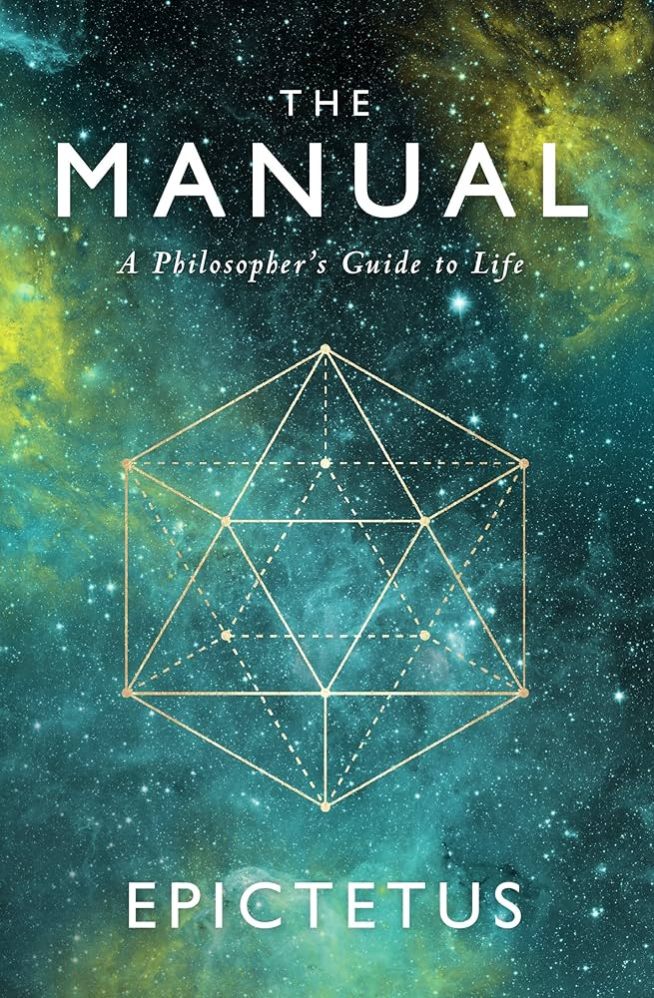
The Manual – Epictetus

Picture this: A former slave becomes one of history’s most influential philosophers, writes nothing down himself, and yet his wisdom survives two millennia to become a self-help sensation among Silicon Valley CEOs and Reddit stoics. That’s Epictetus for you, and “The Manual” is his greatest hits album.

This pocket-sized guide to living well is essentially ancient Rome’s answer to “Don’t Sweat the Small Stuff,” except it deals with big stuff too – like death, loss, and why your neighbor’s noisy chariot should not ruin your day.

Core Message:
The Manual’s central thesis is remarkably simple: we suffer not from events but from our judgments about them. Can’t control something? Don’t waste energy worrying about it. Can control something? Well, get to work then. It’s cognitive behavioral therapy avant la lettre.

The Good:

  • Remarkable practicality for a 2,000-year-old text
  • Brutal efficiency in delivery (no ancient Greek small talk here)
  • Universal applicability of its principles
  • Zero fluff – each passage packs a philosophical punch
  • Surprisingly modern psychological insights

The Critical Points:

  1. The Emotional Suppression Problem: Epictetus sometimes seems to advocate for a level of emotional detachment that borders on the inhuman. Sorry, but your dog died and you’re allowed to cry about it.
  2. Privilege Perspective: Written from the viewpoint of a man who rose from slavery to relative freedom and comfort, it sometimes oversimplifies the relationship between mindset and circumstance.
  3. Deterministic Worldview: The strict fatalism might be hard to swallow for modern readers who believe in social change and collective action.
  4. Gender and Social Issues: Let’s just say ancient Rome wasn’t winning any awards for progressive thinking. Some passages haven’t aged well.
  5. Missing Nuance: The manual’s aphoristic style, while powerful, sometimes leads to oversimplification of complex human experiences.

Standout Passages:
“It’s not things that upset us, but our judgments about things.” (Looking at you, person who just checked their ex’s Instagram)

“Some things are in our control and others not.” (Revolutionary stuff for chronic control freaks)

The Modern Impact:
It’s fascinating how this ancient text speaks to modern anxieties. In an age of endless notifications, social media FOMO, and constant outrage, Epictetus’s message about choosing our concerns wisely hits different. He’s basically telling us to curate our emotional news feed.

The Bottom Line:
The Manual is like a tough-love therapist from the ancient world – it tells you what you need to hear, not what you want to hear. Yes, some of its advice might seem harsh, and yes, some of its cultural context is outdated, but its core insights about human nature and happiness remain startlingly relevant.

Rating: ⭐⭐⭐⭐½ out of 5
Perfect for: Overthinkers, control freaks, and anyone trying to maintain sanity in a chaotic world
Not for: Those seeking warm fuzzies or validation of their daily dramas

Final Thought:
In a world of 300-page self-help books that could be condensed to a tweet, there’s something refreshing about The Manual’s brevity and directness. It’s like getting philosophical tough love from your no-nonsense ancient Roman grandfather. Just remember, like any manual from 2,000 years ago, some assembly of modern context is required.

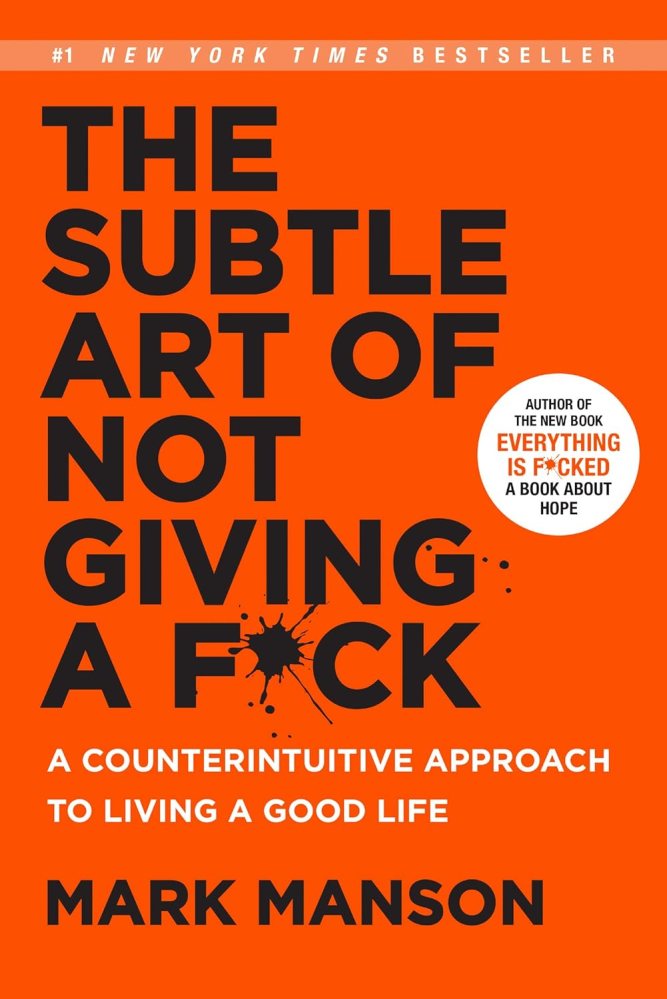
The Subtle Art of Not Giving a Fuck: Mark Manson

Ever had that friend who tells you to “just chill” while you’re having a meltdown? Mark Manson is that friend, except he’s actually making sense – most of the time. His counterintuitive self-help book has sold millions of copies, proving that people really do give a fuck about not giving a fuck.

Manson’s central premise is refreshingly blunt: life is hard, you’re not special, and that’s perfectly okay. In a world saturated with toxic positivity and Instagram-perfect lives, his message hits like a cold shower – uncomfortable at first, but oddly refreshing once you get used to it.

The book’s core argument is that we should be selective about what we care about rather than trying to not care at all (plot twist!). It’s like having a limited number of fucks to give, and Manson is teaching us how to invest them wisely. Think of it as mindfulness for the cynical millennial.

Key Takeaways:

  • Happiness comes through solving problems, not avoiding them
  • Values are the key to meaningful living, but many of us have garbage values (ouch)
  • Suffering is inevitable and useful; it’s what gives life meaning
  • You’re not special, and that’s liberating
  • Taking responsibility for everything in your life is the real key to not giving a fuck

The Good:
Manson has a gift for making complex philosophical concepts digestible through crude humor and pop culture references. He’s basically what would happen if Nietzsche wrote for BuzzFeed, and somehow it works. His writing style is engaging, and his use of personal anecdotes adds authenticity to his arguments.

The book succeeds in cutting through the noise of traditional self-help wisdom. Instead of promising the moon, it tells you to be content with your slice of earth. It’s anti-self-help self-help, and there’s something deeply satisfying about that paradox.

The Critical Points:
Here’s where things get interesting (and where I might ruffle some orange-covered feathers):

  1. The Irony Paradox: For a book about not giving a fuck, it spends an awful lot of time telling you exactly what to give a fuck about. It’s like a zen master who won’t stop talking about silence.
  2. Oversimplification: While the book’s accessibility is a strength, it sometimes veers into oversimplification territory. Complex psychological concepts get reduced to quippy one-liners, which might leave readers with an incomplete understanding of deep-seated issues.
  3. Privilege Blind Spots: Manson’s perspective sometimes comes across as that of a relatively privileged person who has the luxury of choosing what to care about. Not everyone has that freedom.
  4. Repetitive Arguments: By the halfway point, you’ve basically got the message. The rest feels like variations on the same theme – kind of like this criticism about repetition being repetitive.
  5. The Style Can Be Grating: The constant profanity and forced casualness might work for some readers, but it can feel like your uncle trying to be “hip with the kids.”

The Bottom Line:
Despite its flaws, “The Subtle Art” is a valuable addition to the self-help genre, if only for its willingness to punch holes in the bubble of relentless positivity. It’s like a literary version of that friend who tells you what you need to hear rather than what you want to hear.

The book isn’t perfect, but then again, that’s kind of its point. It’s a self-help book for people who are skeptical of self-help books, and in that niche, it excels. Just don’t expect it to revolutionize your life – and again, that’s kind of the point.

Rating: ⭐⭐⭐⭐ out of 5
Perfect for: Millennials tired of being told to manifest their best life
Not for: Those who can’t handle profanity or prefer their self-help with a side of crystals

Final Thought: In a world where everyone’s trying to sell you the secret to eternal happiness, there’s something refreshing about a book that tells you to lower your expectations – even if it does so while secretly raising them.