Rick Rubin – The Creative Act: A Way of Being

You know those zen masters who somehow manage to say profound things while sounding like they’re talking about what they had for breakfast? That’s Rick Rubin for you. The legendary music producer (who’s worked with everyone from Johnny Cash to Jay-Z) has written a book that’s essentially a meditation on creativity disguised as a series of fortune cookies. And I mean that in the best possible way.

Let’s get one thing straight – if you’re looking for a behind-the-scenes tell-all about how Rubin convinced the Beastie Boys to ditch their leather pants, or how he got Black Sabbath to sound like Black Sabbath again, this isn’t that book. Instead, what you get is something far more valuable: a philosophical guide to unleashing your creative potential that’s so simple it’s profound, and so profound it’s simple.

The book is structured as a series of short chapters, each focusing on different aspects of the creative process. It’s like a choose-your-own-adventure book for your artistic soul, except every path leads to some form of enlightenment. Or at least a really good idea for your next project.

Rubin’s central thesis is that creativity isn’t something you do – it’s something you are. It’s less about technique and more about awareness. He suggests that the creative act is less about forcing something into existence and more about becoming receptive to what’s already there. It’s like he’s teaching us to be creative by teaching us how to get out of our own way. As someone who regularly trips over their own mental furniture, I found this perspective particularly refreshing.

One of the book’s most compelling ideas is what I like to call the “cosmic radio station” concept. Rubin suggests that creative ideas are always broadcasting, like radio waves, and our job is simply to tune in to the right frequency. It’s a beautiful metaphor that makes the creative process feel less like pulling teeth and more like adjusting an antenna. Though I must say, some days my antenna feels more like a coat hanger wrapped in tinfoil.

Throughout the book, Rubin emphasizes the importance of process over product. He argues that true creativity comes from a place of playful experimentation rather than rigid goal-setting. It’s about embracing uncertainty and treating every creative endeavor as an experiment rather than a test. As someone who once spent three hours deciding on the perfect font for a grocery list, this was both a relief and a challenge.

What’s particularly striking about the book is its universal applicability. Whether you’re a musician, writer, painter, or someone who arranges their sock drawer with artistic flair, Rubin’s insights apply. He strips creativity down to its essential elements: observation, experimentation, and the courage to follow your curiosity.

The book also tackles the thorny issue of creative blocks, though Rubin might argue that there’s no such thing. Instead, he suggests that what we call “blocks” are actually opportunities for deeper exploration. It’s like when you hit a wall while jogging – maybe it’s not the wall that’s the problem, but your relationship with walls. (Yes, I’m starting to sound like him now. It’s contagious.)

One potential criticism of the book might be its somewhat abstract nature. If you’re looking for specific techniques or step-by-step guides, you might find yourself frustrated. But that’s kind of the point. Rubin isn’t giving us a map; he’s teaching us how to navigate by the stars.

The Creative Act isn’t just a book about making art – it’s a book about being alive to the possibilities around us. It’s about developing a practice of attention and curiosity that enriches not just our creative work, but our entire experience of being human. Rubin has managed to write something that’s simultaneously a creativity guide, a philosophical treatise, and a spiritual handbook, all while maintaining the casual air of someone explaining how to make a really good cup of tea.

In conclusion, The Creative Act is like a Swiss Army knife for the soul – multi-functional, surprisingly simple, and invaluable once you learn how to use it. Rubin has created something special here: a book that doesn’t just inform but transforms, assuming you’re willing to sit with its ideas and let them work their magic.

While it might not give you the secret formula for producing a platinum record (sorry, aspiring music moguls), it offers something far more valuable: a way of seeing the world that makes creativity not just possible but inevitable. Just don’t expect to be the same person you were when you started reading it. As Rubin might say, that’s kind of the point.

Rating: ⭐⭐⭐⭐½ out of 5
Perfect for: Artists of all stripes, creative professionals, and anyone who’s ever stared at a blank page and wished it would stare back.
Not for: People looking for technical how-tos or industry gossip.

On the Shortness of Life

Life, as it turns out, isn’t actually short—it’s just that most of us waste it. That’s the central argument of On the Shortness of Life by Seneca, a work that has remained startlingly relevant despite being written nearly 2,000 years ago. While the ancient Roman philosopher was addressing the concerns of his time—politicians chasing power, merchants obsessed with wealth, scholars lost in trivial studies—his words feel just as applicable in an age of social media, endless notifications, and the modern obsession with productivity. Seneca’s message is simple: we have more than enough time to live a meaningful life, but we squander it on distractions, meaningless pursuits, and worrying about things that don’t matter.

Unlike many modern self-help books that focus on “time management,” Seneca isn’t concerned with squeezing more hours into the day. His argument isn’t that we need to be more efficient—it’s that we need to be more intentional. He criticizes people who spend their lives chasing wealth, fame, or leisure without ever stopping to consider what truly matters. His famous warning that “it is not that we have a short time to live, but that we waste much of it” cuts through the excuses we use to justify our lack of fulfillment. We complain about not having enough time, yet we spend hours on trivial distractions, indulging in gossip, worrying about status, or numbing ourselves with entertainment. Sound familiar? Swap out the Roman baths and political scheming for Instagram feeds and Netflix binges, and suddenly, Seneca could be writing about modern life.

What makes On the Shortness of Life so powerful is that it’s not just a critique of wasted time—it’s a call to action. Seneca urges us to take ownership of our lives, to stop living as if we have unlimited time ahead of us. He warns against the trap of “living for the future,” something that resonates strongly with modern readers. How many people tell themselves they’ll be happy after they get the promotion, after they buy the house, after they retire? Seneca sees this as one of the greatest delusions—people plan for a future they might never even reach while neglecting the present, the only time they actually own. His solution is simple but profound: live fully now. Engage deeply in what truly matters, cut out meaningless pursuits, and treat every day as valuable rather than assuming you’ll always have more time.

When comparing Seneca’s advice to modern Stoic practices, there’s a striking overlap. Today’s Stoic thinkers—whether it’s Ryan Holiday’s The Daily Stoic or William B. Irvine’s A Guide to the Good Life—echo many of the same themes. Both ancient and modern Stoicism emphasize the importance of focusing on what we can control, avoiding distractions, and valuing time as our most precious resource. However, while modern Stoic methods often include structured routines, journaling, and practical exercises to cultivate mindfulness, Seneca’s approach is more direct: stop wasting time, recognize your mortality, and live with purpose.

One of the biggest differences between ancient and modern Stoicism is the way we approach productivity. In today’s world, self-improvement is often tied to efficiency—how can I get more done in less time? How can I maximize my schedule? Seneca would likely argue that this mindset still misses the point. It doesn’t matter how much you accomplish if what you’re accomplishing isn’t meaningful. Modern Stoicism often incorporates methods like digital detoxing, setting daily priorities, and practicing gratitude—things that align with Seneca’s philosophy but are packaged in a more structured way. The key takeaway from both approaches is the same: be intentional about how you live, because time is the one thing you can never get back.

Perhaps the most chilling reminder in On the Shortness of Life is Seneca’s observation that most people don’t even realize they’re wasting their lives until it’s too late. He warns that many people only understand the value of time when they’re near death, looking back with regret at how much of their existence was spent on things that didn’t matter. This is where his writing transcends philosophy and becomes something of a wake-up call. His words force the reader to ask uncomfortable but necessary questions: If I were to die tomorrow, would I be satisfied with how I’ve spent my time? Am I prioritizing things that truly bring meaning, or am I letting life slip by in trivial pursuits?

In a world that constantly demands our attention, where distractions are engineered to be irresistible and busyness is worn like a badge of honor, Seneca’s wisdom is more important than ever. Modern Stoic practices may provide tools to help us implement his advice, but the fundamental lesson remains unchanged: life is only “short” if you fail to use it well. The challenge isn’t to find more time—it’s to stop giving it away to things that don’t matter.

Simon Sinek – The Infinite Game

In “The Infinite Game”, Simon Sinek introduces the concept of the “infinite game” – a fundamental shift in how we approach competition, success, and the purpose of business.

Sinek contrasts the “finite game” with the “infinite game”. Finite games have clear rules, agreed-upon players, and a defined end point where a winner is declared. Examples of finite games include sports, board games, or business competitions. In contrast, the “infinite game” has no finish line – it is an ongoing, ever-evolving challenge without a clear winner.

Finite vs. Infinite Mindset

Sinek argues that many organizations and leaders approach business with a “finite mindset” – focused on short-term goals, beating the competition, and securing their position as the winner. In contrast, the “infinite mindset” looks at the long-term sustainability and resilience of the organization.

The key differences between the finite and infinite mindsets:

  • Purpose: Finite – to win. Infinite – to keep the game going.
  • Capability: Finite – to triumph over an opponent. Infinite – to build trust and cooperation.
  • Measurement: Finite – the financial bottom line. Infinite – the longevity and growth of the organization.
  • Rivals: Finite – opponents to be defeated. Infinite – worthy rivals to make you better.

The Just Cause

At the heart of Sinek’s “infinite game” concept is the “Just Cause” – a clear, inspirational vision for the future that guides the organization’s actions. A Just Cause is:

  • Inclusive: It calls all people to contribute, regardless of their status or position.
  • Service-oriented: It is not self-serving, but aims to advance a cause greater than the organization itself.
  • Resilient: It can withstand competition, disruption, and other challenges.
  • Idealistic: It represents an infinite, aspirational future that can never be fully achieved.

Sinek argues that organizations guided by a Just Cause are better able to adapt, innovate, and thrive in the face of an ever-changing business landscape.

The Infinite Mindset in Action

Sinek provides examples of companies and leaders that have adopted an infinite mindset, including Marriott, Unilever, and former Mastercard CEO Ajay Banga. These organizations focus on long-term sustainability, building trust with stakeholders, and creating value beyond short-term profits.

In contrast, Sinek criticizes companies and leaders who are trapped in a finite mindset, leading to shortsighted decision-making, eroding trust, and ultimately failing to succeed in the “infinite game” of modern business.

Key Takeaways

  • Distinguish between the “finite game” (with clear rules and winners) and the “infinite game” (an ongoing challenge without end).
  • Adopt an “infinite mindset” focused on purpose, capability, measurement, and relationship with rivals.
  • Develop a “Just Cause” – an inspirational, service-oriented vision to guide the organization.
  • Prioritize long-term sustainability and resilience over short-term gains.
  • Foster trust, cooperation, and adaptability to thrive in an ever-changing business environment.

(Summary AI assisted)

This book was interesting and I thought Simon had some solid ideas with a lot of real world data to back them up. In this current market drive business world I feel that long term success is often hurt by short term decisions based solely on getting the share price up to keep investors happy (and in turn, the CEO keeps his job)

I like incorporating Simon’s ideas as I develop my leadership style – always keeping an eye on the infinite game helps inform short term strategy decisions by balancing them with long term goals. I can burden my team now with all the demands from the customers and upper management or I can try to manage up as well as down. Setting expectations for work and providing a clear picture of the value of long term thinking.

I found the book thought provoking but a bit idealistic – mostly because while I agree fundamentally with his idea I have some pessimism that we can ever change the short term market thinking.

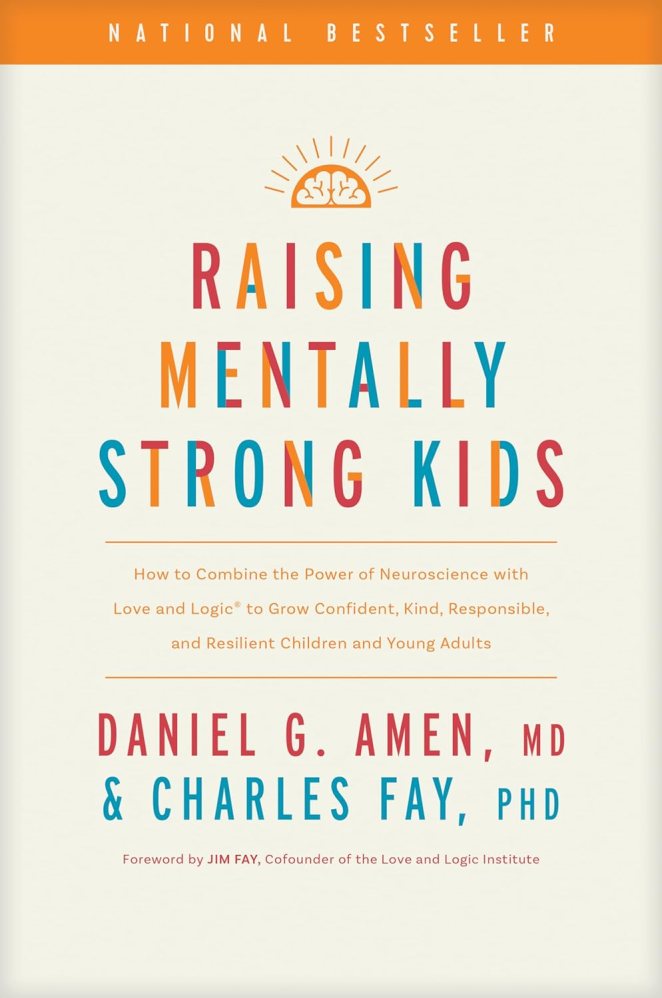
Raising Mentally Strong Kids – Daniel Amen

Raising Mentally Strong Kids

In “Raising Mentally Strong Kids”, psychiatrist Dr. Daniel Amen provides a comprehensive guide for parents on nurturing the mental health and resilience of their children. Drawing from his decades of clinical experience, brain science research, and insights as a parent, Amen lays out a holistic approach to building mental strength and emotional wellbeing in kids.

The Mental Health Epidemic

Amen begins by highlighting the troubling mental health crisis impacting today’s youth. He cites alarming statistics – 1 in 5 children in the US suffers from a mental illness, rates of teen depression and anxiety have skyrocketed, and suicide is the second leading cause of death for ages 10-24. Amen argues these trends are driven by a combination of genetic, environmental, and lifestyle factors, and that parents play a critical role in addressing this epidemic.

The 5 Pillars of Mental Strength

At the heart of Amen’s approach are the “5 Pillars of Mental Strength” that parents must focus on to raise resilient, emotionally intelligent kids:

  1. Brain Health: Ensuring children’s brains are nourished through proper nutrition, exercise, sleep, and stress management. This includes limiting screen time, avoiding substances, and encouraging activities that “exercise” the brain.
  2. Purpose: Helping kids discover their unique talents, values, and sense of meaning. Fostering purpose and a growth mindset builds motivation, self-worth, and the ability to overcome challenges.
  3. Emotional Intelligence: Teaching children to identify, express, and regulate their emotions in healthy ways. Developing EQ skills like empathy, impulse control, and conflict resolution.
  4. Relationships: Nurturing strong, supportive connections with family, friends, mentors, and community. Cultivating a sense of belonging and teaching social skills.
  5. Physical Health: Prioritizing children’s physical well being through active lifestyles, nutritious diets, and good sleep habits. Maintaining physical health supports brain function and overall mental resilience.

Amen emphasizes that these pillars are interconnected – progress in one area reinforces the others, creating an upward spiral of mental strength.

Strategies for Each Pillar

Throughout the book, Amen provides concrete, science-backed strategies for strengthening each pillar of mental health:

Brain Health:

  • Ensure adequate sleep, nutrition, and physical activity
  • Limit screen time and exposure to technology
  • Teach stress management techniques like meditation
  • Avoid alcohol, drugs, and other substances

Purpose:

  • Help kids discover and develop their natural talents
  • Foster a growth mindset and teach grit/perseverance
  • Encourage contribution to family and community
  • Expose children to diverse role models and experiences

Emotional Intelligence:

  • Name and validate children’s emotions
  • Teach emotion regulation skills like reframing
  • Model healthy emotional expression
  • Resolve conflicts through empathy and compromise

Relationships:

  • Prioritize quality time with family
  • Encourage social activities and friendships
  • Connect children with mentors and role models
  • Foster a sense of belonging in school/community

Physical Health:

  • Ensure adequate sleep, nutrition, and exercise
  • Limit sedentary activities and screen time
  • Teach children to care for their physical bodies
  • Address any physical health issues promptly

The Resilient Family

Amen emphasizes that building mental strength in children requires a whole-family approach. He provides guidance for creating a “resilient family ecosystem” where all members look out for one another’s mental health, set healthy boundaries, and reinforce the 5 pillars together.

The book also addresses specific challenges like divorce, trauma, learning disabilities, and neurodevelopmental disorders – outlining how parents can adapt the 5-pillar framework to support kids through adversity.

Key Takeaways

  • Mental health is a critical but often overlooked aspect of child development.
  • Raising mentally strong kids requires a multifaceted approach focused on the 5 pillars of brain health, purpose, emotional intelligence, relationships, and physical wellbeing.
  • Parents play a pivotal role in cultivating these pillars and creating a resilient family environment.
  • With the right strategies and support, all children can develop the mental strength to navigate life’s challenges.

Amen’s book provides an invaluable roadmap for parents committed to raising healthy, resilient, and emotionally intelligent kids in today’s complex world. By prioritizing the 5 pillars of mental strength, families can build a solid foundation for children to thrive.

(Summary AI assisted)

I have a confession – I was an emotional kid. I had what psychologist now call ‘big emotions’ quite often and I can remember just being emotionally exhausted by everything. I think figuring it out as a teen/early 20’s adult made me more resilient especially as I leaned into Stoicism as a way to manage my emotions. However the process wasn’t exactly great and when I saw my kids starting down the same path immediately started looking for information on how to make them more resilient.

This was one of the first books I saw – it was actually on a stand in the library in the new books so I took that as a sign that this was a book I needed to read (well, I kind of do that with all books but I digress). It was a fascinating read and I could see some of the issues my wife and I were having with our parenting styles and took away some valuable strategies I could use to help my kids manage their emotions better. I actually put them to use almost immediately with various degrees of success.

The one I find the most helpful is when the kids make a bad choice or feel upset about a choice instead of jumping in and telling them what you think is the ‘right’ way to handle it you simply ask them. “How did you think you handled it?” and “If someone else asked you how to handle that – what would you tell them?”. Reframing it so that the kids come up with the solution gives them more autonomy and reinforces that they can handle different issues.

The other major strategy is to start giving the kids responsibilities and chores – things that are relatively easy for them but give them a sense of accomplishment. These micro accomplishments build their internal self worth and bolster their self esteem so that when a real challenge comes along they are better prepared for it.

Overall I found the book very helpful and would recommend it to any parent out there who is struggling with kids who have big emotions.

Creativity Inc! – Ed Catmull

Ed Catmull, co-founder of Pixar Animation Studios, shares his insights on fostering creativity and managing a successful creative organization in “Creativity, Inc.” The book details Pixar’s journey from a small tech company to an animation powerhouse, offering valuable lessons on leadership, innovation, and maintaining a creative culture.

Catmull emphasizes the importance of creating an environment where people feel safe to share ideas and take risks. He introduces the concept of the “Braintrust,” a group of trusted colleagues who provide honest feedback on projects without imposing solutions. This approach allows for constructive criticism while preserving the director’s vision and ownership of the project.

The author also discusses the challenges of maintaining creativity as an organization grows. He stresses the need to embrace failure as a necessary part of the creative process and to view problems as opportunities for growth. Catmull shares examples of how Pixar overcame various obstacles, including the near-disaster of Toy Story 2, which required a complete overhaul late in production.

Throughout the book, Catmull emphasizes the importance of people over ideas. He argues that a good team can fix a mediocre idea, but a bad team can ruin even the best concept. This philosophy led Pixar to invest heavily in its employees’ development and to create a culture that values every team member’s contribution.

Important takeaways from “Creativity, Inc.”:

  • Foster a culture of candor where people feel safe to share ideas and give honest feedback
  • Embrace failure as a necessary part of the creative process
  • Implement a “Braintrust” or similar peer review system for projects
  • Focus on hiring and developing talented individuals rather than solely pursuing great ideas
  • Remove barriers to creativity, including fear of failure and hierarchical structures
  • Encourage collaboration and cross-pollination of ideas between departments
  • Maintain a beginner’s mind and be willing to challenge assumptions
  • Balance the needs of the creative process with the realities of running a business
  • Continuously adapt and evolve management practices as the organization grows
  • Recognize that maintaining a creative culture is an ongoing process that requires constant attention

These insights from Catmull’s experience at Pixar offer valuable guidance for leaders in any creative field or organization seeking to foster innovation and maintain a dynamic, productive work environment.

[Summary AI assisted]

I really enjoyed this book. As a fan of Pixar movies I’ve always wondered how they managed to release hit after hit with each movie being a masterpiece of storytelling. I read this book at an important point in my career where I was taking on managing a team who would be creating things via software development. You might thing there’s not a lot of room for creativity in software development but as this book would point out – there’s always room for creativity and learning to encourage my teams to take risks and try new things has been a very rewarding experience. I appreciated all the lessons this book has to teach – it aligns with the books from Simon Sinek where once again the team culture is what creates great work and building and protecting that culture is how you create great teams.

The Obstacle is the Way – Ryan Holliday

“The Obstacle Is the Way” by Ryan Holiday is a modern interpretation of Stoic philosophy, particularly focusing on how to overcome challenges and turn them into opportunities. The book draws heavily from the teachings of ancient Stoic philosophers like Marcus Aurelius, Epictetus, and Seneca.

Key points of the book include:

  1. Perception: How we view obstacles is crucial. By reframing challenges as opportunities for growth and learning, we can approach them more effectively.
  2. Action: Taking deliberate, persistent action is essential. The book emphasizes the importance of focus, creativity, and perseverance in tackling obstacles.
  3. Will: Developing inner resilience and discipline allows us to endure difficulties and maintain perspective in the face of adversity.

The underlying Stoic philosophy emphasizes virtues such as wisdom, justice, courage, and self-control. It teaches that while we cannot control external events, we can control our reactions to them. This philosophy advocates for emotional regulation, rational thinking, and focusing on what is within our power to change.

In today’s society, these methods are particularly relevant due to:

  1. Information overload and constant distractions, which make the Stoic emphasis on focus and prioritization valuable.
  2. Increasing uncertainty in various aspects of life (economic, political, environmental), where the Stoic approach of accepting what we cannot control can reduce anxiety.
  3. A culture of instant gratification, contrasting with the Stoic emphasis on long-term thinking and delayed gratification.
  4. The prevalence of victim mentality, which Stoicism counters by promoting personal responsibility and proactive problem-solving.
  5. High stress levels in modern life, where Stoic practices of mindfulness and emotional regulation can be beneficial.

By applying these principles, individuals can develop greater resilience, clarity of purpose, and effectiveness in navigating the complexities of modern life.

Having already been a student of stoic philosophy this book was treading over well worn ground but I appreciated what he we trying to do here. I found the tone a bit much – I get the target audience he was trying to reach here but it wasn’t too overbearing. There were some insights I found useful as reminders of stoic approaches that perhaps I hadn’t been using yet.

One of the things he focuses on is accepting what we cannot control – something that I feel very strongly about. Here’s a quick graphic showing the concept:

As you can see – there are things you can control which is where you should spend most of your mental and emotional energy – after all they are things you can resolve directly. The things you can influence are important (outside of a true leadership or political role) for a small group (in my case my children) where I want to spend the time to influence them but I don’t control them. All the things in the circle of concern? It’s fine to understand them but since you can’t control or influence them spending a lot of time and anxiety worrying about them is a colossal waste of time. I’m not saying you shouldn’t give to a worthy cause or work to improve the world but if the efforts don’t fall in the first two rings – is it a good use of your time?

Meditations

“Meditations” is a collection of personal reflections and philosophical thoughts written by Marcus Aurelius, Roman Emperor from 161 to 180 AD. Known as the last of the “Five Good Emperors,” Marcus Aurelius was a Stoic philosopher who wrote extensively on how to live a life of virtue, resilience, and rationality amidst the challenges of ruling an empire. His writings, originally intended for his own guidance and self-improvement, offer timeless wisdom on ethics, self-discipline, and the pursuit of inner peace. The book is a testament to Aurelius’ commitment to Stoic principles and serves as a practical guide for navigating life’s complexities with wisdom and integrity.

Key Observations from “Meditations”:

  • Stoic Virtues: Emphasizes virtues such as wisdom, justice, courage, and moderation as essential for personal and ethical living.
  • Acceptance of Nature: Advocates accepting events beyond one’s control and focusing on how one responds to them.
  • Inner Harmony: Encourages cultivating inner tranquility and maintaining equanimity in the face of adversity.
  • Memento Mori: Reflects on the transient nature of life and the inevitability of death as a reminder to live with purpose and virtue.
  • Self-Reflection: Promotes introspection and self-awareness as tools for personal growth and moral development.
  • Duty and Service: Discusses the responsibilities of leadership and the importance of serving others with humility and compassion.
  • Universal Kinship: Explores the idea of humanity’s interconnectedness and the importance of treating others with kindness and empathy.

“Meditations” offers readers profound insights into Stoic philosophy and remains a classic work that continues to inspire individuals seeking wisdom and guidance in their personal and professional lives.

(summary created with the help of AI)

Important excerpts from the book:

  1. Book 2, Section 1: “Begin each day by telling yourself: Today I shall be meeting with interference, ingratitude, insolence, disloyalty, ill-will, and selfishness…”
  1. Book 2, Section 17: “Do not act as if you had ten thousand years to throw away. Death stands at your elbow. Be good for something while you live and it is in your power.”
  2. Book 4, Section 3: “Objective judgment, now, at this very moment. Unselfish action, now, at this very moment. Willing acceptance—now, at this very moment—of all external events.”
  3. Book 4, Section 49: “Waste no more time arguing what a good man should be. Be one.”
  4. Book 5, Section 16: “The impediment to action advances action. What stands in the way becomes the way.”
  5. Book 6, Section 30: “Do not disturb yourself by picturing your life as a whole; do not assemble in your mind the many and varied troubles which have come to you in the past and will come again in the future…”
  6. Book 7, Section 2: “You have power over your mind—not outside events. Realize this, and you will find strength.”
  7. Book 8, Section 7: “Do not indulge in dreams of having what you have not, but reckon up the chief of the blessings you do possess, and then thankfully remember how you would crave for them if they were not yours.”
  8. Book 9, Section 6: “The happiness of your life depends upon the quality of your thoughts.”
  9. Book 12, Section 1: “Begin the morning by saying to yourself, I shall meet with the busybody, the ungrateful, arrogant, deceitful, envious, unsocial. All these things happen to them by reason of their ignorance of what is good and evil.”

I have a special spot in my heart for this book. In my late teens (or perhaps early 20’s) I was struggling a lot and really wasn’t sure where my job was life were going and was feeling kind of listless. My mom bought me a ‘book of the month’ club (yes, I am that old) for a Christmas gift and a few months in, a slim volume called ‘meditations of Marcus Aurelius’ arrived. I was very curious as I’m a big fan of the Roman empire (yes, the rumors are true – I think of the Roman empire often!) so I cracked it open and ended up reading the entire thing in one shot. It was my first exposure to the philosophy of stoicism and it spoke to me in a way that nothing else had up to that point. I can 100% say this random book arriving was a pivot point in my life. It taught me that I alone am in control of my life and that the struggle to control things outside of my purview was a waste of my time. It taught me to calmly handle people who seek to upset me and to take control of a life that is ephemeral.

I still utilize Marcus Aurelius’ teaching to this day and strive to live a stoic life in the face of a very stressful world. I also want to leave by quoting my absolute favorite line in the entire book “The measure of a man is the worth of the things he cares about” I think about that often and strive to be a person who thinks about making the world better.

Measure What Matters

“Measure What Matters” by John Doerr is a compelling guide to the use of Objectives and Key Results (OKRs), a goal-setting system pioneered at Intel and later adopted by companies like Google and Amazon. Doerr demonstrates through numerous case studies and personal anecdotes how OKRs can drive alignment, focus, and accountability within organizations of any size or industry. The book emphasizes the importance of setting ambitious yet achievable objectives and measurable key results to track progress and drive innovation. Doerr argues that OKRs not only improve organizational performance but also foster transparency and empower employees to prioritize their work effectively.

Key Ideas:

  • OKRs (Objectives and Key Results): A goal-setting system that helps organizations define and track objectives along with measurable outcomes.
  • Ambitious Goals: Encouraging teams to set ambitious objectives that push boundaries and inspire innovation.
  • Transparency and Accountability: OKRs promote transparency by making goals visible to the entire organization, fostering accountability at all levels.
  • Continuous Improvement: The iterative nature of OKRs allows for ongoing adjustments and improvements based on real-time data and feedback.
  • Alignment: OKRs align teams and individuals towards common goals, ensuring that everyone is working towards the same objectives.
  • Focus and Prioritization: By setting clear priorities and focusing efforts on key results, OKRs help teams avoid distractions and achieve meaningful outcomes.
  • Cascading OKRs: The process of cascading OKRs from top-level objectives down to individual goals ensures alignment and coherence across the organization.
  • Learning from Failure: Embracing failures as opportunities for learning and growth, integral to the OKR process.
  • Examples and Case Studies: Doerr provides numerous examples from companies like Google, Intel, and others to illustrate the successful implementation and impact of OKRs.

“Measure What Matters” serves as a practical guide for leaders and managers looking to implement a structured and effective goal-setting framework that drives organizational success and fosters a culture of continuous improvement.

(summary created with the aid of AI)

I read the book at the recommendation of the training lead for the OKR class I took when I became a product owner. The class was interesting and using OKR to help set goals seemed like a nice transparent way to ensure that my team and I were aligned with our corporate OKR goals. Doerr went into great detail in this book with a lot of real world examples of OKR in use. While the theories were all sound I found trying to implement them to align with top level OKR was a struggle – but using the ideas in the book I pivoted and just set OKR for my team based on how I interpreted the higher level OKR – setting aggressive goals and reachable milestones that the whole team can work together to achieve.

I think it’s a bit early to determine the success rate of using this system, especially as the team hasn’t fully embraced them yet (it’s a learning process) – and I find I have to frequently refer back to the book to ensure we’re doing the work correctly. However, since the company I work for is all in on OKR I think I’m going to revisit it with my team as we have a few new people and that’s the perfect time to try to implement something new!

I think this book is a great introduction to objectives and key results and if you manage a team and are struggling to align your goals to your company’s strategies this might be a great way to break that roadblock. I recommend it for any leaders who are looking for a system to set goals that isn’t too laborious or punitive.

Leaders Eat Last

 Simon Sinek’s “Leaders Eat Last” is about how good leaders prioritize the well-being of their team. He uses the metaphor of a tribe, where leaders historically made sure everyone got fed before they did. This idea applies to today’s workplaces, where great leaders create a safe and supportive environment, looking out for their team’s needs first. It’s not just about giving orders but fostering a sense of trust and loyalty that boosts productivity and morale.

Here are the key takeaways from Simon Sinek’s “Leaders Eat Last”:

  • Create a Circle of Safety: Leaders should prioritize creating a safe and trusting environment where team members feel secure and supported.
  • Serve Others: True leadership involves serving the needs of others, ensuring their well-being and growth come first.
  • Build Trust: Trust is foundational. Leaders who build trust foster stronger relationships and higher performance.
  • Embrace Empathy: Understand and care about the personal challenges and aspirations of your team members.
  • Lead with Integrity: Act consistently with your values and principles, setting a positive example for others.
  • Encourage Growth: Foster an environment where individuals can develop and contribute their best talents.
  • Promote a Sense of Belonging: Cultivate a culture where everyone feels valued and included, enhancing collaboration and morale.
  • Focus on the Long Term: Successful leadership looks beyond short-term gains to sustainably achieve goals and create lasting impact.

These principles emphasize the importance of putting people first and nurturing a supportive workplace culture for long-term success.

(summary created with the help of AI)

I picked this book because I was promoted into a leadership role and I wanted to read as many leadership books as I could to help me develop my ‘style’ of leadership. I understand that there will be trial and error – especially with some of the against the grain recommendations Sinek makes in this book. I’m actually a pretty big fan of his – his TED talk ‘start with why’ really resonated with me and helped me pivot my career so I was excited to take on some of his books to see if he had any other insights I could leverage.

The ideas of this book are pretty simple – treat your employees like people – not resources on a spreadsheet. That intrinsic motivation will generate better results that authoritarian management. This resonated with me as I’ve had great managers and really BAD managers in my career so I was determined that if I ever led people I would strive to be a great manager. I’m just starting out but applying some of these methods has resulted in amazing productivity and my staff seems very happy to work on my team.

There’s a few more of Sinek’s books that I want to work through – but this is a good start and I heartily recommend it to anyone looking to up their management skills.