I Did It.

Wow. That was quite a journey. I’m honestly still processing the fact that I managed to complete everything. Looking back, I’ve spent over two decades setting goals, and the highest I ever reached before was maybe 60% completion—and that was with a modest list of just ten goals. When I first considered taking on this challenge, I almost talked myself out of it, remembering past failures. But turning 50 flipped a switch in me. I figured I might not succeed, but I knew I’d regret it if I didn’t even attempt it. Maybe not the most optimistic mindset to start with, but if this experience has taught me anything, it’s that with discipline and structure, you can fundamentally shift how you approach things.
Coming up with 50 goals was an adventure in itself. The first few were easy—I pulled from old, unfinished goals and added new ones that felt both exciting and challenging. But once I hit the 30-goal mark, I struggled. That’s when I had to shift my perspective. I started thinking about what turning 50 really signified. I reflected on what I had accomplished, what I had always wanted to do but never got around to. And then it hit me: I had spent years assuming there would always be time. But what if there wasn’t? Shouldn’t I seize the moment now, while I still had the energy to truly enjoy it? That realization changed everything. Suddenly, the list filled itself. Visiting my father’s hometown in Italy. Buying my dream guitar. Sipping on really old Scotch. Once I reframed the process, it became much easier to round out the list. I even left a few open slots, which I later filled with “Explore AI” and “Complete a Bob Ross painting tutorial.”


As I got deeper into rounding out the 50, I found myself turning to the internet for inspiration. Seeing what others had on their goal lists helped me refine mine. Some ideas resonated, some didn’t, but the process helped me think outside the box. And ironically, one of my late additions—learning about AI—ended up being a game-changer. AI became an essential tool throughout the year. With a goal of blogging about my experience, I faced an immense workload, closing in on nearly 300 posts. Without AI’s help in researching topics, I would have been buried under the effort. I even used AI to critique my writing, offering an unfiltered, sometimes ego-bruising editorial lens that ultimately improved my work.
To keep myself accountable, I knew I needed rules. Once the 50 goals were set, I committed to not altering them to make things easier. But I’m also pragmatic—life happens. In the early months, I tore something in my shoulder, which derailed my fitness-related goals. So, I built in a contingency: I allowed myself to swap out five goals if necessary. This gave me a degree of flexibility while ensuring I didn’t just swap out challenges for convenience. I ended up using four swaps (documented on my website), and two of them were due to physical limitations rather than avoidance.


So how did I pull this off while managing a full-time job, two small kids, and a marriage? With structure. I built a framework that allowed me to make progress without compromising what truly mattered.
The first rule: priorities first. My family always comes first—no exceptions. I didn’t pursue these goals at the expense of time with my kids or my wife. I still coached my kids’ teams, played with them on weekends, and handled all the usual parenting duties. I made sure my wife and I kept our Friday lunch dates, giving us uninterrupted time together. And work? That stayed a priority too. I enjoy my job and wasn’t about to let this project interfere with my professional commitments. With those priorities locked in, anything else became negotiable.


The second rule: do something every day. Even on chaotic days—work was crazy, the kids had back-to-back activities, and my wife was out of town—I could still do something. Read a few pages of a book. Practice Italian on Babbel for five minutes. Write a quick gratitude journal entry. Even brushing my teeth at night, I could squeeze in a small action. The consistency was the key. After a few months, it became so ingrained that skipping a day felt like a glitch in my system. These small, daily efforts accumulated, creating momentum that accelerated progress over time.


The third rule: find hidden time. It’s there if you look for it. That hour-long commute? Perfect for listening to educational podcasts or checking off an album from my music list. Instead of doom-scrolling my phone during lunch, I’d read, write, or learn something new. Even waiting for my kids to finish practice became an opportunity—reading on my Kindle, researching goals, or sketching ideas. Once I stopped treating time as something to kill and started seeing it as something to use, my productivity skyrocketed.


The final rule: track everything. This was huge. I needed to see my progress at a glance, so I built a spreadsheet with progress bars and a dashboard to keep me motivated. If one goal was lagging, I’d shift focus to bring it up to speed. As the months passed and those bars turned blue, I felt the inertia pulling me forward. That visual reinforcement made a huge difference. I also used OneNote to collect ideas, notes, and drafts, which kept me organized and efficient. These tools gave me a comprehensive view of where I stood at any given moment.


As the year progressed, I started identifying areas of wasted time and replacing them with intentional actions. Little by little, I started to see myself as someone who followed through, rather than someone who set goals only to abandon them. That shift in self-perception was a turning point. Once I hit 75% completion, I could see the finish line. In the last 60 days, I went into overdrive, laser-focused on getting everything to 100%. I don’t think I could have sustained that level of intensity for an entire year, but as I neared the end, it felt like shifting from marathon pace to an all-out sprint.


But of course, there were downsides. Sustaining focus for an entire year was mentally exhausting. Between work, family, and this challenge, there were weeks when I was completely burned out. Fortunately, some of my goals—meditation, hiking, drawing—helped counteract the stress. On particularly rough weeks, I leaned into those activities, taking long hikes with my kids to reset. Still, there were stretches, especially in the summer, where I did nothing, and guilt crept in. Eventually, I realized that guilt was unnecessary. I wasn’t trying to become a productivity guru or a social media influencer—I was just a 50-year-old guy trying to accomplish something meaningful. And as I watched my goals falling one by one, I realized that even with breaks, I was still on track.


Another major downside? Free time took a massive hit. Movies, TV, video games—I barely engaged with any of them. I didn’t play a single hour of video games all year, missed most new film releases, and barely kept up with my sports teams. (Not that the Jets gave me much to miss.) These things might not be “productive,” but they’re enjoyable, and I realized I missed them. Sometimes, you just want to unwind and watch your favorite team blow a late lead.


Ultimately, I learned so much from this experience—not just about discipline and productivity, but about balance, adaptability, and what really matters. There were tough moments, but overall, I’m glad I did it. And now, looking ahead, I’m excited to see where these lessons take me next.

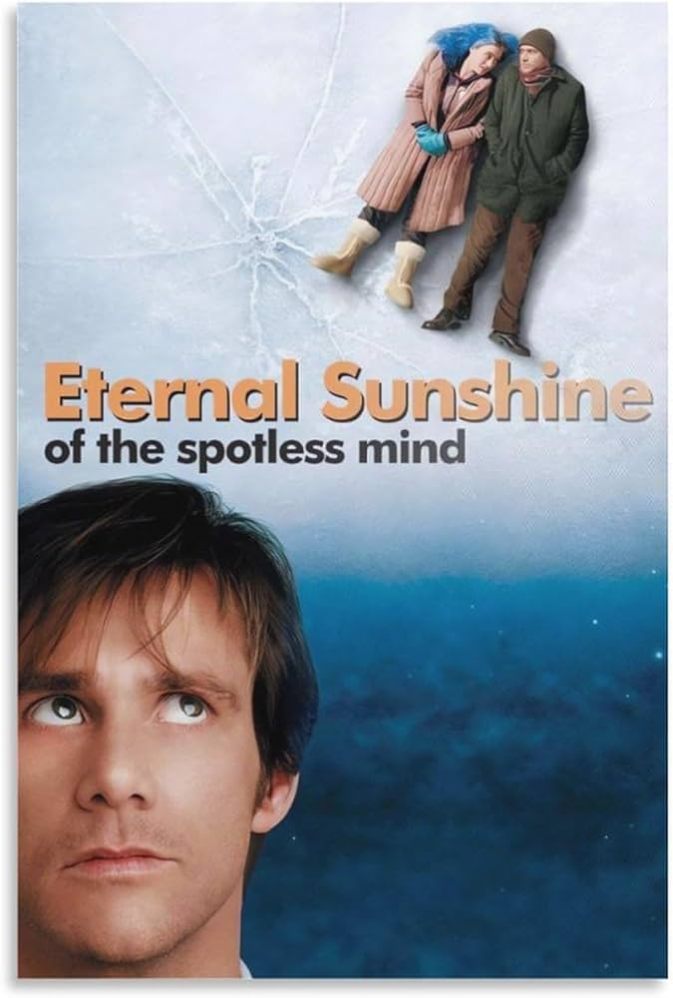
Eternal Sunshine of the Spotless Mind

Ah yes, Eternal Sunshine of the Spotless Mind, or as I like to call it, What If Breakups Were Even More Emotionally Devastating and Science Made It Worse? Michel Gondry and Charlie Kaufman basically took the universal human experience of heartbreak, ran it through a surrealist blender, and served it up as one of the most painfully beautiful movies ever made. This isn’t your typical rom-com where two quirky people bicker, break up, and then dramatically run through an airport to find each other again. No, this is what happens after the rom-com magic wears off, when love isn’t cute anymore, and the person you once adored now just reminds you of all your worst decisions.

Jim Carrey, in a move that shocked everyone who only knew him as “the guy who talks out of his butt in Ace Ventura,” plays Joel, a sad, introverted man who learns that his impulsive, free-spirited ex-girlfriend Clementine (Kate Winslet in her most chaotic form) has erased him from her memory using a weirdly casual brain procedure. Naturally, like any emotionally wounded man with access to experimental science, he decides to erase her too. But because Kaufman is a diabolical genius, we don’t just watch Joel go through the process—we watch his memories collapse in real time, a dreamlike rollercoaster where moments of love and pain literally melt away as he runs through his own mind, desperately trying to hold on to Clementine even as she disappears before his eyes.

And let’s talk about Winslet’s Clementine for a second, because she’s the ultimate manic pixie dream grenade. She’s not here to “fix” Joel—if anything, she’s just as lost as he is, if not more. She drinks too much, changes her hair color like it’s a mood ring, and makes impulsive decisions she regrets almost immediately. But she’s also brutally honest in a way that cuts through Joel’s passive existence like a knife. “Too many guys think I’m a concept, or I complete them, or I’m gonna make them alive,” she tells him in one of the movie’s many gut-punching moments. “But I’m just a fucked-up girl who’s looking for my own peace of mind.” That’s the magic of Eternal Sunshine—it doesn’t romanticize love; it unpacks it, deconstructs it, and reminds you that even the most passionate relationships come with baggage, misunderstandings, and heartbreak.

But what really elevates the film is how it turns the inside of Joel’s head into a surrealist funhouse of memories. The cinematography and practical effects make you feel like you’re inside his unraveling mind—books lose their words, faces blur, childhood memories bleed into romantic moments, and the world literally collapses around him. It’s beautiful and terrifying all at once, a visual representation of what it feels like to lose something you didn’t realize you wanted to keep until it was too late.

And yet, for all its existential dread, the film never fully sinks into cynicism. Because as much as it’s about heartbreak, it’s also about the inevitability of love. Even after all the pain, even after wiping each other from their minds, Joel and Clementine still find their way back together. The movie doesn’t promise a happy ending—it just suggests that love, in all its messy, flawed, heartbreaking glory, is worth the risk. And that’s what makes it such a masterpiece.

So yeah, Eternal Sunshine of the Spotless Mind is less of a movie and more of an emotional lobotomy in the best possible way. It’s the kind of film that leaves you staring at the ceiling at 2 AM, reevaluating every relationship you’ve ever had, and resisting the urge to text your ex. And honestly, what more could you ask for?

Goal Met – Watch top 50 Movies of All Time

I really enjoyed this one as I love movies and this was an easy one to achieve. I again used ChatGPT to search all the top 50 movie lists out there then curate a list of consensus top 100 sorted by year released. I went through and removed movies that I have watched already (Star Wars, Lord of the Rings, etc.) and back filled those with the movies that didn’t make the original cut. Then I broke them down by decade until I had 5 for each decade.

Watching them in sequential order was a fascinating look into the technical and artistic progression of cinema. Starting with black and white silent films with actors who used their bodies to tell the story to the moment when Chaplin started singing and you realized that ‘talkies’ were now a thing,

The transition from black and white to color was also pretty fascinating from a technical perspective as you could see the film grain now and after some time I found I could almost identify which decade the movie was from purely based on the look of the film. The quality of the image got better and better with each watching ending up with a few HDR 4K visual spectacles.

I never once thought ‘why is this on the list?’ each movie was amazing and I found myself immersed in the storytelling and artistic achievement. Watching buster Keaton’s pratfalls and stunts was a visual delight and some of the over the top dialogue from the 40’s and 50’s wasn’t tacky it was straight entertaining. Some of the more poignant movies were heart wrenching such as the pianist which was a brutal watch but I couldn’t look away from the suffering. Stories like that need to be told so people don’t forget.

Film is an art – a way of telling a story in the tradition of storytellers of old. You have your improbable heroes like Lawrence of Arabia, you have your moral lessons like the great dictator or treasure of the Sierra Madre. These stories are important and I’m glad they are all being digitized to protect them as their loss would be a loss to society at large.

The one thing I didn’t get to do during this challenge was keep up on new movie releases – I was just too busy with all the various tasks I was juggling.  I did however, jot down the ones I wanted to watch in a notebook (along with TV series I want to watch) so when the challenge is over I’m going to relax and try to clear out my list!

The Lost City of Z

James Gray’s The Lost City of Z is the kind of movie that Hollywood doesn’t really make anymore—a slow-burn, introspective adventure film that’s more about obsession and existential yearning than it is about gunfights and treasure maps. If you’re expecting a swashbuckling, vine-swinging, snake-punching Indiana Jones type of adventure, I have some unfortunate news: this is not that. There are no ancient booby traps, no secret passageways, and not a single fedora in sight. What we do get is a beautifully shot, hypnotically slow descent into madness, where one man gets so consumed by the unknown that he willingly throws his entire life into the jungle, never to return.

Charlie Hunnam, shedding all remnants of his Sons of Anarchy biker aesthetic, plays Percy Fawcett, a British explorer who makes the baffling mistake of thinking, Yes, I will absolutely go deep into the Amazon rainforest in the early 1900s when absolutely everything is trying to kill me. To be fair, Percy isn’t some glory-seeking adventurer—he’s a man desperate to prove himself to a world that looks down on him. He stumbles upon the idea of a lost civilization buried in the jungle and suddenly, his life is no longer about being a husband or father—it’s about finding Zed (because the British refuse to say Zee like normal people). The deeper he goes, the more obsessed he becomes, to the point where the jungle stops being a place and becomes a state of mind.

Gray directs the film with the kind of patience that dares you to let it sink into your bones. He’s not interested in cheap thrills or exaggerated spectacle. Instead, he lets the atmosphere take over, letting the sweat, the mud, and the endless sea of trees weigh down on you like they do on Fawcett. It’s hypnotic, almost dreamlike—especially when compared to the rigid, oppressive society Fawcett returns to back home in England. Every time he steps out of the jungle, the world seems grayer, smaller, and more suffocating, as if civilization itself is the real prison.

And let’s talk about Robert Pattinson, because somehow, amid all of this, he sneaks in one of his best I’m-going-to-make-you-forget-I-was-ever-in-Twilight performances. As Fawcett’s scruffy, loyal companion Henry Costin, Pattinson disappears into the role, reminding us once again that he thrives in weird, offbeat characters with impressive facial hair. His quiet, almost resigned presence serves as a perfect counterbalance to Hunnam’s increasingly manic ambition, a reminder that for every explorer chasing glory, there’s a guy just trying not to die from malaria.

Sienna Miller also delivers a strong performance as Fawcett’s wife, Nina, a woman stuck in the impossible position of loving a man who loves something else more. She challenges him, supports him, and resents him all at once, embodying the emotional toll that Fawcett’s obsession leaves on the people around him. Because while he’s off chasing mythical cities, his real-life responsibilities—his family, his children, his entire actual existence—are left behind, gathering dust.

By the time the movie reaches its haunting final moments, it doesn’t really matter whether Fawcett found Z or not. The point isn’t about what’s real—it’s about the chase, the longing, the need to believe in something greater than yourself. The Lost City of Z isn’t about discovery; it’s about obsession. It’s about the people who are willing to walk off the edge of the map, knowing full well they might never come back.

So if you’re looking for a classic adventure movie with action-packed set pieces, this might not be your thing. But if you want a slow, meditative, and quietly devastating story about a man who willingly loses himself in the unknown—then The Lost City of Z is a journey worth taking. Just, you know, bring some bug spray.

The Pianist

Roman Polanski’s The Pianist is one of those movies that doesn’t just tell a story—it makes you live inside it, smothering you in a slow, methodical descent into hell. If you came looking for a standard World War II drama with sweeping battle scenes, a rousing musical score, and an obligatory moment where someone nobly sacrifices themselves while looking up at the sky, then congratulations—you are in the wrong place. This isn’t a movie about war, heroism, or resistance fighters saving the day. This is about survival, and survival isn’t glorious. It’s humiliating. It’s degrading. It’s watching the world collapse around you while you slowly wither away in the corner, praying no one notices you exist.

Adrien Brody plays Władysław Szpilman, a Polish-Jewish pianist who starts the movie playing Chopin in a Warsaw radio station and ends it looking like a half-dead scarecrow wandering the ruins of civilization. At the beginning, he’s got everything—family, talent, a home, a nice suit. But as the Nazis tighten their grip on Warsaw, all of it gets stripped away, piece by piece, until all that’s left is a man too weak to stand, hiding in the debris like a ghost who hasn’t realized he’s dead yet. Brody is phenomenal here, and not just in the way he physically transforms from a well-fed, confident musician into a skeletal shell of himself. He barely speaks for half the movie, yet you can feel every ounce of his suffering through his eyes. He doesn’t play Szpilman as a grand, defiant survivor—he plays him as a man who keeps existing simply because he has no other choice.

And let’s talk about Polanski’s direction, because it’s surgical in the way it destroys you. The film never indulges in melodrama, never turns Szpilman into some kind of cinematic martyr. Instead, it just follows him, unflinchingly, as he endures horror after horror. One moment, he’s playing music at a party. The next, he’s watching an old man in a wheelchair get thrown off a balcony by German soldiers. A few scenes later, he’s watching his family get herded onto a train, and he knows—without a word being said—that he will never see them again. The violence here isn’t stylized, it isn’t dramatic, it’s just cold, brutal, and matter-of-fact. People are shot in the street like it’s nothing. Families disappear overnight. The world goes mad, and Szpilman can do nothing but drift through it, clutching his hunger and his silence.

By the time we reach the last act of the film, Szpilman has been reduced to a walking corpse, hiding in the ruins of Warsaw, scrounging for scraps like a stray dog. And then, in one of the most quietly devastating scenes in war movie history, he is finally discovered—by a German officer, no less. And what does he do? He plays the piano. He sits at that broken, dust-covered instrument and plays as if the world isn’t burning outside. And somehow, for just a moment, music, the very thing that defines him, becomes his salvation. Because in a world that has taken everything from him—his family, his dignity, his home—his ability to create something beautiful is the only thing he has left.

The Pianist is not an easy watch. It’s not meant to be. It’s the kind of film that leaves you sitting in stunned silence when the credits roll, the kind that makes you feel like you’ve lived through something rather than just watched it. It doesn’t ask for your tears, but it takes them anyway. It’s a masterpiece, yes, but in the most haunting way possible—the kind of masterpiece that lingers in your bones long after the screen goes black.

The Hurt Locker

Kathryn Bigelow’s The Hurt Locker isn’t just a war movie—it’s a 131-minute stress test for your central nervous system. This isn’t one of those big, sweeping, patriotic spectacles where war is just a backdrop for heroism, camaraderie, and some dude writing sentimental letters home while soft orchestral music swells. No, this is war as pure, undiluted anxiety. This is war as an abusive relationship between a man and a bomb suit. This is war where every trash bag, abandoned car, and suspiciously placed goat could be the last thing you ever see. And the best part? You get to spend all of it inside the increasingly unhinged mind of Staff Sergeant William James, played with reckless brilliance by Jeremy Renner.

Renner’s James is not your typical movie soldier. He’s not here to brood about the morality of war or deliver grand monologues about duty and sacrifice. No, this man treats bomb disposal the way a daredevil treats BASE jumping, except instead of a parachute, he has a pair of wire cutters and a questionable amount of impulse control. He’s the guy who looks at a bomb that could level a city block and thinks, “I wonder how close I can get before this thing turns me into confetti.” He sweats adrenaline, makes every safety protocol weep, and approaches each explosive like it just insulted his mother. The man is addicted to war, which the movie kindly reminds us is “a drug.” Yeah, no kidding.

And while James is out here treating life like a Call of Duty lobby, his team—played by Anthony Mackie and Brian Geraghty—spends most of the movie vacillating between barely concealed terror and wanting to punch him in the face. Mackie’s Sanborn is the no-nonsense professional who, shockingly, does not appreciate James’ bomb-defusing-by-vibes-only approach. Meanwhile, Geraghty’s Eldridge is the poor guy who looks like he wandered into this war zone by accident and now can’t figure out how to leave. Their dynamic is basically “daredevil maniac and the two exhausted guys who have to keep him from dying,” which would be hilarious if it weren’t also completely terrifying.

But what really makes The Hurt Locker stand out isn’t just the tension—it’s how relentlessly it drags you into the chaos. Bigelow’s direction makes you feel like you’re right there in the dirt, sweating through your shirt, wondering if the old man watching you from a rooftop is just a guy enjoying the sunset or someone about to set off an IED with his Nokia brick phone. The handheld camerawork, the rapid cuts, the eerie silence that hangs in the air right before everything goes to hell—it all adds up to a film that doesn’t just depict war; it immerses you in it.

And yet, for all its high-octane suspense, The Hurt Locker isn’t about action—it’s about obsession. It’s about how, for some people, the war never really ends, even when they leave the battlefield. James might be able to dismantle bombs with his bare hands, but he can’t dismantle the part of himself that craves the rush. There’s a moment near the end where he stands in a grocery store aisle, staring blankly at an endless row of cereal boxes, completely lost. The choices are overwhelming. The stakes are non-existent. There’s no life-or-death tension, no adrenaline, no purpose. He looks more afraid in that moment than he does when he’s facing down a car bomb. Because the truth is, war is the only place he truly feels alive.

So yeah, The Hurt Locker is a masterpiece, but it’s the kind of masterpiece that leaves you slightly nauseous, vaguely anxious, and questioning whether you should have watched something with talking animals instead. It’s a film that doesn’t glorify war, but it does understand the terrifying allure of it. It grabs you by the collar, drags you into the dirt, and doesn’t let go until you’re just as rattled as the men on screen. And if you somehow make it through the whole thing without stress-eating an entire bag of chips, congratulations—you’re either a robot or William James himself.

Selma

Here’s the thing about Selma: it’s a movie that takes one of the most pivotal moments in American history and refuses to wrap it in the usual Hollywood gloss. No, this isn’t a feel-good, triumphal march where the music swells and justice is delivered with a bow on top. This is history as it was—messy, brutal, defiant, and driven by people who were not mythic figures but human beings who got tired of waiting for America to live up to its own promises.

Ava DuVernay, the mastermind behind this historical gut-punch, directs with such precision that you almost feel like you’re sitting in the rooms where Martin Luther King Jr. (played by David Oyelowo, who, let’s be honest, deserved every award that year and then some) and his fellow activists are making impossible decisions. The film doesn’t deify King; instead, it shows him as a leader who carried the weight of a movement on his shoulders while still being a husband, a father, and a man who, for all his strength, had moments of doubt. This isn’t the King of sanitized history books, but a flesh-and-blood person with an impossible mission. And somehow, Oyelowo nails every note of it, capturing the gravity, the exhaustion, and that unmistakable power in his voice.

The supporting cast is equally incredible. Carmen Ejogo as Coretta Scott King doesn’t just stand by his side—she holds her own, radiating both grace and quiet strength. Tom Wilkinson as LBJ? Oh, he plays the complicated, not-quite-the-ally-he-should’ve-been president with the right balance of charm and political calculation. And Tim Roth as George Wallace? Slimy as ever, which means he did the job right. But it’s not just about individual performances; it’s about how every person on screen embodies the weight of the moment.

Let’s talk about the march itself—the one from Selma to Montgomery. This movie does not pull its punches when it comes to showing the violent resistance these protesters faced. The Edmund Pettus Bridge sequence is one of the most harrowing moments put to screen—tear gas, batons, bodies trampled—and DuVernay films it in a way that makes you feel the impact of every blow. It’s not over-dramatized; it’s just raw and real. And it’s a stark reminder that these fights for civil rights weren’t won with speeches alone but with blood, resilience, and an unwavering belief in justice.

And can we take a moment to talk about the cinematography? Bradford Young, the cinematographer, gives this film a look that feels intimate yet grand, capturing both the quiet moments of personal struggle and the large-scale protests with equal beauty. The lighting, the framing—everything feels deliberate and urgent, like a call to action rather than a history lesson.

By the time you get to the end, when King delivers his “How Long? Not Long” speech, if you don’t feel something stirring deep in your soul, check your pulse. Because this is not just a movie; it’s a necessary reminder of what happens when people refuse to sit down and shut up in the face of injustice. It doesn’t matter if you know the history—this film makes you feel it. And that, more than anything, is what makes Selma great.

The Artist

If The Artist were a person, it would be that charming, slightly eccentric friend who’s always impeccably dressed and seems to have stepped out of a time machine just to make your life a bit more interesting. This is a film that dares you not to fall in love with it. Set in the late 1920s through the early 1930s, it’s a delightful homage to the silent film era, filled with all the drama, romance, and slapstick comedy that made those early flicks so captivating.

Jean Dujardin plays George Valentin, a silent movie star with a dazzling smile and a charismatic presence that could give Clark Gable a run for his money. But, alas, the arrival of talkies threatens to end his reign as the king of Hollywood. Enter Bérénice Bejo as Peppy Miller, a young dancer with a cute little beauty mark and dreams as big as her grin. She’s the face of the new Hollywood wave, and her star rises as George’s begins to wane. The chemistry between Dujardin and Bejo is electric—half the time, you’re grinning at their antics and the other half, you’re hoping they figure out their lives and just kiss already.

Director Michel Hazanavicius does something extraordinary with The Artist: he makes silence loud. In a world where we’re bombarded by constant noise, the lack of spoken dialogue in this film amplifies every gesture, every glance, every tap of a dance shoe. The music, oh, the music! It swoops in, filling the gaps, elevating the emotional stakes, and turning simple scenes into operatic moments. Ludovic Bource’s score is a character in its own right, narrating the highs and lows with such precision that you’d swear it’s whispering secrets about the characters directly into your ear.

Then there’s the dog. Uggie, the Jack Russell terrier, almost steals the show. Whether he’s saving his master from a burning film reel or doing a jaunty little dance, Uggie encapsulates the spirit of The Artist: playful, touching, and unapologetically entertaining.

What makes The Artist truly remarkable, though, is how it manages to speak volumes about the transition from silent films to talkies—a metaphor for any sort of change and the fear it brings. It’s both a love letter to a bygone era and a reminder that art, no matter the format, is timeless. The film tugs at your nostalgia with one hand and slaps you with a reality check with the other. It’s a silent film that loudly celebrates the joy of movies, reminding us why we fell in love with cinema in the first place.

By the time the credits roll, if you aren’t a little in love with George, Peppy, and yes, even Uggie, then maybe silent films—and charming eccentrics—are just not for you. But for everyone else, The Artist is a reminder that sometimes, the best way to say something meaningful is to just shut up and let the pictures do the talking.

Everything Everywhere All At Once

If Everything Everywhere All at Once were a person, it would be the most chaotic, over-caffeinated, emotionally unstable, and absurdly wise friend you have—the one who somehow makes you laugh, cry, and question the meaning of life in the span of a single conversation. This movie isn’t just a film; it’s a full-body experience. It grabs you by the collar, hurls you through the multiverse at breakneck speed, and somehow, by the end, makes you believe in the power of googly eyes and a well-placed hug.

At the heart of this madness is Michelle Yeoh, who plays Evelyn Wang, a middle-aged laundromat owner drowning in tax problems, an unraveling marriage, an increasingly distant daughter, and, oh yeah, an unexpected multiversal war where she’s the universe’s last hope. So, you know, a normal Tuesday. Yeoh is a revelation—switching from exhausted immigrant mother to kung-fu master to hot-dog-fingered romantic to literally a rock, all while making you feel every ounce of her existential crisis. It’s like watching an entire lifetime of performances crammed into one movie, and she absolutely owns every second.

And then there’s Ke Huy Quan, who storms back into Hollywood like he never left, delivering one of the most heartbreakingly pure performances as Waymond, Evelyn’s kind, soft-spoken husband who turns out to be the most quietly profound character in the entire film. One minute he’s bumbling with fanny-pack dad energy, the next he’s slicing through goons with said fanny pack, and then, just when you think you have him figured out, he drops the monologue about kindness that shatters your soul into a million pieces. This is the kind of performance that makes you want to hug every nice person you’ve ever met.

And then there’s Stephanie Hsu as Joy/Jobu Tupaki, who, honestly, might be one of the most hilariously terrifying antagonists ever put to screen. She’s nihilism in a glittering Elvis suit, flipping between existential despair and chaotic slapstick, and somehow, amidst all the ridiculousness, she delivers a gut-punch performance about generational trauma, identity, and the all-consuming fear of never being enough. If you thought your mom made you feel guilty, imagine if she could literally fight you across infinite universes.

But let’s talk about how this movie does what it does. The Daniels (Daniel Kwan and Daniel Scheinert) direct this film like two absolute lunatics who somehow got their hands on an A24 budget and decided to use it to make the most emotionally resonant fever dream imaginable. The editing is on another level—flipping between universes, tones, and aspect ratios like it’s no big deal. One moment it’s a high-stakes kung-fu battle, the next it’s a heartfelt conversation between two literal rocks, and somehow, both scenes hit just as hard.

And the action? Gloriously absurd. You will never see another movie where a butt-plug-fueled martial arts battle exists in the same space as an Oscar-worthy meditation on love and acceptance. The fight choreography is top-tier—equal parts Jackie Chan homage and absurdist comedy—because why shouldn’t a fight scene involve a guy using a keyboard like nunchucks?

And let’s not forget the emotional core of it all. Because underneath the hot-dog fingers, the raccoon puppeteering (yes, Raccacoonie is real and magnificent), and the existential bagel of doom, this is a story about a mother and a daughter, about learning to choose love and kindness even when life is messy and incomprehensible. It’s about the small, quiet moments that make existence meaningful—even if you are just a rock on a hill.

By the time the credits roll, you’re left feeling emotionally drained in the best way possible. Everything Everywhere All at Once is absurd, heartfelt, hilarious, existential, and genuinely one of the most original films ever made. It’s a love letter to chaos, to immigrant families, to kindness, and to the fact that sometimes, the only way to fight existential dread is to put googly eyes on everything.