Amadeus

Amadeus: When God’s Favorite Composer Was His Least Favorite Human

Meet Antonio Salieri, a man who had the misfortune of being a pretty good composer in the same era as a certifiable genius. It’s like being a decent amateur juggler who has to follow someone juggling chainsaws while riding a unicycle. Blindfolded.

The film opens with elderly Salieri (F. Murray Abraham) attempting suicide while screaming apologies to Mozart for murdering him. This leads to him being committed to an asylum, where he tells his story to a young priest who probably wasn’t expecting his day to include a feature-length confession about musical jealousy and divine betrayal.

Through Salieri’s incredibly biased narration, we meet Wolfgang Amadeus Mozart (Tom Hulce), whose laugh sounds like a hyena that just discovered nitrous oxide. Mozart arrives in Vienna as the most talented brat in musical history – a genius composer who also happens to be a giggling, cursing, drinking manchild with a thing for potty humor. Imagine if you combined Einstein’s brain with a frat boy’s personality, then gave him a wig.

Salieri, who has dedicated his life to God and music (in that order), can’t handle the fact that the Almighty has chosen to give his divine gift to this “obscene child.” It’s like watching someone who spent decades practicing their craft get upstaged by a natural talent who doesn’t even bother to warm up. Mozart composes masterpieces the way most people doodle – without effort and often while doing something else entirely.

The film follows Mozart’s career in Vienna, where he manages to offend pretty much everyone who could help his career. He’s commissioned to write an opera, and decides the perfect subject would be a comedy about life in a harem, because nothing says “court approval” like sexual innuendo in Turkish costumes. Meanwhile, Salieri plots Mozart’s downfall while simultaneously being the only person who truly appreciates the genius he’s trying to destroy.

Mozart’s life starts to unravel faster than a cheap wig. His father dies (appearing later as a terrifying figure in a mask to commission the Requiem), his wife Constanze (Elizabeth Berridge) leaves him, and he’s reduced to teaching piano lessons to “squealing children” for money. Salieri, seeing his chance, disguises himself as Mozart’s dead father and commissions a Requiem Mass, planning to steal it and reveal it as his own composition at Mozart’s funeral – because nothing says “mentally stable” like planning to premiere your stolen masterpiece over your rival’s dead body.

The film builds to Mozart racing against time and his own deteriorating health to complete the Requiem, while Salieri pretends to help him while actually helping him die faster. It all culminates in one of cinema’s greatest sequences, as Mozart dictates his Requiem from his deathbed to Salieri, who writes it down while probably thinking “I could have written this… okay, no I couldn’t.”

The Verdict

What I Love:

  • F. Murray Abraham making musical jealousy into high art
  • Tom Hulce’s laugh, which should have gotten its own Oscar nomination
  • The most beautiful soundtrack in film history (thanks, Wolfgang)
  • Costume design that makes modern fashion weeks look understated
  • Miloš Forman’s direction making classical music sexy before it was cool

What Could’ve Been Better:

  • Might make you feel bad about quitting those piano lessons
  • Will definitely affect your ability to listen to “Eine Kleine Nachtmusik” without giggling
  • Could make you question every gift you thought God gave you

“Amadeus” is less about historical accuracy and more about the agony of being second-best in a field you’ve dedicated your life to. It’s like a sports movie where the antagonist is the narrator, God is the referee, and Mozart is that guy who shows up without training and breaks all the records.

Rating: 5 out of 5 powdered wigs

P.S. – After watching this, you might want to listen to Mozart’s Requiem. Just don’t commission one yourself.
The French Connection

When Drug Busting Meets Defensive Driving 101

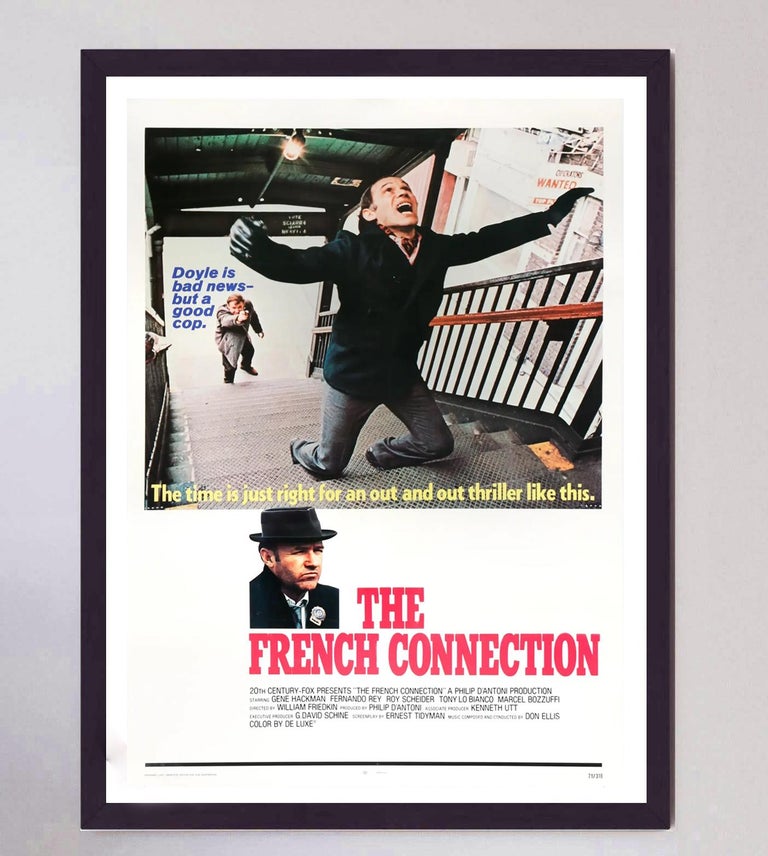
Ever wonder what would happen if you gave the world’s angriest cop a badge, a car, and an obsession with French drug dealers? Meet Jimmy “Popeye” Doyle (Gene Hackman), a New York detective whose approach to police work makes Bull Connor look like Officer Friendly.

Doyle and his partner Buddy “Cloudy” Russo (Roy Scheider) stumble onto what might be the biggest heroin deal in history while doing their usual routine of harassing random civilians and treating the Constitution like a suggestion list. They spot well-dressed Sal Boca hanging out at a nightclub with known criminals, which in early 1970s New York was like noticing water is wet, but Doyle’s gut says there’s more.

Enter Alain Charnier (Fernando Rey), a sophisticated French criminal who makes other drug lords look like street corner dealers. He’s smuggling $32 million worth of heroin into New York inside a car being brought over by unsuspecting TV personality Henri Devereaux. Charnier is everything Doyle isn’t – sophisticated, patient, and owns more than one sport coat.

The film follows Doyle and Russo as they conduct the world’s most aggressive stakeout. This includes a surveillance sequence that consists mainly of our heroes freezing their badges off while eating what appears to be the worst takeout in New York (which is saying something). Doyle’s dedication to the case extends to following Charnier around the city in a cat-and-mouse game that probably violated every transit authority regulation in existence.

This leads to the film’s centerpiece: a car chase that makes the Fast & Furious franchise look like a driver’s ed video. Doyle, pursuing a hijacked elevated train carrying a hitman, creates a new category of traffic violation while terrorizing Brooklyn in a brown Pontiac. The scene was shot without permits, which means those terrified pedestrians jumping out of the way weren’t acting – they were just trying to get their groceries home.

Things get messier when the feds get involved, leading to jurisdictional disputes that make interdepartmental meetings look like group therapy. The whole operation nearly falls apart multiple times, primarily because Doyle has the diplomatic skills of a hangry rhinoceros. It all culminates in a showdown at an abandoned warehouse (because where else would you conduct a major drug bust?) that goes about as smoothly as you’d expect when Popeye Doyle is involved.

The Verdict

What I Love:

  • Gene Hackman making “angry cop” into an art form worthy of the Louvre
  • A car chase that probably sent New York’s insurance rates up for decades
  • Cinematography that makes you want to take a shower, but that’s the point
  • A police procedural that’s about as procedural as a food fight
  • The most aggressive use of a porkpie hat in cinema history

What Could’ve Been Better:

  • Might make you distrust anyone wearing nice clothes in New York
  • Will definitely affect your opinion of elevated trains
  • Could make you question the effectiveness of police sensitivity training

“The French Connection” is like if you took a documentary about police work and replaced all the paperwork scenes with adrenaline. It won five Academy Awards, including Best Picture, proving that sometimes the Academy voters appreciate a good car chase as much as a period drama.

Rating: 5 out of 5 illegally parked surveillance vans

P.S. – After watching this, you might want to take the subway. Actually, after that chase scene, maybe just walk.

Once Upon a Time in America

The Longest Game of Criminal Musical Chairs Ever Filmed

Looking for a nice, straightforward gangster movie? Maybe try Goodfellas. Sergio Leone’s final film is what happens when you take a crime epic, throw it in a blender with a pocket watch, and hit the “timeline confetti” button. It’s nearly four hours of past, present, and “wait, when are we now?”

Our story follows David “Noodles” Aaronson (Robert De Niro) through three primary time periods: the 1920s (child gangster edition), the 1930s (successful gangster edition), and 1968 (confused old gangster edition). The film opens with Noodles in 1933 fleeing from gangsters after apparently getting his friends killed and stealing their money. Because that’s what friends are for, right?

Cut to 1968, where an older Noodles returns to New York after receiving a mysterious letter. He looks like he’s spent the last 35 years trying to figure out what exactly happened in this movie, and honestly, same. He visits a still-operating speakeasy run by Fat Moe (Larry Rapp), whose sister Deborah (Elizabeth McGovern) was the love of Noodles’ life – at least when he wasn’t too busy ruining everything.

Through a series of flashbacks more complex than a quantum physics textbook, we learn about young Noodles (Scott Tiler) and his childhood friend Max (Rusty Jacobs). They start their criminal career in Manhattan’s Lower East Side, where they meet Patsy and Cockeye, forming a gang that makes the Little Rascals look like model citizens. Their early adventures include setting a rival’s newspaper stand on fire, which seems like a lot of effort to avoid reading the morning news.

Young Noodles goes to prison for killing a rival gang member, and when he gets out, he reunites with his now-grown friends. Adult Max (James Woods) has become more ambitious than a Silicon Valley startup founder, leading the gang into bigger scores during Prohibition. The adult gang’s operations are successful enough to make them rich, but Max keeps pushing for more, because apparently being a wealthy criminal during the Depression isn’t enough of an achievement.

The film weaves through their rise to power, complicated by Noodles’ obsession with Deborah and Max’s increasingly risky schemes. There’s a subplot about a union leader named Jimmy O’Donnell that’s more confusing than trying to assemble IKEA furniture without instructions. Meanwhile, Noodles’ relationship with Deborah goes about as well as you’d expect from someone whose emotional intelligence is somewhere between a rock and a slightly smaller rock.

Everything supposedly culminates in a betrayal in 1933 that leads to the deaths of Max, Patsy, and Cockeye. But because this is Leone, nothing is what it seems. In 1968, Noodles discovers that Max faked his death, stole the gang’s money, and became a powerful political figure named Secretary Bailey. It’s like the worst high school reunion surprise ever.

The Verdict

What I Love:

  • A narrative structure that makes Christopher Nolan say “maybe that’s a bit complicated”
  • Ennio Morricone’s score that makes even scenes of people walking seem epic
  • De Niro proving he can brood in multiple decades
  • James Woods at peak James Woods-iness
  • Cinematography that makes New York look like a beautiful dream, even when it’s a nightmare

What Could’ve Been Better:

  • Might require a flowchart to follow the timeline
  • Will definitely affect your ability to tell what year it is
  • Could make you suspicious of any childhood friend who seems too ambitious

This is a film that treats time like a suggestion rather than a rule. It’s less “Once Upon a Time” and more “Several Times at Once in America.” At nearly four hours long, it’s the kind of movie that makes Lord of the Rings look like a TikTok video.

Rating: 5 out of 5 opium-induced time jumps

P.S. – If you’re planning to watch this, maybe take notes. Or better yet, bring a professional timekeeper.

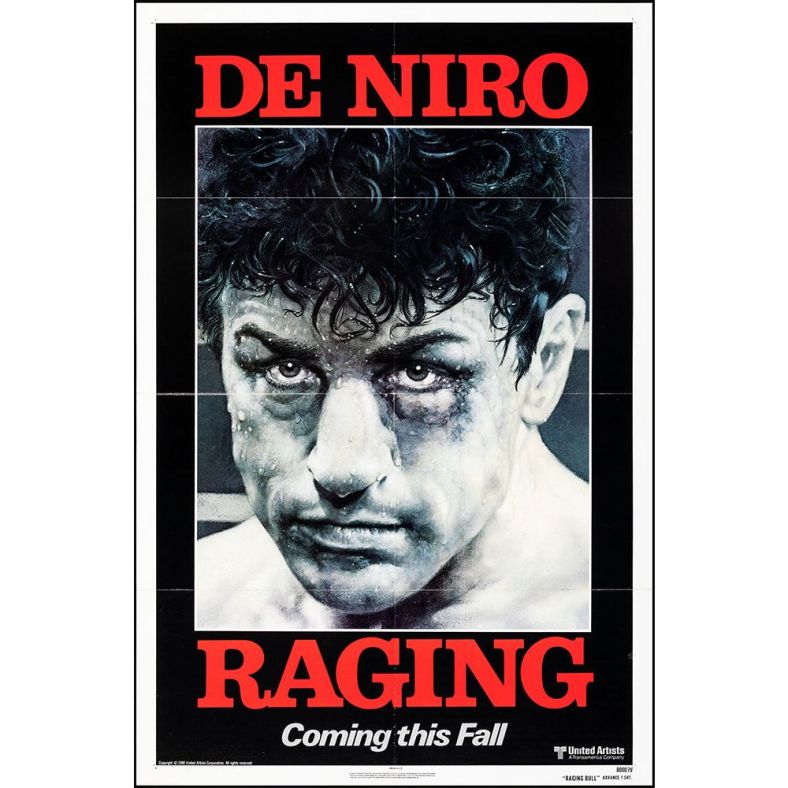
Raging Bull

Ever wonder what would happen if you took the world’s angriest man and made him punch people for a living? Meet Jake LaMotta (Robert De Niro), a middleweight boxer whose approach to both fighting and relationships makes Mike Tyson look like a meditation teacher.

Scorsese’s black-and-white masterpiece follows LaMotta through his rise and spectacular face-first fall, chronicling a man who apparently never met a person – including himself – he didn’t want to fight. The film opens in 1941, when Jake is just a up-and-coming boxer whose only notable personality trait is his ability to take a punch better than most people take compliments.

Enter Jake’s brother Joey (Joe Pesci, proving that short men can be terrifying long before Goodfellas), who manages Jake’s career with all the subtlety of a punch to the face. Their relationship is like watching the world’s most violent family counseling session, complete with mob connections and fixed fights. When Jake meets 15-year-old Vickie (Cathy Moriarty), he pursues her with all the charm of a restraining order waiting to happen. They eventually marry, because apparently no one thought to warn her about red flags.

The boxing scenes are shot like violent ballet, with blood spraying in gorgeous slow motion and sounds that make every punch feel like a small car accident. Scorsese films these fights like they’re taking place in hell itself, with smoke filling the ring and flashbulbs popping like tiny explosions. It’s beautiful in the same way a tornado is beautiful – from a very safe distance.

But the real fighting happens outside the ring. Jake’s pathological jealousy turns his life into a never-ending episode of “Who’s Sleeping With My Wife?” (Spoiler alert: probably nobody). He accuses Joey of having an affair with Vickie, which leads to a fight that makes their childhood squabbles look like pillow fights. He beats up his wife’s supposed admirers with the dedication of a man filling out his punch card at a very violent coffee shop.

The film charts Jake’s rise to the middleweight championship, including his famous fights with Sugar Ray Robinson, whom Jake seems to view less as an opponent and more as a personal insult to his existence. But because Jake can’t stop being Jake for five minutes, he gains weight, loses his title, and manages to alienate literally everyone who ever cared about him.

By the 1950s, Jake is reduced to running a sleazy Miami nightclub and performing bad stand-up comedy, which is somehow more painful to watch than any of his boxing matches. He gets arrested for introducing underage girls to male patrons, sending him to prison where, in a moment of pure LaMotta logic, he punches a wall until his knuckles bleed while screaming “Why? Why?”

The film ends with an older, paunchier Jake rehearsing his nightclub act in front of a mirror, reciting Marlon Brando’s famous “I coulda been a contender” speech from On the Waterfront. It’s a moment of crushing irony – unlike Terry Malloy, Jake had actually made it. He just couldn’t stop fighting long enough to enjoy it.

The Verdict

What I Love:

  • De Niro’s performance, which included gaining 60 pounds and presumably losing his sanity
  • Boxing sequences that make actual boxing look like synchronized swimming
  • Michael Chapman’s black-and-white cinematography that makes everything look like a beautiful nightmare
  • Joe Pesci proving that rage isn’t determined by height
  • Dialogue that makes profanity sound like Shakespeare

What Could’ve Been Better:

  • Might make you reconsider your boxing career
  • Will definitely affect your appetite for steak
  • Could make family reunions seem relatively peaceful by comparison

“Raging Bull” is like watching a Greek tragedy where everyone speaks in four-letter words and resolves their conflicts with uppercuts. It’s a masterpiece that makes you grateful for modern anger management techniques.

Rating: 5 out of 5 perfectly cooked steaks (medium rare, or Jake will know)

P.S. – After watching this, you might want to hug your brother. Unless he’s Joe Pesci.

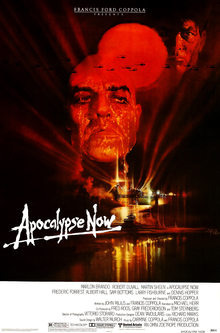
Apocalypse Now

The World’s Worst River Cruise

Looking for a relaxing boat trip up a scenic river? Then maybe skip Captain Benjamin Willard’s (Martin Sheen) journey into the heart of madness during the Vietnam War. His mission, should he choose to accept it (spoiler: he does, because apparently he’s never seen a war movie before): sail upriver into Cambodia to find Colonel Walter Kurtz (Marlon Brando), a rogue Special Forces officer who’s gone full “started his own death cult” crazy. You know, just your standard military performance review.

Willard, who starts the film with the mother of all hangovers in a Saigon hotel room, gets his mission from intelligence officers who seem surprised that giving someone unlimited power in a war zone might lead to megalomania. Kurtz, once a model officer, has apparently gone off the reservation both literally and figuratively, setting up his own kingdom where he plays God with a side of human sacrifice.

Our protagonist joins a Navy PBR crew that makes the Marx Brothers look well-adjusted. There’s Chief Phillips (Albert Hall) trying to maintain sanity, Lance Johnson (Sam Bottoms) who starts sane and ends up practically joining Kurtz’s fan club, Chef (Frederic Forrest) who just wanted to be a saucier (worst career change ever), and Clean (Laurence Fishburne, all of 14 years old) who’s probably too young to be experiencing any of this.

Their journey upriver is like a demented version of Disney’s Jungle Cruise. First stop: a USO show featuring Playboy Playmates that devolves into chaos faster than you can say “terrible planning.” Next up: the infamous “Charlie don’t surf” sequence where Lieutenant Colonel Kilgore (Robert Duvall) decides the best time to go surfing is during an air cavalry assault. Because nothing says “military strategy” like hanging ten while napalm explodes in the background.

The crew’s encounters get progressively weirder as they head upriver. They massacre a sampan full of civilians over a hidden puppy (definitely not in the Geneva Convention), experience a surreal USO show redux at a French plantation (apparently some folks didn’t get the memo about colonialism being over), and face an attack by natives that kills Clean and drives Chef into new realms of paranoia.

Finally reaching Kurtz’s compound, they find a photojournalist (Dennis Hopper) who makes your average cult member look skeptical. He babbles about Kurtz’s genius while stepping over bodies like they’re speed bumps. Chef gets dispatched to call in an airstrike if Willard doesn’t return, which goes about as well as you’d expect (spoiler: Kurtz returns Chef to Willard… in pieces).

The film’s climax intercuts Willard’s assassination of Kurtz with a ritual buffalo sacrifice, which is probably the most subtle thing that happens in the entire third act. Kurtz’s famous last words – “The horror… the horror…” – could refer to the war, human nature, or possibly just Brando’s script reading process.

The Verdict

What I Love:

  • Cinematography that makes you feel like you’re having someone else’s acid flashback
  • A soundtrack that turns The Doors’ “The End” into the world’s most ominous boat trip theme
  • Helicopter sequences that made the Air Cavalry look like a Wagner opera with better props
  • Martin Sheen’s performance, which might actually be a real nervous breakdown
  • The fact that Francis Ford Coppola didn’t completely lose his mind making this (debatable)

What Could’ve Been Better:

  • Might make you reconsider your upcoming river cruise booking
  • Will definitely affect your opinion of Wagner’s “Ride of the Valkyries”
  • Could make you suspicious of any military officer who quotes T.S. Eliot

“Apocalypse Now” is what happens when you adapt Joseph Conrad’s “Heart of Darkness,” feed it acid, and send it to Vietnam. It’s a masterpiece of controlled chaos that took years off everyone’s life who made it – Sheen had a heart attack, Brando showed up looking like he ate the entire craft services table, and the shoot went so long the Filipino government changed hands during filming.

Rating: 5 out of 5 questionably motivated surf sessions

P.S. – I love the smell of hyperbole in the morning. Smells like… Oscar nominations.

Taxi Driver

Ever had insomnia so bad you decided to become a taxi driver and slowly descend into violent psychosis? Meet Travis Bickle (Robert De Niro), a Vietnam vet whose idea of a self-improvement program makes Fight Club look like a mindfulness retreat.

Travis takes a job driving a taxi on New York’s night shift, which in 1976 was about as relaxing as being a rodeo clown with vertigo. He cruises through a Times Square that makes modern-day Times Square look like Disneyland, carrying passengers that would make an Uber driver’s one-star reviews seem quaint. His journal entries reveal a man who sees the city as a cesspool that needs cleaning, though his idea of urban renewal involves significantly more ammunition than most city planners would recommend.

Our sleep-deprived protagonist becomes fixated on two women: Betsy (Cybill Shepherd), a campaign worker for presidential candidate Charles Palantine, and Iris (Jodie Foster), a 12-year-old prostitute. Because nothing says “I’m totally stable” like taking your first date to a Swedish porn film, Travis manages to spectacularly bomb his chances with Betsy faster than you can say “poor choice of venue.” Pro tip: X-rated movies are generally not considered first-date material, unless you’re dating a film critic with very specific interests.

Meanwhile, Travis’s mental state deteriorates faster than a sandwich left in a hot cab. He starts working out, buying illegal guns from sketchy salesmen (played by Steven Prince, who probably didn’t have to act much), and practicing quick-draws in front of his mirror while delivering the now-iconic “You talkin’ to me?” monologue – which, by the way, is the worst self-help affirmation ever.

His apartment turns into what would happen if an army surplus store had a baby with a pharmacy’s worth of uppers. He straps a gun to his arm using a homemade sliding mechanism that would make Q Branch jealous, shaves his hair into a mohawk that would give any barber PTSD, and generally transforms himself into a one-man army whose recruiting officer really should have checked references.

The plot accelerates when Travis fixates on “saving” Iris from her pimp, Sport (Harvey Keitel, rocking a wardrobe that makes most disco outfits look understated). He also decides that presidential candidate Palantine needs to be assassinated, because nothing says “I’m helping” like attempting to shoot a politician. When that plan fails – turns out Secret Service agents don’t appreciate mohawked guys reaching for their pockets – Travis redirects his violent salvation complex toward Sport and Iris’s other exploiters.

The finale explodes into one of cinema’s most notorious bloodbaths, as Travis storms the brothel in a scene that makes The Shining look like a real estate walkthrough. He eliminates Sport, the hotel manager, and Iris’s client in a sequence that’s both horrifying and weirdly balletic, if your idea of ballet involves multiple gunshot wounds. Travis himself is shot several times but keeps going, demonstrating that crazy beats bullets every time.

The film’s coda is a masterpiece of irony: Travis survives and is hailed as a hero by the media for saving Iris. We see him back at work, now famous among his fellow cabbies, even getting a fare from Betsy who seems impressed by his newfound notoriety. But that final look in his rearview mirror suggests that New York’s most unstable cabbie hasn’t exactly found inner peace.

The Verdict

What I Love:

  • De Niro’s performance, which makes other method actors look like they’re doing dinner theater
  • The grimy portrayal of 1970s New York that makes modern tourists seem adorably naive
  • Bernard Herrmann’s last and possibly greatest score, which sounds like jazz having a nervous breakdown
  • Paul Schrader’s script that reads like Dostoevsky after three days without sleep
  • Michael Chapman’s cinematography that makes you want to take a shower, but in a good way

What Could’ve Been Better:

  • Might make you reconsider using ride-share services
  • Will definitely make you suspicious of anyone who owns multiple guns and hair clippers
  • Could affect tourism to New York (though modern Times Square has done that anyway)

“Taxi Driver” is a masterpiece that manages to be both a character study and a slap in the face to anyone who thinks mental health services are adequately funded. It’s like watching a train wreck if the train were consciousness itself, and the track were society’s failed support systems.

Rating: 5 out of 5 possibly imagined cab fares

P.S. – After watching this, you might want to take the bus for a while.

Yojimbo

When a Wandering Samurai Decides to Play Chess with Human Pieces

Ever have that moment when you walk into a town and think, “This place could use a good old-fashioned gang war”? No? Well, meet Sanjuro (Toshiro Mifune), a masterless samurai who does exactly that, though admittedly with more style and a better sword than most of us could manage.

The year is 1860, and our scruffy protagonist wanders into a town that’s about as cheerful as a tax office on April 14th. The first thing he sees is a dog trotting by with a human hand in its mouth. Most people would take this as a sign to try the next town over, but Sanjuro sees it as a career opportunity. Welcome to the world of Akira Kurosawa’s “Yojimbo.”

The town’s situation is more complicated than a corporate org chart. On one side, we have silk merchant Tazaemon and his gang, led by the hot-headed Ushitora, who recently split from his former boss Seibei. On the other side, we have sake merchant Tokuemon and his gang, led by the aforementioned Seibei. Both gangs are about as trustworthy as a chocolate teapot, and caught between them are the town’s few remaining honest citizens, including Gonji, the sake brewery owner who becomes Sanjuro’s primary source of information (and sake).

Our crafty samurai quickly figures out that the best way to clean up this town is to let it get even dirtier first. He approaches Seibei and offers his services as a yojimbo (bodyguard), demonstrating his skills by casually cutting down three of Ushitora’s men. The display is so impressive that both gangs want to hire him, which is exactly what he was counting on.

What follows is a masterclass in manipulation that would make Machiavelli take notes. Sanjuro plays both sides, intentionally leaking information back and forth, driving up his price, and watching as the gangs become increasingly paranoid. He gets hired by Seibei for the princely sum of 25 ryo, only to witness a fascinating display of cheapskate theater as Seibei’s wife suggests paying him after he wins the coming battle (spoiler alert: they never planned to pay him at all).

The plot thickens like a good miso soup when Ushitora’s gang brings in Unosuke (Tatsuya Nakadai), the younger brother who’s been away and has returned with a newfangled pistol. This is the feudal Japanese equivalent of bringing a gun to a sword fight, and it significantly complicates Sanjuro’s plans.

Things really get messy when our antihero helps a kidnapped woman escape back to her family. This act of kindness (his one deviation from calculated self-interest) nearly gets him killed. The gangs discover his double-dealing, and he receives a brutal beating that would have most people considering a career change. Instead, he recovers in hiding, watching as the town descends further into chaos.

The final act is a symphony of violence orchestrated by our now-recovered samurai. Having managed to get the gambling-addicted constable to free a prisoner (which led to said prisoner killing Seibei), Sanjuro sets up the final confrontation. In one of cinema’s most iconic showdowns, he faces off against six men, including the pistol-wielding Unosuke. The scene is a perfect blend of tension, skill, and that special brand of samurai cool that inspired countless filmmakers, including Sergio Leone, who would later remake this film as “A Fistful of Dollars.”

The Verdict

“Yojimbo” is what happens when you take a hardboiled detective novel, dress it in a kimono, and filter it through the genius of Akira Kurosawa. It’s a perfect blend of drama, dark humor, and action that somehow manages to be both deeply cynical and wildly entertaining.

What I Love:

  • Toshiro Mifune’s performance as Sanjuro is a masterpiece of subtle expressions and physical presence
  • The way Kurosawa frames every shot like a perfect photograph
  • The dark humor that runs throughout the film like a bitter thread
  • Masaru Sato’s score, which manages to be both playful and ominous
  • The intricate plot mechanics that click together like a perfect puzzle
  • The influential cinematography that would inspire generations of filmmakers

What Could’ve Been Better:

  • Some of the political machinations might be hard to follow on first viewing
  • The violence, while artistic, might be too stylized for some modern viewers
  • The film’s cynical worldview might be a bit much for those seeking traditional heroics

“Yojimbo” isn’t just a great samurai film; it’s a great film, period. It’s a story that transcends its genre and setting to become something universal – a tale about human greed, corruption, and the occasional need for a mysterious stranger to come to town and clean house. The fact that it manages to be darkly funny while doing all this is just icing on the rice cake.

Rating: 5 out of 5 strategically placed sake cups

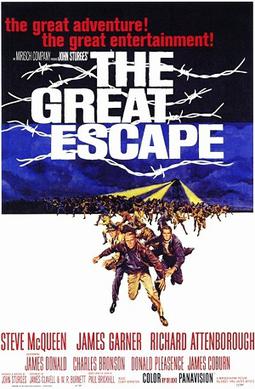
The Great Escape

The Great Escape: When “Sorry, Wrong Tunnel” Isn’t an Option

You know a movie’s going to be good when it opens with the Germans essentially creating their own all-star team of escape artists by putting all their most troublesome POWs in one camp. Talk about a self-fulfilling prophecy! Based on a true story from World War II, “The Great Escape” follows a group of Allied prisoners planning the mother of all prison breaks from a supposedly escape-proof German POW camp.

Enter Squadron Leader Roger Bartlett (Richard Attenborough), nicknamed “Big X,” who’s basically the Steve Jobs of escape planning, minus the turtlenecks. His ambitious plan? Not just to get a few men out, but to orchestrate a mass exodus of 250 prisoners. The goal isn’t just escape – it’s to cause such massive disruption that the Germans will have to devote valuable resources to hunting them down. Now that’s what I call thinking big!

The plan involves not one, not two, but THREE tunnels (dubbed Tom, Dick, and Harry – because apparently “Eenie, Meenie, and Miney” were taken). The film introduces us to a fantastic ensemble cast, each with their own specialty. There’s Flight Lieutenant Danny Velinski (Charles Bronson), the “Tunnel King,” who can probably dig his way out of anything except a bad movie contract. Captain Virgil Hilts (Steve McQueen), the “Cooler King,” spends so much time in solitary confinement he probably has his mail forwarded there. And let’s not forget Flight Lieutenant Bob Hendley (James Garner), the “Scrounger,” who could probably get you a five-course meal in the middle of a desert.

The movie excels at showing the painstaking detail of the escape preparation. They’re not just digging tunnels; they’re running a full-scale underground operation (pun intended). The prisoners create a complete intelligence network, manufacture civilian clothes, forge documents, and even build a hidden railway system for removing dirt. It’s like watching a very serious episode of “MacGyver” set in the 1940s.

The actual escape sequence is a masterclass in suspense. After months of preparation, things naturally don’t go quite according to plan (because what fun would that be?). The tunnel comes up short of the woods, leading to one of the most nerve-wracking scenes as prisoners have to make breaks for it in full view of the guard towers. It’s like the world’s deadliest game of “Red Light, Green Light.”

The film then follows various escapees as they attempt to make their way through Nazi Germany. Some succeed, most don’t, and the film doesn’t shy away from showing the brutal consequences of the escape attempt. The famous motorcycle chase scene with Steve McQueen (actually performed by both McQueen and stunt rider Bud Ekins) is pure Hollywood additions to the true story, but it’s so incredibly cool that we’ll give them a pass.

The Verdict

“The Great Escape” is that rare breed of war film that manages to be both entertaining and respectful of its serious subject matter. Director John Sturges strikes a perfect balance between showing the ingenuity and sometimes even humor of the prisoners while never letting us forget the deadly stakes of their endeavor.

What I Love:

  • The phenomenal ensemble cast, each bringing their character to vivid life
  • The meticulous attention to detail in showing the escape preparation
  • Elmer Bernstein’s iconic and jaunty musical score that you’re probably humming right now
  • The way the film builds tension gradually but relentlessly
  • How it manages to inject moments of humor without undermining the gravity of the situation

What Could’ve Been Better:

  • The 172-minute runtime might test some viewers’ patience (though I’d argue every minute is necessary)
  • Some historical liberties taken, particularly with the American presence in the camp
  • The motorcycle sequence, while awesome, is pure Hollywood fantasy

The film serves as both a testament to human ingenuity and determination, and a memorial to the real men who risked (and in many cases gave) their lives in the actual escape. It’s a perfect example of how to make an entertaining war film that doesn’t trivialize the actual history it’s based on.

If you haven’t seen it yet, what are you waiting for? But maybe don’t watch it right before a long flight – all that tunnel footage might make you a bit claustrophobic.

Rating: 4.5 out of 5 dirt-filled trouser legs

Lawrence of Arabia

Let me take you through this monumental epic, which manages to feel both impossibly vast and deeply personal at the same time.

The story begins with Lawrence’s death in a motorcycle accident (ironically, after surviving all his desert adventures), before rewinding to show us the eccentric British Army lieutenant in Cairo, where his insubordinate attitude and scholarly interests make him stick out like a sore thumb in the military bureaucracy. When he’s assigned as a liaison to the Arab Bureau, it’s partly because his superiors just want him out of their hair – though this “punishment” ends up changing the course of history.

The film really hits its stride when Lawrence meets Prince Feisal (Alec Guinness, doing his best with a role that really should have gone to an Arab actor). Here we get our first glimpse of Lawrence’s growing infatuation with Arab culture and his emerging messiah complex. His first major achievement – crossing the “uncrossable” Nefud Desert to attack Aqaba from the unprotected landward side – establishes his reputation for achieving the impossible. The scene where he returns alone into the desert to rescue a lost man perfectly encapsulates his character: equal parts messiah, madman, and military genius.

The film takes a darker turn after Lawrence’s capture in Daraa. The sequence where he’s “entertained” by the Turkish Bey (though the film leaves the specifics of his torture and possible sexual assault ambiguous) marks a crucial turning point. O’Toole’s performance becomes increasingly unhinged after this – his eyes take on a wild gleam, and his actions become more brutal. The massacre of the Turkish column at Tafas, where Lawrence orders “no prisoners,” shows just how far he’s fallen from the idealistic officer we met in Cairo.

What makes the film particularly fascinating is how it refuses to either fully condemn or celebrate Lawrence. Was he a liberator or another kind of colonizer? A friend to the Arab people or someone playing at being Arab? The film suggests all these things might be true simultaneously. There’s a brilliant scene where Lawrence stares at his reflection in a dagger’s blade, seemingly unsure of who he’s become – it’s worth the price of admission alone.

The political machinations in the background are equally compelling. While Lawrence is leading his Arab army to victory, the British and French are already carving up the Middle East in the Sykes-Picot Agreement. There’s a devastating moment when Lawrence realizes his promises of Arab independence were hollow – he was just another tool of colonial policy, despite his genuine belief in the Arab cause.

The film’s technical achievements are staggering. Consider the famous cut from Lawrence blowing out a match to the rising desert sun – it’s taught in every film school for a reason. The battle sequences are enormous in scale (no CGI armies here – those are thousands of real extras), yet Lean never loses sight of the human drama. The scene where Lawrence walks atop a captured Turkish train, soaking in the adulation of his men, tells us everything about his psychological state without a word of dialogue.

Special mention has to go to the supporting cast. Omar Sharif’s Sherif Ali transforms from would-be assassin to Lawrence’s closest friend and voice of reason. Anthony Quinn’s Auda abu Tayi steals every scene he’s in, bringing a magnificent swagger to the Bedouin chief who fights “because it is my pleasure.” Even smaller roles, like Claude Rains as the craftily pragmatic Mr. Dryden, add depth to the political intrigue.

The film’s handling of Lawrence’s sexuality and gender expression was remarkably ahead of its time, even if it couldn’t be explicit about it. His famous line “The trick is not minding that it hurts” takes on multiple meanings, and his delight in wearing Arab robes speaks to someone finding freedom in a different cultural identity.

Most impressively, “Lawrence of Arabia” manages to be both a celebration and critique of the heroic narrative. It shows us Lawrence’s achievements in all their glory while simultaneously questioning the very nature of Western intervention in the Middle East – questions that remain painfully relevant today. By the end, when Lawrence returns to England in his British uniform, looking uncomfortable and out of place, we understand that he’s a man who belongs nowhere – too Arab for England, too English for Arabia, and perhaps too mythologized to ever be truly understood.

The film’s nearly four-hour runtime might seem daunting, but like the desert itself, it operates on its own sense of time. This is cinema at its most ambitious and accomplished – a character study painted on the largest possible canvas, where the spectacular desert vistas serve as both backdrop and mirror to Lawrence’s internal journey. It’s a reminder of what movies can achieve when they aim for true greatness.

★★★★★ David Lean’s sweeping masterpiece “Lawrence of Arabia” swallows you whole like the endless sea of sand that serves as its majestic backdrop. Peter O’Toole, in his career-defining role, brings T.E. Lawrence to life with a hypnotic intensity that borders on feverish – watching his transformation from prissy British officer to messianic desert warrior feels like witnessing someone slowly lose their grip on sanity under the merciless Arabian sun. The supporting cast is a feast of powerhouse performances, with Omar Sharif’s dignified Sherif Ali and Anthony Quinn’s thunderous Auda abu Tayi practically vibrating with barely contained energy. Yes, this epic runs longer than a camel can go without water (216 glorious minutes), but every frame of Freddie Young’s cinematography is a painting come to life, from shimmering mirages to the most famous match cut in cinema history. Maurice Jarre’s sweeping score doesn’t so much accompany the film as possess it. While modern viewers might raise an eyebrow at white actors playing Arab roles (a problematic Hollywood tradition that persisted far too long), the film’s exploration of colonialism, identity, and the price of greatness remains startlingly relevant. Lean’s direction transforms what could have been a stuffy biographical film into a psychological odyssey that’s both intimate character study and grand spectacle. Like the desert itself, “Lawrence of Arabia” seems to exist outside of time – massive, mesmerizing, and absolutely essential.

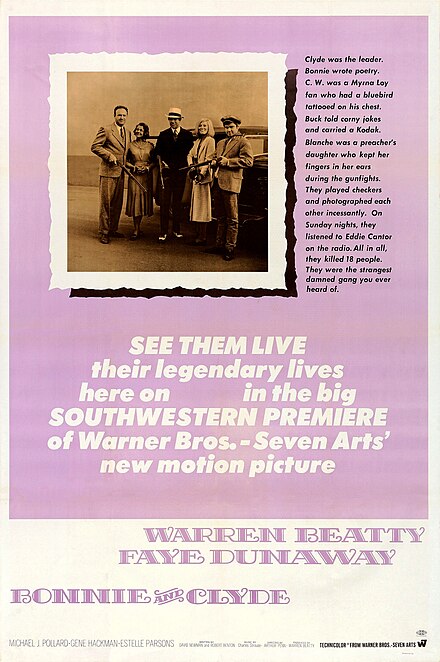
Bonnie and Clyde

In 1931 West Dallas, Bonnie Parker finds Clyde Barrow attempting to steal her mother’s car. Rather than being alarmed, she’s intrigued by his dangerous edge. When Clyde reveals his prison time and shows off his gun (subtlety isn’t his strong suit), Bonnie is captivated. He seals the deal by robbing a store just to impress her, and suddenly this small-town waitress sees her ticket out of a life of serving coffee and settling for mediocrity.

Their early crime spree is more comedy than criminal masterstroke. Clyde’s first attempt at a bank robbery goes sideways when there’s no money in the bank – turns out the Depression hit everyone hard. They start small, knocking over grocery stores and gas stations, with Clyde fumbling his way through hold-ups while Bonnie cheers from their stolen getaway cars. There’s a particularly telling scene where Clyde can’t even park properly during a robbery, much less shoot straight.

The Barrow Gang really takes shape when they pick up C.W. Moss, a gas station attendant who knows cars better than he knows common sense. Then comes Clyde’s brother Buck, fresh out of prison himself, with his wife Blanche, a preacher’s daughter who’s about as suited for crime as a penguin is for the Sahara. Her constant hysteria provides an interesting counterpoint to Bonnie’s cool-as-a-cucumber approach to their lifestyle.

The film delves into some fascinating character dynamics, particularly around Clyde’s impotence (both literal and metaphorical – the film’s not exactly subtle about this symbolism). Bonnie’s frustration with their physical relationship leads to one of the most intimate scenes in the movie – and it involves a Coca-Cola bottle, of all things.

Their rise to fame is meticulously detailed. They take photos like celebrities, with Bonnie hamming it up with a cigar and gun, creating iconic images that would make their way into newspapers across the country. They even have a brief encounter with a farmer whose house has been repossessed by the bank – a scene that positions them as Robin Hood figures, even though their robberies were more self-serving than philanthropic.

The violence escalates gradually but significantly. What starts as warning shots turns into casualties, with each death hardening them a little more. There’s a particularly brutal scene where they kidnap a young cop, share laughs with him, then have to kill him – a moment that shows how far they’ve fallen from their early romantic notions of being outlaws.

The beginning of the end comes at their hideout in Joplin, Missouri. A shootout with the police leaves two officers dead, but they escape with rolls of film that would later become famous photos of their gang. However, their luck starts running thin. A subsequent shootout at a motor court proves catastrophic – Buck takes a bullet to the head but doesn’t die immediately, leading to scenes of Blanche’s devastating breakdown as she watches her husband slowly slip away.

The final act is set in motion by C.W.’s father, Malcolm Moss, who makes a deal with the authorities. The ambush is meticulously planned by Frank Hamer and his team, who wait by the side of a rural road in Louisiana. The famous ending sequence shows Bonnie and Clyde sharing a look – a moment of unspoken understanding – before their car is riddled with enough bullets to make Swiss cheese jealous. Director Arthur Penn films their deaths in a balletic slow motion that somehow manages to be both brutal and beautiful.

Throughout the film, there’s a recurring theme of Bonnie’s desire for fame and recognition. She writes poetry about their exploits, ensures their stories make the papers, and seems more concerned with how history will remember them than with the morality of their actions. In a darkly ironic twist, she gets her wish – just not quite in the way she imagined.

The film also weaves in subtle commentary about the media’s role in creating celebrities out of criminals, the economic desperation of the Depression era, and the death of the American frontier spirit – all themes that resonate surprisingly well even today. Though at its heart, it remains a story about two kids playing at being outlaws until the game becomes all too real.

★★★☆☆ “Bonnie and Clyde” revolutionized American cinema with its bold blend of violence and romance, even if some of its performances now feel as theatrical as a high school production of “Romeo and Juliet.” Warren Beatty and Faye Dunaway attack their roles with the subtlety of a tommy gun, chewing through scenes with wild-eyed abandon that occasionally threatens to overshadow the film’s groundbreaking narrative. Gene Hackman provides a more measured performance as Buck, though Estelle Parsons as Blanche seems determined to shatter every window in Texas with her piercing screams. Yet despite these melodramatic tendencies, the film’s importance cannot be overstated – it helped usher in New Hollywood with its frank depiction of violence, sexuality, and moral ambiguity, while its influential editing techniques and unflinching finale remain powerful even today. The story of these Depression-era outlaws may be heightened by its performances, but its examination of celebrity culture, violence, and American mythology laid the groundwork for countless films to follow, making it an essential piece of cinema history, even if you occasionally need to turn down the volume.