One Flew Over The Cuckoos Nest

When Your Prison Escape Plan Needs a Second Draft

Ever had one of those days where you try to dodge work by checking yourself into a mental hospital? No? Well, meet Randle Patrick McMurphy, a guy whose attempt to escape manual labor makes “quit your job and start a pottery business” look like a solid life choice.

McMurphy (played by Jack Nicholson, in a role that probably had method actors everywhere wondering if they should also get themselves committed) isn’t crazy – he’s just crazy like a fox who really didn’t think his plan through. After faking mental illness to dodge prison work duty, he finds himself in a psychiatric ward run by Nurse Ratched, a woman whose bedside manner makes Darth Vader look like a customer service trainer.

The ward is divided into two groups: the Acutes (potentially curable patients) and the Chronics (permanent residents who make the furniture look dynamic). Among the Acutes, we’ve got Billy Bibbit, whose stutter would give The King’s Speech’s Geoffrey Rush job security; Dale Harding, a man so deeply closeted he probably has winter coats in there; and Charlie Cheswick, whose emotional regulation makes a toddler at Toys “R” Us look zen. The Chronics include Chief Bromden, a Native American giant who’s perfected the art of playing deaf and mute – basically the world’s tallest mime.

McMurphy bursts into this environment like a food fight at a wine tasting. He immediately starts questioning everything: Why can’t they watch the World Series? Why does the ward’s music sound like elevator muzak composed by depressed snails? Why do their group therapy sessions feel like Twitter arguments in slow motion?

His battle with Nurse Ratched escalates from minor skirmishes over card games and TV privileges to full-scale warfare. It’s like watching a chess match where one player insists on using the pieces to act out scenes from WWE. McMurphy’s shocking discovery that many patients are there voluntarily leads to the greatest “wait, what?” moment since someone first explained cryptocurrency.

The plot thickens faster than institutional oatmeal when McMurphy organizes a ward party that makes your average college dorm shindig look like afternoon tea with the Queen. He smuggles in women and alcohol, and even gets Chief Bromden to break his silence – turns out the big guy was basically playing the world’s longest game of charades.

But because we can’t have nice things in this ward, everything goes sideways faster than a cafeteria jello cup. Billy Bibbit’s post-party encounter with Nurse Ratched proves that some people shouldn’t be allowed to weaponize guilt – it’s like watching your mom, your therapist, and your high school principal team up for an intervention, with tragic results.

The Verdict

What I Love:

  • Jack Nicholson’s performance, which makes other movie rebels look like hall monitors
  • Louise Fletcher turning passive-aggressive behavior into an Olympic sport
  • A supporting cast that could make group therapy actually worth attending
  • Direction so good it probably got Miloš Forman banned from hospital administration meetings
  • The most compelling argument against institutional healthcare since the invention of leeches

What Could’ve Been Better:

  • Might make you suspicious of every nurse offering medication
  • Will ruin your plans to fake mental illness to escape prison
  • Likely to make your next doctor’s visit more anxiety-inducing than it already was

This film swept the Academy Awards like Nurse Ratched sweeps away contraband cigarettes, winning all five major categories. It’s a masterpiece that will make you laugh, cry, and seriously reconsider any plans to avoid manual labor through institutional commitment.

Rating: 5 out of 5 suspiciously calm orderlies

P.S. – If you ever hear someone sweetly say “medication time,” run. Just run.
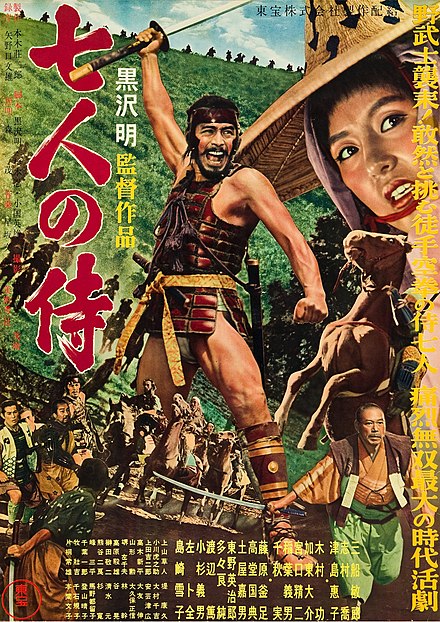
Seven Samurai

Ah, let me dive into Akira Kurosawa’s epic masterpiece about medieval gig work!

The story kicks off in 16th-century Japan, where a village of farmers discovers that bandits are planning to raid them once their harvest is ready. (Apparently, bandits in feudal Japan were considerate enough to give advance notice of their robberies.) The villagers, tired of being the medieval equivalent of a free grocery store, decide to hire samurai for protection. Their budget? Room, board, and all the rice they can eat – which, in feudal Japan’s version of a job posting, translates to “unpaid internship with meals included.”

Enter Kambei, a wise, experienced samurai who’s first seen shaving his head to rescue a kidnapped child. (If that’s not the definition of a perfect job interview, I don’t know what is.) Despite the less-than-attractive compensation package, Kambei takes pity on the villagers and agrees to help. He then starts assembling his team like it’s Ocean’s Eleven: Medieval Edition.

The recruitment process brings together a colorful crew: Katsushirō, an eager young samurai wannabe; Gorobei, who can catch arrows mid-flight (a skill that, surprisingly, does come in handy); Kyūzō, a serious master swordsman; Heihachi, the funny one who’s good with an axe; Shichirōji, Kambei’s old war buddy; and the scene-stealing Kikuchiyo (Toshiro Mifune), a wild card who’s clearly not a real samurai but makes up for it with enough energy to power a small village.

Once they reach the village, our samurai find that their job includes not just fighting bandits, but also being part-time therapists for a community with major trust issues. The farmers have hidden their women and valuables, because historically, samurai haven’t exactly been the most courteous house guests. Kikuchiyo, revealed to be a farmer’s son himself, calls out both sides for their prejudices in what must be feudal Japan’s first diversity and inclusion seminar.

While waiting for the bandits, the samurai turn the village into a fortress and train the farmers in the art of war, which goes about as well as you’d expect when teaching rice farmers to use spears. Meanwhile, young Katsushirō falls for a local farmer’s daughter, because apparently no one told him that workplace romances are complicated.

When the bandits finally attack, what follows is a series of increasingly intense battles in the rain (because Kurosawa never met a fight scene he couldn’t make more dramatic with weather). The samurai’s clever tactics and the farmers’ newfound courage turn the tide, but victory comes at a cost – four of the samurai die in the fighting, proving that even in medieval Japan, the mortality rate for temporary contract work was unreasonably high.

The film ends with the surviving samurai watching the farmers happily planting rice, leading Kambei to muse that the real winners are the villagers, while samurai just keep losing. (Though you could argue that the real losers were the bandits, who probably should have just applied for farming jobs instead.)

The whole thing serves as a poignant reminder that sometimes the best-paying jobs aren’t the most rewarding, and that if you’re going to hire security consultants, maybe offer better benefits than just rice.

In the end, “Seven Samurai” became so influential that it spawned numerous remakes, including “The Magnificent Seven,” proving that the concept of protecting villagers from bandits transcends both cultures and centuries – though the payment plans remain consistently poor.

5/5 Samurai Swords – Really just a classic movie. I love the idea of Samurai and have watched a LOT of these kind of movies (in addition to kung fu movies) such as Zatoichi and the Hidden Fortress. It’s really well acted and after a short while the subtitles became less obtrusive and and got pulled into the story. It was really well paced – the silences and ambient sounds were well placed and the on screen deaths were meaningful – hard to do character development with so many characters but Kurosawa pulled it off.

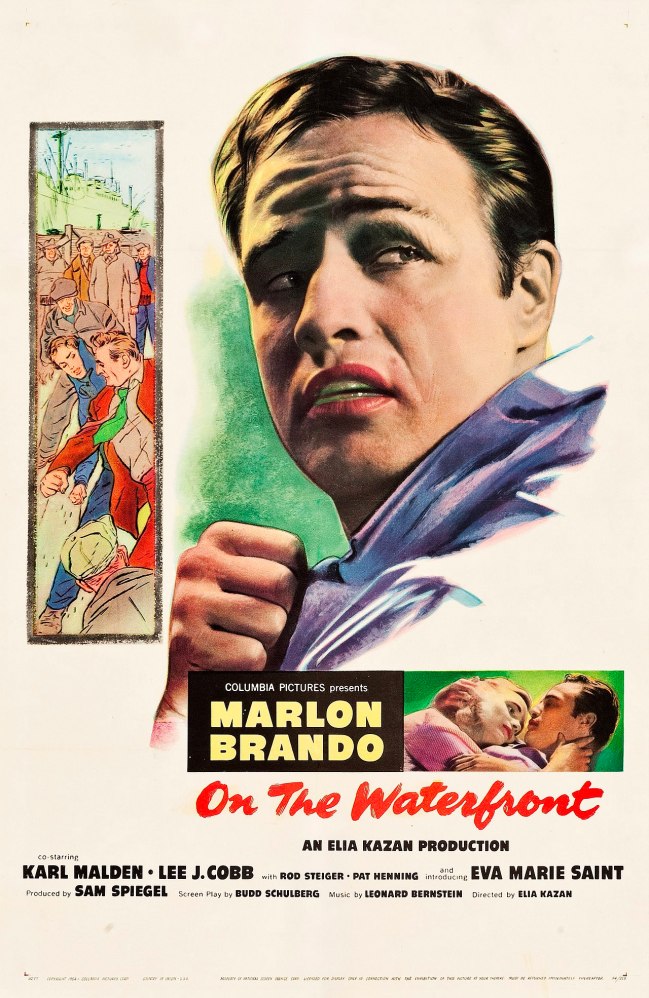
On the Waterfront

Ah, let me dive into Elia Kazan’s gritty masterpiece about corruption, conscience, and questionable career choices in the longshoremen industry!

The story follows Terry Malloy (Marlon Brando), an ex-boxer turned dockworker who spends his days doing the bidding of union boss Johnny Friendly – when he’s not tending to his rooftop pigeon coop, that is. (Nothing says “sensitive tough guy” quite like racing pigeons.) Terry’s brother Charley works as Friendly’s lawyer, making corruption a real family business.

The trouble starts when Terry unknowingly helps set up the murder of Joey Doyle, a dockworker who was planning to testify against Friendly’s corrupt union. Terry thought they were just going to “talk” to Joey, but instead, Joey takes an unscheduled flying lesson off a roof. Oops.

Enter Edie Doyle (Eva Marie Saint), Joey’s sister, who’s determined to find out who killed her brother. She’s also apparently the only person in this waterfront neighborhood who owns clothes that aren’t covered in grime. Terry starts falling for her, which really complicates his whole “pretend-nothing-happened” strategy. Meanwhile, the persistent Father Barry (Karl Malden) keeps popping up like a clerical whack-a-mole, giving waterfront sermons about standing up to corruption and making Terry feel guilty.

As Terry gets closer to Edie and more conflicted about his role in Joey’s death, Friendly starts getting nervous. More dock workers end up dead, including Kayo Dugan, who’s crushed by a “mysteriously” dropped load of whiskey cases. (OSHA would have had a field day with these working conditions.)

The turning point comes when Friendly orders Charley to make sure Terry doesn’t testify to the Crime Commission. In the famous taxi scene, Charley pulls a gun on his own brother, leading to Terry’s heartbreaking “I coulda been a contender” speech about how Charley ruined his boxing career by making him throw fights. Instead of killing Terry, Charley lets him go – and ends up dead himself, hung from a hook in an alley. (Friendly isn’t big on subtlety.)

This finally pushes Terry over the edge. He testifies against Friendly, which makes him about as popular on the docks as a punctured life vest. In the final showdown, Terry gets beaten to a pulp by Friendly and his goons, but refuses to stay down. He staggers to his feet and leads the other workers into the warehouse, breaking Friendly’s control over the dock.

The movie ends with Terry bloody but unbowed, having finally stood up for what’s right – though you have to wonder if maybe he should have considered a career change to something less dangerous, like professional alligator wrestling.

The whole thing serves as a powerful reminder that sometimes doing the right thing means getting punched in the face repeatedly, and that keeping pigeons is apparently the universal signal for “complicated character with a hidden soft side.”

5 punch drunk stars. I loved this movie – it’s got everything – romance! mobsters! Brando chewing the scenery! Brando quietly brooding! The famous ‘I could have been a contender!’ speech – just oozing 50’s cool guy vibes. The plot was a bit thin as a morality tale but it was overall well acted and engaging and worth the watch.

Dr. Strangelove or How I Learned to Love the Bomb

Ah, let me break down Stanley Kubrick’s darkly hilarious Cold War satire where everyone’s trying their best to avoid nuclear annihilation… and somehow making everything worse!

The film kicks off when General Jack D. Ripper, a man whose grip on reality is about as firm as his grip on proper bodily fluid management, decides to launch a nuclear attack on the USSR. His reasoning? He’s convinced the Soviets are corrupting America’s “precious bodily fluids” through fluoridation. (This is what happens when you get your medical information from questionable sources.)

Group Captain Lionel Mandrake, a British RAF officer, finds himself trapped at the base with the paranoid Ripper, trying desperately to get the recall code. Meanwhile, President Merkin Muffley (Peter Sellers in one of his three roles) assembles his advisors in the War Room, including the enthusiastically hawkish General Buck Turgidson, who treats potential nuclear war like an exciting football game.

Enter Dr. Strangelove himself (Sellers again), a wheelchair-bound ex-Nazi scientist whose right arm occasionally decides to recreate the Nazi salute (talk about muscle memory issues). He’s supposedly the expert, though his expertise seems mainly focused on underground bunkers and their potential for repopulating the Earth – with a special emphasis on the male-to-female ratio that would be “necessary.”

The situation gets even more complicated when we learn about the Soviet “Doomsday Machine” – a device designed to automatically trigger world-ending nuclear destruction if the USSR is attacked. The Soviets built it as a deterrent but hadn’t announced it yet because, as the Soviet Ambassador explains, they were saving it for a special occasion. (Because nothing says “surprise party” like mutually assured destruction.)

As bombers approach their targets, Major T.J. “King” Kong (Slim Pickens) leads his crew with cowboy enthusiasm, determined to complete their mission despite increasingly obvious signs that maybe they shouldn’t. This culminates in the iconic scene of Kong riding a nuclear bomb like a rodeo bull, which probably wasn’t in the Air Force training manual.

The film ends with a montage of nuclear explosions set to the cheery “We’ll Meet Again,” because sometimes gallows humor is the only appropriate response to the potential end of civilization.

Through it all, the film serves as a brilliant satire of Cold War politics, military bureaucracy, and the absurdity of nuclear deterrence – reminding us that sometimes the biggest threat to humanity isn’t our weapons, but the people in charge of them who insist they know exactly what they’re doing. It also suggests that maybe, just maybe, putting world-ending weapons in the hands of people worried about their precious bodily fluids isn’t the best idea.

The whole thing makes you wonder if somewhere, in some war room, there’s still a General Turgidson explaining how we can “win” a nuclear war with only 10-20 million casualties, “tops.”

4/5 ICMBs. I love Peter Seller’s comedy and him playing three roles in this movie probably set the standard for Eddie Murphy to follow in the 80’s. The comedy is absurdist and really reflects the time the movie was made and released. I’m not sure it would be very successful outside of that time however as the brand of humor is pretty specific. Overall though, superbly acted throughout even if it went a bit long in spots.

The Good, The Bad, and The Ugly

Let me lay out this twisted treasure hunt of a Western, where everyone’s moral compass spins like a broken slot machine!

The story kicks off during the Civil War, introducing us to our three protagonists – though “protagonists” might be stretching it for at least two of them. There’s “Blondie” (Clint Eastwood) who’s “the Good,” though his goodness seems mainly to consist of being slightly less awful than everyone else. Then there’s Angel Eyes (Lee Van Cleef), “the Bad,” who will cheerfully kill anyone as long as he’s been paid for it (he’s very professional about his awfulness). And finally, there’s Tuco (Eli Wallach), “the Ugly,” a fast-talking bandit who’s about as trustworthy as a rattlesnake in a sock drawer.

The film opens with Blondie and Tuco running a scam where Blondie turns in Tuco for the bounty, then shoots the rope at his hanging (usually waiting until the last possible second, because apparently Blondie has a flair for the dramatic). They split the money and move on to the next town. That is until Blondie decides to end their partnership by abandoning Tuco in the desert – which, as far as workplace resignations go, is pretty extreme.

Tuco survives (because cockroaches and Tuco are nature’s great survivors) and spends the next portion of the movie trying to get revenge on Blondie. This leads to him forcing Blondie to walk through the desert without water, which seems fair – though you’ve got to wonder if these guys have heard of mediation.

The plot kicks into high gear when they stumble across a dying Confederate soldier who reveals the location of $200,000 in Confederate gold. The catch? He tells Tuco the name of the cemetery where it’s buried and tells Blondie the name on the grave. Now they’re forced to work together, which goes about as well as you’d expect for two guys who just finished trying to kill each other.

Enter Angel Eyes, who’s been tracking this gold too. What follows is a three-way dance of alliances, betrayals, and Mexican standoffs, all while the Civil War rages around them like an inconvenient background event. Our three anti-heroes keep crossing paths with the war, getting wrapped up in prison camps and battles, though they remain impressively focused on their gold hunt despite the minor distraction of America tearing itself apart.

It all culminates in the famous three-way showdown in a massive circular graveyard, because if you’re going to have a Mexican standoff, you might as well do it somewhere photogenic. After enough tension to snap a piano wire, Blondie emerges victorious, sharing the gold with Tuco – except he’s left Tuco’s share out of reach while he’s tied up, because old habits die hard.

The whole thing is set to Ennio Morricone’s iconic score, which manages to turn “wah-WAH-wah” into high art. The film basically created the template for every subsequent movie where people squint at each other while pointing guns, which turns out to be quite a few movies.

And there you have it – a story that proves that maybe the real treasure was the enemies we made along the way, and that having a cool theme song makes everything you do about 300% more awesome.

5 Pistoleros out of 5. I’ll admit I love a good western – the genre has thinned out in recent years and not all of them a great but this is Clint Eastwood in his prime and he’s facing off against a great supporting cast (much better than that chair on the stage). The score is iconic – ecstasy of gold is right up there with what I consider one of the most iconic movie songs of all time (first place if you pretend John Williams doesn’t exist) [do yourself a favor and listen to Metallica’s cover if you haven’t its amazing]

If I didn’t have a series of other things to do this year – this would have probably knocked me into a Western movie rabbit hole. I still might go on one after this challenge is over because this movie is still resonating with me months after I watched it.

Sunset Boulevard

Billy Wilder’s “Sunset Boulevard” kicks off with possibly the most attention-grabbing opener in film history – our narrator is floating face-down in a swimming pool, and he’s, well, dead. Talk about starting with a bang! This deceased fellow is Joe Gillis, a down-on-his-luck screenwriter who then takes us back six months to explain how he ended up as pool decor.

It all starts with Joe running from repo men trying to snag his car (because apparently being a Hollywood writer wasn’t quite as glamorous as the brochures suggested). During his escape, he conveniently gets a flat tire and pulls into what appears to be an abandoned mansion on Sunset Boulevard. Except it’s not abandoned – it’s the home of Norma Desmond, a forgotten silent film star who’s been living in her own private time capsule with her intensely creepy butler, Max.

Norma, who’s about as stable as a Jenga tower in an earthquake, has written a massive screenplay about Salome that she’s convinced will be her “return” (don’t you dare say “comeback”!). She hires Joe to edit it, though “traps” might be a better word. Soon enough, Joe finds himself installed as Norma’s kept man, living in luxury but feeling increasingly like a pet hamster in a gilded cage. The woman buys him expensive clothes, throws lavish parties where she’s the only guest, and watches her old silent films with the kind of devotion usually reserved for religious experiences.

Meanwhile, Joe starts secretly working on a screenplay with Betty Schaefer, a young script reader who’s engaged to his best friend Artie. Because apparently Joe hasn’t noticed he’s living in a film noir and this can only end badly. As Joe and Betty fall in love, Norma becomes increasingly unstable, attempting suicide when she thinks Joe might leave her (manipulation level: expert).

The whole thing comes to a head when Joe finally tries to break free. He tells Norma he’s leaving and that her dream comeback is never going to happen – her fan letters have been written by Max all along (who, in a twist that would make Freud need a lie-down, turns out to be both her ex-husband AND her former director). Norma, taking rejection as well as you’d expect from someone who hasn’t heard the word “no” since 1925, shoots Joe three times, bringing us full circle to our swimming pool opening.

The finale is pure Hollywood grotesque – Norma, completely detached from reality, descends her grand staircase believing she’s filming her great comeback scene, while the police and news cameras capture her final performance. “I’m ready for my close-up, Mr. DeMille,” she announces to the waiting cameras, having fully retreated into her own private fantasy world where she’s still the greatest star of them all.

And there you have it – a cautionary tale about Hollywood, fame, delusion, and why you should always pay your car payment on time. Also, maybe don’t move in with mysterious former silent film stars, no matter how good their pool looks.

4/5 sad stars. I’ve always heard the line ‘I’m ready for my closeup Mr. Deville’ and I never knew where it was from until I saw this movie. It was a really good film – if a little unsettling. This poor woman a victim of Hollywood and it’s pursuit of beauty and youth has a mental break and is essentially taken advantage of by Joe who’s really in it for the free house and cash. I feel like Joe got what was coming to him – I mean he stole his best friend’s gal as well – the guy is morally bankrupt and I didn’t feel bad at all that she John Wick’d his ass

Rear Window

Ah, “Rear Window,” a cinematic gem that proves the old adage, “curiosity killed the cat, but satisfaction brought it back.” This 1954 masterpiece, directed by the legendary Alfred Hitchcock and starring the incomparable James Stewart and Grace Kelly, is a thrilling exploration of voyeurism, suspicion, and the dark underbelly of human nature.

The story follows L.B. “Jeff” Jefferies (Stewart), a globe-trotting photographer confined to his apartment after breaking his leg on assignment. With nothing but time on his hands, Jeff takes to spying on his neighbors through the rear window of his apartment, his trusty binoculars and telephoto lens his only companions.

At first, Jeff’s voyeuristic tendencies seem harmless enough – a bit of harmless people-watching to pass the time. But as he becomes more and more engrossed in the lives of his neighbors, he begins to suspect that one of them, a salesman named Lars Thorwald (Raymond Burr), may have murdered his invalid wife.

Aided by his glamorous girlfriend, Lisa Fremont (Kelly), and his wisecracking nurse, Stella (Thelma Ritter), Jeff sets out to unravel the mystery of Thorwald’s wife’s disappearance. But as he becomes more and more obsessed with the case, he begins to lose sight of the line between observation and invasion, putting himself and those he loves in grave danger.

Hitchcock, the master of suspense, is at the top of his game in “Rear Window.” His use of the confined apartment setting is a stroke of genius, creating a sense of claustrophobia and unease that permeates every frame. The camera becomes Jeff’s eyes, panning across the courtyard and zooming in on the lives of his neighbors, each window a mini-drama waiting to unfold.

Stewart is brilliant as Jeff, his affable charm masking a deeper sense of unease and frustration. Kelly, in one of her most iconic roles, is a vision of grace and beauty, her outward poise belying a fierce intelligence and determination. And Burr, in a chilling turn as the enigmatic Thorwald, is a study in quiet menace, his every move laden with sinister intent.

But it is the film’s exploration of voyeurism and the ethics of observation that truly sets it apart. As Jeff becomes more and more enmeshed in the lives of his neighbors, he begins to question his own morality, wondering if he has the right to pry into the private lives of others. In a telling moment, Lisa chastises him for his behavior, reminding him that “we’ve become a race of Peeping Toms.”

As the tension mounts and the danger becomes more and more palpable, “Rear Window” builds to a heart-stopping climax. In a scene that has become iconic in the annals of cinema, Lisa infiltrates Thorwald’s apartment, searching for evidence of his crimes. The camera becomes Jeff’s eyes once more, his helpless gaze fixed on the woman he loves as she puts herself in harm’s way.

In the end, “Rear Window” stands as a testament to the power of cinema to explore the darkest recesses of the human psyche. It’s a film that asks uncomfortable questions about the nature of privacy, the ethics of observation, and the thin line between curiosity and obsession. Hitchcock’s mastery of the medium is on full display, his every shot a mini-masterpiece of composition and tension.

So if you’re in the mood for a pulse-pounding, thought-provoking exploration of the human condition, look no further than “Rear Window.” Just remember, as Jeff so aptly puts it, “I wonder if it’s ethical to watch a man with binoculars and a long-focus lens. Do you suppose it’s ethical, even if it’s in the cause of justice?” It’s a question that will linger long after the final credits have rolled.

3/5 suspenseful stars. This movie exudes 1950’s charm – from the movie poster, the music, down to the clothing it encapsulates the time period perfectly. Jimmy Stewart is great and Grace Kelley provides a charming counterpoint to Jimmy’s gruff character. It starts out slow and builds up suspense until the armrest gripping final 10-15 minutes where things get really tense and.. well.. the guy with the broken legs falls off the balcony. I mean – this guy can’t catch a break (hey now!) but hey – this is on him. If he wasn’t spying on the neighbor they would have gotten away with murder and probably skipped town without endangering his girlfriend or him. I always enjoy Hitchcock movies and Jimmy Stewart and I recall watching this as a young kid with my mom but not really getting what was going on so it was interesting 40+ years later seeing it again and reconciling my young mind with my current experiences.

12 Angry Men

Ah, “12 Angry Men,” a cinematic masterpiece that proves the power of one man’s conviction can change the course of justice. This 1957 classic, directed by Sidney Lumet and starring the inimitable Henry Fonda, takes place almost entirely within the confines of a jury room, where twelve men must decide the fate of a young man accused of murder. What follows is a gripping exploration of the American legal system, the nature of prejudice, and the strength of the human spirit.

The story begins on a sweltering summer day in New York City, where twelve jurors are tasked with determining the guilt or innocence of a young Puerto Rican man accused of stabbing his father to death. At first glance, the case seems open and shut – the evidence is overwhelming, and eleven of the jurors are ready to convict. But one man, Juror 8 (Fonda), has his doubts.

As the deliberations begin, Juror 8 finds himself at odds with his fellow jurors, each of whom brings their own biases and preconceptions to the table. There’s Juror 3 (Lee J. Cobb), a hot-headed businessman with a personal vendetta against the accused; Juror 10 (Ed Begley), a bigoted garage owner who sees the defendant as nothing more than a “them”; and Juror 7 (Jack Warden), a wisecracking salesman more interested in catching a baseball game than serving justice.

But Juror 8 refuses to back down. In a series of powerful scenes, he methodically dissects the prosecution’s case, pointing out inconsistencies and raising doubts about the reliability of the witnesses. He challenges his fellow jurors to look beyond their prejudices and consider the possibility that the defendant may be innocent.

As the deliberations wear on, tensions mount, and tempers flare. In one particularly heated exchange, Juror 3 lunges at Juror 8, his face contorted with rage. But Juror 8 remains calm, his quiet strength a beacon of reason in a sea of chaos.

Slowly but surely, Juror 8’s arguments begin to sway his fellow jurors. One by one, they change their votes, until only Juror 3 remains steadfast in his belief of the defendant’s guilt. In a powerful moment of self-reflection, Juror 3 breaks down, revealing the true reason behind his bias – a troubled relationship with his own son.

In the end, the jury returns a verdict of not guilty, a testament to the power of reasonable doubt and the importance of impartial justice. The film ends with a poignant moment of connection between Juror 8 and Juror 9 (Joseph Sweeney), an elderly man who had been one of the first to change his vote. It’s a reminder that even in the darkest of times, there is always the possibility of understanding and compassion.

“12 Angry Men” is a film that resonates as powerfully today as it did over six decades ago. Its themes of prejudice, groupthink, and the importance of standing up for one’s beliefs are as relevant now as they ever were. Lumet’s direction is masterful, his use of claustrophobic close-ups and tense camera angles creating an atmosphere of almost unbearable intensity.

But it is the performances that truly make the film shine. Fonda is a revelation as Juror 8, his quiet strength and unwavering moral compass a beacon of hope in a world of cynicism and doubt. And the rest of the cast is equally impressive, each bringing a unique perspective and depth of character to their roles.

In the end, “12 Angry Men” stands as a testament to the power of storytelling to challenge our assumptions and change our hearts and minds. It’s a film that demands to be seen, a powerful reminder that justice is not always easy, but it is always worth fighting for. So if you’re in the mood for a thought-provoking, emotionally charged exploration of the human condition, look no further than this timeless classic. Just remember, as Juror 8 so eloquently puts it, “it’s always difficult to keep personal prejudice out of a thing like this. And wherever you run into it, prejudice always obscures the truth.”

5/5 – This is a classic for a reason – the way Juror 8 slowly brings people around their biases to see the evidence without that bias is a masterclass in persuasion. Seeing each of the jurors face themselves in the proverbial mirror and change their mind was a moving experience and hearkens back a time when people could have their minds changed instead of now where it seems people are committed to their dogmatic views and will not change for anything. I can’t see this happening in 2024 – the rest of the jurors would hold on to their biased views and it would end up a hung jury. Regardless of the current social mindset this movie was superbly acted and shot – it all happens in one room and it feels confined – so much that the actors open the windows to let in air and you feel what they must have felt in that hot room all day. One final note: for 30 years I thought it was Jimmy Stewart who was juror 8 and to my surprise when I watched it this time it was Henry Fonda!

Treasure of the Sierra Madre

Ah, “The Treasure of the Sierra Madre,” a classic tale of greed, paranoia, and the corrupting influence of gold. This 1948 gem follows the adventures of three down-on-their-luck Americans as they seek their fortune in the rugged Sierra Madre mountains of Mexico. Directed by the legendary John Huston and starring the incomparable Humphrey Bogart, this film is a gritty exploration of the human psyche when faced with the temptation of untold riches.

The story begins in the bustling city of Tampico, where we meet Fred C. Dobbs (Bogart), a down-and-out American ex-pat struggling to make ends meet. Dobbs’ luck changes when he meets Bob Curtin (Tim Holt), a fellow vagrant, and Howard (Walter Huston), a grizzled old prospector with a nose for gold. The three men pool their resources and set out to strike it rich in the mountains, but little do they know that their journey will be fraught with peril, both external and internal.

As the intrepid trio makes their way through the unforgiving terrain, they encounter a host of colorful characters, each with their own hidden agendas. There’s Gold Hat (Alfonso Bedoya), a ruthless bandit with a penchant for philosophizing, and his gang of loyal followers. In a scene that has become iconic in cinematic history, Gold Hat confronts the Americans, demanding to see their badges. “Badges? We ain’t got no badges. We don’t need no badges! I don’t have to show you any stinking badges!” he sneers, a line that has been parodied and referenced countless times since.

As the men toil away in the mountains, their newfound wealth begins to take its toll on their psyches. Dobbs, in particular, becomes increasingly paranoid, convinced that his partners are plotting against him. In a chilling scene, Dobbs confronts Curtin, accusing him of stealing his share of the gold. The tension is palpable, the air thick with the stench of suspicion and betrayal.

Meanwhile, Howard, the wise old prospector, tries to keep the peace, but even he is not immune to the siren call of the gold. In a poignant moment, Howard reflects on the nature of greed, musing that “gold is a devilish sort of thing. Makes men do funny things.”

As the men’s paranoia reaches a fever pitch, the film takes a dark turn. Dobbs, consumed by his own madness, turns on his partners, leading to a shocking and violent confrontation. The once-strong bond between the men is shattered, their dreams of wealth and prosperity reduced to dust in the wind.

In the end, the treasure of the Sierra Madre proves to be a curse rather than a blessing. The gold, so coveted and sought after, brings nothing but misery and destruction to those who pursue it. It’s a powerful reminder that the true treasures in life are not material, but rather the bonds of friendship and the strength of one’s character.

“The Treasure of the Sierra Madre” is a masterful exploration of the human condition, a searing indictment of the corrupting influence of greed. Huston’s direction is masterful, his use of light and shadow creating an atmosphere of impending doom. Bogart’s performance is a tour de force, his portrayal of Dobbs a chilling reminder of the darkness that lurks within us all.

In the end, the film stands as a testament to the enduring power of cinema to explore the deepest recesses of the human soul. It’s a classic in every sense of the word, a film that rewards repeated viewings and leaves an indelible mark on all who experience it. So if you’re in the mood for a gritty, uncompromising tale of greed and betrayal, look no further than “The Treasure of the Sierra Madre.” Just remember, as Howard so wisely puts it, “the worst ain’t so bad when it finally happens. Not half as bad as you figure it’ll be before it’s happened.”

(Summary AI assisted)

4/5 – I’m a sucker for westerns and this kinda falls into that vein being set in the west and around the same time period. I enjoyed the tense interplay between the men once they found the gold and was shocked at the rapid decline into paranoia and fear that Bogart’s character had – I’m guessing a man down on his luck for so much time suddenly getting a fortune can change a man. Greed is the word of the day – and the fear of someone taking what is yours. I wasn’t expecting a psychological drama when I put this movie on but it was fascinating to see. I also chuckled extensively at the ‘Badges? We don’t need to stinkin’ badges line’ – I knew that was from an old movie but seeing it in real time was great.

The Maltese Falcon

Certainly! Let’s delve into the intricate plot of The Maltese Falcon, examining the key moments that make this film a true classic.

The story begins with a seemingly simple case: the lovely Miss Wonderly (later revealed to be Brigid O’Shaughnessy) hiring private detectives Sam Spade and Miles Archer to tail a man named Floyd Thursby, who has allegedly run off with her sister. However, this being a film noir, nothing is as it seems. In a shocking turn of events, Archer is murdered, and Thursby is found dead soon after. The police suspect Spade, given his affair with Archer’s wife, Iva, but Spade is too cunning to be caught in such an obvious trap.

As Spade investigates the murders, he finds himself drawn into a complex web of deceit surrounding the elusive Maltese Falcon, a priceless statuette dating back to the Knights Templar. The falcon attracts a host of unsavory characters, each with their own hidden agendas.

Joel Cairo, a dapper and perfumed fellow with a penchant for deception, attempts to enlist Spade’s help in obtaining the falcon, offering him a tempting sum of money. However, Cairo’s true allegiances remain as murky as the San Francisco fog.

Enter Kasper Gutman, a larger-than-life figure with a genial demeanor that belies his ruthless nature. Gutman, also known as “The Fat Man,” has been searching for the falcon for years, and he’s not about to let anyone stand in his way. In a memorable scene, Gutman regales Spade with the history of the falcon, revealing its immense value and the lengths to which people will go to possess it.

As the plot thickens, Spade finds himself grappling with his growing attraction to Brigid, despite his suspicions about her involvement in the murders. The interplay between Bogart and Astor is electric, their banter as sharp as a razor’s edge. In one particularly charged moment, Brigid attempts to seduce Spade, but he remains ever the consummate professional, refusing to let his guard down.

The various factions chasing the falcon converge in Spade’s apartment, each trying to outmaneuver the others. In a scene that crackles with tension, Cairo and Gutman attempt to strong-arm Spade, but he turns the tables on them with a clever ruse involving a fake falcon. The scene is a testament to Spade’s quick wit and unflappable nature in the face of danger.

As the climax approaches, Spade must navigate a minefield of shifting loyalties and hidden motives. In a shocking twist, it’s revealed that Brigid herself is the mastermind behind the murders, having used her feminine wiles to manipulate all those around her. Spade, ever the moral compass in a world of corruption, turns her over to the police, despite his feelings for her.

In the film’s iconic final scene, Spade reflects on the nature of the falcon and the folly of those who sought it. “The stuff that dreams are made of,” he muses, a line that has become synonymous with the film itself. It’s a poignant moment that underscores the film’s central theme: the pursuit of wealth and power is ultimately a hollow one, and true valor lies in maintaining one’s integrity in the face of temptation.

The Maltese Falcon is a film that stands the test of time, thanks in no small part to its impeccable cast, razor-sharp writing, and masterful direction. It’s a testament to the enduring power of film noir, and a reminder that sometimes the most priceless things in life are the ones that money can’t buy.

(Summary AI assisted)

(5/5) I love this movie – I recall watching it with my mom one lazy Saturday evening as a teen and not really getting a lot of the subtext but I was fascinated by the style of the movie and was delighted by the ending. Now if streaming services were a thing I’d probably have gone into a bogart binge watch session or taken in some more 40’s detective flicks but alas we had 4 channels and whatever the parents picked up at Palmer video down the street. So I didn’t get a chance to dig deeper into either genre until much much later. This is probably the third or fourth time I’ve seen this movie and it never gets old. Just so much 1940’s cool exuding from the screen. When I was pulling movies for the top 50 of all time I usually eliminated movies I’ve seen more than once to get exposure to other films but I left this one on there simply because it’s one of my favorites!