I Did It.

Wow. That was quite a journey. I’m honestly still processing the fact that I managed to complete everything. Looking back, I’ve spent over two decades setting goals, and the highest I ever reached before was maybe 60% completion—and that was with a modest list of just ten goals. When I first considered taking on this challenge, I almost talked myself out of it, remembering past failures. But turning 50 flipped a switch in me. I figured I might not succeed, but I knew I’d regret it if I didn’t even attempt it. Maybe not the most optimistic mindset to start with, but if this experience has taught me anything, it’s that with discipline and structure, you can fundamentally shift how you approach things.
Coming up with 50 goals was an adventure in itself. The first few were easy—I pulled from old, unfinished goals and added new ones that felt both exciting and challenging. But once I hit the 30-goal mark, I struggled. That’s when I had to shift my perspective. I started thinking about what turning 50 really signified. I reflected on what I had accomplished, what I had always wanted to do but never got around to. And then it hit me: I had spent years assuming there would always be time. But what if there wasn’t? Shouldn’t I seize the moment now, while I still had the energy to truly enjoy it? That realization changed everything. Suddenly, the list filled itself. Visiting my father’s hometown in Italy. Buying my dream guitar. Sipping on really old Scotch. Once I reframed the process, it became much easier to round out the list. I even left a few open slots, which I later filled with “Explore AI” and “Complete a Bob Ross painting tutorial.”


As I got deeper into rounding out the 50, I found myself turning to the internet for inspiration. Seeing what others had on their goal lists helped me refine mine. Some ideas resonated, some didn’t, but the process helped me think outside the box. And ironically, one of my late additions—learning about AI—ended up being a game-changer. AI became an essential tool throughout the year. With a goal of blogging about my experience, I faced an immense workload, closing in on nearly 300 posts. Without AI’s help in researching topics, I would have been buried under the effort. I even used AI to critique my writing, offering an unfiltered, sometimes ego-bruising editorial lens that ultimately improved my work.
To keep myself accountable, I knew I needed rules. Once the 50 goals were set, I committed to not altering them to make things easier. But I’m also pragmatic—life happens. In the early months, I tore something in my shoulder, which derailed my fitness-related goals. So, I built in a contingency: I allowed myself to swap out five goals if necessary. This gave me a degree of flexibility while ensuring I didn’t just swap out challenges for convenience. I ended up using four swaps (documented on my website), and two of them were due to physical limitations rather than avoidance.


So how did I pull this off while managing a full-time job, two small kids, and a marriage? With structure. I built a framework that allowed me to make progress without compromising what truly mattered.
The first rule: priorities first. My family always comes first—no exceptions. I didn’t pursue these goals at the expense of time with my kids or my wife. I still coached my kids’ teams, played with them on weekends, and handled all the usual parenting duties. I made sure my wife and I kept our Friday lunch dates, giving us uninterrupted time together. And work? That stayed a priority too. I enjoy my job and wasn’t about to let this project interfere with my professional commitments. With those priorities locked in, anything else became negotiable.


The second rule: do something every day. Even on chaotic days—work was crazy, the kids had back-to-back activities, and my wife was out of town—I could still do something. Read a few pages of a book. Practice Italian on Babbel for five minutes. Write a quick gratitude journal entry. Even brushing my teeth at night, I could squeeze in a small action. The consistency was the key. After a few months, it became so ingrained that skipping a day felt like a glitch in my system. These small, daily efforts accumulated, creating momentum that accelerated progress over time.


The third rule: find hidden time. It’s there if you look for it. That hour-long commute? Perfect for listening to educational podcasts or checking off an album from my music list. Instead of doom-scrolling my phone during lunch, I’d read, write, or learn something new. Even waiting for my kids to finish practice became an opportunity—reading on my Kindle, researching goals, or sketching ideas. Once I stopped treating time as something to kill and started seeing it as something to use, my productivity skyrocketed.


The final rule: track everything. This was huge. I needed to see my progress at a glance, so I built a spreadsheet with progress bars and a dashboard to keep me motivated. If one goal was lagging, I’d shift focus to bring it up to speed. As the months passed and those bars turned blue, I felt the inertia pulling me forward. That visual reinforcement made a huge difference. I also used OneNote to collect ideas, notes, and drafts, which kept me organized and efficient. These tools gave me a comprehensive view of where I stood at any given moment.


As the year progressed, I started identifying areas of wasted time and replacing them with intentional actions. Little by little, I started to see myself as someone who followed through, rather than someone who set goals only to abandon them. That shift in self-perception was a turning point. Once I hit 75% completion, I could see the finish line. In the last 60 days, I went into overdrive, laser-focused on getting everything to 100%. I don’t think I could have sustained that level of intensity for an entire year, but as I neared the end, it felt like shifting from marathon pace to an all-out sprint.


But of course, there were downsides. Sustaining focus for an entire year was mentally exhausting. Between work, family, and this challenge, there were weeks when I was completely burned out. Fortunately, some of my goals—meditation, hiking, drawing—helped counteract the stress. On particularly rough weeks, I leaned into those activities, taking long hikes with my kids to reset. Still, there were stretches, especially in the summer, where I did nothing, and guilt crept in. Eventually, I realized that guilt was unnecessary. I wasn’t trying to become a productivity guru or a social media influencer—I was just a 50-year-old guy trying to accomplish something meaningful. And as I watched my goals falling one by one, I realized that even with breaks, I was still on track.


Another major downside? Free time took a massive hit. Movies, TV, video games—I barely engaged with any of them. I didn’t play a single hour of video games all year, missed most new film releases, and barely kept up with my sports teams. (Not that the Jets gave me much to miss.) These things might not be “productive,” but they’re enjoyable, and I realized I missed them. Sometimes, you just want to unwind and watch your favorite team blow a late lead.


Ultimately, I learned so much from this experience—not just about discipline and productivity, but about balance, adaptability, and what really matters. There were tough moments, but overall, I’m glad I did it. And now, looking ahead, I’m excited to see where these lessons take me next.

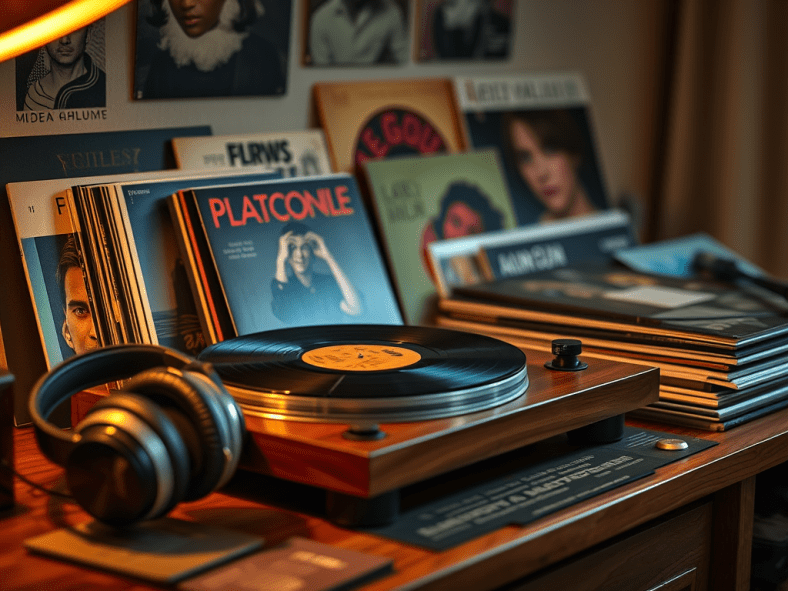
Goal Met – Listen to Top 50 Albums of all Time

OK so this one is bound to generate arguments. I again used ChatGPT to collate a list from as many sources as possible and come up with a consensus top 50. Some of the albums I was familiar with, some I’ve never heard of so I knew this was going to be an adventure.

I actually went out and got some high quality headphones so I could experience them with as much audio fidelity as possible. I was pleasantly surprised at what a difference they made from my $10 amazon headset I was using!

Some of the albums were sonic masterpieces.. While others were a struggle for me. I mean I understand why Patti Smith is highly regarded but her music was a slog the same for the velvet underground. I listened to every song on every album and I feel like I get why some of these are so highly regarded – I mean what’s going on is such a great album that I listened to it again as soon as I was done.

The one thing that this challenge did was improve my Apple music algorithm – I mean it was pretty polluted from my kids asking Alexa to play Taylor Swift and dinosaur songs so injecting the algorithm with some quality music really helped balance the scales!

I got interested in the evolution of music and wish I had followed the movie goal and selected albums from each decade as I think that would have been a more interesting experience but I still managed to dig deep and explore why these albums are so well regarded and how they might be connected to each other.

[Filter by music tag to see individual reviews]

Marvin Gaye – What’s Going On?

f the 1900s produced a single album that defined not just a moment, not just a movement, but the entire human condition, it’s What’s Going On. This isn’t just Marvin Gaye’s masterpiece—it’s the masterpiece. It’s the album that took soul, R&B, and protest music and wove them together so seamlessly, so beautifully, that you almost forget it was born out of pure heartbreak and rage. It’s the most important album of its time, and the most hauntingly relevant album of ours.

Before What’s Going On, Marvin Gaye was Motown royalty—the voice behind silky, romantic hits like “Ain’t No Mountain High Enough” and “I Heard It Through the Grapevine.” But by 1971, he wasn’t in the mood for love songs. His brother had just come back from Vietnam, traumatized. The country was in turmoil—civil rights protests, police brutality, poverty, an endless war overseas. And Marvin himself was in crisis, mourning the death of Tammi Terrell and questioning everything, from his music to his faith to the very country he called home. Instead of giving the world another Motown hit, he gave them this: an album that asked the hardest, simplest question of all—what’s going on?

It starts with the title track, and from the first notes, you realize this isn’t just a song—it’s a spiritual awakening. Those saxophones don’t just play, they breathe. The layered, conversational vocals sound like ghosts speaking from another dimension. Marvin’s voice is smooth, pleading, aching as he delivers the line that still echoes half a century later: “You know we’ve got to find a way, to bring some lovin’ here today.” It’s not just a protest song—it’s a prayer.

Then comes “What’s Happening Brother,” a song so intimate it feels like a letter home from war. It’s about Marvin’s brother, yes, but it’s also about every soldier, every displaced person, every lost soul trying to find their way back to a country that no longer feels like home. And just when you think the album can’t get heavier, “Flyin’ High (In the Friendly Sky)” slides in, a devastating, jazz-soaked meditation on addiction, delivered so delicately that it almost feels like floating—until you realize it’s really about falling.

The genius of What’s Going On is that it never stops moving. The songs flow into one another, seamlessly, like a single unbroken thought. “Save the Children” is a desperate cry for the future, “God Is Love” is a hymn disguised as a groove, and then we hit the track—“Mercy Mercy Me (The Ecology).” Who else, in 1971, was making environmental protest music and making it sound this good? It’s as smooth as silk but as urgent as a siren, and the fact that it still applies today, maybe even more than it did then, is either proof of its timeless brilliance or an indictment of everything we’ve failed to fix.

And then there’s “Inner City Blues (Make Me Wanna Holler),” the album’s haunting, gut-punch of a finale. It’s not just a song—it’s an entire system breaking down in real time. Marvin lays it all bare: crime, poverty, war, systemic injustice. And yet, the groove is hypnotic. He’s telling us the truth, but he’s making sure we feel it. When that final, ghostly reprise of “What’s Going On” fades out, it feels less like the end of an album and more like a warning: this isn’t over.

Culturally, What’s Going On didn’t just shake the world—it changed it. It forced Motown to grow up. It paved the way for artists like Stevie Wonder, Curtis Mayfield, and Prince to be as socially conscious as they were musically innovative. It made soul music deeper, richer, more urgent. And five decades later, it still stands as the single greatest artistic statement ever made about America’s struggles—because tragically, so many of those struggles still exist.

There are albums that define genres. There are albums that define generations. And then there’s What’s Going On—the album that defines humanity itself. It’s the pinnacle of the 20th century, not because of its influence (though that’s undeniable), not because of its sonic brilliance (though it’s flawless), but because it speaks to something bigger than music. It’s the album that asks the right questions, the album that dares to care, the album that never stops being true.

And if we’re still asking what’s going on in the 21st century, maybe it’s because we still need to listen.

Beach Boys – Pet Sounds

Before Pet Sounds, The Beach Boys were just that band your dad probably listened to while waxing his surfboard, cranking out sunny, harmonized odes to cars, girls, and the California dream. Then Brian Wilson went ahead and dropped this album—a record so ambitious, so breathtakingly beautiful, that it didn’t just change music, it made the Beatles rethink their entire existence. Pet Sounds is the moment the Beach Boys stopped being a pop band and became something much, much greater: architects of one of the most profoundly moving records ever made.

Released in 1966, Pet Sounds is Brian Wilson’s baby—his heart, mind, and fragile genius poured into 13 songs that are somehow as complex as a symphony and as emotionally direct as a diary entry. While the rest of the band was still riding the surf-rock wave, Wilson was holed up in the studio, crafting intricate, orchestral soundscapes, layering harmonies so lush they sound like they were sent down from the heavens, and generally losing his mind in pursuit of perfection. And it worked.

The album opens with “Wouldn’t It Be Nice,” a song so joyful, so bursting with hope, that you almost miss the fact that it’s drenched in longing and frustration. This isn’t just a love song—it’s a plea, the sound of youth itself, wishing time would move faster so real life could begin. Then comes “You Still Believe in Me,” where Brian’s voice sounds so delicate it might shatter, backed by plucked piano strings and harmonies that swell like a sunrise. It’s devastatingly gorgeous.

But the real emotional gut punch arrives with “Don’t Talk (Put Your Head on My Shoulder),” which might be the most heartbreakingly intimate song ever written. It’s so stripped down, so vulnerable, that it feels less like a song and more like a whispered confession. And then, just when you’re wiping away a tear, here comes “God Only Knows”—possibly the greatest love song of all time. The genius of it isn’t just in its sweeping, celestial melody, or Carl Wilson’s angelic vocal, but in the fact that it begins with the line “I may not always love you.” No one had ever dared start a love song like that before. It’s honest. It’s human. And it’s perfect.

The rest of the album is a sonic playground. “I Know There’s an Answer” is trippy and philosophical, “Here Today” feels like an anti-love song dressed in baroque pop, and “I Just Wasn’t Made for These Times” might as well be Brian Wilson’s autobiography, a heartbreaking lament from a man who felt utterly alone even while making the most beautiful music of his life. And then there’s the instrumental “Let’s Go Away for Awhile,” which doesn’t even need lyrics—it’s pure emotion, translated into sound.

By the time Pet Sounds closes with “Caroline, No,” a song that sounds like the death of innocence itself, you realize you’ve just experienced something more than an album. This is Brian Wilson’s soul, captured on tape. It was ahead of its time in ways no one understood in 1966, but decades later, it stands as one of the most important, influential records in history. Paul McCartney called Pet Sounds his favorite album of all time—and he wrote Sgt. Pepper. That should tell you everything.

Why is Pet Sounds a top-five album of all time? Because it’s the sound of someone trying to reach musical perfection and somehow succeeding. Because it took the pop music rulebook and rewrote it in full color. Because it’s as heartbreaking as it is hopeful, as complex as it is simple, and as fresh today as it was nearly 60 years ago. Because once you hear it, it never really leaves you. And because, in the end, God only knows what we’d be without it.

Joni Mitchell – Blue

There are albums that make you feel. And then there’s Blue, which doesn’t just make you feel—it undoes you. It strips you down to your rawest, most vulnerable self, forces you to stare directly into your own soul, and somehow, by the time it’s over, you’re grateful for the experience. There has never been, and likely never will be, an album more emotionally naked than this one. Joni Mitchell didn’t just write Blue—she bled it.

Released in 1971, Blue is the sound of a woman who has nothing left to hide. While rock and folk at the time were still playing around with the idea of confessional songwriting, Joni took it to an entirely new level. She didn’t just write about love—she wrote about love as it actually is: messy, euphoric, devastating, transformative. She didn’t just write about herself—she wrote about all of us. Every heartbreak, every moment of longing, every bittersweet memory—it’s all there, wrapped in her delicate, piercing voice and melodies so achingly beautiful that you can’t help but let them consume you.

It starts with “All I Want,” a song that sounds deceptively breezy until you realize it’s a desperate plea for love, fulfillment, and something more. Then comes “My Old Man,” a love song that refuses to romanticize love—it’s not about grand gestures, it’s about the way someone makes coffee in the morning, the way they exist in your space. And then we hit “Little Green,” and if you know, you know. The moment you realize she’s singing about the daughter she gave up for adoption, the weight of the song crashes down on you like a wave, and suddenly, Blue isn’t just an album anymore—it’s a private diary that you almost feel guilty for reading.

But if the first three songs make you lean in, “Carey” gives you a moment to breathe—a playful, free-spirited travelogue of her time in Greece with a man who was nothing more than a momentary escape. But just when you start to think she’s letting you off the hook, “Blue” arrives, and it’s devastating. It’s sadness distilled into song, the kind of song that doesn’t just express heartbreak—it is heartbreak.

Then there’s “California,” a love letter to home disguised as a road-weary traveler’s rambling thoughts, and “This Flight Tonight,” which captures regret in real-time as she second-guesses every decision she’s made. But the true emotional wrecking ball is “River.” It’s a Christmas song, but not in the way you think—it’s a song about wishing you could disappear, about drowning in your own sadness, about how even the most beautiful times of the year can be unbearable when you’re heartbroken. The loneliness in her voice is so palpable, so real, that even if you’ve never skated away on a frozen river, you feel like you have.

And just when you think you can’t take any more, she closes with “A Case of You” and “The Last Time I Saw Richard.” The former is one of the greatest love songs ever written, a song so intimate and poetic that it feels like it’s being whispered in your ear. The latter is a warning—a bitter, weary reflection on what happens when you let love make you cynical. It’s the perfect way to end an album that has spent the last forty minutes exposing every fragile, messy, beautiful part of the human condition.

What makes Blue one of the greatest albums of all time isn’t just its lyrics, its melodies, or even Joni’s hauntingly pure voice—it’s the fact that no one has ever made something this personal, this real, and this utterly fearless before or since. Artists like Taylor Swift, Brandi Carlile, and countless others have built their careers on the foundations that Blue laid down, but even they would tell you—there’s only one Joni, and there’s only one Blue.

This isn’t just an album. It’s an emotional experience. It’s a mirror. It’s a masterpiece. And if you’ve ever loved, lost, hoped, regretted, or simply felt—then Blue is already a part of you.

Stevie Wonder – Songs in the Key of Life

There are great albums. There are legendary albums. And then there’s Songs in the Key of Life, which is less of an album and more of an event—one of those rare, cosmic moments where a musician taps directly into something higher, bigger, and more profound than the rest of us can even comprehend. It’s Stevie Wonder at the absolute height of his powers, delivering an album so expansive, so bursting with life, love, and humanity, that it doesn’t just sit in the pantheon of great records—it is the pantheon.

This wasn’t just another record for Stevie. It was his magnum opus, the culmination of everything he had learned from years of pushing the boundaries of soul, funk, jazz, and pop. He spent two years obsessing over it, recording in multiple cities with some of the best musicians alive, and when it finally dropped in 1976 as a double album with a bonus EP (because, of course, one album wasn’t enough to contain this brilliance), it was an instant masterpiece. It was a Number One album for 13 weeks, it won Album of the Year at the Grammys, and it’s been influencing every musician with ears ever since.

And the songs? Forget about it. The opening track, “Love’s in Need of Love Today,” is a slow, soulful warning that feels even more urgent now than it did nearly 50 years ago. It’s the kind of song that makes you sit down, breathe, and actually listen—because Stevie isn’t just making music, he’s preaching, and you’d be wise to pay attention. Then “Have a Talk with God” kicks in, a cosmic gospel-funk groove that somehow makes spiritual searching feel like a party, before we slide into “Village Ghetto Land,” a haunting, orchestral satire that shreds the illusion of the American dream with a string arrangement so beautiful you almost forget he’s singing about poverty and injustice.

But if Songs in the Key of Life is a universe, then “Sir Duke” is the sun at the center of it—a celebration of music itself, a tribute to Duke Ellington, and quite possibly the most joyful brass arrangement ever recorded. If you can hear that horn section without smiling, I’d like to check your pulse. And just when you think Stevie has hit his peak, here comes Isn’t She Lovely—a song so infectiously warm that it somehow made an extended harmonica solo feel like the happiest sound in existence. He wrote it for his newborn daughter, but let’s be real, it might as well have been written for the entire world.

Then there’s “Pastime Paradise,” a song so ahead of its time that decades later, Coolio borrowed it for Gangsta’s Paradise and turned it into another classic. It’s eerie, intense, and socially conscious in a way that makes it feel like it could have been written yesterday. “I Wish” is pure funk perfection, a nostalgia trip so groovy that even people who weren’t alive in the ‘60s feel like they were, and “Knocks Me Off My Feet” is so smooth it practically melts as you listen to it.

But Stevie didn’t stop there. “As” is one of the greatest love songs ever written, a transcendent, endless devotion anthem that sounds like it was composed on another plane of existence, and “Another Star” closes out the album with a Latin jazz-fusion explosion that refuses to let you sit still.

What makes Songs in the Key of Life one of the greatest albums of all time isn’t just its musical brilliance—it’s its scope. This album is everything. It’s love, it’s pain, it’s joy, it’s struggle, it’s nostalgia, it’s hope, it’s fear, it’s funk, it’s jazz, it’s gospel, it’s soul, it’s life itself. Stevie Wonder wasn’t just writing songs—he was writing the human experience.

And the impact? Infinite. Prince, Michael Jackson, Beyoncé, Kendrick Lamar—everyone cites this album as an influence. It’s been sampled, covered, studied, and worshipped because it’s simply untouchable. There is no Songs in the Key of Life, Part II because no one—not even Stevie—could ever make something like this again.

Some albums make you feel something. Songs in the Key of Life makes you feel everything. And that’s why it’s not just one of the top five albums of all time—it might just be the album of all time.

Nirvana – Nevermind

I was 18 when Nevermind came out, and if you weren’t there, you’ll never fully understand what it felt like. It was like a meteor hit music. One day, it was all hair metal, neon spandex, and drum machines, and the next, it was flannel, distortion, and an existential crisis you could actually dance to. Nirvana didn’t just release an album; they ripped a hole in the fabric of pop culture and let all the disaffected, pissed-off, and misunderstood kids climb through.

And let’s be clear: Nevermind wasn’t supposed to be this big. This was just three scrappy guys from Seattle making an album they thought might sell a few thousand copies, maybe let them quit their day jobs. But then “Smells Like Teen Spirit” happened, and suddenly, everything changed. That opening riff? It’s the sound of the entire ‘80s collapsing in on itself. The second it hit, you knew things weren’t going back to normal. Kurt Cobain’s voice was raw, desperate, and completely unhinged in a way that made you feel like he was singing your own confusion back at you. And that chorus—loud, quiet, louder—wasn’t just a musical trick, it was a tidal wave. It didn’t matter if you were a misfit skater kid or some suburban burnout, this was your anthem.

But Nevermind isn’t just “Smells Like Teen Spirit.” Every song is its own sucker punch. “In Bloom” mocks the very people who bought the album, which makes it even funnier that frat bros cranked it at keggers. “Come As You Are” is sludgy and hypnotic, a song that practically begs you to sink into the couch and let your brain melt. “Lithium” is a singalong for people teetering on the edge, and “Polly” is so stripped-down and haunting that you don’t even realize how horrifying the lyrics are until halfway through.

Then there’s “Drain You,” which might be Nirvana’s most underrated song, full of bizarre, cryptic lyrics about dependency that somehow feel more universal than anything else on the album. “Territorial Pissings” is pure chaos, an explosion of punk energy that makes you want to kick over a table, and by the time you hit “Something in the Way,” you feel like you’ve been through a full psychological breakdown.

And that’s the thing—Nevermind isn’t just music. It’s a mood, a whole generation’s nervous breakdown wrapped in fuzz pedals and Cobain’s gut-wrenching wails. It felt dangerous and vulnerable at the same time, like you weren’t just listening to songs, you were overhearing someone’s diary being set on fire. It turned grunge from a regional subculture into the defining sound of the decade and made rock feel dangerous again after years of corporate gloss.

The cultural impact? Unmatched. Before Nevermind, alternative music was exactly that—alternative. After Nevermind, it was mainstream. This album didn’t just kill hair metal; it burned it to the ground and salted the earth. Suddenly, everyone was wearing ripped jeans, every record label was scrambling to sign the next Nirvana, and every teenager with a cheap guitar was convinced they could start a band. And maybe they could—because Nevermind proved you didn’t need million-dollar production or virtuoso musicianship. You just needed something real, something that mattered.

And that’s why Nevermind is a top-five album of all time. Because it wasn’t just music—it was a revolution. It was the sound of an entire generation realizing they weren’t alone in their discontent. And for those of us who lived through it, it wasn’t just an album we listened to. It was an album that changed us.

The Beatles – Abbey Road

here are great albums, and then there is Abbey Road, which doesn’t just sit at the top of the mountain—it built the mountain, paved the road up it, and then casually walked across a zebra crossing on its way out. Released in 1969 as the Beatles’ last recorded album (yes, Let It Be technically came later, but let’s all agree to pretend that never happened in this timeline), Abbey Road is the sound of four geniuses who barely tolerate each other making some of the best music of their lives. It’s both a swan song and a defiant middle finger to anyone who thought they’d lost their touch, and if it weren’t for Sgt. Pepper’s Lonely Hearts Club Band hogging all the nostalgic glory, this would be the definitive Beatles album. Scratch that—maybe it is.

From the opening bass line of “Come Together,” where Paul McCartney’s groove is so thick you could spread it on toast, to the farewell whisper of “The End,” Abbey Road is a masterclass in reinvention. “Come Together” itself is a bluesy, slinky number that sounds like it was born in a smoky bar in a dream. It makes no lyrical sense whatsoever, but it’s so cool you don’t care. Then there’s “Something,” where George Harrison decides he’s had enough of being the quiet one and writes the greatest love song in the Beatles’ catalog, making Sinatra gush about how it was the best love song ever written (which is hilarious, considering he also thought it was a Lennon/McCartney tune).

McCartney, never one to be outshined, serves up “Oh! Darling,” a song where he howls like he’s been time-traveling with Little Richard, and “Maxwell’s Silver Hammer,” a whimsical little murder ditty that sounds like a children’s song if that child were a sociopath. Then there’s “Octopus’s Garden,” which is probably the only time anyone has ever been grateful for Ringo singing lead. It’s charming, it’s goofy, and somehow, it works—mostly because George Martin’s production is so pristine it could make an actual octopus cry tears of joy.

But let’s be honest, Abbey Road is really about that Side B medley, where McCartney, Lennon, and George decide to stop writing full songs and instead create a sprawling, perfectly stitched-together rock opera in miniature. “You Never Give Me Your Money” starts as a gentle lament before it becomes a carnival of rock and roll, “She Came In Through the Bathroom Window” is a cryptic fever dream that sounds way cooler than its story actually is, and by the time we hit “Golden Slumbers,” McCartney is singing like a man who knows this is the end of something historic. And then there’s “The End” itself, where Ringo finally gets his drum solo (a tasteful one, no less), and the three guitarists engage in an unprecedented six-string duel, before the Beatles bow out with the immortal words: “And in the end, the love you take is equal to the love you make.” It’s almost unbearably poetic.

If Abbey Road were just a collection of songs, that would be one thing, but its cultural impact is immeasurable. That album cover alone—four men casually crossing the street—has been parodied, imitated, and worshiped to the point where tourists still risk getting flattened by London traffic just to recreate it. Sonically, it was groundbreaking, from its pioneering use of the Moog synthesizer to its meticulous production that set the gold standard for album recordings moving forward. Every major rock band in the ‘70s took notes from Abbey Road—Queen, Pink Floyd, even Zeppelin leaned into the idea that a rock album could be a fully realized piece of art rather than just a collection of singles.

So why is Abbey Road a top-five album of all time? Because it’s not just an album—it’s a myth. It’s the sound of the greatest band ever finding one last spark of unity before the inevitable implosion, of four men who changed the world choosing to go out not with a whimper, but with a masterpiece. It’s proof that music doesn’t just reflect culture—it creates it. And if we’re being honest, Abbey Road is so damn good, it almost makes you forget about Let It Be. Almost.

Goal Met: Write a Song

I’ve been playing guitar for years and in the last five or so I’ve been mixing in vocals and learning new songs but they’re all someone else’s song. I’ve always wanted to write my own songs but never really went through the process. I did have a notebook (electronic) where I jotted down ideas, snippets of a verse, a few chorus lines, even just some ideas or rhyming words that I thought might be interesting. However, I never really did anything with it.

I decided that one of my goals this years was to sit down, sort through these ideas and come up with at least one full song. It was a struggle sorting through those notes to find ones that spoke to me and even more of a struggle to fill in the rest of the song. I watched some songwriter videos on YouTube and studied the structure of a lot of my favorite tunes and as inspiring at they were I still struggled to write a song that flowed the way I wanted it to.

The first song was one I wanted to write for my daughter for years – from the viewpoint of a father telling his little girl that no matter what happens she will always have a home with him. I had a handful of lyrics I’ve written over the years and with a little cleanup and polish I had a few verses I thought were pretty good and the chorus was where I struggled then in my notes I saw a line  that just said ‘flying or falling’  and from that line the entire chorus was born and the name of the song ‘Flying or Falling’ (This turned out to be a common theme as there are a LOT of songs on Apple Music with that title) – the bridge came easy as well, I think once I had momentum on this song whatever creative blocker there was just vanished.  Since my voice was in rough shape due to an ongoing fight with some sort of illness I wasn’t happy with the vocals as they were – however in my other goal of researching AI and various tools I found a site that lets you upload a melody and create a song using AI singers to ‘cover’ your song and while it was a long process of trial and error I finally got something I thought was the exact sound I was going for- they even added a full band accompaniment which was really awesome.
 

A few weeks later I wanted to work on another song – feeling inspired from this one. I had just one idea jotted down in my notebook “You say we’re like ships passing in the night, we’re on the same sea’ and I built an entire song from that idea weaving in elements of being lost at sea, the light finally breaking and being able to navigate again. I mixed in references to the sea and nautical terms but tried to not overdo it and this song came really easy to me because it was just me talking to my wife after she had a hard day really – just in lyrical format. I wanted it to be a slower tempo song with some piano work (of which I am not very skilled at all) so I worked out the melody line on guitar and then had the AI transpose it to Piano and went with a female singer because after a few hours of trial and error trying to get it right whatever combo I hit gave me something haunting yet powerful. I really love this song and am proud of it and my wife cried when she heard it (well to be fair she cried at the song for my daughter too)


I gave them both the songs as a valentines day present which went over well. My son wanted to know where his song was, so I’m working on my magnum opus – a song about dinosaurs dance battling in space.