Amy Winehouse – Back in Black

Get ready to dive headfirst into a pool of retro-tinged heartbreak and vodka, because we’re about to dissect Amy Winehouse’s “Back to Black.” This isn’t just an album; it’s a confessional booth draped in ’60s girl group harmonies and soaked in Jack Daniel’s.

When “Back to Black” dropped in 2006, it was like a glorious anachronism had elbowed its way onto the charts, sporting a beehive and cat-eye liner. Winehouse took the sounds of yesteryear, infused them with her raw, unfiltered experiences, and created something both timeless and achingly contemporary.

“Rehab” kicks off the proceedings with all the subtlety of a brick through a window. It’s a defiant middle finger to intervention attempts, wrapped in a melody so catchy it should be illegal. Winehouse’s delivery is part croon, part snarl, like Ronnie Spector raised on a steady diet of punk rock and bad decisions.

You’d be forgiven for thinking “You Know I’m No Good” was a long-lost nugget from the Stax vault. The horns punch, the drums shuffle, and Winehouse lays bare her infidelities and insecurities with a frankness that’s both refreshing and uncomfortable. It’s like eavesdropping on someone’s therapy session, if that session took place in a smoky jazz club.

The title track “Back to Black” is where things get really heavy. Winehouse’s voice drips with despair as she chronicles the end of a relationship with gut-wrenching honesty. The production, courtesy of Mark Ronson, is a masterclass in modern-retro, with a melody that Phil Spector would’ve killed for (too soon?).

“Tears Dry on Their Own” samples Marvin Gaye and Tammi Terrell’s “Ain’t No Mountain High Enough,” but this ain’t no uplifting ode to love conquering all. Instead, it’s a clear-eyed look at a relationship’s end that somehow manages to sound like the world’s most depressing party.

Let’s talk about that voice for a moment. Winehouse’s vocals throughout this album are nothing short of extraordinary. She growls, purrs, and wails, her voice crackling with emotion and smoky from too many late nights. It’s the kind of voice that makes you believe every word, even when those words are detailing behavior that would make Keith Richards blush.

“Back to Black” isn’t just an album; it’s a time machine with a broken emergency brake. It hurtles between past and present, mixing retro sounds with contemporary themes in a way that feels both nostalgic and frighteningly current.

In essence, this record is like stumbling upon a ’60s girl group gig in a modern dive bar, where the lead singer is spilling her guts between shots of tequila. It’s beautiful, it’s messy, it’s heartbreaking, and you can’t look away.

So, should you listen to “Back to Black”? Does a bear… well, you know the rest. Just be prepared: this album might just break your heart, make you want to dance, and inspire you to make some questionable life choices all at the same time. Now, if you’ll excuse me, I’ve got a sudden urge to tease my hair into a beehive and perfect my winged eyeliner. They tried to make me go to rehab, but I said… “Just one more spin of this record.”

The Rolling Stones – Let it Bleed

Ah, “Let It Bleed” by The Rolling Stones. Buckle up, folks, because we’re about to dive into an album that’s grittier than Keith Richards’ liver and more intoxicating than Mick Jagger’s hip swivels.

Released in 1969, this record hit the scene like a molotov cocktail thrown into a church choir practice. It’s the aural equivalent of getting punched in the face by a velvet-gloved fist – painful, but oddly pleasurable.

Let’s start with “Gimme Shelter,” shall we? This track kicks off the album like a boot to the teeth, with Keith Richards’ opening riff slithering in like a venomous snake. Then Merry Clayton’s vocals come wailing in, sounding like she’s exorcising demons while gargling whiskey. It’s the kind of song that makes you want to either start a revolution or hide under your bed – possibly both.

Moving on to “Love in Vain,” we find Mick and the boys taking a Robert Johnson blues classic and dressing it up in rock ‘n’ roll drag. It’s as if they took the Delta blues, gave it a haircut, and taught it to strut down Carnaby Street. The result is bluesier than a jobless man’s Monday and smoother than Bill Wyman’s bass lines.

Now, let’s talk about “Midnight Rambler.” This track is so sleazy it probably needs a tetanus shot. Clocking in at nearly seven minutes, it’s a slow-burning ode to deviance that builds like a pressure cooker of sin. By the time it explodes into its climax, you’ll feel like you need a shower – but in a good way.

“You Got the Silver” gives us a rare treat – Keith Richards on lead vocals. His gravelly pipes sound like they’ve been marinated in Jack Daniel’s and left to dry in the sun. It’s a tender moment on an otherwise raucous album, like finding a rose growing in a junkyard.

The title track “Let It Bleed” is a rollicking good time, with piano that honky-tonks harder than a cowboy on payday. It’s the kind of song that makes you want to dance, drink, and make questionable life choices – often simultaneously.

But the pièce de résistance has to be “You Can’t Always Get What You Want.” Starting with a choir so angelic it could make an atheist consider confession, it then descends into a rock anthem that’s part philosophical musing, part hedonistic call to arms. It’s like Sunday school and Saturday night had a baby, and that baby grew up to be a rock star.

Producer Jimmy Miller deserves a medal (or perhaps a stint in rehab) for corralling this circus of sound into a cohesive album. The production is raw yet polished, like a diamond that’s been rolled in the mud – it sparkles, but it’s not afraid to get its hands dirty.

“Let It Bleed” is more than just an album; it’s a time capsule of an era when rock ‘n’ roll was dangerous, sexy, and had something to say. It’s the sound of a band at the height of their powers, teetering on the edge of excess but never quite falling off.

In conclusion, “Let It Bleed” is like that friend who always convinces you to stay out for one more drink – it’s probably bad for you, but damn if it isn’t a good time. It’s an album that grabs you by the collar, kisses you full on the mouth, and leaves you dizzy, disoriented, and desperate for more.

So should you listen to “Let It Bleed”? Absolutely. Just make sure you have a good lawyer and a sturdy liver first. This isn’t just an album; it’s a rite of passage. It might not always give you what you want, but I’ll be damned if it doesn’t give you what you need.

The Beatles – Rubber Soul

Alright, mop-top enthusiasts and Liverpudlian linguists, it’s time to twist and shout our way into the magical mystery tour that is The Beatles’ “Rubber Soul.” This isn’t just an album; it’s the sound of four lads from Liverpool collectively deciding to blow the minds of an entire generation.

Released in 1965, “Rubber Soul” hit the scene like a technicolor bomb in a black-and-white world. It’s as if The Beatles looked at their own cheery pop past and said, “Right, lads, time to get weird.” And boy, did they deliver.

Let’s kick things off with “Drive My Car,” shall we? This track revs up the album with a cheeky euphemism so thinly veiled it might as well be wearing cling film. The interplay between Paul and John’s vocals is tighter than Ringo’s drum skins, while the lyrics are saucier than a chippy on a Friday night.

“Norwegian Wood (This Bird Has Flown)” saunters in next, bringing with it a sitar and a story more mysterious than the contents of George’s meditation cushion. John Lennon spins a tale of extramarital almost-naughtiness with all the nonchalance of a man ordering a curry. It’s The Beatles dipping their toe into the waters of psychedelia, and finding it groovy, baby.

But let’s talk about “Nowhere Man.” This existential crisis set to a jaunty tune is like finding a copy of Sartre’s “Being and Nothingness” hidden inside a box of Corn Flakes. The harmonies are sweeter than a sugar butty, but the lyrics? They’re a peek into the void that’s catchier than the common cold.

“Michelle” brings some continental sophistication to the proceedings, with Paul McCartney doing his best “Allo Allo” impression. It’s the musical equivalent of wearing a beret and smoking Gauloises while reading Camus in a Parisian café. Pretentious? Maybe. Irresistible? Absolutely.

And then there’s “In My Life,” a song so beautiful it could make a statue weep. John Lennon reflects on loves past and present with all the wisdom of a man twice his age. George Martin’s Bach-inspired piano solo (sped up to sound like a harpsichord) is the cherry on top of this melancholic masterpiece.

Production-wise, this album is tighter than Pete Best’s grimace when he heard “Please Please Me” hit number one. George Martin’s fingerprints are all over this, guiding The Beatles as they expand their sonic palette faster than you can say “yeah, yeah, yeah.”

“Rubber Soul” isn’t just an album; it’s a pivotal moment in pop music history. It’s The Beatles growing up in public, trading moptops for mind expansion, and taking their audience along for the ride. It’s the sound of four musicians realizing they can do anything they damn well please, and the world will not only listen but ask for more.

In conclusion, “Rubber Soul” is like that friend who went backpacking across India and came back wearing harem pants and quoting Khalil Gibran. It’s familiar, yet exotic; comforting, yet challenging. It’s The Beatles saying goodbye to yeah-yeah-yeah and hello to a brave new world of artistic expression.

So, should you listen to “Rubber Soul”? Is the Pope Catholic? Do bears… well, you know. Of course you should! Just be prepared: this album might just expand your mind faster than you can say “Lucy in the Sky with Diamonds” (but that’s another album altogether). Don’t be surprised if you come out the other side with a sudden urge to grow your hair, learn sitar, and contemplate the nature of existence. Now, if you’ll excuse me, I’ve got a date with my turntable and a sudden, inexplicable craving for fish and chips. It’s all in the mind, you know.

Taking Heads – Remain in Light

Alright, let’s dive into the sonic labyrinth that is Talking Heads’ “Remain in Light,” shall we? Strap on your headphones and prepare for a journey that’ll make you question whether you’re experiencing auditory hallucinations or just David Byrne’s fever dreams set to music.

Released in 1980, this album is like that weird kid in high school who wore mismatched socks and talked about existentialism during lunch break – it’s utterly baffling at first, but give it time, and you’ll realize it’s actually brilliant.

From the get-go, “Born Under Punches (The Heat Goes On)” assaults your eardrums with a barrage of polyrhythms that would make a mathematician’s head spin. It’s as if the band decided to throw every instrument they could find into a blender, hit puree, and serve it with a side of Byrne’s twitchy vocals. The result? A funky soup that’s equal parts confusing and addictive.

Moving on to “Crosseyed and Painless,” we’re treated to a groove so tight it could squeeze the air out of your lungs. The interplay between Tina Weymouth’s bass and Chris Frantz’s drums is like watching two ninjas engaged in a deadly dance-off. Meanwhile, Byrne’s stream-of-consciousness lyrics read like the ramblings of a mad scientist who’s had one too many espressos.

But let’s talk about the elephant in the room – or should I say, the large automobile? “Once in a Lifetime” is the track that launched a thousand memes and probably an equal number of existential crises. With its hypnotic bassline and Byrne’s unhinged preacher persona, it’s the musical equivalent of having an out-of-body experience while stuck in rush hour traffic.

The album’s second half doesn’t let up. “Houses in Motion” feels like a voodoo ritual performed by a bunch of art school dropouts who stumbled upon some African drums. And “Listening Wind”? It’s so atmospheric you might need scuba gear to fully appreciate it.

Produced by the wizard of sonic landscapes, Brian Eno, “Remain in Light” is a masterclass in controlled chaos. It’s as if the band took their previous new wave sound, fed it some exotic mushrooms, and let it loose in a room full of world music instruments.

What’s truly remarkable is how cohesive this beautiful mess sounds. Despite the cacophony of competing rhythms, found sounds, and Byrne’s often nonsensical lyrics, it all somehow works. It’s like watching a Rube Goldberg machine made of instruments – complex, seemingly random, but ultimately purposeful.

In conclusion, “Remain in Light” is the audio equivalent of trying to solve a Rubik’s Cube while riding a unicycle on a tightrope. It’s challenging, disorienting, and might make you question your sanity, but damn if it isn’t a thrilling ride. The Talking Heads didn’t just push the envelope with this album; they put it through a paper shredder, reassembled it with glitter glue, and mailed it to the future.

So, should you listen to “Remain in Light”? Absolutely. Just make sure you’re sitting down, preferably in a room with padded walls. This isn’t just an album; it’s a full-on auditory experience that’ll leave you wondering, “How did I get here?” And isn’t that just life in a nutshell?

Stevie Wonder – Innervisions

Alright, soul searchers and funk philosophers, strap yourselves in. We’re about to embark on a journey through Stevie Wonder’s “Innervisions,” an album so prophetic it’ll make you wonder if Stevie can see the future better than most of us can see the present.

Released in 1973, “Innervisions” didn’t just drop; it descended from the heavens like a funky revelation, leaving listeners wondering if their record players had somehow tapped into the cosmic consciousness. It’s as if Stevie took the entire spectrum of human experience, ran it through a Moog synthesizer, and served it up with a side of jaw-dropping vocal acrobatics.

Let’s kick things off with “Too High,” shall we? This cautionary tale about drug abuse comes wrapped in a groove so addictive it should come with its own 12-step program. The irony of making a song about being too high sound this elevating is not lost on us, Stevie. Well played.

“Living for the City” rolls in next, a seven-minute opus that’s part urban storytelling, part sociopolitical commentary, and all funk. This track doesn’t just bump; it punches you in the gut with the harsh realities of inner-city life, then soothes the bruise with one of the most infectious choruses ever laid to tape. By the time that faux police siren wails, you’ll be too busy grooving to notice you’ve just been schooled in social studies.

But let’s talk about “Golden Lady.” This love song is smoother than a fresh jar of Skippy. Stevie’s voice here is so buttery, it should come with a cholesterol warning. The way he glides from his lower register to that sublime falsetto is like watching a master painter work – effortless, beautiful, and leaving you wondering, “How the hell did he do that?”

“Higher Ground” kicks the door down with a clavinet riff so funky it’ll make your stank face permanent. This is Stevie at his most uplifting, both lyrically and musically. It’s the kind of song that makes you want to be a better person, all while wondering if it’s possible to sprain something vital by over-grooving.

And then there’s “Don’t You Worry ’bout a Thing,” a Latin-tinged jam that showcases Stevie’s genre-bending genius. The faux-Spanish intro is both hilarious and endearing, reminding us that even musical demigods have a sense of humor. Once the song kicks in proper, you’ll be salsa dancing whether you know how to or not.

Production-wise, this album is tighter than a new pair of platform shoes. The fact that Stevie played nearly every instrument himself is mind-boggling. It’s like he’s a one-man Funk Olympics, and he’s taking home gold in every event.

“Innervisions” isn’t just an album; it’s a spiritual journey set to the most soulful soundtrack imaginable. It tackles heavy themes – racism, substance abuse, religion, love – with the deftness of a lyrical Muhammad Ali, floating like a butterfly and stinging like a bee.

In conclusion, “Innervisions” is like that friend who’s always dropping profound truths, but is so cool about it that you never feel preached at. It’s an album that’ll make you dance, think, feel, and then dance some more. It’s not just music; it’s a full-body, all-senses-engaged experience.

So, should you listen to “Innervisions”? Does the Pope wear a funny hat? Is the sky blue? Is Stevie Wonder a musical genius? The answer is a resounding, funkadelic YES. Just be prepared: this album might just rewire your brain and realign your chakras. Don’t be surprised if you come out the other side with a sudden urge to learn the harmonica and change the world. Now, if you’ll excuse me, I’ve got a date with my headphones and a sudden, inexplicable need to groove. Blame it on the sunshine, blame it on the moonlight, but mostly, blame it on the boogie.

Radiohead – OK Computer

“OK Computer” by Radiohead: A Pretentious Odyssey Through the Digital Wasteland

In the annals of rock history, few albums have been as simultaneously lauded and overanalyzed as Radiohead’s “OK Computer.” Released in 1997, this opus has been hailed as a visionary masterpiece, a prophetic warning of our technologically dependent future. But let’s cut through the static and get to the heart of the matter: is it really all it’s cracked up to be, or just a collection of beeps and boops masquerading as profound art?

From the opening guitar arpeggios of “Airbag” to the final whimpers of “The Tourist,” “OK Computer” takes us on a journey. Unfortunately, it’s less of a road trip and more of a pretentious trudge through a swamp of self-importance. Thom Yorke’s vocals weave between unintelligible mumbles and banshee wails, as if he’s trying to simultaneously channel a moody teenager and a malfunctioning dial-up modem.

Yorke’s lyrics are a smorgasbord of pseudo-intellectual ramblings. It’s as if he swallowed a thesaurus and regurgitated it onto paper while watching late-night sci-fi reruns. The band seems to mistake obscurity for profundity, leaving listeners to wade through a lyrical quagmire that’s about as clear as mud on a moonless night.

Musically, the album is a testament to the band’s technical prowess, I’ll give them that. But it often feels like they’re showing off for the sake of it. It’s the musical equivalent of that guy at a party who won’t stop talking about his vintage synthesizer collection. We get it, you can play your instruments. Now can we have a tune we can actually hum?

“OK Computer” is the emperor’s new clothes of the music world. Critics and fans alike have spent decades convincing themselves of its genius, afraid to admit that maybe, just maybe, they don’t actually understand what’s going on. It’s not that the album is bad, per se. It’s just that it’s not the earth-shattering, life-changing experience it’s been made out to be.

In the end, “OK Computer” is like that friend who studied philosophy for a semester and now won’t shut up about existentialism at parties. It’s trying so hard to be deep that it forgets to be enjoyable. Is it influential? Absolutely. Is it technically impressive? Without a doubt. But is it the masterpiece it’s purported to be? This reviewer says: Computer says no.

In a world where we’re constantly bombarded with information, perhaps Radiohead’s greatest achievement with “OK Computer” was creating an album that makes you wish for a little less input. It’s a testament to the band’s skill that they managed to make something so complex, but sometimes, as they almost say in “Karma Police,” this reviewer just wants them to “stop this noise.”

Tribe Called Quest – Low End Theory

Low End Theory by A Tribe Called Quest is a hip-hop classic that dropped in 1991, blending jazz samples with boom-bap beats to create a smooth, innovative sound. The album’s production, largely handled by Q-Tip, set a new standard in hip-hop, showcasing how jazz and rap could mesh seamlessly.

This album is crucial because it helped define the sound of alternative and jazz rap in the ’90s. It influenced countless artists and producers, showing how hip-hop could be both intellectually engaging and sonically adventurous. The album’s focus on live instrumentation and complex lyricism pushed the genre forward, cementing A Tribe Called Quest’s place in hip-hop history.

Three standout tracks:

  1. “Scenario” – This posse cut features Leaders of the New School (including a young Busta Rhymes) and is known for its high-energy beats and memorable verses. It’s a perfect closer for the album.
  2. “Check the Rhime” – With its catchy hooks and back-and-forth flow between Q-Tip and Phife Dawg, this track exemplifies the group’s chemistry and clever wordplay.
  3. “Jazz (We’ve Got)” – This track embodies the album’s jazz-rap fusion, with its smooth saxophone samples and laid-back flow, showcasing the group’s musical innovation.

I liked this album – it is lyrically dense and the grooves are really tight – I didn’t get a chance to listen to TCQ when I was a kid as I was transitioning to grunge and industrial in the early 90’s – away from my hip hop roots.

What this album makes me think/feel: It has that early 90’s authenticity. You can tell just from the sounds of the album that it’s a product of the 90’s and it makes me think of rolling down the strip in Seaside Heights with the bass pumping on the way to the sawmill for 2.50 slices.

(Post was AI assisted)

Nirvana – Nevermind

What can I say about this album? This is probably one of my favorite albums of all time. I can still remember the first time I  heard it on MTV. I was like ‘I’m not sure what musical genre that is, but I need more of it’.

Before I listened to this album (and Pearl Jam’s Ten) I was heavy into 1970’s/80’s music specifically Queen, Bob Seager, Cat Stevens, CCR and the Beatles. I listened to that genre almost exclusively and the only exposure I got to other types of songs was via MTV.

That all changed once I listened to Nirvana’s Nevermind. Every track spoke to teen Tony in a way that I think most of my GenX peers would recognize. Socially and politically we were just jaded and this music was so angry and full of emotion that it tapped into the rebellious spirit and became a huge influence in how we dressed and acted (well, my friend group at least).

I’m not sure I could pick a favorite. Smells like Teen Spirit is overplayed but I still headbang every time it plays on my grunge playlist. In Bloom’s driving guitar made me pick up an electric guitar and try to figure out how to play it. Dave Grohl’s drumming in bread never fails to get me hyped – in fact his drumming across the album is simple yet serves the song perfectly. The stripped down acoustic on Polly is so different yet seems to fit into the album perfectly.

When you’re angry at the world put on Territorial Pissings and just scream along with Kurt – let the anger out. It’s such a good song to scream along to.

What this album makes me feel: Young again. Driving up somewhere with the cyber/chat crew in my falling apart Chevy Blazer with this album in the tape deck playing over the cheap stock speakers. Being different – engaging grunge in all it’s flannel glory and opening my eyes to a wide world of music that I wasn’t aware was even out there.

5/5 – I mean – what else can I give it? It’s a great album on it’s own but wrapped into the reshaping of my identity back then it’s influence on me continues to this day.

Nas – Illmatic

This one was pretty easy as I already owned this album and listened to it extensively during my long commutes in the late 90’s.

There’s a reason Nas is hailed as one of the GOATS the flows are immaculate his rapping style is so clean and smooth and the tracks he’s rapping over are tight. His lyrics on this album are so dense with a distinct storytelling vibe talking about drugs, guns, and the life on the streets.

His breath control on extended verses is amazing and I found myself referring to the lyrics for the songs due to how fast they were going by.

One of my favorite tracks is halftime – it’s got a funky groove and the words go hard (even the few.. Problematic verse) – typical of 90’s hip-hop the album is full of references to money,  violence and police brutality and NAS is unafraid to lay down some tracks calling this out. I also like how he goes back in his history with sine introspective lyrics showing how he started, his struggles, and how he got to where he is now.

How this album makes me feel:  Cruising home from work on a hot summer day, the NAS tape (yes, tape) in the player and cranking out of my shitbox car. No worries in the world other than getting that paycheck and figuring out where I’m gonna spend it that weekend.

5/5 – I love this album. I know I’m biased for NY rappers but I can listen to this album over and over and never get tired of it.

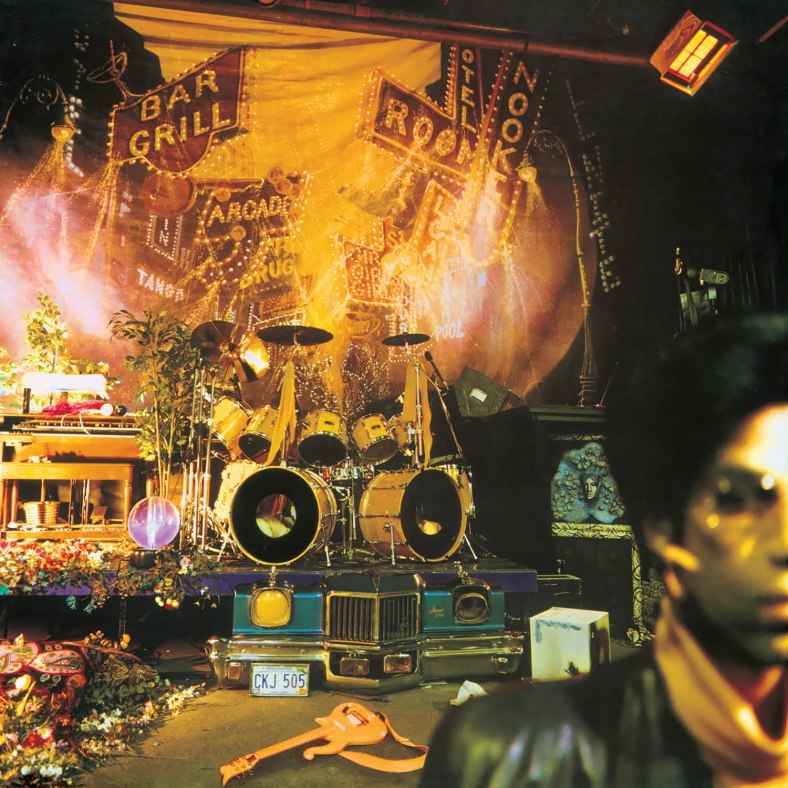
Prince – Sing o’ The Times

Listening to this album was a trip. I went into it with a little knowledge of Prince as I had the purple rain album when I was a kid and watched the movie more than a few times. Somehow, I never listened to this album before so this is my first time hearing most of these track (off a double album)

The one thing I got from most of these songs was prince was T-H-I-R-S-T-Y man.. Some of these songs were straight up filthy. Prince was a naughty boy and he didn’t mind letting people know. The biggest example was ‘It’ — “I want do it baby, every day, all right.  In a bed, on the stairs, anywhere, all right” I mean.. No allusions here.. He’s straight up being nasty. If I was your girlfriend is a straight freek-a-leek song. This is an album you put on after you slip into your silk pajamas and start making the moves on the laaaaadies.

That being said – there was also some strong social commentary that was relevant to the times laced through out the songs especially sing of the times “In France a skinny man died of a big disease with a little name” – I mean that lyric is fire. I like how the album flip flops between social commentary and seduction so smoothly.

The one song that stands out to me is the lighthearted tune ‘Starfish and Coffee’ about a girl who radiates joy and innocence. It’s a catchy tune and it just makes me smile – can’t help but sing the chorus while grooving.

How this album makes me feel: If I knew this album existed – my teenage self would 100% have put a few of these into a mixtape for a girl I was seeing. It’s a vibe and I’m here for it.

I give this album a randy 3/5 – I’m not that big a fan of R’n’B and it infuses this album pretty heavily. The three is for the standard pop tunes that showcase Prince’s guitar chops and excellent lyrical ability.