Fargo

Fargo (1996): You Betcha It’s a Masterpiece

Oh jeez, where do we start with “Fargo”? Ya know, the Coen Brothers could’ve just made a straightforward crime thriller about a kidnapping scheme gone wrong in Minnesota. Instead, they gave us a quirky masterpiece that’s basically what would happen if you dropped film noir into a wood chipper and reassembled it in the Land of 10,000 Lakes.

The story begins with Jerry Lundegaard (William H. Macy, perfecting the art of desperate flop sweat), a car salesman whose financial schemes have landed him in deeper trouble than a moose in quicksand. His solution? Hire two thugs to kidnap his wife so his wealthy father-in-law will pay the ransom. Because what could possibly go wrong with that plan? Everything. Everything could go wrong.

Enter our heroes and villains: Carl Showalter (Steve Buscemi, described memorably as “kinda funny lookin'”) and Gaear Grimsrud (Peter Stormare, who elevates silence to an art form) are the hired kidnappers who turn out to be about as reliable as a chocolate teapot. But the real star is Frances McDormand as Marge Gunderson, the very pregnant police chief who investigates the inevitably botched crime with the kind of cheerful persistence that makes Minnesota Nice seem downright terrifying.

The plot unfolds like a dark comedy of errors written by an evil genius who’s really into regional accents. Bodies pile up, wood chippers get involved (yah, that scene), and through it all, Marge methodically follows the trail of breadcrumbs while stopping occasionally for all-you-can-eat buffets. It’s like watching Lady Macbeth performed at a church potluck, only with more fake blood and “you betchas.”

The Coens craft a world that’s simultaneously absurd and authentic. The Minnesota accents might seem exaggerated until you actually visit Minnesota. The polite small talk in the middle of tense situations isn’t parody – it’s documentary. And the way violence erupts suddenly into this mannered world makes it all the more shocking.

What Works Like a Hot Dish at a Church Supper:

  • Frances McDormand’s Oscar-winning performance as Marge, creating one of cinema’s most unique and compelling detectives
  • The perfect balance of humor and horror that makes the dark moments darker and the funny moments funnier
  • Roger Deakins’ cinematography that turns the white Minnesota landscape into both beautiful backdrop and metaphorical blank canvas for bloodshed
  • The supporting cast of character actors who make every small role memorable
  • Dialogue that’s quotable without being cutesy (“And I guess that was your accomplice in the wood chipper?”)

What’s Shakier Than a Jello Salad:

  • The Mike Yanagita scene still puzzles some viewers (though it actually serves a subtle purpose in the plot)
  • The “based on a true story” claim is about as genuine as Jerry’s loan applications
  • Some viewers might find the accents and mannerisms too heightened
  • The pacing in the middle section requires some patience

The Final Verdict:
“Fargo” is what happens when exceptional filmmakers take genre conventions, regional specificity, and moral commentary and blend them into something wholly unique. It’s a crime story that’s less interested in the mechanics of crime than in the peculiar characters who commit them and the decent folks who clean up afterward.

The film works on multiple levels: as a straight crime thriller, as a dark comedy, as a morality tale about the dangers of greed, and as a celebration/satire of Midwestern values. It’s like a layer cake made of violence, desperation, and Minnesota nice, all frosted with snow and blood.

Rating: 5 out of 5 white Oldsmobile Ciera sedans

P.S. Keep an eye out for the scene where Carl tries to function in a world of excessive Minnesota politeness. His increasing frustration with people who just want to make pleasant conversation while he’s trying to be a hardened criminal is comedy gold. Also, remember: if someone offers you coffee in Minnesota, just say “yah” and save everyone some time.

The Manual – Epictetus

Picture this: A former slave becomes one of history’s most influential philosophers, writes nothing down himself, and yet his wisdom survives two millennia to become a self-help sensation among Silicon Valley CEOs and Reddit stoics. That’s Epictetus for you, and “The Manual” is his greatest hits album.

This pocket-sized guide to living well is essentially ancient Rome’s answer to “Don’t Sweat the Small Stuff,” except it deals with big stuff too – like death, loss, and why your neighbor’s noisy chariot should not ruin your day.

Core Message:
The Manual’s central thesis is remarkably simple: we suffer not from events but from our judgments about them. Can’t control something? Don’t waste energy worrying about it. Can control something? Well, get to work then. It’s cognitive behavioral therapy avant la lettre.

The Good:

  • Remarkable practicality for a 2,000-year-old text
  • Brutal efficiency in delivery (no ancient Greek small talk here)
  • Universal applicability of its principles
  • Zero fluff – each passage packs a philosophical punch
  • Surprisingly modern psychological insights

The Critical Points:

  1. The Emotional Suppression Problem: Epictetus sometimes seems to advocate for a level of emotional detachment that borders on the inhuman. Sorry, but your dog died and you’re allowed to cry about it.
  2. Privilege Perspective: Written from the viewpoint of a man who rose from slavery to relative freedom and comfort, it sometimes oversimplifies the relationship between mindset and circumstance.
  3. Deterministic Worldview: The strict fatalism might be hard to swallow for modern readers who believe in social change and collective action.
  4. Gender and Social Issues: Let’s just say ancient Rome wasn’t winning any awards for progressive thinking. Some passages haven’t aged well.
  5. Missing Nuance: The manual’s aphoristic style, while powerful, sometimes leads to oversimplification of complex human experiences.

Standout Passages:
“It’s not things that upset us, but our judgments about things.” (Looking at you, person who just checked their ex’s Instagram)

“Some things are in our control and others not.” (Revolutionary stuff for chronic control freaks)

The Modern Impact:
It’s fascinating how this ancient text speaks to modern anxieties. In an age of endless notifications, social media FOMO, and constant outrage, Epictetus’s message about choosing our concerns wisely hits different. He’s basically telling us to curate our emotional news feed.

The Bottom Line:
The Manual is like a tough-love therapist from the ancient world – it tells you what you need to hear, not what you want to hear. Yes, some of its advice might seem harsh, and yes, some of its cultural context is outdated, but its core insights about human nature and happiness remain startlingly relevant.

Rating: ⭐⭐⭐⭐½ out of 5
Perfect for: Overthinkers, control freaks, and anyone trying to maintain sanity in a chaotic world
Not for: Those seeking warm fuzzies or validation of their daily dramas

Final Thought:
In a world of 300-page self-help books that could be condensed to a tweet, there’s something refreshing about The Manual’s brevity and directness. It’s like getting philosophical tough love from your no-nonsense ancient Roman grandfather. Just remember, like any manual from 2,000 years ago, some assembly of modern context is required.

Platoon

If you’ve ever wondered what the opposite of a feel-good war movie looks like, Oliver Stone’s “Platoon” is your answer. This isn’t your grandfather’s World War II glory story – this is Vietnam in all its mud-soaked, morally ambiguous, soul-crushing reality.

Our guide through this green inferno is Chris Taylor (Charlie Sheen, back when that name meant “serious actor”), a college dropout who volunteered for Vietnam out of a naive sense of patriotic duty. Remember those idealistic college essays you wrote about making the world a better place? Yeah, this is like that, except with more leeches, less sleep, and the constant threat of stepping on a land mine.

Taylor finds himself caught between two father figures: Sergeant Elias (Willem Dafoe), the compassionate warrior who hasn’t quite lost his humanity, and Sergeant Barnes (Tom Berenger, sporting a face full of scars and a soul full of darkness), who embodies the war’s dehumanizing effects. If Elias is the platoon’s conscience, Barnes is its survival instinct gone rabid.

The film doesn’t so much unfold as it descends – into madness, into moral corruption, into the heart of darkness (and yes, that Conrad reference is entirely intentional). We watch as Taylor’s idealism crumbles faster than a cookie in a monsoon. The platoon faces not just external enemies but internal ones: fear, paranoia, and the growing realization that maybe the real war isn’t between Americans and Vietnamese, but between different visions of what America should be.

Stone, drawing from his own Vietnam experiences, crafts scenes that feel less like Hollywood set pieces and more like fever dreams. The night ambushes, where muzzle flashes briefly illuminate terrified faces. The village raid that spirals into an atrocity. The cannabis-hazed moments in the “underworld” bunker where soldiers escape through rock music and chemical recreation. It all feels horrifyingly authentic.

The film’s most iconic moment – Elias running from the NVA with his arms raised (spoiler alert: it doesn’t end well) – becomes a sort of crucifixion image, the death of whatever moral high ground America thought it had in this conflict. When Samuel Barber’s Adagio for Strings swells over scenes of destruction, it feels less like a soundtrack and more like a requiem for lost innocence.

What Makes It Hit:

  • The raw authenticity that only comes from a director who’s actually been there
  • Willem Dafoe and Tom Berenger delivering career-defining performances as the angel and devil on Taylor’s shoulders
  • Cinematography that makes you feel the suffocating heat and paranoia of the jungle
  • A supporting cast (including a young Forest Whitaker and Johnny Depp) that brings the diverse reality of Vietnam-era America to life
  • The gradual build-up of tension that makes the explosive moments all the more impactful

What Makes It Miss:

  • Some of the symbolism (good sergeant vs. evil sergeant) can feel a bit heavy-handed
  • Charlie Sheen’s performance, while solid, occasionally feels overwhelmed by his more experienced co-stars
  • The voiceover narration sometimes states themes that the visual storytelling already conveys
  • The pacing in the middle section can drag for viewers expecting constant action

The Final Word:
“Platoon” isn’t just a war movie – it’s an exorcism of America’s Vietnam demons caught on film. It’s brutal, uncompromising, and absolutely essential viewing. While “Apocalypse Now” gave us Vietnam as surreal nightmare and “Full Metal Jacket” gave us Vietnam as dark satire, “Platoon” gives us Vietnam as it was: a meat grinder that took young men’s bodies and souls.

This isn’t a movie you enjoy – it’s a movie you survive, much like the war itself. It’s also one of the most important war films ever made, precisely because it strips away all the glory and pageantry to show war’s true face. When the credits roll, you’ll feel like you’ve been through something significant, even if you’re not quite sure you want to go through it again.

Rating: 5 out of 5 shattered illusions

P.S. Watch for the scene where King (Keith David) explains the reality of who’s fighting this war: “You got your white-bread, college boys like you out here, fighting this war, alongside your poor, black, Spanish, and redneck boys who’d be the first to die.” It’s a moment of clarity that cuts through all the fog of war.

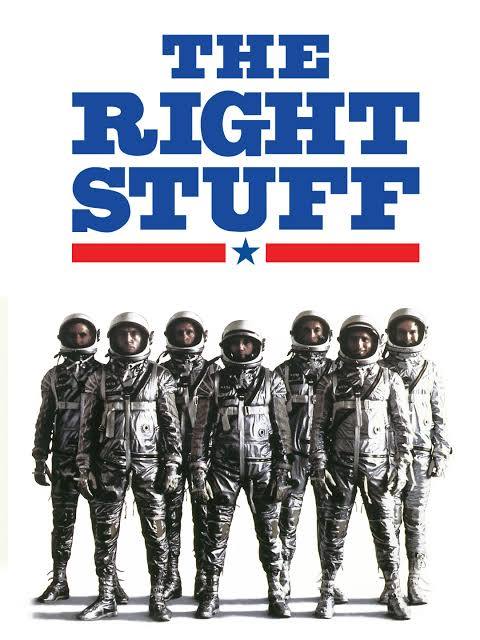
The Right Stuff

Ever wonder what happens when you take a bunch of cocky test pilots, stuff them into experimental aircraft, and tell them to push the limits of human possibility? Well, “The Right Stuff” has your answer, and spoiler alert: it involves a lot of sonic booms and even more swagger.

Based on Tom Wolfe’s bestselling book, this epic chronicles the birth of America’s space program, starting with the sound barrier-breaking exploits of test pilots at Edwards Air Force Base and culminating in the Mercury space program. At its heart is Chuck Yeager (Sam Shepard), the quintessential test pilot who treats breaking the sound barrier like it’s just another day at the office (which, for him, it kind of was).

Enter the Mercury Seven astronauts, led by John Glenn (Ed Harris, sporting a smile that could power a spacecraft) and Gordon Cooper (Dennis Quaid, whose cocky grin should have its own credit). These guys go from being hotshot pilots to America’s first astronauts, though the transition isn’t exactly smooth. Think of it as going from being cowboys of the sky to being spam in a can, as some of them put it.

The film brilliantly captures the absurdity of early spaceflight preparation. Want to be an astronaut? Great! Just let us stick every possible medical instrument into every possible orifice, spin you around until you’re ready to redecorate the centrifuge, and then parade you in front of the press like circus animals. All while your wives (including a stellar Pamela Reed as Trudy Cooper) maintain perfect hair and picture-perfect smiles for the cameras.

Director Philip Kaufman weaves together multiple storylines with the skill of a master storyteller. We bounce between Yeager’s continuing adventures pushing the envelope at Edwards, the Mercury astronauts’ training and missions, and the political circus surrounding the space race. The film manages to be both intimately personal and grandly historical, showing us both the men behind the headlines and the massive governmental machine that turned them into American icons.

What really sets “The Right Stuff” apart is its sense of humor about the whole enterprise. Yes, these men were heroes, but they were also gloriously human. The film captures their competitiveness, their fears, their family struggles, and their occasional bouts of what Tom Wolfe called “maintaining the zipper-down reputation.” It’s three hours and thirteen minutes of American history that never feels like a history lesson.

The Review Stuff:

What Works:

  • The cast is phenomenal across the board, with Sam Shepard’s laconic Yeager and Ed Harris’s earnest Glenn being particular standouts
  • The visual effects, despite being pre-CGI, are still impressive and give a visceral sense of what early test flights and space missions felt like
  • The script balances humor, drama, and historical accuracy with remarkable skill
  • Caleb Deschanel’s cinematography makes both the desert and space look equally magnificent
  • Bill Conti’s score soars as high as the aircraft it accompanies

What Doesn’t:

  • At over three hours, the film can feel a bit long-winded in places
  • Some of the supporting characters get lost in the shuffle
  • The political context of the space race with the Soviets feels somewhat underdeveloped
  • A few of the effects sequences haven’t aged as well as others

The Verdict:
“The Right Stuff” is that rare historical epic that manages to be both informative and entertaining, reverential and irreverent. It’s a testament to both human achievement and human folly, showing us heroes who were all too human and humans who became heroes. While it might be a bit too long for some viewers, it’s a journey worth taking, especially for anyone interested in aviation, space exploration, or just damn good filmmaking.

Rating: 4.5 out of 5 sonic booms

P.S. Keep an eye out for the running gag about the mysterious test pilot deaths being explained away as “crashes into the side of a mountain.” It’s both darkly funny and historically accurate – the government’s go-to explanation for classified mishaps during the Cold War era.

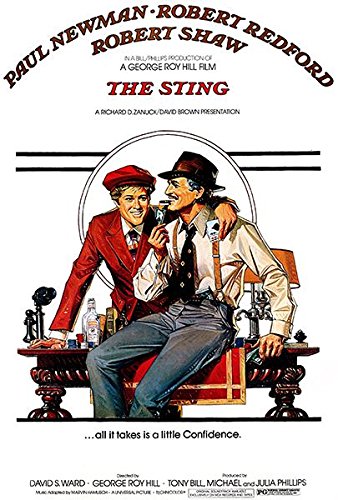
The Sting

When Revenge is Best Served with Style

Need to get revenge on a murderous crime boss? Try elaborate confidence games and ragtime music! At least that’s the approach Johnny Hooker (Robert Redford) takes after his partner gets killed by enforcer Loretta Numbers for scamming a numbers runner connected to crime boss Doyle Lonnegan (Robert Shaw).

Hooker seeks out Henry Gondorff (Paul Newman), a master con artist who’s “retired” in the same way that Michael Jordan was “retired” – which is to say, not really. Gondorff, despite nursing the kind of hangover that would kill a lesser man, agrees to help set up the ultimate con: a fake betting parlor designed to separate Lonnegan from his money and his smugness simultaneously.

What follows is a masterclass in the long con, featuring more moving parts than a Swiss watch factory. Gondorff infiltrates Lonnegan’s high-stakes poker game on a train, winning big with cheating that’s so obvious it would make a Vegas casino blush. This gets Lonnegan’s attention and, more importantly, his anger – something Gondorff and Hooker plan to leverage like a financial advisor with inside information.

The duo assembles a team of con artists who make Ocean’s Eleven look like amateur hour. They create an entirely fake off-track betting parlor, complete with a cast of characters that would make Broadway jealous. There’s Kid Twist (Harold Gould) posing as a Western Union clerk, giving out “sure thing” horse racing tips that are actually delayed results. The Erickson (Eileen Brennan) provides the female touch, while Eddie Niles (John Heffernan) plays the part of a disgruntled betting parlor employee willing to help Lonnegan “cheat” the house.

Meanwhile, FBI Agent Polk (Dana Elcar) is pursuing Hooker for killing a pursuer who was actually offed by someone else (it’s complicated), and corrupt cop Lieutenant Snyder (Charles Durning) is trying to get his cut of whatever action Hooker’s running. It’s like a chess game where half the pieces are actually checkers in disguise.

The con builds to a magnificent crescendo involving a fake shooting, a betting parlor raid that’s actually staged, and Lonnegan losing half a million dollars (in 1936 money!) to a horse that already lost. The beauty of the con is that Lonnegan can’t even go to the police because everything he tried to do was illegal anyway.

The Verdict

What I Love:

  • Newman and Redford’s chemistry that makes other screen partnerships look like blind dates
  • David S. Ward’s script that’s more intricately plotted than most retirement plans
  • Marvin Hamlisch’s adaptation of Scott Joplin’s ragtime music that makes white-collar crime seem downright jaunty
  • Period details so perfect you’ll check your calendar to make sure it’s not 1936
  • A plot twist ending that M. Night Shyamalan probably studies like religious text

What Could’ve Been Better:

  • Might make you overly suspicious of any gambling establishment
  • Will definitely affect your ability to play poker with a straight face
  • Could make you question why your revenge plans aren’t this stylish

“The Sting” pulls off the ultimate con: making audiences root for criminals while tapping their feet to ragtime music. It won seven Academy Awards, proving that sometimes crime does pay, as long as it’s fictional and features really good-looking people.

Rating: 5 out of 5 marked cards

P.S. – If someone named Kid Twist offers you horse racing tips, maybe check the timestamps first.

Amadeus

Amadeus: When God’s Favorite Composer Was His Least Favorite Human

Meet Antonio Salieri, a man who had the misfortune of being a pretty good composer in the same era as a certifiable genius. It’s like being a decent amateur juggler who has to follow someone juggling chainsaws while riding a unicycle. Blindfolded.

The film opens with elderly Salieri (F. Murray Abraham) attempting suicide while screaming apologies to Mozart for murdering him. This leads to him being committed to an asylum, where he tells his story to a young priest who probably wasn’t expecting his day to include a feature-length confession about musical jealousy and divine betrayal.

Through Salieri’s incredibly biased narration, we meet Wolfgang Amadeus Mozart (Tom Hulce), whose laugh sounds like a hyena that just discovered nitrous oxide. Mozart arrives in Vienna as the most talented brat in musical history – a genius composer who also happens to be a giggling, cursing, drinking manchild with a thing for potty humor. Imagine if you combined Einstein’s brain with a frat boy’s personality, then gave him a wig.

Salieri, who has dedicated his life to God and music (in that order), can’t handle the fact that the Almighty has chosen to give his divine gift to this “obscene child.” It’s like watching someone who spent decades practicing their craft get upstaged by a natural talent who doesn’t even bother to warm up. Mozart composes masterpieces the way most people doodle – without effort and often while doing something else entirely.

The film follows Mozart’s career in Vienna, where he manages to offend pretty much everyone who could help his career. He’s commissioned to write an opera, and decides the perfect subject would be a comedy about life in a harem, because nothing says “court approval” like sexual innuendo in Turkish costumes. Meanwhile, Salieri plots Mozart’s downfall while simultaneously being the only person who truly appreciates the genius he’s trying to destroy.

Mozart’s life starts to unravel faster than a cheap wig. His father dies (appearing later as a terrifying figure in a mask to commission the Requiem), his wife Constanze (Elizabeth Berridge) leaves him, and he’s reduced to teaching piano lessons to “squealing children” for money. Salieri, seeing his chance, disguises himself as Mozart’s dead father and commissions a Requiem Mass, planning to steal it and reveal it as his own composition at Mozart’s funeral – because nothing says “mentally stable” like planning to premiere your stolen masterpiece over your rival’s dead body.

The film builds to Mozart racing against time and his own deteriorating health to complete the Requiem, while Salieri pretends to help him while actually helping him die faster. It all culminates in one of cinema’s greatest sequences, as Mozart dictates his Requiem from his deathbed to Salieri, who writes it down while probably thinking “I could have written this… okay, no I couldn’t.”

The Verdict

What I Love:

  • F. Murray Abraham making musical jealousy into high art
  • Tom Hulce’s laugh, which should have gotten its own Oscar nomination
  • The most beautiful soundtrack in film history (thanks, Wolfgang)
  • Costume design that makes modern fashion weeks look understated
  • Miloš Forman’s direction making classical music sexy before it was cool

What Could’ve Been Better:

  • Might make you feel bad about quitting those piano lessons
  • Will definitely affect your ability to listen to “Eine Kleine Nachtmusik” without giggling
  • Could make you question every gift you thought God gave you

“Amadeus” is less about historical accuracy and more about the agony of being second-best in a field you’ve dedicated your life to. It’s like a sports movie where the antagonist is the narrator, God is the referee, and Mozart is that guy who shows up without training and breaks all the records.

Rating: 5 out of 5 powdered wigs

P.S. – After watching this, you might want to listen to Mozart’s Requiem. Just don’t commission one yourself.

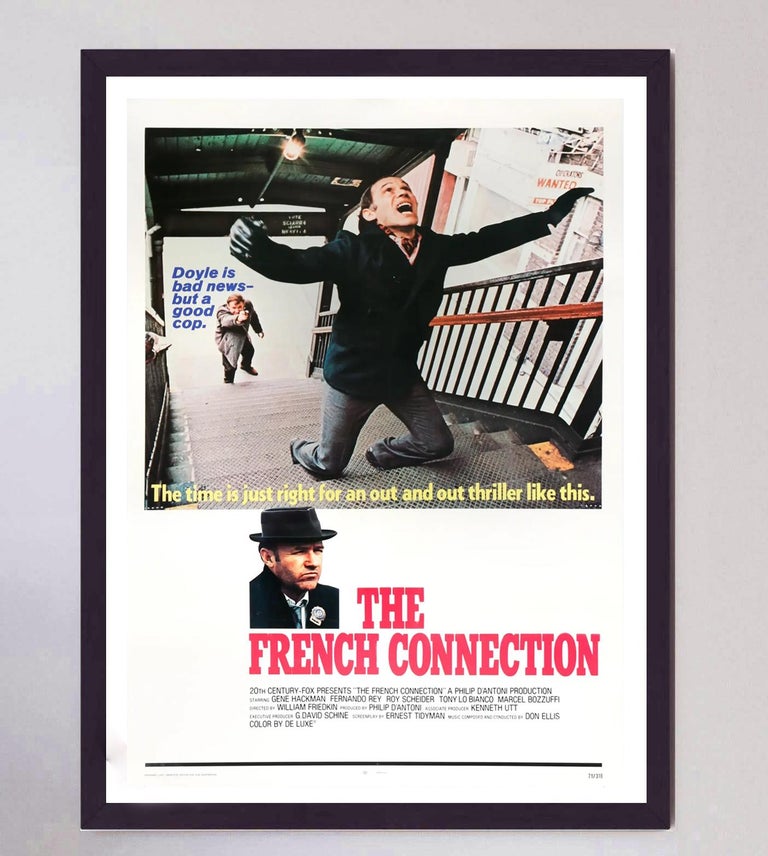
The French Connection

When Drug Busting Meets Defensive Driving 101

Ever wonder what would happen if you gave the world’s angriest cop a badge, a car, and an obsession with French drug dealers? Meet Jimmy “Popeye” Doyle (Gene Hackman), a New York detective whose approach to police work makes Bull Connor look like Officer Friendly.

Doyle and his partner Buddy “Cloudy” Russo (Roy Scheider) stumble onto what might be the biggest heroin deal in history while doing their usual routine of harassing random civilians and treating the Constitution like a suggestion list. They spot well-dressed Sal Boca hanging out at a nightclub with known criminals, which in early 1970s New York was like noticing water is wet, but Doyle’s gut says there’s more.

Enter Alain Charnier (Fernando Rey), a sophisticated French criminal who makes other drug lords look like street corner dealers. He’s smuggling $32 million worth of heroin into New York inside a car being brought over by unsuspecting TV personality Henri Devereaux. Charnier is everything Doyle isn’t – sophisticated, patient, and owns more than one sport coat.

The film follows Doyle and Russo as they conduct the world’s most aggressive stakeout. This includes a surveillance sequence that consists mainly of our heroes freezing their badges off while eating what appears to be the worst takeout in New York (which is saying something). Doyle’s dedication to the case extends to following Charnier around the city in a cat-and-mouse game that probably violated every transit authority regulation in existence.

This leads to the film’s centerpiece: a car chase that makes the Fast & Furious franchise look like a driver’s ed video. Doyle, pursuing a hijacked elevated train carrying a hitman, creates a new category of traffic violation while terrorizing Brooklyn in a brown Pontiac. The scene was shot without permits, which means those terrified pedestrians jumping out of the way weren’t acting – they were just trying to get their groceries home.

Things get messier when the feds get involved, leading to jurisdictional disputes that make interdepartmental meetings look like group therapy. The whole operation nearly falls apart multiple times, primarily because Doyle has the diplomatic skills of a hangry rhinoceros. It all culminates in a showdown at an abandoned warehouse (because where else would you conduct a major drug bust?) that goes about as smoothly as you’d expect when Popeye Doyle is involved.

The Verdict

What I Love:

  • Gene Hackman making “angry cop” into an art form worthy of the Louvre
  • A car chase that probably sent New York’s insurance rates up for decades
  • Cinematography that makes you want to take a shower, but that’s the point
  • A police procedural that’s about as procedural as a food fight
  • The most aggressive use of a porkpie hat in cinema history

What Could’ve Been Better:

  • Might make you distrust anyone wearing nice clothes in New York
  • Will definitely affect your opinion of elevated trains
  • Could make you question the effectiveness of police sensitivity training

“The French Connection” is like if you took a documentary about police work and replaced all the paperwork scenes with adrenaline. It won five Academy Awards, including Best Picture, proving that sometimes the Academy voters appreciate a good car chase as much as a period drama.

Rating: 5 out of 5 illegally parked surveillance vans

P.S. – After watching this, you might want to take the subway. Actually, after that chase scene, maybe just walk.

Once Upon a Time in America

The Longest Game of Criminal Musical Chairs Ever Filmed

Looking for a nice, straightforward gangster movie? Maybe try Goodfellas. Sergio Leone’s final film is what happens when you take a crime epic, throw it in a blender with a pocket watch, and hit the “timeline confetti” button. It’s nearly four hours of past, present, and “wait, when are we now?”

Our story follows David “Noodles” Aaronson (Robert De Niro) through three primary time periods: the 1920s (child gangster edition), the 1930s (successful gangster edition), and 1968 (confused old gangster edition). The film opens with Noodles in 1933 fleeing from gangsters after apparently getting his friends killed and stealing their money. Because that’s what friends are for, right?

Cut to 1968, where an older Noodles returns to New York after receiving a mysterious letter. He looks like he’s spent the last 35 years trying to figure out what exactly happened in this movie, and honestly, same. He visits a still-operating speakeasy run by Fat Moe (Larry Rapp), whose sister Deborah (Elizabeth McGovern) was the love of Noodles’ life – at least when he wasn’t too busy ruining everything.

Through a series of flashbacks more complex than a quantum physics textbook, we learn about young Noodles (Scott Tiler) and his childhood friend Max (Rusty Jacobs). They start their criminal career in Manhattan’s Lower East Side, where they meet Patsy and Cockeye, forming a gang that makes the Little Rascals look like model citizens. Their early adventures include setting a rival’s newspaper stand on fire, which seems like a lot of effort to avoid reading the morning news.

Young Noodles goes to prison for killing a rival gang member, and when he gets out, he reunites with his now-grown friends. Adult Max (James Woods) has become more ambitious than a Silicon Valley startup founder, leading the gang into bigger scores during Prohibition. The adult gang’s operations are successful enough to make them rich, but Max keeps pushing for more, because apparently being a wealthy criminal during the Depression isn’t enough of an achievement.

The film weaves through their rise to power, complicated by Noodles’ obsession with Deborah and Max’s increasingly risky schemes. There’s a subplot about a union leader named Jimmy O’Donnell that’s more confusing than trying to assemble IKEA furniture without instructions. Meanwhile, Noodles’ relationship with Deborah goes about as well as you’d expect from someone whose emotional intelligence is somewhere between a rock and a slightly smaller rock.

Everything supposedly culminates in a betrayal in 1933 that leads to the deaths of Max, Patsy, and Cockeye. But because this is Leone, nothing is what it seems. In 1968, Noodles discovers that Max faked his death, stole the gang’s money, and became a powerful political figure named Secretary Bailey. It’s like the worst high school reunion surprise ever.

The Verdict

What I Love:

  • A narrative structure that makes Christopher Nolan say “maybe that’s a bit complicated”
  • Ennio Morricone’s score that makes even scenes of people walking seem epic
  • De Niro proving he can brood in multiple decades
  • James Woods at peak James Woods-iness
  • Cinematography that makes New York look like a beautiful dream, even when it’s a nightmare

What Could’ve Been Better:

  • Might require a flowchart to follow the timeline
  • Will definitely affect your ability to tell what year it is
  • Could make you suspicious of any childhood friend who seems too ambitious

This is a film that treats time like a suggestion rather than a rule. It’s less “Once Upon a Time” and more “Several Times at Once in America.” At nearly four hours long, it’s the kind of movie that makes Lord of the Rings look like a TikTok video.

Rating: 5 out of 5 opium-induced time jumps

P.S. – If you’re planning to watch this, maybe take notes. Or better yet, bring a professional timekeeper.

Fried Pizza (Fritta)

In the narrow alleyways of Naples’ Quartieri Spagnoli, pizza fritta emerged during World War II as necessity transformed crisis into culinary innovation. When Allied bombing damaged many wood-fired ovens and ingredients became scarce, Neapolitan pizzaioli turned to a different cooking method – deep frying. What began as a wartime adaptation became a cherished street food tradition that persists today.

Pizza fritta starts with the same dough as traditional Neapolitan pizza, but instead of being baked, it’s sealed into a half-moon shape and immersed in boiling oil. The filling traditionally consists of ricotta, small pieces of ciccioli (pork), and black pepper, though modern versions might include provola, salami, or tomato sauce. The frying process creates a golden, crispy exterior while steaming the filling inside, resulting in a perfect contrast of textures.

This style of pizza gained fame through the “friddarielle” – women who sold pizza fritta from street stands, often on credit to hungry workers. The most famous was Fernanda Speranza, known as “Queen of the Fried Pizza,” who fed thousands during Naples’ post-war reconstruction. These vendors would call out “Oggi a otto!” (Pay in eight days!), allowing customers to eat now and pay later – a system of trust that helped sustain communities through hard times.

In modern Naples, pizza fritta exists in two main forms: the traditional filled half-moon and the open-faced montanara, where the dough is fried then topped with tomato sauce and cheese before a quick finish in the oven. Both styles represent Naples’ ability to elevate humble ingredients into celebrated dishes through technique and tradition.

The renaissance of Neapolitan pizza has brought renewed attention to pizza fritta, with high-end restaurants now offering refined versions alongside street vendors maintaining traditional preparations. Yet its essence remains unchanged – a testament to Neapolitan ingenuity and resilience, transformed from wartime necessity into culinary heritage.

I had my first true Pizza Fritta in Naples and it was transcendent. I know that sounds like hyperbole but it was crispy and soft at the same time and the tomato and cheese toppings were both salty and sweet and overall it was what people think of when they say “taste explosion” – I knew I wanted to recreate it at home but kept delaying it in favor of easier pizzas. I knew I wanted to use the roasted tomatoes similar to what I had in Italy but wanted to jazz it up. I decided some baked ricotta would be a nice salty counterpoint to the sweet tomatoes and I was right. This really was an easy thing to make and it was delicious. I ate three before I remembered to leave a couple for my wife.

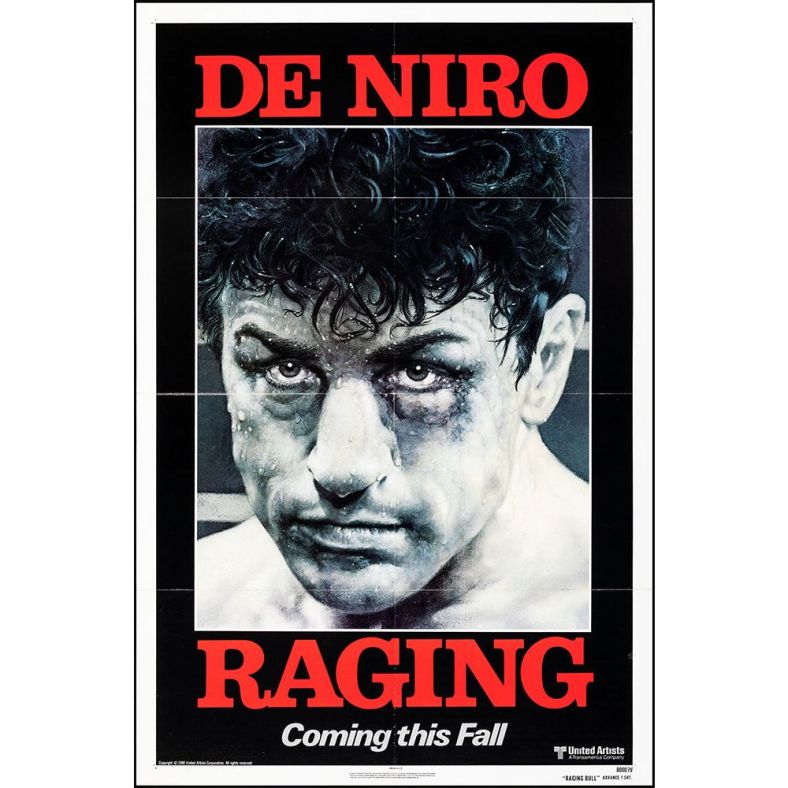
Raging Bull

Ever wonder what would happen if you took the world’s angriest man and made him punch people for a living? Meet Jake LaMotta (Robert De Niro), a middleweight boxer whose approach to both fighting and relationships makes Mike Tyson look like a meditation teacher.

Scorsese’s black-and-white masterpiece follows LaMotta through his rise and spectacular face-first fall, chronicling a man who apparently never met a person – including himself – he didn’t want to fight. The film opens in 1941, when Jake is just a up-and-coming boxer whose only notable personality trait is his ability to take a punch better than most people take compliments.

Enter Jake’s brother Joey (Joe Pesci, proving that short men can be terrifying long before Goodfellas), who manages Jake’s career with all the subtlety of a punch to the face. Their relationship is like watching the world’s most violent family counseling session, complete with mob connections and fixed fights. When Jake meets 15-year-old Vickie (Cathy Moriarty), he pursues her with all the charm of a restraining order waiting to happen. They eventually marry, because apparently no one thought to warn her about red flags.

The boxing scenes are shot like violent ballet, with blood spraying in gorgeous slow motion and sounds that make every punch feel like a small car accident. Scorsese films these fights like they’re taking place in hell itself, with smoke filling the ring and flashbulbs popping like tiny explosions. It’s beautiful in the same way a tornado is beautiful – from a very safe distance.

But the real fighting happens outside the ring. Jake’s pathological jealousy turns his life into a never-ending episode of “Who’s Sleeping With My Wife?” (Spoiler alert: probably nobody). He accuses Joey of having an affair with Vickie, which leads to a fight that makes their childhood squabbles look like pillow fights. He beats up his wife’s supposed admirers with the dedication of a man filling out his punch card at a very violent coffee shop.

The film charts Jake’s rise to the middleweight championship, including his famous fights with Sugar Ray Robinson, whom Jake seems to view less as an opponent and more as a personal insult to his existence. But because Jake can’t stop being Jake for five minutes, he gains weight, loses his title, and manages to alienate literally everyone who ever cared about him.

By the 1950s, Jake is reduced to running a sleazy Miami nightclub and performing bad stand-up comedy, which is somehow more painful to watch than any of his boxing matches. He gets arrested for introducing underage girls to male patrons, sending him to prison where, in a moment of pure LaMotta logic, he punches a wall until his knuckles bleed while screaming “Why? Why?”

The film ends with an older, paunchier Jake rehearsing his nightclub act in front of a mirror, reciting Marlon Brando’s famous “I coulda been a contender” speech from On the Waterfront. It’s a moment of crushing irony – unlike Terry Malloy, Jake had actually made it. He just couldn’t stop fighting long enough to enjoy it.

The Verdict

What I Love:

  • De Niro’s performance, which included gaining 60 pounds and presumably losing his sanity
  • Boxing sequences that make actual boxing look like synchronized swimming
  • Michael Chapman’s black-and-white cinematography that makes everything look like a beautiful nightmare
  • Joe Pesci proving that rage isn’t determined by height
  • Dialogue that makes profanity sound like Shakespeare

What Could’ve Been Better:

  • Might make you reconsider your boxing career
  • Will definitely affect your appetite for steak
  • Could make family reunions seem relatively peaceful by comparison

“Raging Bull” is like watching a Greek tragedy where everyone speaks in four-letter words and resolves their conflicts with uppercuts. It’s a masterpiece that makes you grateful for modern anger management techniques.

Rating: 5 out of 5 perfectly cooked steaks (medium rare, or Jake will know)

P.S. – After watching this, you might want to hug your brother. Unless he’s Joe Pesci.