AI – Text to Image Generation Tools

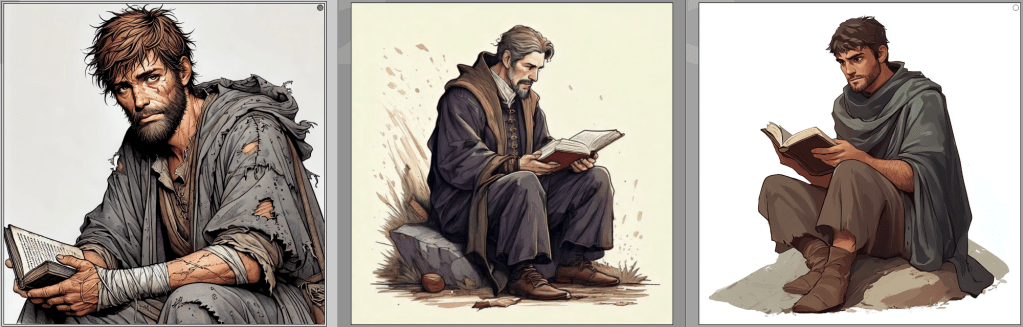
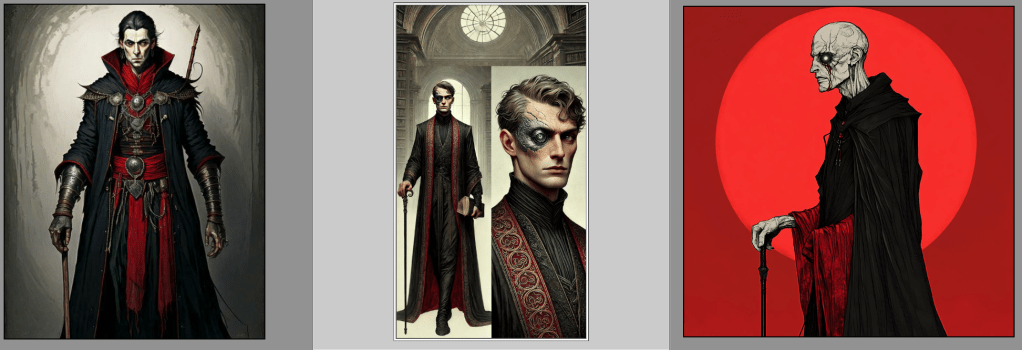
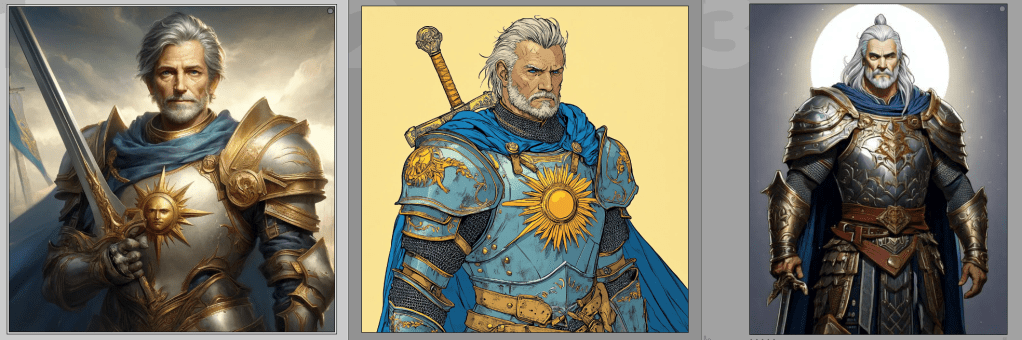
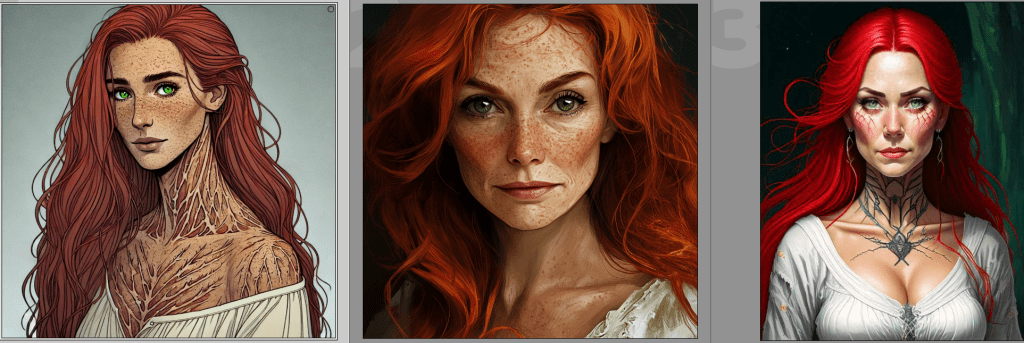
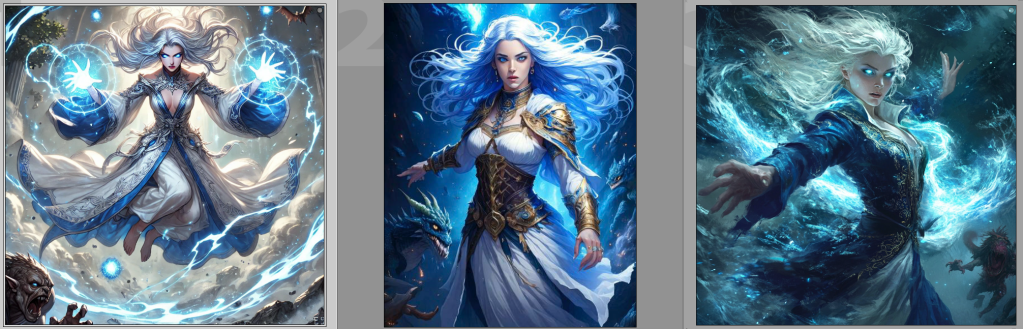
One of the first things I explored in the realm of AI was text to image generation. It wasn’t my first interaction with this type of AI – I had checked out Firefly on my work account to generate a few things and even used Midjourney when it was first introduced. I wasn’t impressed really with either tool at the time and shelved the idea of using them for any real work. Two years later as I started really leaning into learning AI I decided to revisit the major text to image tools to see how far they’ve come along. To test them out I decided to feed them straight descriptions of some of the characters in the story/book I was writing. I created a prompt for each one and fed the identical prompt into each image generator.

The first thing I noticed was they really didn’t like making unattractive people. Even if the prompt specified that a person was older some models kicked out images of people in their 20’s. Even the old weathered warrior looked like he belonged on the cover of GQ. I know I could have tinkered with the prompt and really pushed it to the image I wanted but for this experience I wanted to use the straight descriptions from the book.

The tools I used for this were DallE3, MidJourney and Adobe Firefly. I know adobe is all about cutting edge design but their tool failed on almost every prompt. It ignored critical details in the prompt like ages, scarring, hairstyles, etc. and basically served up whatever it thought was close. Coming in second was DallE which tended to spit out anime leaning images (although to be fair, I did this before I learned how to craft hyper specific image prompts) and also couldn’t seem to handle more specific prompting. The clear winner was MidJourney – it came the closest on each character and the quality of it’s output was actually inspiring to me as it was how I viewed some of these characters in my head.

I know there’s other tools out there but I settled on the ‘big 3’ for this comparison so without further ado here’s the output from each tool for the major characters (so far)

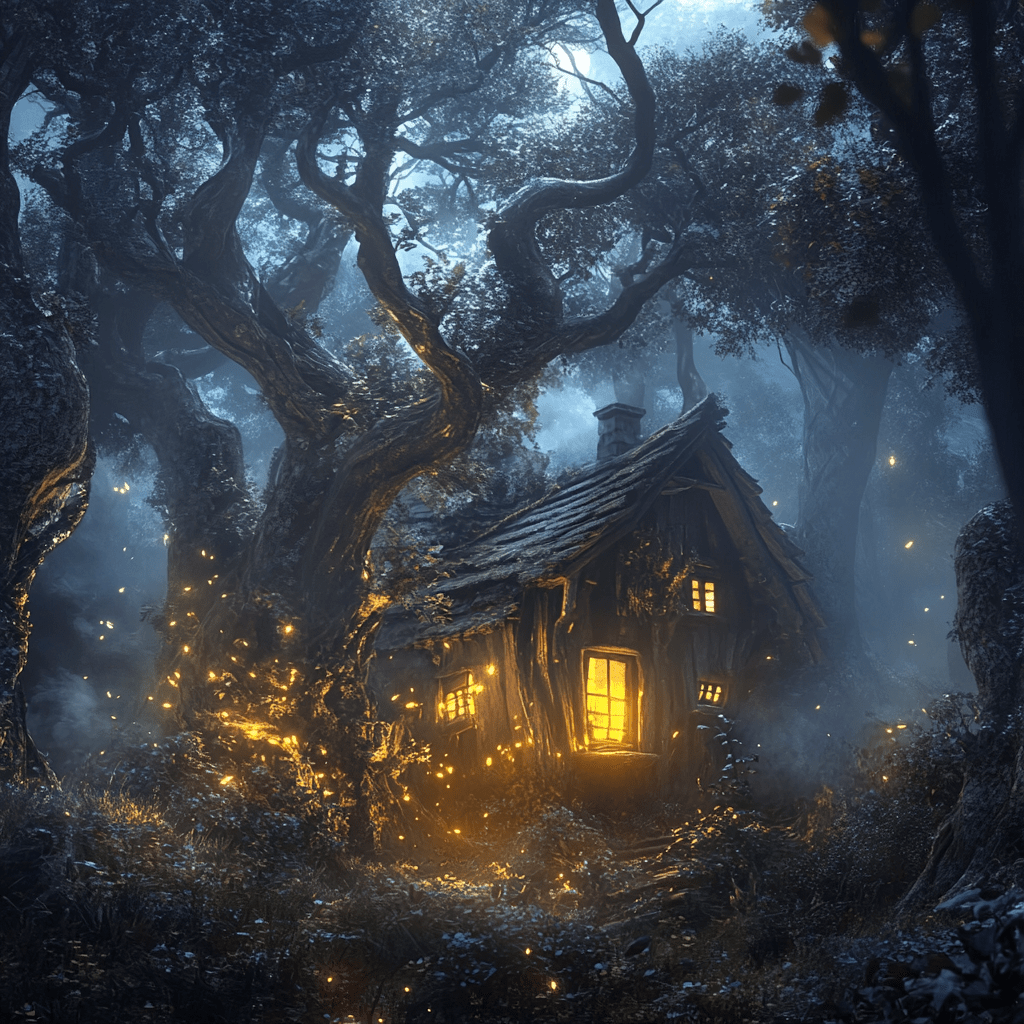
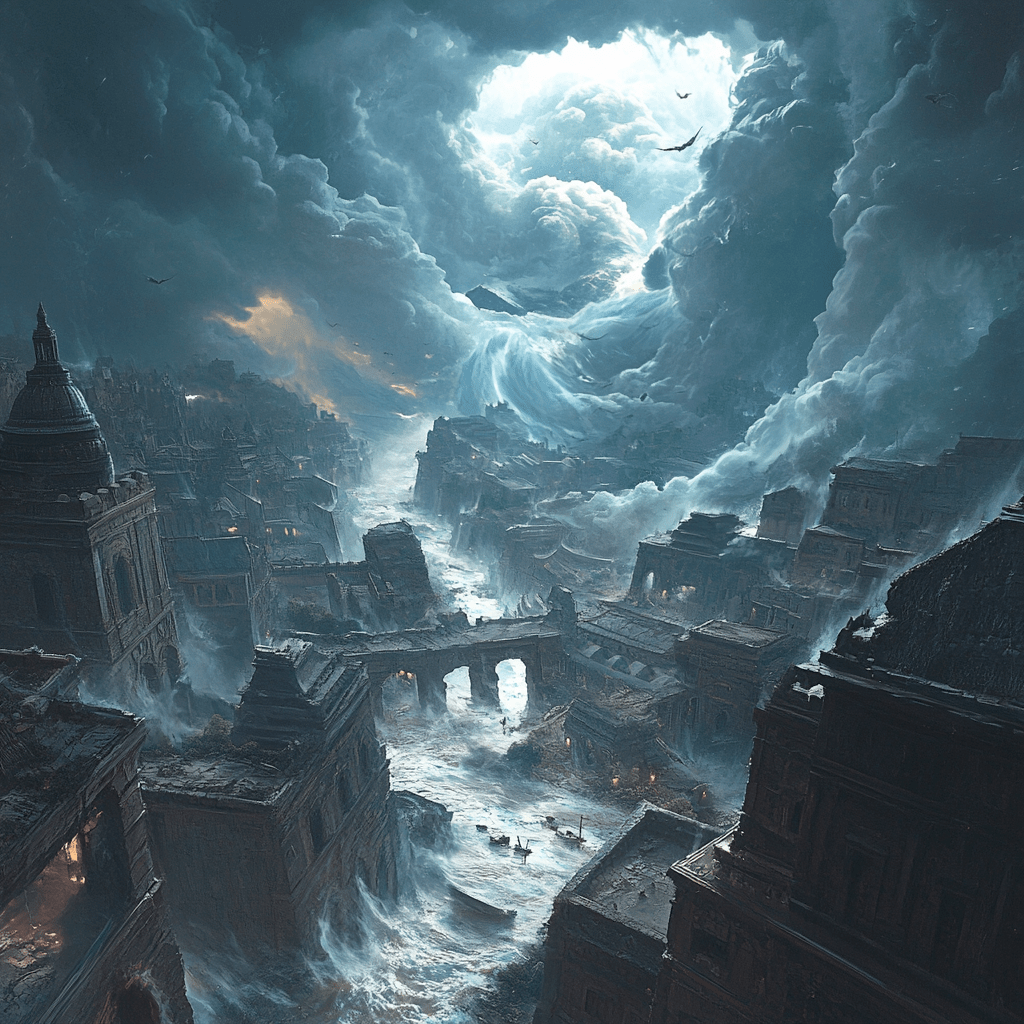
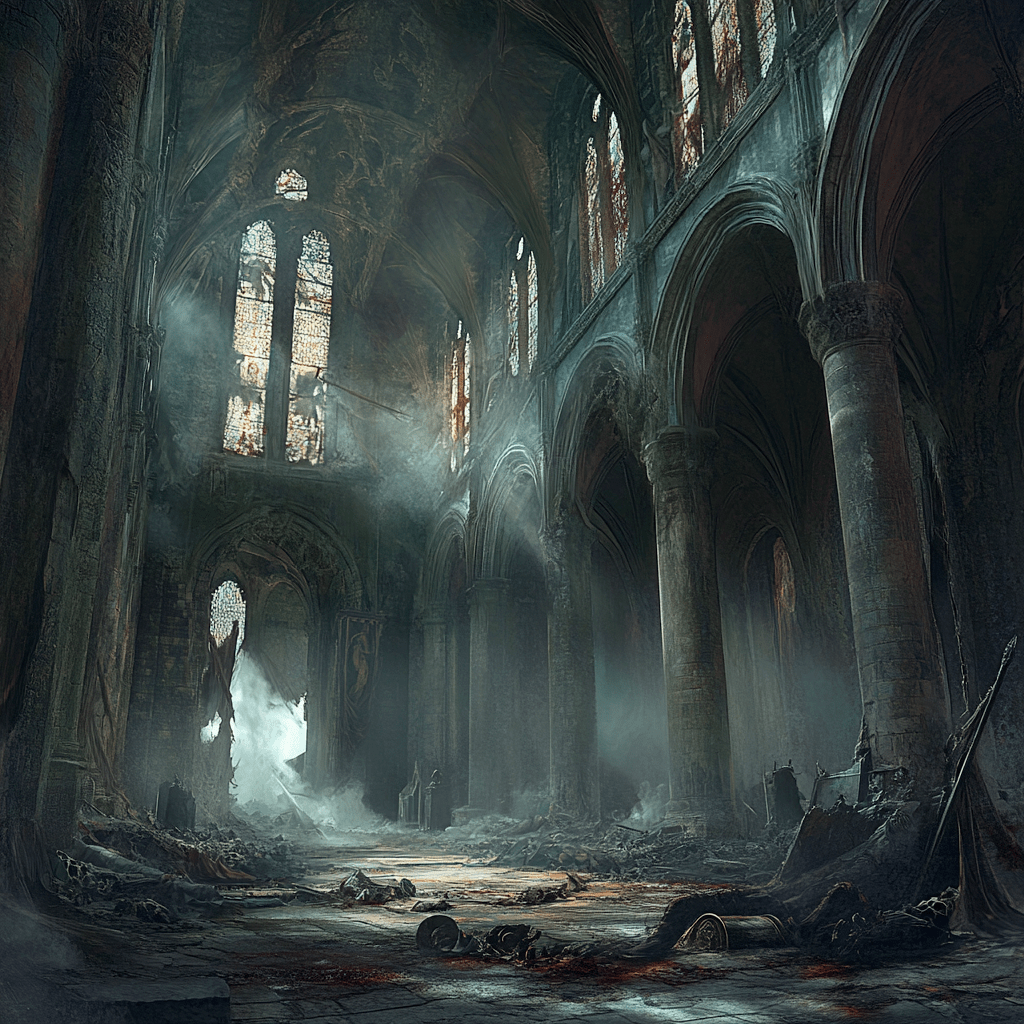
After I got these results I did a deep dive into prompt crafting for images and got a lot better at directing the tools to produce what I wanted. I didn’t get a chance to go back and recreate all these characters but here’s some random images from the book that I created using these advanced prompts

Goal Met – Create 50 Art Pieces

I’ve always like sketching and painting – when I was a kid my favorite class was art. I actually was good enough to get a few different scholarship offers to art school but was talked out of going and instead went into technology and the rest, they say, is history.

I have a few sketch pads on my shelves filled with honest efforts to start drawing and painting again but they usually only have a few pages in them before life just gets too busy and I need to start prioritizing where I spend my time. I’ve always wondered if downplaying the need to create is leading to a more stressful life as it’s one of the things I truly enjoy doing. However, I find myself in a cycle where I pick it up again, I suck at it, I keep trying and get some skills back, then put it away only to repeat this cycle the next time I feel the need to start drawing again.

So I thought if I forced myself to create 50 pieces of art this year I’d kickstart those old habits and maybe pick up something fun again. I didn’t limit it to sketching or drawing, I included things like videos but only if they required something creative (like rotoscoping, green screens, etc.)

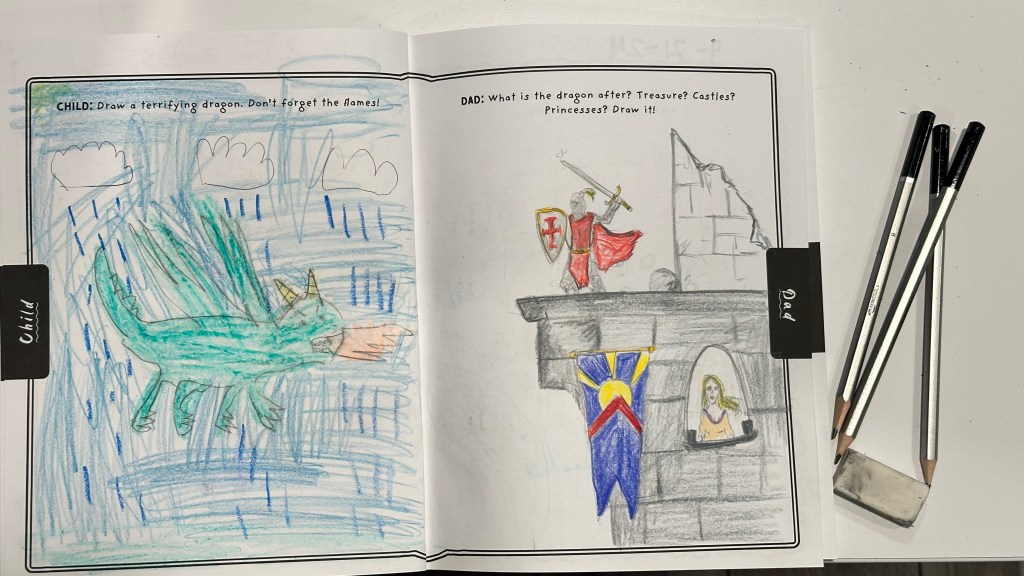
As to what to draw? That actually was a bigger challenge. I searched out daily sketch idea websites and they seemed OK. I had a book ‘sketch with dad’ where my daughter and I would take turns drawing in the book and I did a bunch of directed draw videos with my son teaching him how to draw by following along with him.

One old sketchbook idea reared its head when I was digging out some old art books – I had planned to draw all the creatures in the D&D Monster Manual (original version, TYVM)I don’t know how long that project has been simmering but I thought hey – I need some inspiration on days when nothing else is working so I’d randomly pick a monster and then draw it using the book/websites as a source.

Here’s some things I learned: I absolutely suck at drawing human faces. I mean, it’s embarrassing how bad it is – like a knockoff version of the uncanny valley. One of the things I want to work on after this 50 for 50 thing is done is just drawing faces one after another until I can make a person not look like a homunculus.

That being said – I did enjoy drawing and even when it didn’t turn out good I learned something about proportion, anatomy, and texturing.

Goal Met – Paint Bob Ross Painting

Now this may, on its head, seem like an odd goal. But I’ve always wanted to do this and part of this 50 for 50 thing was to realize this dreams and goals that have been subsided by bigger things in life.

I need to preface this by telling a story. My mother was a painter – she used it as therapy after she had a stroke and she’s the one who taught me how to draw and paint and encouraged me to create and explore art.  One thing I knew each week was that Bob Ross would be on the TV when I got home from school and we’d watch it together and I would be absolutely fascinated how he’d just create a stunning landscape out of nothing – just slapping paint on the canvas and *bam* clouds! Pallete knife? *bam* mountains.. It was like magic.

Even at that young age I wanted to try, but we didn’t have oil paints and the things we needed so I kind of just shelved the idea but I still watched the show each week with my mom and tried to guess what Bob would be up to that week.

I didn’t think about it for a while until I was looking at something else online and saw that they released a bunch of Bob Ross videos onto YouTube and I was immediately taken back to that 1980’s couch (you know the one – we all had it in fact if I googled 1980’s couch it’s the FIRST RESULT) eating my after school snack and watching bob on the ol’ 32 inch color TV

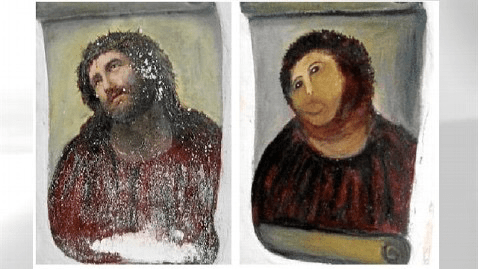
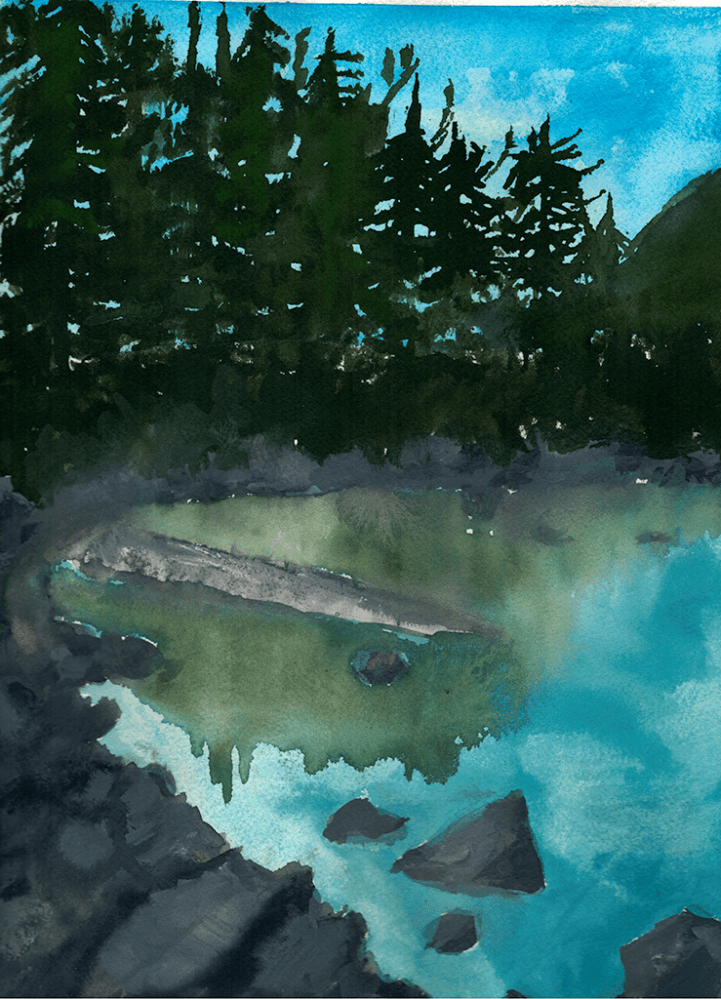
I knew I wanted to try to recreate a Bob Ross painting and this goal series seemed like a good place to make that happen. I had some canvas and brushes and some oil paints so all I needed was the ‘magic white’ and a few colors I was missing and I followed along with a Youtube tutorial and I learned very quickly that Bob Ross makes it look easy, but it isn’t. I struggled so much with the mountains that they look terrible but when I tried to fix them they ended up looking worse than when that one lady ‘fixed’ that Jesus painting

The rest of the painting wasn’t too bad actually – I had to pause and rewind frequently but I managed to get most of the process down. Other than the horrid mountains, the rest of it was adequate.

But you know what Bob ross would say?

Thanks Bob – I think I’m going to try again but do some research first – maybe watch some tutorials or something that can give me more pointers but I really enjoyed the experience of painting this and will definitely try a different one

Rick Rubin – The Creative Act: A Way of Being

You know those zen masters who somehow manage to say profound things while sounding like they’re talking about what they had for breakfast? That’s Rick Rubin for you. The legendary music producer (who’s worked with everyone from Johnny Cash to Jay-Z) has written a book that’s essentially a meditation on creativity disguised as a series of fortune cookies. And I mean that in the best possible way.

Let’s get one thing straight – if you’re looking for a behind-the-scenes tell-all about how Rubin convinced the Beastie Boys to ditch their leather pants, or how he got Black Sabbath to sound like Black Sabbath again, this isn’t that book. Instead, what you get is something far more valuable: a philosophical guide to unleashing your creative potential that’s so simple it’s profound, and so profound it’s simple.

The book is structured as a series of short chapters, each focusing on different aspects of the creative process. It’s like a choose-your-own-adventure book for your artistic soul, except every path leads to some form of enlightenment. Or at least a really good idea for your next project.

Rubin’s central thesis is that creativity isn’t something you do – it’s something you are. It’s less about technique and more about awareness. He suggests that the creative act is less about forcing something into existence and more about becoming receptive to what’s already there. It’s like he’s teaching us to be creative by teaching us how to get out of our own way. As someone who regularly trips over their own mental furniture, I found this perspective particularly refreshing.

One of the book’s most compelling ideas is what I like to call the “cosmic radio station” concept. Rubin suggests that creative ideas are always broadcasting, like radio waves, and our job is simply to tune in to the right frequency. It’s a beautiful metaphor that makes the creative process feel less like pulling teeth and more like adjusting an antenna. Though I must say, some days my antenna feels more like a coat hanger wrapped in tinfoil.

Throughout the book, Rubin emphasizes the importance of process over product. He argues that true creativity comes from a place of playful experimentation rather than rigid goal-setting. It’s about embracing uncertainty and treating every creative endeavor as an experiment rather than a test. As someone who once spent three hours deciding on the perfect font for a grocery list, this was both a relief and a challenge.

What’s particularly striking about the book is its universal applicability. Whether you’re a musician, writer, painter, or someone who arranges their sock drawer with artistic flair, Rubin’s insights apply. He strips creativity down to its essential elements: observation, experimentation, and the courage to follow your curiosity.

The book also tackles the thorny issue of creative blocks, though Rubin might argue that there’s no such thing. Instead, he suggests that what we call “blocks” are actually opportunities for deeper exploration. It’s like when you hit a wall while jogging – maybe it’s not the wall that’s the problem, but your relationship with walls. (Yes, I’m starting to sound like him now. It’s contagious.)

One potential criticism of the book might be its somewhat abstract nature. If you’re looking for specific techniques or step-by-step guides, you might find yourself frustrated. But that’s kind of the point. Rubin isn’t giving us a map; he’s teaching us how to navigate by the stars.

The Creative Act isn’t just a book about making art – it’s a book about being alive to the possibilities around us. It’s about developing a practice of attention and curiosity that enriches not just our creative work, but our entire experience of being human. Rubin has managed to write something that’s simultaneously a creativity guide, a philosophical treatise, and a spiritual handbook, all while maintaining the casual air of someone explaining how to make a really good cup of tea.

In conclusion, The Creative Act is like a Swiss Army knife for the soul – multi-functional, surprisingly simple, and invaluable once you learn how to use it. Rubin has created something special here: a book that doesn’t just inform but transforms, assuming you’re willing to sit with its ideas and let them work their magic.

While it might not give you the secret formula for producing a platinum record (sorry, aspiring music moguls), it offers something far more valuable: a way of seeing the world that makes creativity not just possible but inevitable. Just don’t expect to be the same person you were when you started reading it. As Rubin might say, that’s kind of the point.

Rating: ⭐⭐⭐⭐½ out of 5
Perfect for: Artists of all stripes, creative professionals, and anyone who’s ever stared at a blank page and wished it would stare back.
Not for: People looking for technical how-tos or industry gossip.
Artwork – Sketch with Dad Book

Since my daughter was really into drawing, I wanted to encourage her to practice and expand her creativity. While looking into ways to do this, I found this book – where there’s a prompt for her to draw something then a prompt for me to draw something to build on her drawing. I really enjoy this collaborative drawing and it does encourage me to get my sketching goals done because it makes her happy and I think it’s creating cherished memories she’ll carry with her into her artistic endeavors in the future.

Here’s drawings 1-5