The Artist

If The Artist were a person, it would be that charming, slightly eccentric friend who’s always impeccably dressed and seems to have stepped out of a time machine just to make your life a bit more interesting. This is a film that dares you not to fall in love with it. Set in the late 1920s through the early 1930s, it’s a delightful homage to the silent film era, filled with all the drama, romance, and slapstick comedy that made those early flicks so captivating.

Jean Dujardin plays George Valentin, a silent movie star with a dazzling smile and a charismatic presence that could give Clark Gable a run for his money. But, alas, the arrival of talkies threatens to end his reign as the king of Hollywood. Enter Bérénice Bejo as Peppy Miller, a young dancer with a cute little beauty mark and dreams as big as her grin. She’s the face of the new Hollywood wave, and her star rises as George’s begins to wane. The chemistry between Dujardin and Bejo is electric—half the time, you’re grinning at their antics and the other half, you’re hoping they figure out their lives and just kiss already.

Director Michel Hazanavicius does something extraordinary with The Artist: he makes silence loud. In a world where we’re bombarded by constant noise, the lack of spoken dialogue in this film amplifies every gesture, every glance, every tap of a dance shoe. The music, oh, the music! It swoops in, filling the gaps, elevating the emotional stakes, and turning simple scenes into operatic moments. Ludovic Bource’s score is a character in its own right, narrating the highs and lows with such precision that you’d swear it’s whispering secrets about the characters directly into your ear.

Then there’s the dog. Uggie, the Jack Russell terrier, almost steals the show. Whether he’s saving his master from a burning film reel or doing a jaunty little dance, Uggie encapsulates the spirit of The Artist: playful, touching, and unapologetically entertaining.

What makes The Artist truly remarkable, though, is how it manages to speak volumes about the transition from silent films to talkies—a metaphor for any sort of change and the fear it brings. It’s both a love letter to a bygone era and a reminder that art, no matter the format, is timeless. The film tugs at your nostalgia with one hand and slaps you with a reality check with the other. It’s a silent film that loudly celebrates the joy of movies, reminding us why we fell in love with cinema in the first place.

By the time the credits roll, if you aren’t a little in love with George, Peppy, and yes, even Uggie, then maybe silent films—and charming eccentrics—are just not for you. But for everyone else, The Artist is a reminder that sometimes, the best way to say something meaningful is to just shut up and let the pictures do the talking.
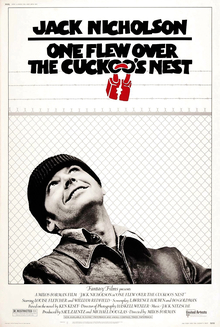
One Flew Over The Cuckoos Nest

When Your Prison Escape Plan Needs a Second Draft

Ever had one of those days where you try to dodge work by checking yourself into a mental hospital? No? Well, meet Randle Patrick McMurphy, a guy whose attempt to escape manual labor makes “quit your job and start a pottery business” look like a solid life choice.

McMurphy (played by Jack Nicholson, in a role that probably had method actors everywhere wondering if they should also get themselves committed) isn’t crazy – he’s just crazy like a fox who really didn’t think his plan through. After faking mental illness to dodge prison work duty, he finds himself in a psychiatric ward run by Nurse Ratched, a woman whose bedside manner makes Darth Vader look like a customer service trainer.

The ward is divided into two groups: the Acutes (potentially curable patients) and the Chronics (permanent residents who make the furniture look dynamic). Among the Acutes, we’ve got Billy Bibbit, whose stutter would give The King’s Speech’s Geoffrey Rush job security; Dale Harding, a man so deeply closeted he probably has winter coats in there; and Charlie Cheswick, whose emotional regulation makes a toddler at Toys “R” Us look zen. The Chronics include Chief Bromden, a Native American giant who’s perfected the art of playing deaf and mute – basically the world’s tallest mime.

McMurphy bursts into this environment like a food fight at a wine tasting. He immediately starts questioning everything: Why can’t they watch the World Series? Why does the ward’s music sound like elevator muzak composed by depressed snails? Why do their group therapy sessions feel like Twitter arguments in slow motion?

His battle with Nurse Ratched escalates from minor skirmishes over card games and TV privileges to full-scale warfare. It’s like watching a chess match where one player insists on using the pieces to act out scenes from WWE. McMurphy’s shocking discovery that many patients are there voluntarily leads to the greatest “wait, what?” moment since someone first explained cryptocurrency.

The plot thickens faster than institutional oatmeal when McMurphy organizes a ward party that makes your average college dorm shindig look like afternoon tea with the Queen. He smuggles in women and alcohol, and even gets Chief Bromden to break his silence – turns out the big guy was basically playing the world’s longest game of charades.

But because we can’t have nice things in this ward, everything goes sideways faster than a cafeteria jello cup. Billy Bibbit’s post-party encounter with Nurse Ratched proves that some people shouldn’t be allowed to weaponize guilt – it’s like watching your mom, your therapist, and your high school principal team up for an intervention, with tragic results.

The Verdict

What I Love:

  • Jack Nicholson’s performance, which makes other movie rebels look like hall monitors
  • Louise Fletcher turning passive-aggressive behavior into an Olympic sport
  • A supporting cast that could make group therapy actually worth attending
  • Direction so good it probably got Miloš Forman banned from hospital administration meetings
  • The most compelling argument against institutional healthcare since the invention of leeches

What Could’ve Been Better:

  • Might make you suspicious of every nurse offering medication
  • Will ruin your plans to fake mental illness to escape prison
  • Likely to make your next doctor’s visit more anxiety-inducing than it already was

This film swept the Academy Awards like Nurse Ratched sweeps away contraband cigarettes, winning all five major categories. It’s a masterpiece that will make you laugh, cry, and seriously reconsider any plans to avoid manual labor through institutional commitment.

Rating: 5 out of 5 suspiciously calm orderlies

P.S. – If you ever hear someone sweetly say “medication time,” run. Just run.