Worldwide Food Tour – England

A Culinary Symbol of Cornwall

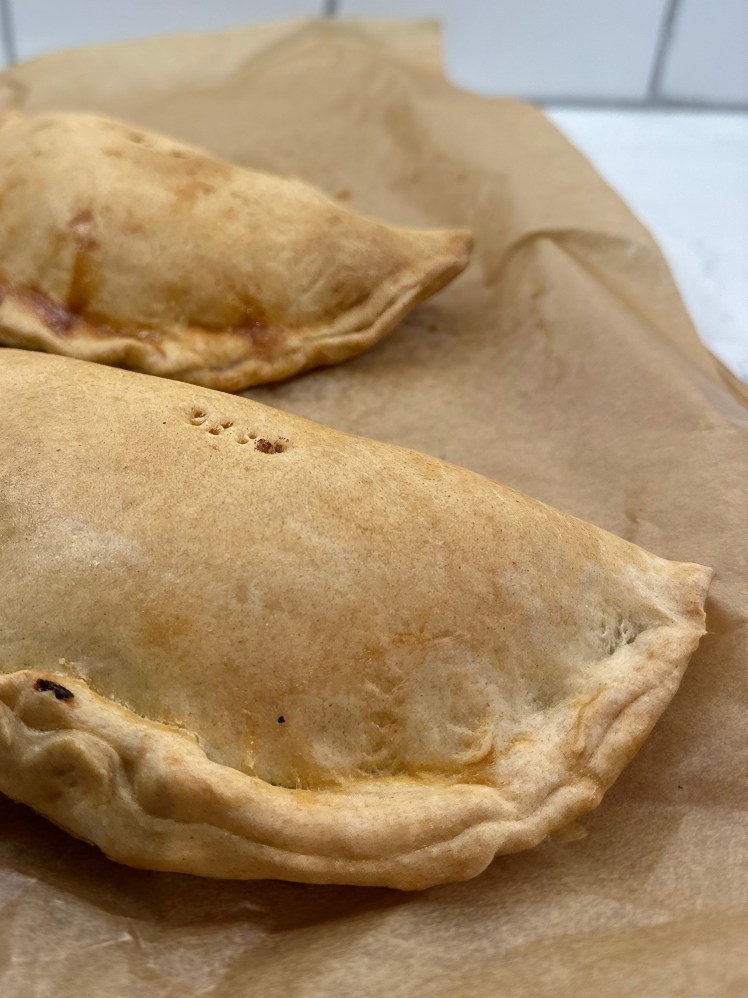
Few dishes are as intrinsically linked to a place as the Cornish pasty is to Cornwall, England. This golden, crescent-shaped pastry has been a staple of Cornish life for centuries, woven into the cultural fabric of the region as both a practical meal and a symbol of local identity. While pasties exist in various forms around the world, the Cornish pasty is protected by Protected Geographical Indication (PGI) status, ensuring that only pasties made in Cornwall using traditional methods can bear the official name.

From the tin mines of the 18th and 19th centuries to modern-day bakeries and family kitchens, the Cornish pasty remains a beloved, hearty dish that represents the resourcefulness and culinary heritage of England’s rugged southwest.


The History: A Miner’s Best Friend

The Cornish pasty’s origins can be traced back to the 13th century, when similar pastry-wrapped dishes were eaten in England. However, it was during the 18th and 19th centuries that the pasty became synonymous with Cornwall, particularly among tin miners. These men worked long hours underground in dark, dangerous conditions, and they needed a meal that was both portable and sustaining.

The pasty was the perfect solution. Its thick, crimped edge served as a built-in handle, allowing miners to hold and eat the pasty without touching their food with dirty, arsenic-laden hands. Some pasties even had a savory filling on one side and a sweet filling on the other, providing both a main course and dessert in a single package.

Over time, the pasty became deeply embedded in Cornish culture, with generations passing down family recipes. Today, it remains an essential part of local food traditions, often celebrated at events like the World Pasty Championships held annually in Cornwall.


What is a Cornish Pasty?

A traditional Cornish pasty consists of a shortcrust or rough puff pastry encasing a filling of beef, potato, onion, and swede (rutabaga), all seasoned simply with salt and pepper. Unlike other meat pies, the filling is uncooked before baking, allowing the ingredients to steam inside the pastry, creating a distinctively rich and succulent flavor.

Key characteristics of an authentic Cornish pasty:

  • Shape: Always D-shaped with a crimped edge along one side
  • Filling: Beef, potato, onion, and swede—never pre-cooked
  • Seasoning: Only salt and pepper; no additional herbs or gravy
  • Pastry: A sturdy yet flaky crust designed to hold its shape

Once assembled, the pasty is baked until golden brown, developing a crispy, slightly blistered crust that locks in the filling’s juices.


Tasting Notes: A Hearty, Comforting Bite

A warm Cornish pasty delivers an immediate sense of comfort. The crust is crisp and slightly crumbly, giving way to a tender, buttery texture that contrasts beautifully with the steaming filling inside.

The beef is juicy and rich, enhanced by the natural sweetness of swede and onion. The potatoes add a soft, starchy element that binds the flavors together. Seasoned with just salt and pepper, the pasty allows the natural savoriness of the ingredients to shine without overpowering the dish.

A well-made Cornish pasty is deeply satisfying, offering a perfect balance of textures and flavors in every bite. It’s substantial but not heavy, making it an ideal meal on the go or a nostalgic taste of Cornwall’s working-class history.


Beyond Cornwall: A Global Favorite

Though firmly rooted in Cornwall, the pasty has traveled far beyond England’s borders. In the 19th century, Cornish miners emigrated to places like Michigan (USA), Australia, and Mexico, taking their beloved pasty with them. Today, pasties remain a staple in Michigan’s Upper Peninsula, where they are often served with gravy or ketchup—a regional twist.

Despite these adaptations, the Cornish pasty remains one of England’s most iconic dishes, a timeless comfort food that continues to tell the story of Cornwall’s history, resilience, and culinary tradition.
New Haven Apizza

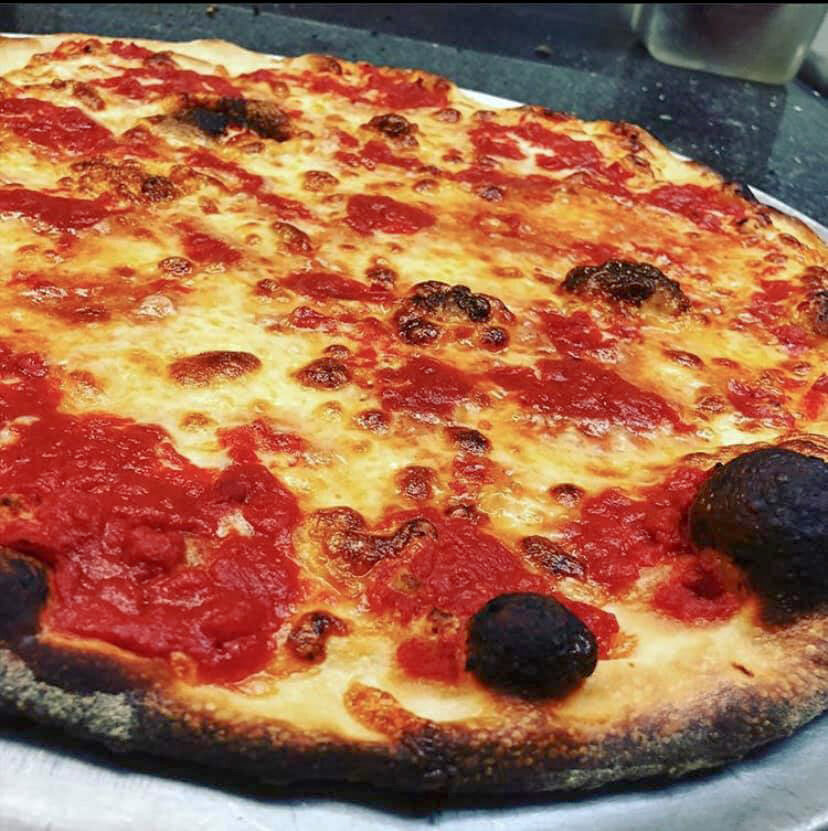
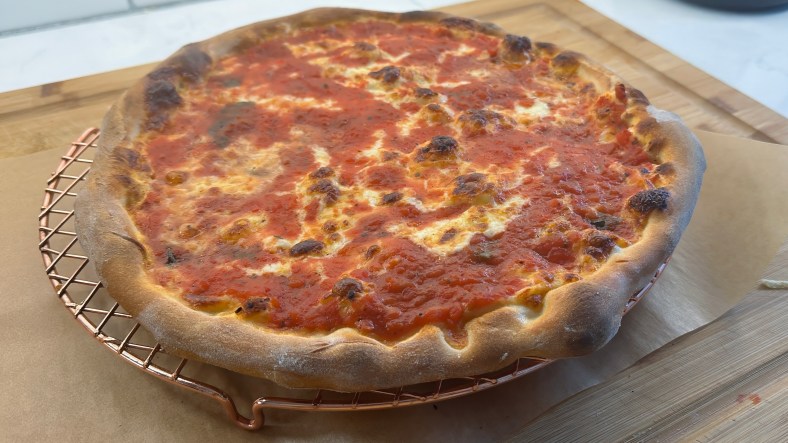
If you think you know pizza but haven’t tried New Haven apizza, prepare for a revelation. This Connecticut-born classic isn’t just a regional variation—it’s an institution. Locals (and pizza purists) will tell you it’s not just pizza; it’s apizza (pronounced ah-beetz, thanks to its Neapolitan dialect roots). And if you’re expecting something soft, foldable, and loaded with cheese, think again. New Haven-style apizza is a blistered, charred, chewy masterpiece that’s as much about texture as it is about flavor.

New Haven’s pizza legacy started with Italian immigrants in the early 20th century, particularly Frank Pepe, the man who put this style on the map. In 1925, Pepe opened Frank Pepe Pizzeria Napoletana, serving up coal-fired pies with his now-famous white clam pizza. Not long after, rival pizzerias like Sally’s Apizza and Modern Apizza emerged, each perfecting their own take on this iconic style. Unlike the more famous New York-style pizza, which leans on a balanced crust-to-topping ratio and a slight crispiness, New Haven apizza is all about the crust—thin, crisp on the bottom, airy inside, and charred to perfection in a coal-fired oven.

Let’s talk about that char. New Haven apizza is intentionally cooked at blistering hot temperatures (sometimes over 600°F), which gives it a signature blackened, crispy exterior. Don’t be alarmed by those dark spots—it’s not burnt; it’s perfectly charred, adding a smoky depth of flavor that’s completely unique. The dough itself is made with high-protein flour, fermented longer than usual to develop complex flavors, and stretched into an irregular, oblong shape—so don’t expect a perfectly round pie.

Then there’s the sauce-to-cheese ratio, which in New Haven is refreshingly sparse. A traditional “plain” apizza (tomato pie) features little more than a thin layer of tangy tomato sauce, oregano, garlic, and a drizzle of olive oil—no cheese unless you ask for it (mootz, short for mozzarella). That’s right, cheese is optional here. Order a plain pie without specifying “mootz,” and you’ll get a saucy, crispy, dairy-free experience that lets the ingredients shine in their purest form. If you do opt for mozzarella, it’s typically applied in moderation rather than covering the entire pizza.

Of course, we can’t talk about New Haven apizza without mentioning its most famous creation: the white clam pie. This local legend, first made at Frank Pepe’s, is an absolute must-try. Imagine a garlicky, olive oil-based pizza topped with freshly shucked littleneck clams, grated pecorino Romano, and a sprinkle of oregano—it’s briny, rich, and utterly addictive. No red sauce, no mozzarella, just pure seafood-meets-charred-dough magic. It might sound unusual, but one bite, and you’ll understand why people drive for hours just to get their hands on it.

Beyond clams, other classic New Haven toppings include hot cherry peppers, sausage, and fresh tomato (which is typically added post-bake for a bright, juicy contrast). But no matter what toppings you choose, the beauty of apizza lies in its balance—crispy, chewy crust, minimalist toppings, and that unmistakable coal-fired flavor.

Despite its deep roots in New Haven, apizza has started making waves beyond Connecticut. Devoted fans and former Yale students have helped spread the gospel of charred pies to other cities, with New Haven-style pizzerias popping up in places like New York, Boston, and even Los Angeles. But for the truest experience, nothing beats the original. Whether you’re biting into a classic tomato pie at Sally’s, indulging in a white clam pie at Pepe’s, or grabbing a crispy, cheesy slice at Modern, one thing is for sure—New Haven apizza is one of America’s greatest contributions to the pizza universe.

So, if you ever find yourself in the Elm City, do yourself a favor: order a large pie, embrace the char, and remember to call it apizza.

Goal Met: Make 50 Different Pizzas

This will be a cakewalk, I said to myself, I make pizza all the time how hard can it be to make 50 different pizzas? Let me tell you dear readers – it was very hard. The first few were easy as I busted out crowd favorites like Neapolitan, Pepperoni, and even a meat lovers. It was about 10 pizzas in when I started to wonder if just coming up with new toppings was a good way to accomplish this.

I did some research into topping combos and came up with a few that looked interesting but as part of my research I started seeing more regional pizzas pop up and it got me interested in how pizza can change as it travels across the world or even across the state. So I did a deep dive and became a pizzaologist. Tracking pizza as it went through all its different iterative changes.

These regional pizzas were still dough, sauce, and cheese but the way they went about it changed and I used my handy research assistant (ChatGPT) to do a deep dive into how Pizza was introduced to these regions and what the history of the style was (you can find these in the individual pizza posts) and it was some fascinating stuff.

Now there are some that argue for one style of pizza as being ‘real pizza’ and I get it. For me it’s a two way tie between a classic NY/NJ slice and true Neapolitan pizza. I get the appeal of Chicago deep dish and the buttery crust of a real good pan pizza and to be honest, I love them all. I’m not an elitist in that way (No, don’t take my NY Pizza card!) but I always come back to the classics when I’m in the mood for a good pizza that scratches that itch.

It was an educational journey and introduced a few new pies into my rotation (such as Apizza or pizza fritte) and there were a few that were just not great such as the steamed pizza. It’s like.. A bao bun with sauce and cheese. The texture was just not what I want from a pizza. The flavor was alright, but man I like steam buns and pizza but not this unholy fusion.

I’m glad I did this and I feel like I can talk about regional / international pizzas with a much more informed opinion having made and tried a lot of them.  The only drawback was I always felt like I needed to be making a new pizza even if I wanted a classic pie. Now that it’s over I expect classic margheritas are on tap for a few weeks to make things simple!

Worldwide Food Tour – England

A Dish Born from Frugality and Tradition

Few dishes in British cuisine are as cherished and steeped in tradition as Yorkshire pudding. Though humble in its ingredients, this golden, airy delight is an essential component of a traditional Sunday roast dinner in England. Originally devised as a way to make the most of a meager pantry, Yorkshire pudding has become a symbol of British culinary ingenuity, transforming simple batter into a crispy-yet-pillowy accompaniment.

Hailing from Yorkshire in northern England, this dish has been enjoyed for centuries, evolving from a frugal side dish to a nationally beloved comfort food. Whether served with roast beef and gravy, as part of a full meal, or even as a dessert with jam, Yorkshire pudding is a testament to the versatility of British cooking.


The History: A Clever Way to Stretch a Meal

Yorkshire pudding has its roots in the 18th century, when it was first recorded as “dripping pudding.” Before ovens had regulated temperatures, large joints of meat were roasted on spits over an open fire, with fat and juices dripping down into a pan placed below. Cooks in Yorkshire realized that if they poured a simple batter of flour, eggs, and milk into that pan, it would puff up and become a satisfying, crispy, and slightly chewy dish—perfect for filling up hungry diners before the costly meat was served.

The earliest known recipe appeared in Hannah Glasse’s 1747 cookbook, “The Art of Cookery Made Plain and Easy,” where it was officially named Yorkshire Pudding. Over time, the dish became a staple across England, particularly as a companion to roast beef in a traditional Sunday roast.

The importance of Yorkshire pudding in British culture is so profound that in 2008, the Royal Society of Chemistry even declared that a proper Yorkshire pudding must rise at least four inches to be considered authentic!


What is Yorkshire Pudding?

Despite its name, Yorkshire pudding is not a dessert like an American pudding but rather a savory baked dish made from a thin, pancake-like batter. It is light and airy on the inside while crispy and golden on the outside.

A classic Yorkshire pudding is made from four key ingredients:

  • Flour – Provides structure and crispness
  • Eggs – Help create a light, fluffy texture
  • Milk – Adds richness and forms a smooth batter
  • Beef Drippings or Oil – Essential for achieving a crisp, golden exterior

The secret to a successful Yorkshire pudding lies in extremely hot fat and a very hot oven. The batter is poured into preheated, smoking-hot muffin tins or a roasting pan with beef drippings, causing an instant sizzle that helps create the classic dramatic rise and hollow center.

It can be made in individual portions (muffin-sized) or as a large, pan-baked pudding that is sliced and served.


Tasting Notes: A Delicate Balance of Crisp and Airy

A well-made Yorkshire pudding delivers a satisfying contrast in textures:

  • The exterior is crisp and golden-brown, with a delicate crunch that shatters slightly as you bite in.
  • The interior is soft, eggy, and airy, almost like a popover or a soufflé, but with a bit more chew.
  • The flavor is rich and slightly savory, enhanced by the depth of the beef drippings if used. However, it remains neutral enough to soak up gravy, meat juices, or even sweet toppings like jam when served in different contexts.

Yorkshire pudding is best enjoyed fresh from the oven, when its textures are at their peak.


How Yorkshire Pudding is Served

1. The Classic: With Roast Beef and Gravy

The most traditional way to enjoy Yorkshire pudding is alongside roast beef, gravy, and vegetables in a Sunday roast dinner. The pudding is perfect for sopping up the rich, meaty juices, adding both texture and flavor to the meal.

2. As a Starter (Old Tradition)

Historically, Yorkshire pudding was served before the main meal, drizzled with gravy. This was a way to fill diners up cheaply before the more expensive meat was served.

3. Toad in the Hole

Another British classic, Toad in the Hole, takes the Yorkshire pudding batter and bakes sausages inside it, creating a heartier, more substantial dish.

4. As a Dessert

In some parts of England, Yorkshire pudding is even served as a sweet dish, topped with golden syrup, jam, or even cream—a testament to its versatility.


Beyond Yorkshire: A Dish Loved Around the World

While Yorkshire pudding is most famous in England, similar dishes exist in various forms across the world. The American popover is nearly identical, and the Dutch baby pancake shares many similarities but leans more toward the sweet side.

Today, Yorkshire pudding is a staple in British households and pub menus, and its reputation continues to spread globally. Whether paired with a roast, sausages, or even something sweet, Yorkshire pudding remains a timeless, comforting delight that embodies the heart and soul of English cuisine.

St. Louis Style Pizza

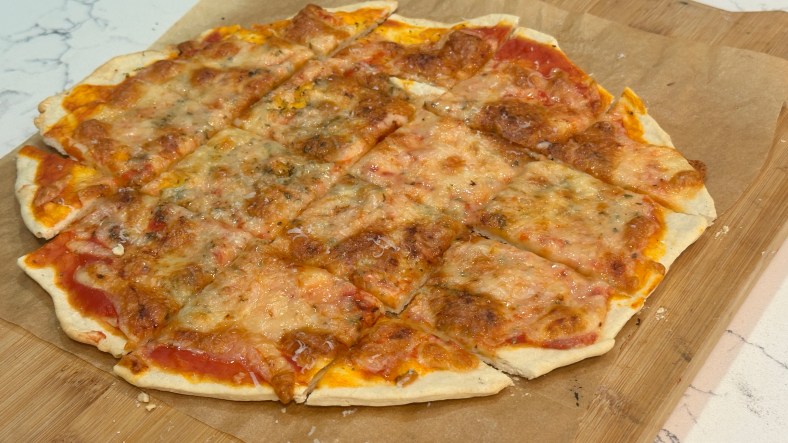
If you’ve never had St. Louis-style pizza, get ready for something totally unexpected. This Missouri-born creation defies every traditional pizza rule in the best way possible—starting with the fact that it’s cut into squares, not slices. That’s right, in St. Louis, pizza isn’t served in the familiar triangle shape but instead in a grid of bite-sized squares, thanks to what’s known as the “party cut” or “tavern cut.” But the unique slicing method is just the beginning of what sets this style apart.

First and foremost, the crust is unlike any other. Instead of a chewy, airy dough, St. Louis-style pizza has an ultra-thin, cracker-like crust that snaps rather than bends. There’s no yeast involved, which means the dough stays flat and crispy, giving each bite a satisfying crunch. This makes it one of the few pizzas that you definitely cannot fold—and honestly, you wouldn’t want to. The crisp texture is the backbone of the entire experience.

Then there’s the cheese—and this is where things get really St. Louis. Unlike most pizzas that use mozzarella, St. Louis-style pizza is topped with Provel cheese, a hyper-local blend of cheddar, Swiss, and provolone. Provel is an acquired taste—it’s ultra-melty, creamy, and has a slight smoky, buttery flavor. While some people love its gooey texture, others find it almost too processed. But for St. Louisans, Provel is non-negotiable. You’ll even find it in toasted ravioli, another local specialty. If you order a St. Louis-style pizza outside of Missouri, chances are they’ll swap in mozzarella, but if you want the real deal, it’s gotta be Provel.

As for the sauce, St. Louis keeps things sweet and tangy. Unlike the bright, acidic sauces of Neapolitan or New York-style pizza, St. Louis pizza sauce often has a touch of sugar, creating a slight sweetness that balances the saltiness of the Provel cheese. It’s usually spread in a thin layer, so the sauce never overwhelms the crispy crust.

And finally, we have the toppings. Since the crust is thin and crispy, St. Louis-style pizza can handle a lot of toppings without getting soggy. Popular choices include Italian sausage, pepperoni, mushrooms, onions, and green peppers, though some places get more creative. One classic St. Louis topping combo is bacon and onion, a salty-sweet mix that plays well with the Provel.

While the “who invented St. Louis pizza?” debate continues, one name always comes up: Imo’s Pizza. Founded in 1964 by Ed and Margie Imo, this family-owned business turned the local style into a full-blown institution. Today, Imo’s is to St. Louis what Domino’s is to the rest of America—a citywide staple with dozens of locations serving up thin, crispy, Provel-smothered pies.

Outside of Missouri, St. Louis-style pizza remains a bit of a cult favorite. Some people can’t get enough of the crispy crust and melty Provel, while others struggle to embrace its unconventional approach. But love it or hate it, St. Louis-style pizza is one of the most distinct and proudly regional pizzas in the U.S. It’s not trying to be New York, Neapolitan, or Chicago deep-dish—it’s doing its own thing, unapologetically.

So, if you ever find yourself in St. Louis, forget the debate over whether Provel is real cheese, embrace the party cut, and dive into a crispy, cheesy, square-shaped bite of Missouri’s finest. Just don’t ask for a slice.

Goal Met: Eat at Michelin Starred Restaurant

When I was younger I worked in various restaurants as summer jobs and really enjoyed the experience. I know it’s probably the naivete of youth but for a while I considered trying to stage at some fancy restaurants in NYC to build a career as a chef (this was before the food network and the age of the celebrity chef) -I ultimately opted out of that dream and continued to cook for various places at the Jersey shore until one of my friends recruited me to come work in IT support as it paid much better and I could sit all day.

I still loved cooking and continue to pursue it as a hobby and I appreciate a restaurant that gets it right, since I have unfortunately worked at places where cutting corners was gospel. So I’ve always wanted to go eat at a Michelin star restaurant and experience a world class dining experience.

I knew I had to go into NYC so I went to the Michelin guide and  filtered for starred places and it came back with a lot of options. I first wanted to go to Per Se as I’m a huge Thomas Keller fan but I couldn’t find a reservation at a time that worked for my and my wife plus the cost of $500 a person before extras was a major factor, especially coupled with my general dislike of seafood as Keller uses a lot of fish in his tasting menus.

I ultimately decided to Torrisi (https://torrisinyc.com/) was the right option for us (Shocker I picked an Italian restaurant). I preferred A La Carte dining as I could ensure the food I was getting was something I would enjoy and I was able to get a lunch reservation which worked out perfect so we could go during the week while our kids were in school.

The menu was simple – which I like as I’d prefer a few things made with exacting care as opposed to a huge menu. I just feel that allows the chefs to perfect their skills.

We walked in and were greeted warmly by the hostess who seated us promptly even though we were 15 minutes early. The servers were attentive and ensured our drinks were replenished and to check on us to see if there’s anything else we needed. The place was beautiful, located in little Italy in the Puck building. 

The dining room features soaring 17-foot ceilings with original crown molding and ornate brass chandeliers. The walls showcase custom murals depicting New York scenes in muted gold and cream tones.

The space is divided into distinct areas: a curved marble bar with leather stools, banquettes upholstered in deep blue velvet, and intimate tables arranged around a central dining room. Brass accents, mirrored panels, and vintage-style sconces create warmth throughout.

The design blends 1920s glamour with modern Italian-American elements: terrazzo floors, leather-bound menus, and custom wine displays. White tablecloths and fine china maintain formality, while exposed brick walls and ambient lighting create a more relaxed atmosphere.

We decided to each get a pasta dish (they were small) and split an entrée. I had a few cocktails (including the signature Torrisi Spritz which was a play on the standard Aperol spritz) and my wife had some white wine.

They brought out some sourdough bread first – soft open interior with a crackling sesame seed crust this was bread as it ought to be. It came with an herb infused butter that elevated the whole experience. It was served twice – once right after we ordered and again with our pasta for “fare la scarpetta.”

We started with their signature ‘American and Italian hams with zeppole’. I know I thought the same thing, zeppoles? But it was something everyone who went there raved about so we tried it and it was a sublime experience. You wrap the super thin prosciutto around the zeppole and pop the whole thing in your mouth. The salt and fat of the ham plays against the slight sweetness of the zeppole creating a compelling contrast – I just wish they had as many zeppoles as pieces of ham because there were three more slices of ham on the plate and I wanted to keep going.

For the pasta I opted for the classic cheese tortellini as that was the dish they are known for. It was tender fresh pasta with just the right amount of bite and the filling was texturally complex with a strong bite of sharp cheese at the end. The sauce was light and flavorful – I suspect it was just tomatoes cooked very briefly as they tasted super fresh. My wife went with the special which was truffle tortellini in a truffle sauce, topped with shaved truffles. That’s a lot of truffles, I thought to myself as she was ordering but it was delicious and I say that as someone who really doesn’t care for the taste of truffles.

The main was chicken alla griglia (we shared it). Perfectly tender chicken with a crackling skin covered with a sauce fragrant with rosemary and oregano. I was surprised at how well the crust on the chicken held up against the sauce. Chicken can be hit or miss in most restaurants so seeing it done to perfection was great.

After dinner they brought us a sampler of ices to help cleanse our palette; Green apple and lemon were selections we were given. Then they brought out a plate of Italian cookies with our dessert menu. At this point, I was getting pretty full but felt like if we were here for the full experience we should try something off the dessert menu. I knew most people recommended the affagatto but I wasn’t in the mood for that so opted for the almond cheesecake.

They brought out a slice of cheesecake that had a marzipan topping piped onto it – we barely finished it between the two of us due to its richness. I mean, it was great but I felt like I needed a nap when we finished. 

Overall it was a great experience. The food was amazing, the ambience and service were good and I felt like I was getting a Michelin star type of experience.

Next up – let’s see what a two or three star experience is like!

Worldwide Food Tour – Senegal

Maafe has its origins in the Manding (Mande) people, who historically inhabited present-day Senegal, Mali, and Guinea. It is believed to have been created centuries ago, when groundnuts (peanuts) were introduced to Africa through Portuguese traders in the 16th century.

Over time, peanuts became a staple crop in West Africa, leading to the development of rich, peanut-based stews like Maafe. The dish spread across the Sahel region, becoming a fundamental part of the cuisines of Mali, Gambia, Guinea, Nigeria, and Ivory Coast.

While Maafe is most closely associated with Senegal, it is widely popular across Francophone West Africa, with slight variations in ingredients and cooking techniques depending on the region.


What is Maafe?

At its core, Maafe is a peanut-based stew, thickened with tomatoes, spices, and vegetables, and often served with rice, couscous, or fufu. The dish’s rich, nutty flavor is balanced by the acidity of tomatoes, the savoriness of slow-cooked meat, and the earthy warmth of West African spices.

Essential Ingredients of Maafe:

  • Meat (or Protein): Typically chicken, beef, lamb, or even fish. Some vegetarian versions use tofu or chickpeas.
  • Peanut Butter (Groundnut Paste): The defining ingredient, giving the dish its signature creamy texture and nutty richness.
  • Tomatoes & Tomato Paste: Adds depth, acidity, and umami.
  • Onions & Garlic: Provide a strong aromatic base.
  • Vegetables: Often includes carrots, sweet potatoes, cabbage, okra, or potatoes for added heartiness.
  • Spices:
    • Ginger & Bay Leaves – For warmth and fragrance.
    • Chili Peppers or Scotch Bonnet – For a spicy kick (Maafe can be mild or fiery!).
    • Cumin & Coriander – For subtle earthiness.
  • Stock or Water: Helps create the luscious, thick sauce.

Some regional versions add coconut milk for extra creaminess, while others incorporate mustard, tamarind, or fermented locust beans for a deeper umami flavor.


Tasting Notes: A Perfect Balance of Nutty, Savory, and Spicy

A bowl of Maafe is deeply satisfying and complex:

  • The peanut butter gives it a creamy, silky texture, coating every bite with rich, nutty flavor.
  • The tomatoes add a bright acidity, balancing the richness of the groundnuts.
  • The meat is fork-tender, infused with the slow-simmered spices and sauce.
  • The vegetables absorb the flavorful broth, adding natural sweetness and texture.
  • The spices and chili bring a gentle heat, making every bite warming and fragrant.

Maafe’s comforting richness makes it the perfect dish for both everyday meals and festive occasions.


How Maafe is Served

Maafe is traditionally enjoyed as a communal meal, served with a starchy base to soak up the flavorful sauce.

Common Accompaniments:

  1. Steamed White Rice – The most common pairing, allowing the peanut sauce to shine.
  2. Couscous – Popular in Senegal and Mali, giving a light, fluffy contrast to the thick stew.
  3. Fufu (Pounded Yam or Cassava) – A traditional West African choice, perfect for scooping up the sauce.
  4. Bread – Sometimes served with crusty baguette (a French colonial influence).

In Senegal, Maafe is often eaten family-style, with people gathered around a large communal bowl, scooping up the stew with rice or bread.


Beyond Senegal: Maafe’s Influence Across West Africa

While Maafe is most famous in Senegal, it has many variations across West Africa:

  • In Mali, it’s called Tigadegena and often includes more vegetables.
  • In Gambia and Guinea, it is spicier and sometimes made with fish instead of meat.
  • In Nigeria and Ghana, peanut stews are similar but use local spices and ingredients.

No matter the version, the rich, nutty, and deeply comforting essence of Maafe remains the same.


Why Maafe is One of Senegal’s Most Beloved Dishes

Rich & Flavorful – A perfect harmony of peanuts, tomatoes, and spices.
Comforting & Hearty – A warming, satisfying meal that fills you up.
Versatile – Can be made with chicken, beef, lamb, fish, or even vegetarian.
A Dish with History – A centuries-old recipe with deep cultural roots in West Africa.
Perfect for Sharing – A communal dish that brings people together over good food.

Whether you’re enjoying it in Dakar, Bamako, or your own kitchen, Maafe is a taste of West African tradition in every spoonful.

Margherita Sbagliata

Margherita Sbagliata is a pizza that turns tradition on its head while still honoring the essence of what makes a classic Margherita so beloved. In Italian, “sbagliata” means “mistaken” or “wrong,” a word that suggests a happy accident or an intentional twist on the original. Much like the Negroni Sbagliato, where prosecco replaces gin for a lighter, sparkling take on the cocktail, Margherita Sbagliata takes the familiar ingredients of a traditional Pizza Margherita and rearranges them in a way that challenges expectations while delivering a completely satisfying experience.

At first glance, it might not even look like a Margherita pizza. The typical structure—red tomato sauce, white mozzarella, and green basil, meant to mirror the Italian flag—is flipped, reimagined, or even deconstructed depending on the pizzeria or chef making it. In some versions, the tomato is no longer the base but instead appears in chunks, roasted or semi-dried, scattered atop a white pizza, where a layer of fior di latte or burrata takes center stage. The result is a pizza that still tastes unmistakably like a Margherita but with a different balance of textures and flavors. Instead of a thin layer of tomato sauce seeping into the dough, the concentrated bursts of roasted or blistered cherry tomatoes add a more intense, almost jammy sweetness that contrasts beautifully with the creaminess of the cheese.

Another version of the Margherita Sbagliata plays with the cooking process, adding the tomato only after the pizza has baked, rather than spreading it onto the dough before it goes into the oven. This method, sometimes referred to as a reverse Margherita, allows the crust to develop a deeper char and crispness without absorbing moisture from the sauce, resulting in a more defined chew and crunch. When the pizza comes out of the oven, crushed or puréed tomatoes—sometimes raw, sometimes lightly cooked—are spooned over the bubbling cheese, creating a fresh and slightly unexpected contrast between the warm crust and the bright acidity of the tomato.

Some interpretations go even further, introducing ingredients like stracciatella, ricotta, or even smoked mozzarella to enhance the richness of the cheese element. Instead of the traditional basil leaf, some versions finish with a basil-infused oil or delicate microgreens, offering the herbal note in a more subtle, modern way. The flexibility of Margherita Sbagliata makes it an exciting canvas for chefs to experiment with while still keeping it firmly rooted in Italian tradition.

Despite the changes in presentation and technique, the fundamental appeal of this pizza remains the same as the original Margherita: a perfect harmony of dough, tomato, cheese, and basil. The “mistaken” part of its name is, in reality, anything but a mistake—it’s a rethinking of a classic that brings out different elements of its flavor profile, sometimes highlighting the brightness of the tomatoes, sometimes leaning into the creaminess of the cheese, sometimes emphasizing the crispness of the crust. It’s a variation that celebrates tradition while embracing the creativity that has always been a part of Italian cooking.

In Naples, where pizza is treated with near-religious devotion, you’re more likely to find the traditional Margherita reigning supreme, but in cities like Rome, Milan, and even international pizza hubs in New York or London, Margherita Sbagliata has carved out a niche as a modern, inventive alternative. Whether ordered in a trendy pizzeria or recreated at home with high-quality ingredients, it offers a fresh perspective on something familiar, proving that even a classic like the Margherita still has room for reinvention.

Goal Met: Pizza Tour (10+ Famous Pizza Places)

OK. So I like pizza. I mean.. you say you like pizza sure.. but not like I do. I don’t think I’ve gone pizza-less for more than a week my entire life. When I was just starting my career and saving money I used to get 2 for 1 pizzas on Tuesdays from the local pizza place and just eat slices of pizza for dinner until I had a few paychecks in the bank and could… get fresher pizza. I mean, one of my goals is to make 50 different pizzas.. during COVID I bought a 50 pound bag of flour and we ate a LOT of pizza.

One of the things I never really did was go visit popular or famous pizza places (sometimes arguing I can make them just as well at home). While I was trying to come up with 50 goals I was really struggling with the last few and thought to myself “You know what, you need to fit more pizza into this” so that’s where this goal came from.

I took in a lot of top 10 pizza lists, reddit rankings, barstool pizza reviews (one bite, everyone knows the rules) and other sources of pizza knowledge to create a list of places I should go. You’ll notice that most of the are in the Northeast which we all know is the mecca of good pizza. Sorry all you other states trying to claim your doughy bread casseroles are pizza.. the tri-state area is where it’s at.

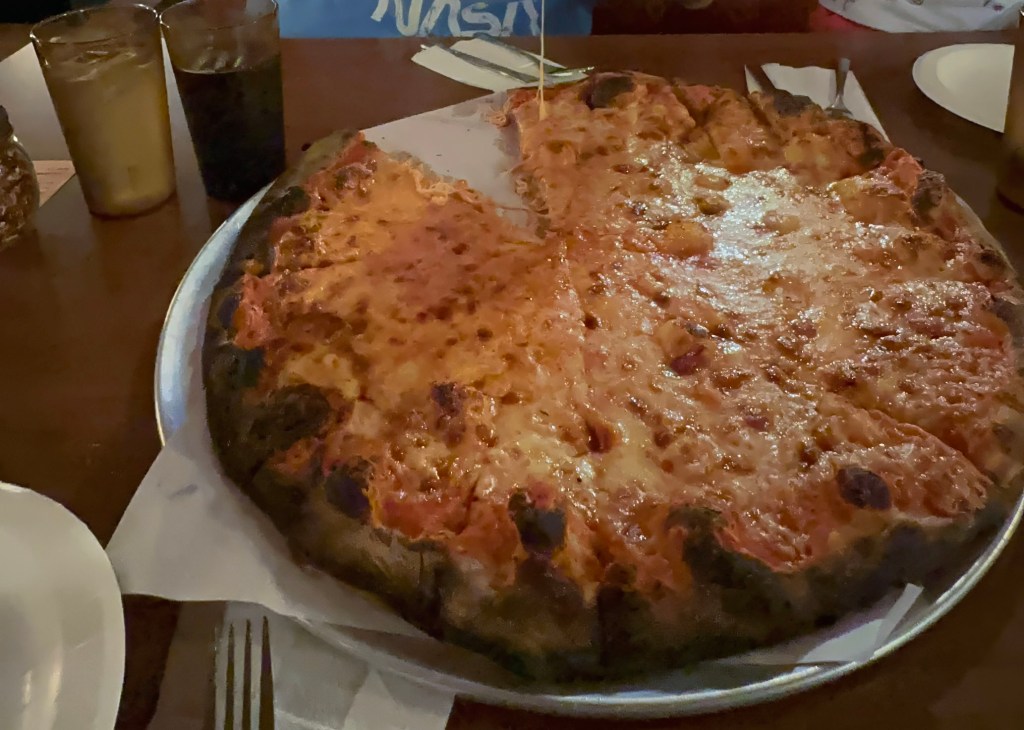
Modern Apizza New Haven, CT
Considered one of the top thee New Haven pizza places – this was recommended on nearly every list I researched. Located away from downtown New Haven in a relatively quiet neighborhood it’s unassuming other than the giant metal slice of pizza sculpture. We got there somewhat early so we didn’t wait for a seat (there was a pretty long line when we left). The place was relatively small but the service was fast and the pizza arrived perfectly charred with a strong tomato aroma. The first slice had an epic cheese pull – they don’t skimp on the cheese here! It had a strong tomato taste and chewy tangy cheese that melted altogether into what I consider a perfect slice. The crust was thin and crispy but strong enough to hold up all that cheese and had it’s own character.

Score: 9.2

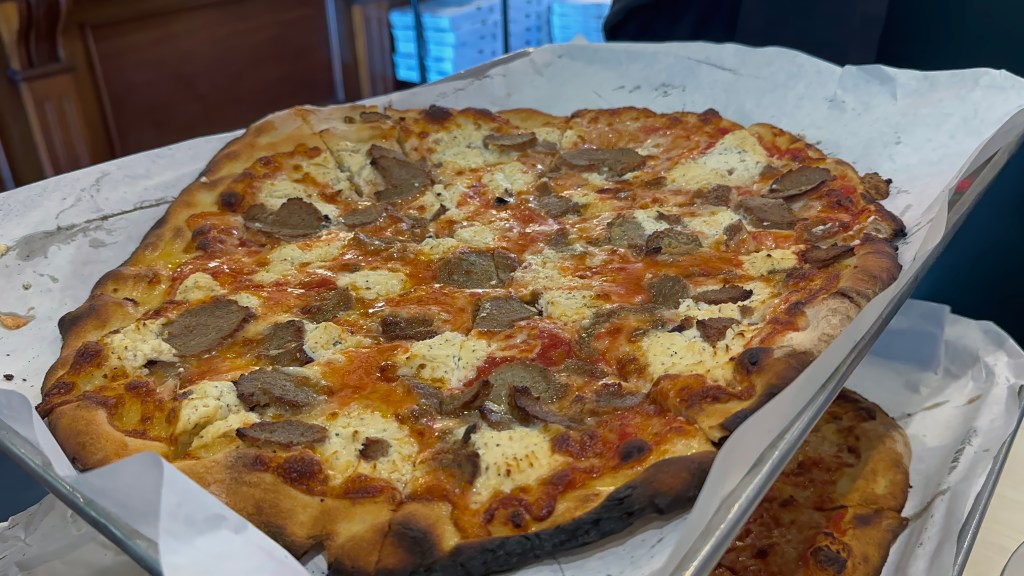
Frank Pepe’s Pizza – New Haven, CT
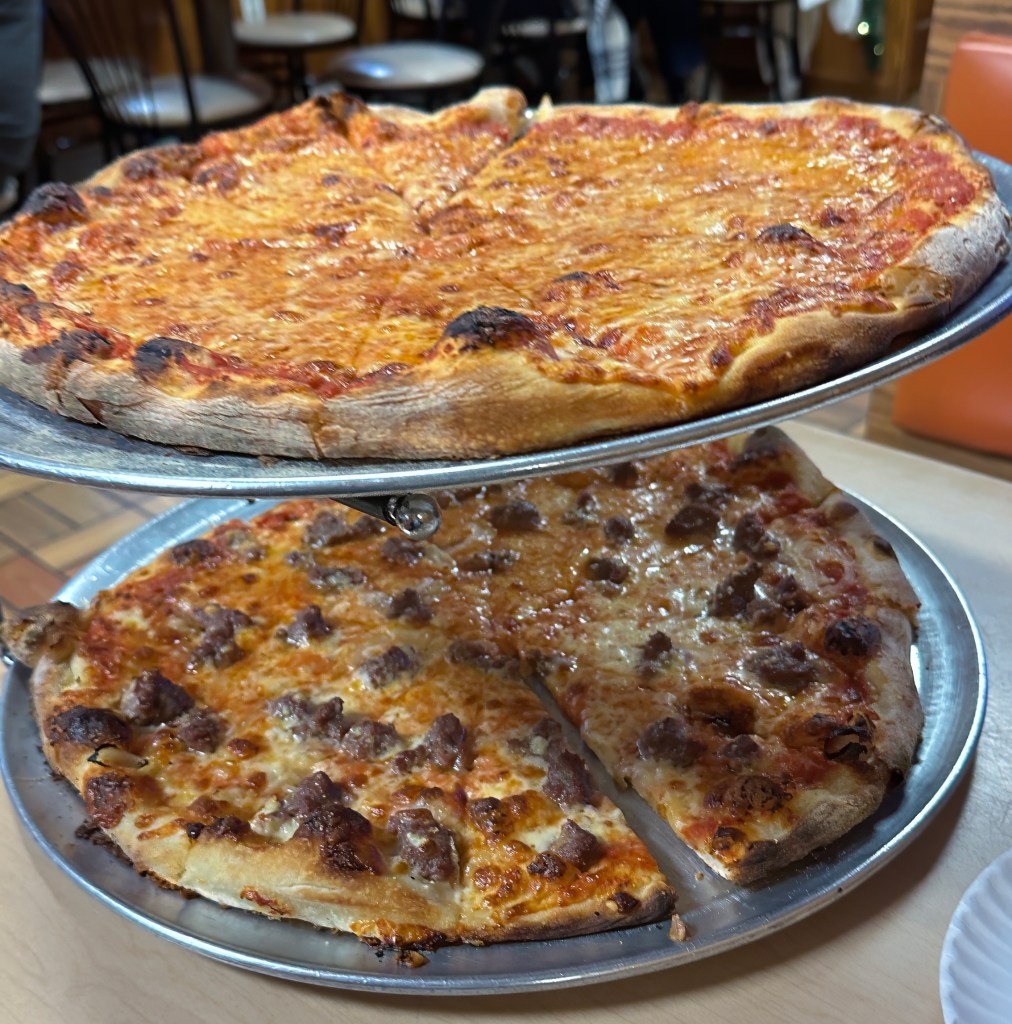
The second of the big three, this is one I’ve been to before. It’s one of the most popular pizza places (as well as the oldest) and as such there’s usually a long line. On super busy days they open an overflow seating area but I’ve never been there when that has happened so I got to sit in the main restaurant. It’s a treat because the pizza oven is visible from the front room and you can see the staff working like a well oiled machine feeding the pizzas into the coal fired ovens with excessively large pizza peels. This time around I got my usual cheese pizza but also ordered a meatball pie with ricotta. The pies arrived in a timely manner and the cheese pizza was nice and charred. The sauce wasn’t too heavily spiced and they had a really light hand on the cheese. Even with the light hand there was some oil pooling which detracted from the experience. The crust was thin and crispy with little to no dip when you picked up the slices. The meatball pie with ricotta though was a revelation – instead of dabs of ricotta like most pizza places they dabbed on ravioli filling and each bite of the filling was amazing. I can see why this place is so popular – even after so many years they are still slinging some high quality pies.

Score 8.9

Papa’s Tomato Pies – Robbinsville NJ

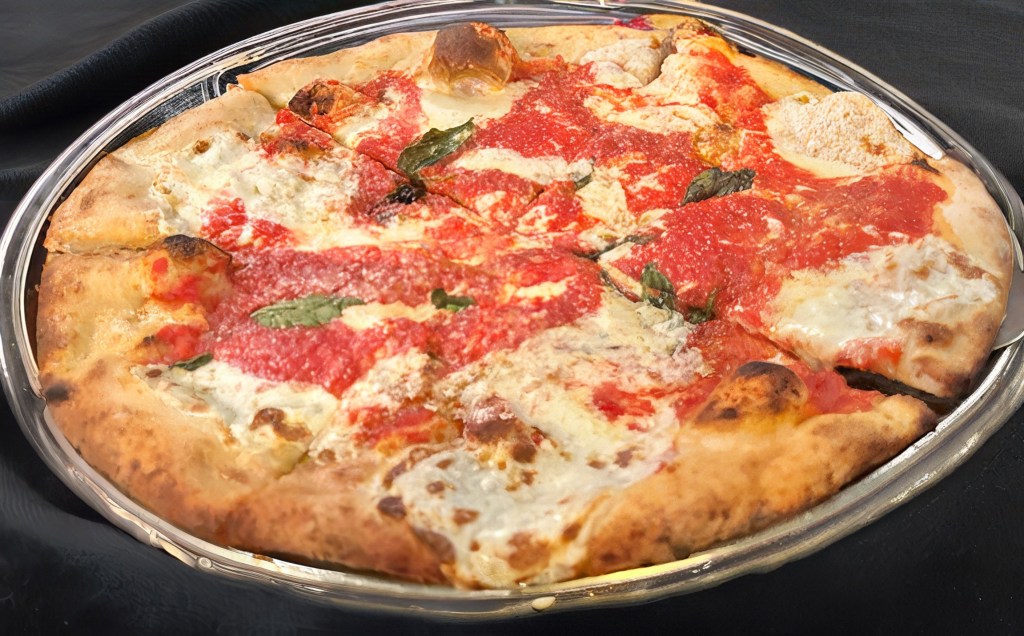
Located in Robbinsville NJ (originally from Chambersburg in Trenton until they moved about 15 years ago) this iconic tomato pie place continues the trend of famous pizza places located right next to other (see Sally’s and Pepe’s) as DeLorenzo’s is right down the road. Tomato pies are a bit of a misnomer as they aren’t like Philly tomato pies (an abomination they dare to call a pizza) they just put down the cheese first then sauce it with hand crushed tomatoes and a dusting of spices/cheese. The crust is well done but not charred like New Haven style and the tomatoes are sweet which is a great counterpart to the savory cheese that they use. They offer a mustard pie which is intriguing but I opted for the straight plain pie which is the bar I rate each place at. There’s quite the debate amongst the locals which one is best – I side with Papa’s as they hit the right amount of well done with the pie while DeLo’s can come out really dry and overcooked.

Score: 8.7

DeLorenzo’s Tomato Pies – Robbinsville NJ

Located right down the street from Papa’s this place was also originally in Trenton before they moved to Robbinsville. There’s two locations in the area – this one which is based off the original and another one by the train station in Hamilton. I prefer this place as it feels more authentic. The pizza is cracker thin and really well done. The tomatoes are sweet and they use a good amount of cheese. They also cut the pizza in random shapes which I’m sure is a cute way to be different but it ends up with huge slices and tiny side slices. Just cut it into 8 slices – lets be civilized. They have a no Parmesan cheese rule which I support and here’s an important caveat: These pizzas do not travel well. You can get them to go but its a completely different experience. You need to eat them in the restaurant right out of the oven for the optimal experience. I’ve eaten here a few times and it’s hit or miss with how well done it is. Sometimes it is legitimately overcooked and dry and sharp crust splinters attack your gums like an angry wolverine. However when they hit the mark it really is an amazing pizza experience

Score: 8.7

John’s of Bleecker Street – NYC

Consistently at the top of NY Pizza rankings; John’s is a tiny pizza place on Bleecker street offering up some traditional NY style pizzas. Waited in line for about 40 minutes on a Saturday night (I was already in the city with friends and we wanted some good pizza) and got stuffed into a tiny booth with barely any room to breathe let alone eat. Ordered the plain cheese and the white pie – both highly recommended. The pizzas came out pretty quick – most likely due to the fact they had so few booths in the place they really needed to move pies to get that turnover they want. The cheese pull was fantastic and the dough was crispy and flavorful. The sauce was very simple – just some crushed tomatoes but it tasted a bit flat – I suspect it needed some salt or something else to dress it up. I enjoyed the very old school decor and ambiance – it felt very old NY.

Score: 8.5

Grimaldi’s – NYC

Classic Neo-neapolitan pies – not crispy like NY, or soft like Naples somewhere in the middle. This time around we hit up the one that was located in what used to be the Limelight nightclub. It was a bit of a mental struggle to reconcile my memories of the club with taking my kids there for pizza. Of course I didn’t fill in the kids about all the fun I had there.. but I did explain to them people used to come here to listen to music and dance. They seemed to get a kick out of that. The pizza came out pretty fast but like John’s the cheese/sauce lock was off and there was a bit too much bare crust at the edges. However the sauce as really savory and packed full of flavor and the cheese was a great balance. It really was a great tasting pie and I’d say comparable to the one located in Brooklyn. Overall the balance was just right and the crust was light and a bit crispy – the sweet spot for this type of pizza.

Score: 9.1

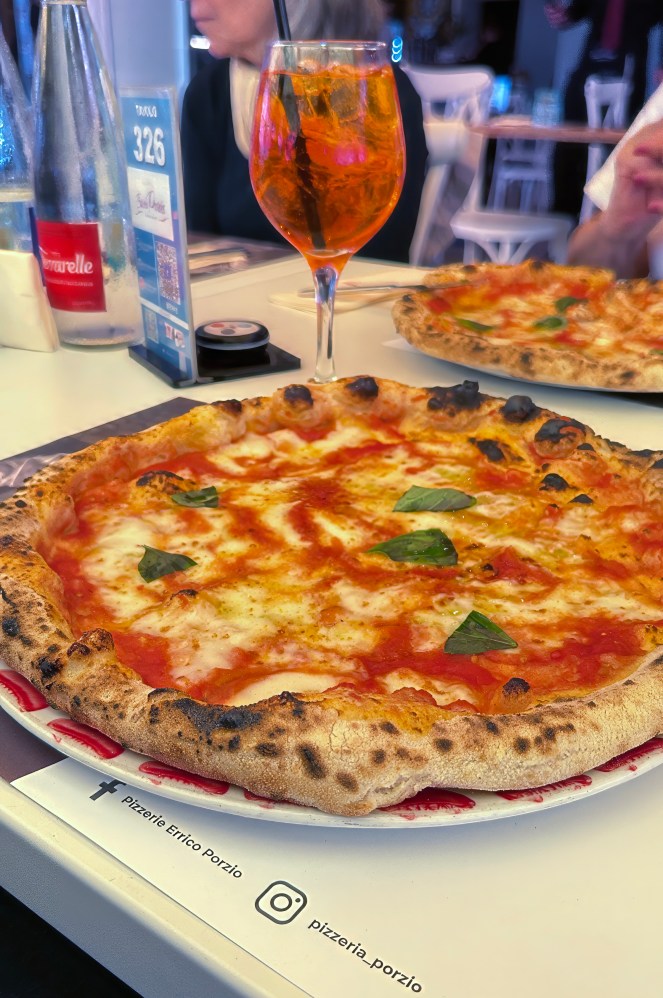
Pizzeria Errico Porzio Lungomare – Naples, Italy

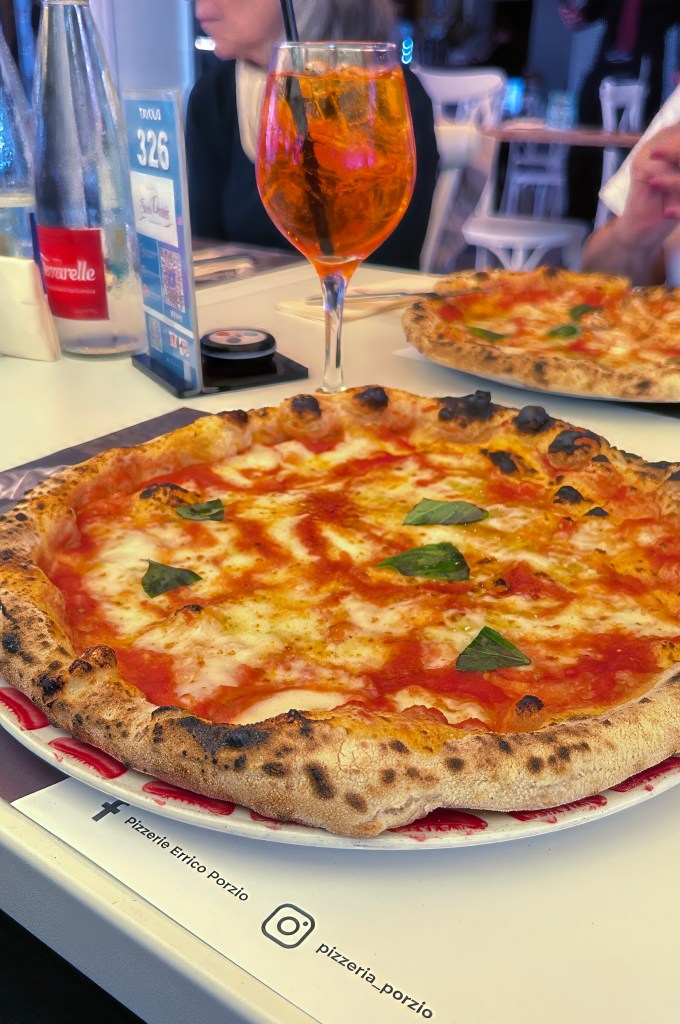
One of my goals this year was to visit my father’s home town in Italy and see the family I had there. I explained to them that I was looking for the best Neapolitan pizza they had and he really talked up this pizzaolo Errico Porzio – showing me his Instagram and saying he’s a pretty big deal in Naples. One afternoon we’re walking along the Lungomare and my step mom is starving so I try to be helpful and say ‘Che Ore Mangiamo?’ to my cousin and we just happened to be right by this pizzeria so we stopped in to see what all the fuss is about. I of course just got the classic margherita pizza (with the obligatory spritz) – if you’re going to the source you need to get the classics! Maybe it was the hype, the fact I was in Naples facing the bay with Vesuvius in the background.. but this had to be one of the best pizzas I’ve ever eaten. The dough was soft but with a hint of crunchiness, the sauce was unadorned and has that san marzano sweetness.. the kiss of the wood fire. Just.. 🤌 Bonus: As I was getting ready to leave my cousin notices Errico walking through and calls him over to take a photo with me which was a pretty cool experience. I tried to express how good the pizza was in Italian then he asked me some rapid fire questions in Italian and I had no idea what he said haha

Score: 9.8

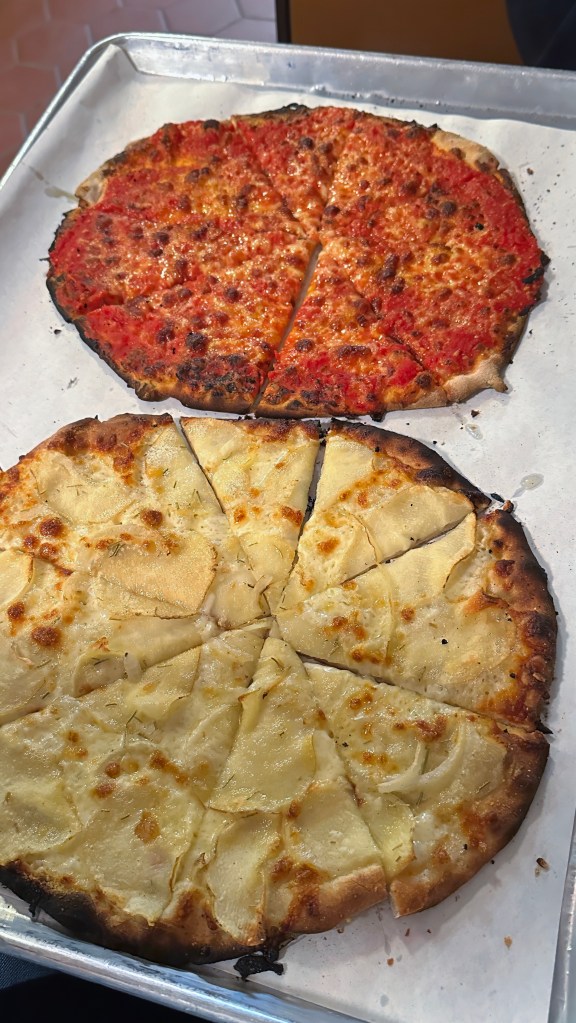
BAR – New Haven CT

I wasn’t sure about this place – the people on the internet were raving about it but it just seemed like a brewery which happened to serve pizza which I wasn’t optimistic about. I was in New Haven with a buddy for a quick pizza run so we decided to try a new place and see what the hype was. We got there and had to go to the bar to order – and we decided to order two medium pies (we were hungry) one plain and one white pie. We also got a few beers to tide us over – mine was a cherry wheat beer that really was quite good. When the pies arrived I though we made a mistake the medium pies came out in a full sheet pan. They where massive. I don’t even want to know what the large pie was served on. Daunted by the acres of pizza in front of us we dug in. The sauce was flat and lacked any real flavor – it was almost watery and the cheese was overcooked and dry. The crust was extremely thin and cracker like but lacked any defining flavors. The white pie fared better but the garlic in it was a bit overpowering I think to compensate for the lack of flavors elsewhere. Overall a middling experience – It’s still pizza in the end but after eating at the other New Haven spots this really didn’t live up to the hype.

Score: 6.2

Zuppardi’s – New Haven CT

Another highly recommended place, it as a bit off the beaten path in West Haven CT in a residential neighborhood. It really seemed out of place it’s all just residential houses then BAM pizza place.. then more houses. I suspect it was here before the neighborhood rose around it. Either way it was a bit different from the other New Haven spots in that it used a gas oven and put out pretty standard round pies. We ordered the usual plain cheese then a meatball and onion. The cheese pizza was pretty good – nice char on the crust, tangy sauce and a lot of cheese but it didn’t stand out compared to other New Haven spots and really felt like a NJ/NY pie. The meatball pie was interesting that the onions were sliced so thin they melted into the sauce and provided a kick of flavor without the usual onion texture. I was so impressed I ordered a fancy mandolin the next day so I could start experimenting with super thin slices of toppings. Overall a really good pizza but nothing about it made it stand out compared to all the other spots I visited.

Score: 8.2

Sally’s – New Haven CT

I’m going to tiptoe the line of heresy here and say I really don’t care for the apizza at Sally’s. The sauce has way too much going on, the cheese is a bit heavy and it takes forever to get your pizza (easily the longest wait I’ve had this year). I understand for some people it’s their favorite of the big three but the couple of times I’ve eaten here I’ve been underwhelmed. Now, I’m not saying it’s not good – it’s just not the pizza I like. I like my sauce to be plain – I sauce my pizzas with just tomatoes and a bit of salt. When you start doctoring your sauce to amp up the flavor you start to lose me. The person I was with loved the pizza and rated it higher than some of the other places so I can see that it’s completely subjective. The pizza had a good char and generous toppings so I can’t find fault there but all this being said this is me rating pizzas that I am eating so the score will reflect that it’s not something I particularly enjoy.

Score: 8.0

Federicis – Freehold NJ

I’m not sure this rises to the level of ‘Fame’ but if does show up quite frequently in “Best Pizza in NJ” lists. The crust is thin – I mean really thin – it was such a crispy and thin crust that I ate 4 slices and barely felt full. The plain cheese is good with a nice mozzarella stretch and the sauce is lightly flavored but tomato forward. The only issue I had is that I was expecting the thin crust pizzas to be approaching well done but this pizza was very light – I felt like it was taken out of the oven a bit too early as the crust was a pale blonde color with just a little bit of char on the ears. I still enjoyed the pizza but the under cooked cracker thin crust gave it a bit of a bowling alley pizza vibe that it had to work hard to overcome.

Score: 7.8

Worldwide Food Tour: Mexico

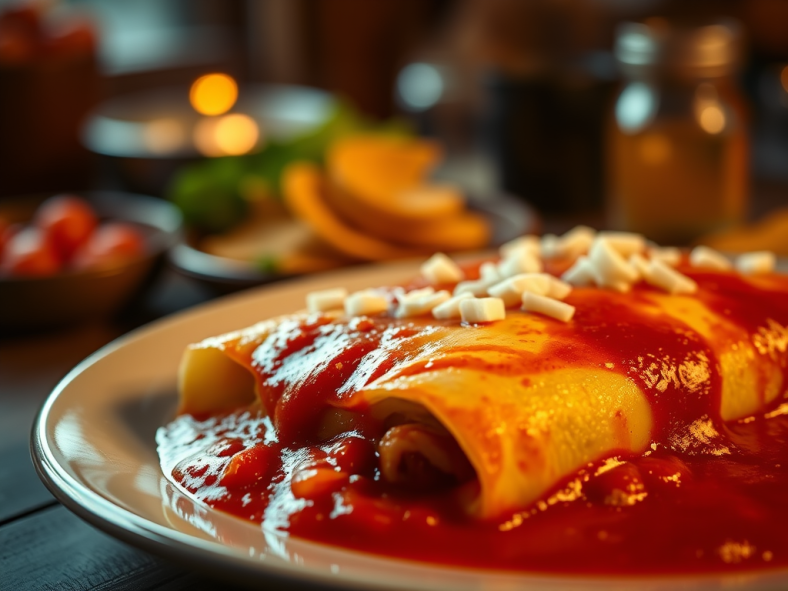
[Note: Stock Photo Used as I didn’t take photos of this dish for some reason]

Now, I love Mexican food. I don’t eat it as often as I’d necessarily like but it always hits the spot. The thing is, other than Tacos I rarely make Mexican food at home. Which is a shame, because it’s a simple food that relies a lot on quality ingredients (much like cucina Italia). This was the first country I hit on the 50 country tour and it was because I was really craving some cheese enchiladas but instead of ordering them from the local Mexican place I decided to make them on my own.

The process wasn’t that terrible hard – just some Mexican cheese, monterrey jack cheese, and the wrappers and a quick tomato based sauce and toss it in the oven. Finish with onions (hold the cilantro please.. yes I’m one of those people) and there you go.

It was a simple dish to put together but very filling on a cold winter night – a nice cerveza to go with it and I’d call that buenos noches.