The STRONG framework

When I began this journey of 50 for 50 I knew exactly what I wanted to achieve, yet my approach was vague. I jumped in enthusiastically, tackling tasks at random and celebrating early victories. But around the six-month mark, things shifted. The initial easy wins faded, leaving me in what can generously be described as a slog.

At this turning point, I paused to reflect. My loose methodology—guided by unwritten rules—needed structure. I combed through my notes, carefully identifying successful behaviors and pinpointing obstacles. I had my insights, but what now?

Influencers often have catchy acronyms for their frameworks, so I brainstormed names. Nothing stuck until I revisited an earlier entry that emphasized the concept of finishing strong—pushing forward even when victory seemed uncertain. That resonated deeply, inspiring the creation of the finish STRONG framework for goal setting and achievement.

Let’s dive into this empowering framework:

Start Small – Commit to doing just one thing each day to progress your goals. Even on your busiest days, five minutes is enough: read a page, sketch a quick idea, jot down tomorrow’s task. This daily action trains your mind, signaling that your goals matter. Eventually, you’ll instinctively feel the need to keep progressing, and skipping a day will feel like something vital is missing.

Transform Habits – Humans thrive on habits, which makes them powerful tools for change. Start small, choosing manageable habits. The book “Atomic Habits” emphasizes how tiny, incremental changes lead to remarkable transformations. Its key lesson—align your habits with your desired identity—deeply impacted me. While I learned that habits often take longer than the popularly cited 30 days to solidify, persistent effort eventually made these behaviors automatic, seamlessly integrating them into my daily routine.

Rebuild Mindset – Among the framework’s elements, mindset is pivotal. To achieve significant goals, you must reinvent how you see yourself—not as someone who might succeed, but as someone who will succeed. Shifting your self-perception eliminates room for hesitation. My mindset transformation was personal; embracing stoicism profoundly changed my worldview, strengthening my resolve and clarity.

Overcome Obstacles – Despite meticulous planning, setbacks are inevitable. Injuries, overwhelming workloads, illnesses, family obligations—each can derail your progress. But it’s not the obstacles themselves, rather your response, that defines your journey. “The Obstacle is the Way” articulates this beautifully: viewing challenges as opportunities to build resilience and strength. Its three-part framework—clearly perceiving obstacles, taking decisive action, and wholeheartedly accepting difficulties—helps cultivate an unwavering spirit and determination.

Never Quit – You will face moments of deep frustration, when progress stalls or even reverses. Giving up becomes tempting, rationalized by thoughts like, “Who would care if I quit?” The answer is simple: You would care. Abandoning your goals creates subtle self-doubt, convincing you that you lack perseverance. Resist that temptation. Slow down, adjust your timeline, but never surrender. Persistence ensures you ultimately achieve the greatness you envisioned.

Gather Data – Tracking progress became essential in my journey. Initially, I relied on a notebook (OneNote) for quick notes and recaps, keeping everything organized. But it was the Google Sheet that truly elevated my motivation. Each goal had its own tab, and a summary sheet visually tracked my progress through checkboxes and color-coded progress bars. Seeing bars turn blue at 100% completion sparked excitement, reinforcing accountability and highlighting areas needing immediate attention.

This finish STRONG framework transformed my approach from chaotic optimism into structured success, ensuring every step forward was intentional, meaningful, and enduring.

I Did It.

Wow. That was quite a journey. I’m honestly still processing the fact that I managed to complete everything. Looking back, I’ve spent over two decades setting goals, and the highest I ever reached before was maybe 60% completion—and that was with a modest list of just ten goals. When I first considered taking on this challenge, I almost talked myself out of it, remembering past failures. But turning 50 flipped a switch in me. I figured I might not succeed, but I knew I’d regret it if I didn’t even attempt it. Maybe not the most optimistic mindset to start with, but if this experience has taught me anything, it’s that with discipline and structure, you can fundamentally shift how you approach things.
Coming up with 50 goals was an adventure in itself. The first few were easy—I pulled from old, unfinished goals and added new ones that felt both exciting and challenging. But once I hit the 30-goal mark, I struggled. That’s when I had to shift my perspective. I started thinking about what turning 50 really signified. I reflected on what I had accomplished, what I had always wanted to do but never got around to. And then it hit me: I had spent years assuming there would always be time. But what if there wasn’t? Shouldn’t I seize the moment now, while I still had the energy to truly enjoy it? That realization changed everything. Suddenly, the list filled itself. Visiting my father’s hometown in Italy. Buying my dream guitar. Sipping on really old Scotch. Once I reframed the process, it became much easier to round out the list. I even left a few open slots, which I later filled with “Explore AI” and “Complete a Bob Ross painting tutorial.”


As I got deeper into rounding out the 50, I found myself turning to the internet for inspiration. Seeing what others had on their goal lists helped me refine mine. Some ideas resonated, some didn’t, but the process helped me think outside the box. And ironically, one of my late additions—learning about AI—ended up being a game-changer. AI became an essential tool throughout the year. With a goal of blogging about my experience, I faced an immense workload, closing in on nearly 300 posts. Without AI’s help in researching topics, I would have been buried under the effort. I even used AI to critique my writing, offering an unfiltered, sometimes ego-bruising editorial lens that ultimately improved my work.
To keep myself accountable, I knew I needed rules. Once the 50 goals were set, I committed to not altering them to make things easier. But I’m also pragmatic—life happens. In the early months, I tore something in my shoulder, which derailed my fitness-related goals. So, I built in a contingency: I allowed myself to swap out five goals if necessary. This gave me a degree of flexibility while ensuring I didn’t just swap out challenges for convenience. I ended up using four swaps (documented on my website), and two of them were due to physical limitations rather than avoidance.


So how did I pull this off while managing a full-time job, two small kids, and a marriage? With structure. I built a framework that allowed me to make progress without compromising what truly mattered.
The first rule: priorities first. My family always comes first—no exceptions. I didn’t pursue these goals at the expense of time with my kids or my wife. I still coached my kids’ teams, played with them on weekends, and handled all the usual parenting duties. I made sure my wife and I kept our Friday lunch dates, giving us uninterrupted time together. And work? That stayed a priority too. I enjoy my job and wasn’t about to let this project interfere with my professional commitments. With those priorities locked in, anything else became negotiable.


The second rule: do something every day. Even on chaotic days—work was crazy, the kids had back-to-back activities, and my wife was out of town—I could still do something. Read a few pages of a book. Practice Italian on Babbel for five minutes. Write a quick gratitude journal entry. Even brushing my teeth at night, I could squeeze in a small action. The consistency was the key. After a few months, it became so ingrained that skipping a day felt like a glitch in my system. These small, daily efforts accumulated, creating momentum that accelerated progress over time.


The third rule: find hidden time. It’s there if you look for it. That hour-long commute? Perfect for listening to educational podcasts or checking off an album from my music list. Instead of doom-scrolling my phone during lunch, I’d read, write, or learn something new. Even waiting for my kids to finish practice became an opportunity—reading on my Kindle, researching goals, or sketching ideas. Once I stopped treating time as something to kill and started seeing it as something to use, my productivity skyrocketed.


The final rule: track everything. This was huge. I needed to see my progress at a glance, so I built a spreadsheet with progress bars and a dashboard to keep me motivated. If one goal was lagging, I’d shift focus to bring it up to speed. As the months passed and those bars turned blue, I felt the inertia pulling me forward. That visual reinforcement made a huge difference. I also used OneNote to collect ideas, notes, and drafts, which kept me organized and efficient. These tools gave me a comprehensive view of where I stood at any given moment.


As the year progressed, I started identifying areas of wasted time and replacing them with intentional actions. Little by little, I started to see myself as someone who followed through, rather than someone who set goals only to abandon them. That shift in self-perception was a turning point. Once I hit 75% completion, I could see the finish line. In the last 60 days, I went into overdrive, laser-focused on getting everything to 100%. I don’t think I could have sustained that level of intensity for an entire year, but as I neared the end, it felt like shifting from marathon pace to an all-out sprint.


But of course, there were downsides. Sustaining focus for an entire year was mentally exhausting. Between work, family, and this challenge, there were weeks when I was completely burned out. Fortunately, some of my goals—meditation, hiking, drawing—helped counteract the stress. On particularly rough weeks, I leaned into those activities, taking long hikes with my kids to reset. Still, there were stretches, especially in the summer, where I did nothing, and guilt crept in. Eventually, I realized that guilt was unnecessary. I wasn’t trying to become a productivity guru or a social media influencer—I was just a 50-year-old guy trying to accomplish something meaningful. And as I watched my goals falling one by one, I realized that even with breaks, I was still on track.


Another major downside? Free time took a massive hit. Movies, TV, video games—I barely engaged with any of them. I didn’t play a single hour of video games all year, missed most new film releases, and barely kept up with my sports teams. (Not that the Jets gave me much to miss.) These things might not be “productive,” but they’re enjoyable, and I realized I missed them. Sometimes, you just want to unwind and watch your favorite team blow a late lead.


Ultimately, I learned so much from this experience—not just about discipline and productivity, but about balance, adaptability, and what really matters. There were tough moments, but overall, I’m glad I did it. And now, looking ahead, I’m excited to see where these lessons take me next.

Goal Met: Design and Print 5 3D Print Projects

So yeah – I work in a 3D print lab with access to the latest cutting edge technology and I got a 3D printer for my house when I got the job to really deep dive into the technology. I spent months printing out other people’s projects from various maker sites but I really wanted to learn how to make my own cool stuff. The only issue was I haven’t touched a CAD tool in a very long time and when I fired up the most recent version of Fusion 360 I was at a total loss.

The first step was getting some CAD training – LinkedIn learning came in handy here as there was a really informative Fusion 360 class that explained everything I needed to know in just a few hours, so I set to work doing CAD development for 3D printing.

The first thing I did was create a little tombstone for an application that I supported for over a decade as it was finally retired and removed from production. I can’t say I was sorry to see it go (as the software was 10 years old and a giant pain to support) but a little token in my office seemed like an appropriate send off.

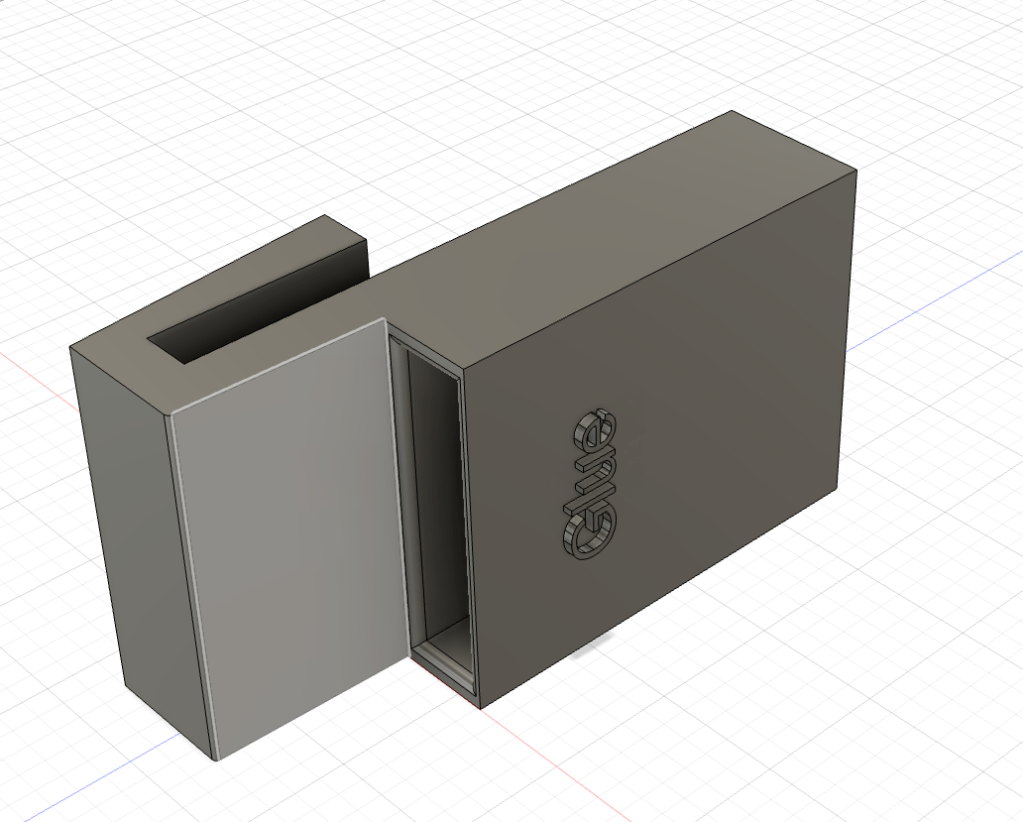
Next up was creating some holders for the kid’s craft carts as they were always losing the glue and scissors so I got to work measuring and creating a holder that could hang off the side of the cart (only I got the sizes all wrong and the first version was way too small) it’s a pretty niche product but filled a need so I was kind of proud of it

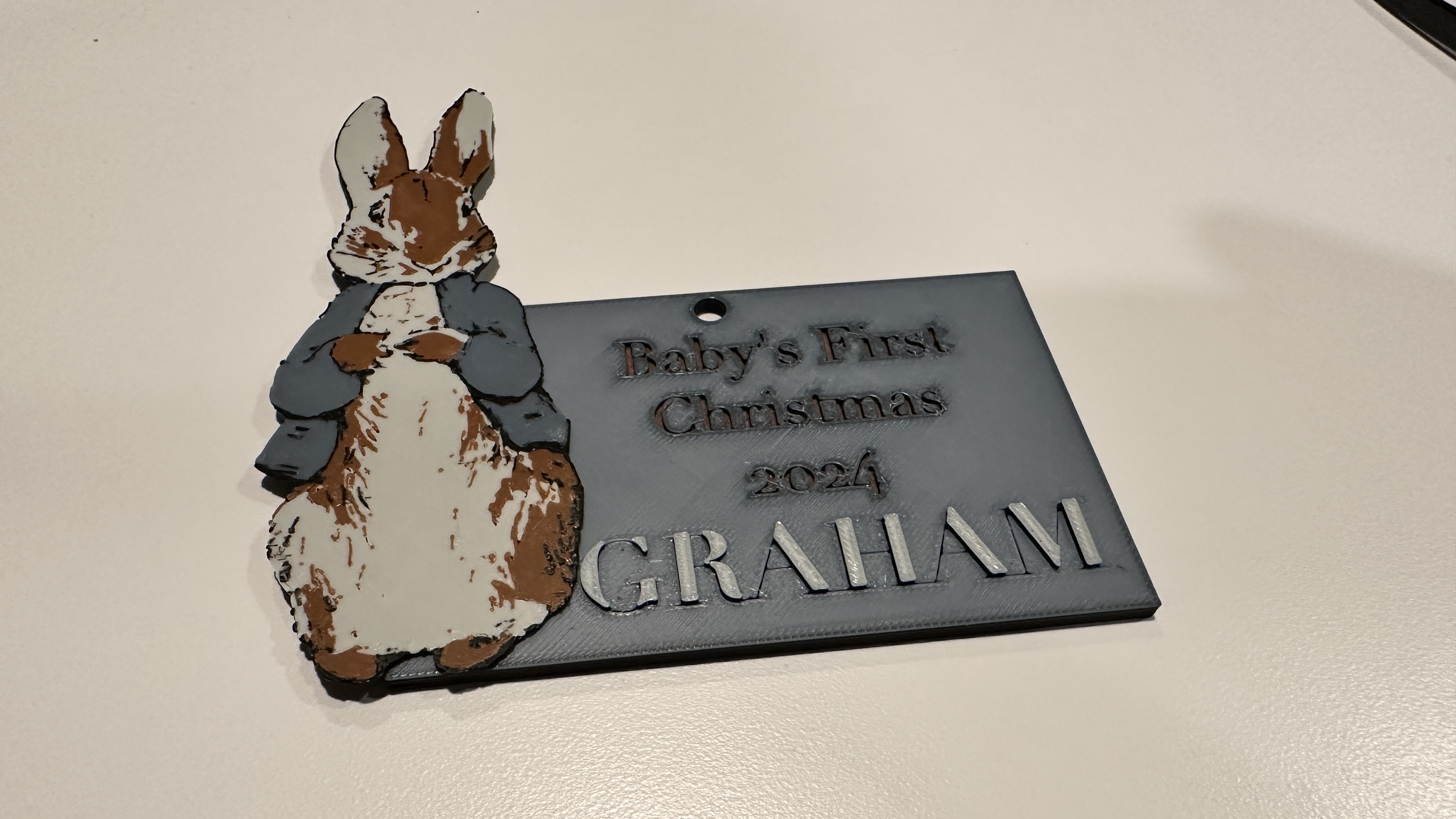
Then I created a few Christmas Ornaments – one to commemorate our trip to Disney, and one for my nephew’s first birthday. These came together pretty quick and using Bambu print’s keychain maker allowed me to turn JPG images into 3D print objects which came in super handy for this project.

My daughter came to me and complained that her new backpack didn’t have enough space for all her keychains (that’s a thing now, I guess) so I surprised her by making this nifty keychain extender that allowed her to add as many keychains as she wanted!

Finally I was working with my son on his pinecar derby car and we needed a place to hide the weights to make it more aerodynamic so I printed a ‘cockpit’ for his car that could glue the weights to and hide them. It was fun learning the shell command to hollow out a solid object – that’s going to come in useful I’m sure!

I really enjoyed this process and learning how to use CAD to design and print things. I’m looking around my house now for things that 3D printing can solve and as I build my skills I’m hoping I can tackle more complex projects but for now I’m pretty excited for the things I made so far (this was one of the hobbies that kinda got put on the back burner once I was done so make time for other goals, but I hope to revisit it frequently this coming year)

Worldwide Food Tour – Cuba

If there is one dish that embodies the soul of Cuban home cooking, it’s Picadillo. This hearty, flavorful ground beef stew is a staple of Cuban cuisine, found in homes, cafeterias, and family gatherings across the island. With its perfect balance of savory and sweet flavors, Picadillo is a dish that reflects Cuba’s rich culinary history, blending Spanish, African, and Caribbean influences into a comforting, satisfying meal.

Picadillo is more than just a beef stew—it’s an essential part of Cuban identity, a meal that every Cuban family has their own version of, passed down through generations. Often served with white rice, black beans, and fried plantains (plátanos maduros), Picadillo is simple, affordable, and deeply comforting.


The History: A Spanish Dish with Caribbean Flair

The origins of Picadillo trace back to Spain, where a similar minced meat dish was prepared with tomatoes, garlic, and spices. When Spanish colonists brought the recipe to Cuba, local ingredients such as olives, raisins, and capers were added, creating the signature Cuban Picadillo we know today.

The name “Picadillo” comes from the Spanish word “picar”, meaning “to chop” or “mince,” referring to the finely ground or chopped beef that forms the base of the dish.

Over time, Cuba’s African and Caribbean culinary influences added further depth to Picadillo. The addition of sweet raisins alongside briny green olives and capers reflects the Caribbean’s love of combining sweet and salty flavors—a hallmark of Cuban cuisine.

Today, Picadillo is a beloved comfort food across Latin America, with regional variations found in Puerto Rico, the Dominican Republic, the Philippines, and Mexico. However, Cuban Picadillo remains distinct for its unique mix of spices, olives, and raisins, creating a rich, sweet-savory depth that sets it apart.


What is Cuban Picadillo?

At its core, Cuban Picadillo is a savory ground beef stew, simmered with a fragrant mix of tomatoes, onions, garlic, bell peppers, olives, capers, and raisins.

Essential Ingredients of Cuban Picadillo:

  • Ground Beef (Carne Molida): The base of the dish, traditionally 85/15 ground beef, offering the perfect balance of richness and texture.
  • Tomatoes & Tomato Sauce: Provides a slightly acidic, umami-packed base for the sauce.
  • Onion, Garlic, & Bell Peppers (Sofrito): The Cuban “holy trinity” of flavors, forming the aromatic backbone of the dish.
  • Olives & Capers: Add a briny, salty punch that contrasts beautifully with the sweetness of the dish.
  • Raisins: A key ingredient that gives Cuban Picadillo its signature sweet element, balancing the acidity and saltiness.
  • Cumin & Oregano: Traditional Cuban spices that infuse warmth and depth into the stew.
  • Bay Leaf: Adds a subtle, earthy aroma.
  • White Wine or Vinegar: A small splash enhances the flavors and adds brightness.

Some variations of Picadillo also include potatoes, carrots, or even a splash of rum to deepen the dish’s complexity.


Tasting Notes: The Perfect Harmony of Sweet, Salty, and Savory

Picadillo is a dish of contrasts and balance, where each bite delivers a rich, meaty texture with bursts of sweetness and brininess.

  • The ground beef is tender and juicy, absorbing the flavors of the aromatic tomato-based sauce.
  • The raisins provide subtle sweetness, softening the dish’s boldness.
  • The olives and capers bring a sharp, salty bite, cutting through the richness.
  • The soffrito (onions, garlic, and peppers) creates a deep, fragrant foundation that ties everything together.
  • When served with fluffy white rice, it soaks up the sauce beautifully, making each bite deeply satisfying.

How Cuban Picadillo is Served

Picadillo is versatile and can be enjoyed in many ways:

1. Classic Plate: With Rice and Black Beans

  • Traditionally served with white rice (arroz blanco) and black beans (frijoles negros).
  • Often accompanied by sweet plantains (maduros) or fried yuca.

2. Picadillo-Stuffed Empanadas or Papas Rellenas

  • Used as a filling for empanadas (Cuban turnovers).
  • Stuffed inside papas rellenas, Cuban-style fried mashed potato balls filled with picadillo.

3. Tacos or Tostones Rellenos

  • Some modern adaptations serve Picadillo inside taco shells or as a topping for crispy fried plantains (tostones rellenos).

4. With a Fried Egg on Top

  • In some Cuban households, Picadillo is served with a fried egg on top, adding extra richness.

No matter how it’s served, Picadillo is a dish that feels like home, bringing warmth and nostalgia with every bite.


Beyond Cuba: Picadillo’s Global Variations

While Cuban Picadillo is unique for its olives, capers, and raisins, many countries have their own versions:

  • Puerto Rico: Includes sofrito, potatoes, and sometimes ham for extra smokiness.
  • Dominican Republic: Similar to the Cuban version but often spicier.
  • Mexico: Sometimes includes chipotle or chili peppers for a smoky heat.
  • Philippines: A completely different take, made with ground pork, carrots, potatoes, and soy sauce.

Despite these variations, Cuban Picadillo stands out for its perfect balance of sweet and salty flavors, making it one of the most comforting and distinctive versions.


Why Picadillo is the Ultimate Cuban Comfort Food

Rich in Flavor – The perfect combination of savory, sweet, and briny flavors.
Affordable & Easy to Make – Uses simple, pantry-friendly ingredients.
Versatile – Can be eaten on its own, over rice, in empanadas, or stuffed into vegetables.
Deeply Rooted in Cuban Culture – A dish that has been passed down for generations.

Whether you’ve had Picadillo before or are trying it for the first time, this dish captures the essence of Cuban home cooking—bold, balanced, and full of heart.

Chapter One

Caldren was lost.

Walking along a ridge he consulted the weathered map in his hand. Up until this point the map was leading him unerringly towards the destination. He left his entire life behind on the chance that this map and the journal it was folded into were real and he didn’t know what he would do if it turned out otherwise.

He was getting tired – his life as a scholar generally did not include athletic pursuits and the scramble across the rock spree and the climb to the ridge had left him sore and exhausted. The trail was clearly marked up until he got to this ridge and then the paths that were supposed to be were instead dense thickets and scrub pines and twisty mountain pathways that all seemed to circle back on each other. Trying to catch his breath in the thin mountain air he sat down heavily on a felled tree and stared at the map as if he looked at it long enough it would give up its secrets.

He glared at the dense overgrowth and grumbled to himself that he should have brought that sword his father had given him. He had never followed his father and brother into the military, but at least a sword would have been useful for cutting through the dense undergrowth. Perhaps the trail was simply overgrown and he needed to cut his way to his destination. He unsheathed his knife from its belt and stared morosely at it – it would take weeks to try to cut through with the knife which was already pretty dull from cutting wood for the evening fires.

The sun was setting soon and the wind was picking up. Caldren pulled his scholars robes from his pack and put them on. He knew the nights up here would be brittle and as his breath puffed into the night air and started a small campfire outside of a sheltered spot amidst the boulders. He didn’t think anyone was around to see the light of the campfire but he shielded it anyway just in case. He wasn’t doing anything technically wrong but he wanted to avoid any entanglements with imperial troops or bandits who would rob him of his already meager possessions.

Settling in for the night he took out his map again. It was yellowed from age and was annotated in a language he didn’t recognize, which was unusual for him as languages was one of the few things he truly excelled at. He was still unsure what he had gotten himself into. After years of searching for any information on the old magic an imperial officer shows up and just hands him a book detailing a mysterious place in the mountains that might be a lost school? It seemed too easy and he was definitely worried that it was a trap and if he did find the location imperial seekers would appear from behind the scrub pines to capture him.

Shaking his head, Caldren picked a random page in the book and started reading. This is something that he had been trying to uncover for a decade now. Magic – real magic like the mages of old. Not the imperial magic so tightly controlled or the hedge witches hiding in the wilderness. The magic spoken of in the tales his mother would tell him at night by the hearth.

Caldren loved these stories and they filled his boyhood imagination with wonder which lead him to pursue a life as a scholar instead of joining the militia as his father had wanted. He spent his days at his duties as an imperial scholar writing books with the words he was given and managing the library at the imperium. It was during a routine cataloging of captured books that he first found the mention of the school and the library. He was reading a pretty straightforward accounting of a merchant guild meeting when there was an entry detailing a funding request for an explorer who claims to have found Aethervale – the mythical location of the library of Temerith. The entry just notes their name as Malcom Sterling and that they granted him the necessary funds in return for first right to books found in the library.

Malcolm Sterling, the leader of the doomed Blackwood company. Everyone had heard the story of how the fabled company disappeared on its way back from one of their expeditions. Some of their company were found at the edges of the Bonechime woods their bodies refusing to rot away – their sightless eyes still facing the wood. Caldren had always thought the stories were fabricated to keep people away from the Bonechime woods but the more he read the more unsettled he became. There was something wrong with that place. It got its name from the sounds that came from the forest when the wind blew through it – a discordant knocking that seemed to follow no pattern but seemed deliberate.

Caldren suspected something else happened to the Blackwood Company. He couldn’t shake the feeling that the Imperial seekers had found out what Malcolm was attempting to do and took steps to ensure that the knowledge remained hidden. Caldren recalled the legends of Temerith and they all seemed to agree that it cannot be found unless it wants you to find it. Caldren always thought that was strange ascribing intent to a building but the legends were all pretty consistent. He wasn’t sure how they ended up hundreds of miles from their original destination however, and the mystery of that is part of what was keeping the legend alive.

Caldren closed the book and threw some more wood onto the small fire. He stared out into the darkening sky through the hazy blue smoke trying to figure out the mystery of this place. He always loved solving puzzles he was persistent when chasing down ideas and he has this unusual ability to remember things he has read clearly. He sorted through all the things he knew about this place trying to tease out a way to gain access.

Before the rise of the empire Temerith was the place mages went to study and learn amongst their peers. The biggest feature of the place was its massive library. The legends claim that you couldn’t ever enter the library itself as it was a stronghold built to protect knowledge. You’d have to speak to the librarians and they would find you the knowledge you sought. The legends here differ as a few claim the librarians were a subset of mage who specialized in managing the library while others claim that the librarians were magical constructs. One thing the legends all agree on were the clockwork archivists – metallic automatons who would gather and sort the books but also serve as guardians. There were a few descriptions of the in some of the books he’d read and they sounded terrifying. Fabricated from some sort of metallic alloy they stood seven feet tall and moved with a grace the belied their mechanical nature. They were generally viewed as benign until someone foolishly tried to break into the library proper. That’s when the guardians put down their books and according to one of his favorite legends their hands became weapons. Caldren never knew why anyone would try to break into a place that had giant metal guards with sword hands but he guessed that some of the knowledge contained in that library had incalculable value.

All the sources he read indicated that the library is hidden somehow and that only people who can channel the magic can find the entrance. He didn’t agree with that idea entirely as there are records of non mages visiting the library so there has to be a way for the everyday needs of such a place to be met. You need food and trade goods for one and he just didn’t see someone who can channel the very energies of the world opening up a bakery. His best guess was there was a way station where visitors would go first and they would be guided in or they would open the lower areas outside of the library proper at certain times to allow for free movement of people. These were all guesses at best as most of the knowledge of the library and magic itself was destroyed by the imperium after the pogrom. Part of his duties as a scholar was to check for the knowledge and ensure it was destroyed but his small act of rebellion was ensuring he read every page as they would be recorded in his memory and he’d write down anything important in a series of journals he kept hidden under a stone in his chambers. Those books were now secured in oilcloth and buried underneath the willow tree he used to climb as a child when playing outside his home. It wouldn’t do to have them discovered once they realized he was never coming back from his sabbatical.

Having exhausted his knowledge of the place and still no closer to finding an answer. He fished some dried meats from his pack and started to gnaw absentmindedly as he considered his next steps. He’d been here for just under a week and he was still no closer to finding the entrance than when he’d arrived. Was this even the right valley? The mountain range stretched for thousands of miles and there could be hundreds of places that match the description of Aethervale. He felt the frustration grow inside of him. He’d left his entire life behind on this insane gamble and he needed this to be the right place he felt deep down that this was the right place he just wasn’t looking at the problem from the right viewpoint.

He did a quick calculation and figured that he had about another week’s worth of food if he was careful and stretched it out as best he could. He’d already lost a significant amount of weight over the last few weeks in this place eating dried rations and whatever he could scavenge. so he wasn’t sure he could go much longer than a week and still have the strength to climb back out and get to the nearest town which was a small mining town about 20 miles from where he started this fools journey. He had tried catching some fish or hunting small game but he just didn’t have any skills in that area so after a few days he resigned himself to the dried foods he has purchased before heading into the mountains.

Having finished his meager meal he walked down to the river to fill his waterskin. Walking around in circles for hours was thirsty work he thought to himself as the icy water numbed his hands. He longed to bathe or clean his robes but he was pretty sure he’d get hypothermia if he tried either of those things so he trudged back up to his campsite grateful for even the little warmth the fire was providing him.

As he left the woods and entered the clearing where his little fire was he froze. Someone was sitting at his fire.

Goal Met – Write a Short Story (10,000 words)

So I had this idea that had been percolating in my head for a while for a story and I always wanted to sit down and write it out to see what form it would take. I actually had a one note page with some idea snippets and overall themes and worldbuilding but never sat down and stared at the blank page.

I struggled with this goal for a while because I either had so many ideas I didn’t know where to start, or my brain was hiding all it’s good ideas deep down where I keep all the names of my grade school teachers. I didn’t waste all the time though as I added more notes and ideas to my notebook trying to kickstart some good ideas.

I think it was tongue in cheek when the first words I wrote were that the main character was lost as I self identify with that character in a lot of ways. But something happened once I put those words down – the story just started flowing onto the page as all the various parts I had in my Lego bin of a brain started clicking together. I had written chapter one and two, and once I had some sort of progress I knew I needed a bit of a prelude to explain what set all these events in motion.  That also led to another flashback chapter which provides a bit more context as to what he’s doing wandering around lost in the mountains to begin with.

I got a few more chapters in before I started having to map out where the plot was going so I didn’t write myself into a corner. That’s when I started exploring various writing tools and worldbuilding apps (some even AI based) to help build out the world a bit and have a sketch of an outline. As a discovery writer I sometimes create entire new sections because I think the idea is cool and trying to lockstep that to a hard outline would feel constraining. 

The only issue was that I blasted past my 10,000 word goal and I have no plans on stopping. While I don’t fancy myself a professional writer by any means, I really feel like there’s a book here that I should finish writing if only to prove to myself that I can. I’m actually really excited by some of the worldbuilding I’ve created and the characters so even if I’m the only one who reads it I kind of want to see how this plays out.

So I’m marking this goal as done – I wrote the short story in my head and then expanded it to a much greater idea and will be posting chapters on this blog as we go.

Worldwide Food Tour – Turkiye

In Turkish cuisine, where vegetables are often the star of the meal, Kabak Yemeği (pronounced kah-BAHK yeh-MEH-ee) holds a special place as a light, healthy, and flavorful zucchini dish. Found in home kitchens across Turkey, this dish is a staple of Aegean and Mediterranean cuisine, where fresh, seasonal vegetables are celebrated.

Kabak Yemeği is a simple yet deeply satisfying dish, often cooked with olive oil (zeytinyağlı) for a light, vegetarian-friendly version, or with ground beef or lamb for a heartier meal. The slow-cooked zucchini absorbs the rich flavors of tomatoes, onions, garlic, and a touch of spices, creating a dish that is both delicate and deeply comforting.

This humble yet elegant dish is a perfect example of the Turkish philosophy of letting fresh ingredients shine, making it a staple in both summer kitchens and year-round home cooking.


The History: Aegean and Ottoman Roots

Zucchini (kabak) has been a part of Turkish cuisine for centuries, brought to Anatolia through trade routes from the Middle East and Central Asia. As a key vegetable in Ottoman palace cuisine and village kitchens alike, zucchini was embraced for its mild, slightly sweet flavor and versatility.

Kabak Yemeği is an example of zeytinyağlı (olive oil) dishes, a category of Turkish cuisine that includes vegetable-based, slow-cooked meals prepared with high-quality olive oil and enjoyed at room temperature. These dishes, influenced by Aegean and Mediterranean cooking traditions, became especially popular in Izmir, Bodrum, and coastal regions where olive trees thrive.

However, variations of Kabak Yemeği also exist in central and eastern Anatolia, where meat and yogurt-based versions are more common. This reflects Turkey’s diverse culinary regions, each adapting the dish to local tastes and ingredients.


What is Kabak Yemeği?

At its core, Kabak Yemeği is a gentle, slow-cooked zucchini dish, lightly stewed in a tomato-based sauce with aromatics and olive oil. It can be served warm or at room temperature, making it a versatile addition to Turkish meals.

Essential Ingredients:

  • Zucchini (Kabak): The star of the dish, typically sliced into rounds or cubes.
  • Onion: Provides a subtle sweetness and depth.
  • Garlic: Adds aromatic richness.
  • Tomatoes: Fresh or canned, creating a light yet flavorful sauce.
  • Olive Oil: Essential for zeytinyağlı versions, adding silkiness and a mild fruitiness.
  • Spices: Typically salt, black pepper, and sometimes red pepper flakes (pul biber) for mild heat.
  • Water or Stock: Helps create a gentle, stew-like consistency.
  • Optional Ingredients: Some versions include carrots, rice, or bulgur for additional texture.

For meat-based versions, ground beef or lamb is lightly browned with onions before adding the zucchini. For a lighter, summer-style dish, the olive oil version is more common.


Tasting Notes: Light, Delicate, and Satisfying

Kabak Yemeği is subtle yet deeply flavorful, offering a balance of sweet zucchini, tangy tomatoes, and savory aromatics.

  • The zucchini becomes tender but not mushy, absorbing the surrounding flavors.
  • The tomato sauce adds a gentle acidity, complementing the mildness of the zucchini.
  • Olive oil creates a silky, almost buttery texture, especially when the dish is served at room temperature.
  • If meat is added, it lends a deeper umami richness, making it a more robust meal.

This dish is both light and comforting, making it an excellent choice for a hot summer evening or as part of a mezze-style meal.


How Kabak Yemeği is Served

Kabak Yemeği is traditionally enjoyed in two main ways:

1. As a Light Main or Side Dish (Zeytinyağlı Style)

  • Served at room temperature or slightly chilled, as part of a mezze spread or a light summer meal.
  • Drizzled with extra olive oil and lemon juice for brightness.
  • Often accompanied by yogurt (sarımsaklı yoğurt – garlic yogurt) and fresh bread.

2. As a Hearty Main Dish (Etli Kabak Yemeği – With Meat)

  • Served warm, often with rice (pilav) or bulgur pilaf.
  • A spoonful of thick Turkish yogurt on the side adds creaminess and tang.
  • Some versions include a touch of red pepper paste (biber salçası) for an extra kick.

No matter how it’s served, Kabak Yemeği is a staple of home-cooked Turkish meals, offering comfort and nourishment in every bite.


Beyond Turkey: A Dish Loved Across the Mediterranean

While Kabak Yemeği is distinctly Turkish, similar zucchini-based stews exist throughout the Mediterranean and Middle East.

  • In Greek cuisine, a dish called Briam features zucchini and tomatoes baked with olive oil.
  • In Lebanon and Syria, Kousa Mfarakeh is a similar slow-cooked zucchini dish with garlic and tomatoes.
  • In Italy, Zucchine alla Scapece is a lightly fried and marinated version of the dish.

Despite regional differences, the concept of slow-cooked zucchini in olive oil remains universal, celebrated for its simple yet irresistible flavors.


Why Kabak Yemeği is a Timeless Turkish Classic

Healthy & Light – A naturally nutritious dish packed with fiber and vitamins.
Versatile – Can be made vegan or with meat, depending on preference.
Simple Yet Flavorful – Uses just a few ingredients but delivers deep, satisfying taste.
Perfect for Any Season – Served warm in winter, cool in summer.
Deeply Rooted in Turkish Culinary Culture – A dish passed down through generations, always present in family meals.

If you love Mediterranean flavors and wholesome, home-cooked meals, Kabak Yemeği is a dish worth trying.

Prelude

Prelude | 15 years ago

CCaldren curled up by the fire as his mother settled into her customary spot in the old wooden chair by the hearth. Sleep tugged at his eyelids, but he fought it, as small boys often do, afraid he might miss something important.

“Tell me a magic story,” he said, stifling a yawn. The stories of the old magic were his favorites—the ones where her voice wove spells of its own, making his imagination come alive.

His mother smiled, but it didn’t quite reach her eyes. “Cal, my dear, it’s time for bed.” She shifted in her chair, reaching for him as if to scoop him up, but he wriggled away.

“I’m not tired! Please?”

She sighed, though her lips still carried a ghost of amusement. “Fine, but only a short one. And you must go to bed after—do you promise?”

“Yes, Mom,” he said solemnly, excitement barely concealed as he settled against the warmth of the fire.

His mother turned toward the window, staring out for a long moment, as though watching something unseen in the night. When she faced him again, her usual playfulness had vanished, replaced by something heavier—something that made Caldren’s skin prickle. Then, she spread her hands in a familiar motion, the one she always used to begin a story of the old magic.

Only this time, her voice was different. This time, it carried a warning.

“Before the Empire came, there were men and women who could tap into magic, a power as vast and untamed as a storm. It was a river that could grant great miracles—or consume those who touched it. Only those with the strongest will could wield it without being burned to ash. There were those who healed, those who built, and those who destroyed. Wars were fought, fire rained from the heavens, and men vied for dominion over magic itself.”

Her green eyes met his, and for the first time, Caldren wasn’t sure he wanted to hear the rest.

“But there were others who twisted the power in forbidden ways—ways so dark I will not speak of them, for even knowledge of such things can stain the soul.”

A chill crept over Caldren’s skin. His tiredness evaporated.

“Mother… what’s wrong?” he whispered.

She stood, pulling back her auburn hair and fastening it in place with practiced ease. Her hands trembled. “I’m sorry, Cal. This story won’t end the way you want it to.”

Three sharp knocks at the door shattered the moment.

Caldren flinched, turning wide eyes to his mother. Out here in the marshlands, visitors were rare—especially at this hour.

Her expression hardened. The air around her shifted, crackling with something Caldren had never felt before. Her green eyes flickered, their depths catching an eerie, azure glow. Shadows danced across her face as she lifted her hands—not to weave illusions as she often did, but with intent.

When her fingertips touched his forehead, a jolt ran through him. A force pressed against his chest, like an unseen tide pushing him backward. Yet, somehow, he hadn’t moved at all.

“Cal, listen to me,” she murmured. “I’ve hidden you from them, but I must focus on maintaining the spell, or they will see through it. I cannot protect you if I do anything else.”

Tears stung his eyes. “They’re here for you, aren’t they? They’re going to take you away.”

His mother’s face twisted with pain, but she nodded.

The Empire’s Seekers. The ones who came for people with magic. The ones who were never seen again.

“I thought we were safe here,” she whispered. “I was wrong.”

More pounding. This time, a voice followed.

“Naeris, open the door. If my men have to break it down, it will go harder on the boy.”

The local watch captain. Elam. Caldren had never understood his hatred—only that it had always been there, simmering beneath the surface.

His mother closed her eyes for a brief moment, then turned to him with urgency. “Behind the cupboard, there’s money. Take it. Go to your uncle in Vaelkaris—he works in the Imperial Library. He will help you.”

The door shuddered under another blow.

Her hands found his face, warm and trembling. “Seek the old magic, Cal. Promise me.”

His breath hitched. The old magic? That was impossible. The Empire had eradicated it long before he was born.

But this was his mother. And she was about to be taken from him.

“I promise,” he whispered.

“Whatever happens, don’t move. The magic will make them overlook you, but you must stay still.”

The door finally gave way, crashing open. Elam strode in, followed by soldiers.

They seized his mother, binding her arms. She didn’t resist. Didn’t fight. Just watched them, defiant, as they pulled a hood over her head.

Then the Seeker entered.

Tall, gaunt, dressed in the Empire’s midnight-blue uniform. He walked with a slight limp, his polished boots whispering against the wooden floor. But it was his eyes that made Caldren shudder—or rather, his lack of them. In their place, silvery metal gleamed, streaked with pulsing veins of red.

Caldren froze. Arcinium. The Empire’s cursed gift to its hounds. If the Seeker looked at him, the magic would not hide him.

“Is this the witch?” the Seeker asked, his voice cold, tinged with an islander’s accent.

“Yes, sir,” Elam replied. Then, to his men, “Search the house. Find the boy.”

Caldren’s breath caught in his throat. His mother had healed these men. His father had trained them before he was sent to die in the Emperor’s wars. And yet, they turned on them without hesitation.

The Seeker’s gaze swept over the room, lingering on the table stacked with books. His mother’s books. Stories of heroes. Of magic. Of things the Empire wanted forgotten.

“Burn it,” he said with a dismissive wave.

A small sound escaped his mother’s lips.

Elam grabbed her arm. “Where is the boy, Naeris? My men have searched the house. I’ll see him sent to the Fifth Legion—he’s literate, so they’ll likely put him with the scribes. A hard life, but at least he will live.”

His mother’s voice was calm. “He is somewhere you cannot follow, Elam.”

Then, she stumbled. Fell to her knees. The soldiers yanked her upright and dragged her into the night.

Elam scowled. “Burn this place to the ground. And find that boy—I want him in chains by sunrise.”

The men rushed to obey.

Caldren crept toward the back of the house, easing the cellar door open with a faint creak. He stilled. Did they hear?

The sound of oil sloshing, of fire crackling, answered his question. No time.

He slipped inside, closing the door behind him. Crawled to the far wall, fumbling for the loose brick. His mother had shown him this tunnel long ago, but he’d never imagined he’d need it. Who would want to hurt them?

He pushed the brick. A faint click. A hidden door swung open.

Smoke seeped in from above. The house was burning.

He crawled into the darkness, gripping the guiding rope. His hands bled from rough stone. His knees scraped raw. The panic clawed at him, whispering of men waiting at the other end—waiting to drag him away.

Then—he slammed into the wall.

The tunnel’s end.

He slumped against the stone, chest heaving. She was gone.

His knuckles throbbed, split and bleeding. He punched the wall anyway.

“Why?” His voice cracked. “What did we ever do to them?

He sank to the ground, pulling his knees to his chest.

And when sleep finally took him, it was not rest.

It was escape.

Trenton Tomato Pie

f you think all pizza is just a variation of the same thing, Trenton Tomato Pie is here to prove you wrong. This New Jersey-born specialty isn’t just a pizza—it’s a philosophy. A distant cousin of the classic New York slice and the coal-fired legends of New Haven, Trenton Tomato Pie flips the script on what most people expect from a pizza by doing one simple, yet game-changing thing: the sauce goes on top.

Trenton Tomato Pie traces its roots back to the early 1900s, when Italian immigrants, particularly those from Naples, were bringing their pizza-making skills to the U.S. While New York and New Haven developed their own famous styles, Trenton (now officially called Hamilton Township, though locals still cling to the old name) was busy crafting something uniquely its own. The earliest and most legendary name in the game is Joe’s Tomato Pie, opened in 1910, but it was De Lorenzo’s Tomato Pies, established in 1936, that cemented the style’s reputation. These family-run pizzerias helped define what Trenton-style pizza was all about: a crisp, thin, yet sturdy crust, a restrained amount of cheese, and the signature move—ladling the tomato sauce over the cheese before baking.

Now, let’s talk about what makes Trenton Tomato Pie different from your average slice. The dough is stretched thin but remains firm enough to hold up under the weight of its toppings without going soggy. Unlike the airier Sicilian-style or the charred chew of a Neapolitan pie, this crust has just the right amount of crunch without being cracker-like. It’s baked in a deck oven—usually gas-fired, though some places use coal—resulting in an evenly cooked base with a golden brown, slightly blistered edge.

The cheese, typically low-moisture mozzarella, is applied sparingly, creating a more balanced bite where no single ingredient overwhelms the others. Then comes the defining feature: the tomato sauce. Unlike many pizzas where the sauce is buried beneath a blanket of cheese, Trenton Tomato Pie does it in reverse. The sauce is spooned over the cheese in dollops or a swirling pattern, allowing it to shine as the dominant flavor. This isn’t a basic, thin tomato sauce either—it’s chunky, vibrant, and slightly sweet, often made from hand-crushed San Marzano or Jersey tomatoes, simmered down just enough to concentrate the natural sweetness without losing that fresh, tangy punch.

Toppings on a Trenton Tomato Pie are kept relatively simple. Pepperoni, sausage, mushrooms, and anchovies are all common, but purists argue that the best way to experience this style is with just the essentials—dough, cheese, and sauce. That way, you can fully appreciate the interplay of textures and flavors without any distractions. One standout variation, though, is clam tomato pie, a nod to New Haven-style apizza, which adds briny, garlicky clams to the mix for a coastal twist.

Despite being overshadowed by its big-city neighbors, Trenton Tomato Pie has a fiercely loyal following. Institutions like De Lorenzo’s and Papa’s Tomato Pies (which claims to be the oldest continuously operating pizzeria in the U.S.) keep the tradition alive, serving up these old-school pies to both nostalgic locals and pizza pilgrims who’ve come to see what all the fuss is about.

In a world where pizza is often loaded with excessive toppings, heavy cheese, and thick layers of sauce, Trenton Tomato Pie stands as a testament to restraint and balance. It’s a pizza for those who appreciate the art of simplicity—where each ingredient gets its moment to shine. If you ever find yourself in New Jersey, seeking out an authentic Trenton Tomato Pie should be at the top of your food bucket list. One bite, and you’ll understand why this under-the-radar classic deserves a spot in the pantheon of America’s greatest pizzas.