Platoon

If you’ve ever wondered what the opposite of a feel-good war movie looks like, Oliver Stone’s “Platoon” is your answer. This isn’t your grandfather’s World War II glory story – this is Vietnam in all its mud-soaked, morally ambiguous, soul-crushing reality.

Our guide through this green inferno is Chris Taylor (Charlie Sheen, back when that name meant “serious actor”), a college dropout who volunteered for Vietnam out of a naive sense of patriotic duty. Remember those idealistic college essays you wrote about making the world a better place? Yeah, this is like that, except with more leeches, less sleep, and the constant threat of stepping on a land mine.

Taylor finds himself caught between two father figures: Sergeant Elias (Willem Dafoe), the compassionate warrior who hasn’t quite lost his humanity, and Sergeant Barnes (Tom Berenger, sporting a face full of scars and a soul full of darkness), who embodies the war’s dehumanizing effects. If Elias is the platoon’s conscience, Barnes is its survival instinct gone rabid.

The film doesn’t so much unfold as it descends – into madness, into moral corruption, into the heart of darkness (and yes, that Conrad reference is entirely intentional). We watch as Taylor’s idealism crumbles faster than a cookie in a monsoon. The platoon faces not just external enemies but internal ones: fear, paranoia, and the growing realization that maybe the real war isn’t between Americans and Vietnamese, but between different visions of what America should be.

Stone, drawing from his own Vietnam experiences, crafts scenes that feel less like Hollywood set pieces and more like fever dreams. The night ambushes, where muzzle flashes briefly illuminate terrified faces. The village raid that spirals into an atrocity. The cannabis-hazed moments in the “underworld” bunker where soldiers escape through rock music and chemical recreation. It all feels horrifyingly authentic.

The film’s most iconic moment – Elias running from the NVA with his arms raised (spoiler alert: it doesn’t end well) – becomes a sort of crucifixion image, the death of whatever moral high ground America thought it had in this conflict. When Samuel Barber’s Adagio for Strings swells over scenes of destruction, it feels less like a soundtrack and more like a requiem for lost innocence.

What Makes It Hit:

  • The raw authenticity that only comes from a director who’s actually been there
  • Willem Dafoe and Tom Berenger delivering career-defining performances as the angel and devil on Taylor’s shoulders
  • Cinematography that makes you feel the suffocating heat and paranoia of the jungle
  • A supporting cast (including a young Forest Whitaker and Johnny Depp) that brings the diverse reality of Vietnam-era America to life
  • The gradual build-up of tension that makes the explosive moments all the more impactful

What Makes It Miss:

  • Some of the symbolism (good sergeant vs. evil sergeant) can feel a bit heavy-handed
  • Charlie Sheen’s performance, while solid, occasionally feels overwhelmed by his more experienced co-stars
  • The voiceover narration sometimes states themes that the visual storytelling already conveys
  • The pacing in the middle section can drag for viewers expecting constant action

The Final Word:
“Platoon” isn’t just a war movie – it’s an exorcism of America’s Vietnam demons caught on film. It’s brutal, uncompromising, and absolutely essential viewing. While “Apocalypse Now” gave us Vietnam as surreal nightmare and “Full Metal Jacket” gave us Vietnam as dark satire, “Platoon” gives us Vietnam as it was: a meat grinder that took young men’s bodies and souls.

This isn’t a movie you enjoy – it’s a movie you survive, much like the war itself. It’s also one of the most important war films ever made, precisely because it strips away all the glory and pageantry to show war’s true face. When the credits roll, you’ll feel like you’ve been through something significant, even if you’re not quite sure you want to go through it again.

Rating: 5 out of 5 shattered illusions

P.S. Watch for the scene where King (Keith David) explains the reality of who’s fighting this war: “You got your white-bread, college boys like you out here, fighting this war, alongside your poor, black, Spanish, and redneck boys who’d be the first to die.” It’s a moment of clarity that cuts through all the fog of war.
The Right Stuff

Ever wonder what happens when you take a bunch of cocky test pilots, stuff them into experimental aircraft, and tell them to push the limits of human possibility? Well, “The Right Stuff” has your answer, and spoiler alert: it involves a lot of sonic booms and even more swagger.

Based on Tom Wolfe’s bestselling book, this epic chronicles the birth of America’s space program, starting with the sound barrier-breaking exploits of test pilots at Edwards Air Force Base and culminating in the Mercury space program. At its heart is Chuck Yeager (Sam Shepard), the quintessential test pilot who treats breaking the sound barrier like it’s just another day at the office (which, for him, it kind of was).

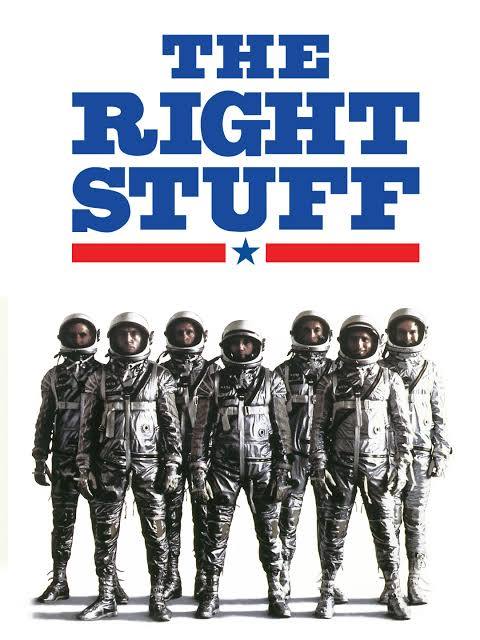
Enter the Mercury Seven astronauts, led by John Glenn (Ed Harris, sporting a smile that could power a spacecraft) and Gordon Cooper (Dennis Quaid, whose cocky grin should have its own credit). These guys go from being hotshot pilots to America’s first astronauts, though the transition isn’t exactly smooth. Think of it as going from being cowboys of the sky to being spam in a can, as some of them put it.

The film brilliantly captures the absurdity of early spaceflight preparation. Want to be an astronaut? Great! Just let us stick every possible medical instrument into every possible orifice, spin you around until you’re ready to redecorate the centrifuge, and then parade you in front of the press like circus animals. All while your wives (including a stellar Pamela Reed as Trudy Cooper) maintain perfect hair and picture-perfect smiles for the cameras.

Director Philip Kaufman weaves together multiple storylines with the skill of a master storyteller. We bounce between Yeager’s continuing adventures pushing the envelope at Edwards, the Mercury astronauts’ training and missions, and the political circus surrounding the space race. The film manages to be both intimately personal and grandly historical, showing us both the men behind the headlines and the massive governmental machine that turned them into American icons.

What really sets “The Right Stuff” apart is its sense of humor about the whole enterprise. Yes, these men were heroes, but they were also gloriously human. The film captures their competitiveness, their fears, their family struggles, and their occasional bouts of what Tom Wolfe called “maintaining the zipper-down reputation.” It’s three hours and thirteen minutes of American history that never feels like a history lesson.

The Review Stuff:

What Works:

  • The cast is phenomenal across the board, with Sam Shepard’s laconic Yeager and Ed Harris’s earnest Glenn being particular standouts
  • The visual effects, despite being pre-CGI, are still impressive and give a visceral sense of what early test flights and space missions felt like
  • The script balances humor, drama, and historical accuracy with remarkable skill
  • Caleb Deschanel’s cinematography makes both the desert and space look equally magnificent
  • Bill Conti’s score soars as high as the aircraft it accompanies

What Doesn’t:

  • At over three hours, the film can feel a bit long-winded in places
  • Some of the supporting characters get lost in the shuffle
  • The political context of the space race with the Soviets feels somewhat underdeveloped
  • A few of the effects sequences haven’t aged as well as others

The Verdict:
“The Right Stuff” is that rare historical epic that manages to be both informative and entertaining, reverential and irreverent. It’s a testament to both human achievement and human folly, showing us heroes who were all too human and humans who became heroes. While it might be a bit too long for some viewers, it’s a journey worth taking, especially for anyone interested in aviation, space exploration, or just damn good filmmaking.

Rating: 4.5 out of 5 sonic booms

P.S. Keep an eye out for the running gag about the mysterious test pilot deaths being explained away as “crashes into the side of a mountain.” It’s both darkly funny and historically accurate – the government’s go-to explanation for classified mishaps during the Cold War era.

Amadeus

Amadeus: When God’s Favorite Composer Was His Least Favorite Human

Meet Antonio Salieri, a man who had the misfortune of being a pretty good composer in the same era as a certifiable genius. It’s like being a decent amateur juggler who has to follow someone juggling chainsaws while riding a unicycle. Blindfolded.

The film opens with elderly Salieri (F. Murray Abraham) attempting suicide while screaming apologies to Mozart for murdering him. This leads to him being committed to an asylum, where he tells his story to a young priest who probably wasn’t expecting his day to include a feature-length confession about musical jealousy and divine betrayal.

Through Salieri’s incredibly biased narration, we meet Wolfgang Amadeus Mozart (Tom Hulce), whose laugh sounds like a hyena that just discovered nitrous oxide. Mozart arrives in Vienna as the most talented brat in musical history – a genius composer who also happens to be a giggling, cursing, drinking manchild with a thing for potty humor. Imagine if you combined Einstein’s brain with a frat boy’s personality, then gave him a wig.

Salieri, who has dedicated his life to God and music (in that order), can’t handle the fact that the Almighty has chosen to give his divine gift to this “obscene child.” It’s like watching someone who spent decades practicing their craft get upstaged by a natural talent who doesn’t even bother to warm up. Mozart composes masterpieces the way most people doodle – without effort and often while doing something else entirely.

The film follows Mozart’s career in Vienna, where he manages to offend pretty much everyone who could help his career. He’s commissioned to write an opera, and decides the perfect subject would be a comedy about life in a harem, because nothing says “court approval” like sexual innuendo in Turkish costumes. Meanwhile, Salieri plots Mozart’s downfall while simultaneously being the only person who truly appreciates the genius he’s trying to destroy.

Mozart’s life starts to unravel faster than a cheap wig. His father dies (appearing later as a terrifying figure in a mask to commission the Requiem), his wife Constanze (Elizabeth Berridge) leaves him, and he’s reduced to teaching piano lessons to “squealing children” for money. Salieri, seeing his chance, disguises himself as Mozart’s dead father and commissions a Requiem Mass, planning to steal it and reveal it as his own composition at Mozart’s funeral – because nothing says “mentally stable” like planning to premiere your stolen masterpiece over your rival’s dead body.

The film builds to Mozart racing against time and his own deteriorating health to complete the Requiem, while Salieri pretends to help him while actually helping him die faster. It all culminates in one of cinema’s greatest sequences, as Mozart dictates his Requiem from his deathbed to Salieri, who writes it down while probably thinking “I could have written this… okay, no I couldn’t.”

The Verdict

What I Love:

  • F. Murray Abraham making musical jealousy into high art
  • Tom Hulce’s laugh, which should have gotten its own Oscar nomination
  • The most beautiful soundtrack in film history (thanks, Wolfgang)
  • Costume design that makes modern fashion weeks look understated
  • Miloš Forman’s direction making classical music sexy before it was cool

What Could’ve Been Better:

  • Might make you feel bad about quitting those piano lessons
  • Will definitely affect your ability to listen to “Eine Kleine Nachtmusik” without giggling
  • Could make you question every gift you thought God gave you

“Amadeus” is less about historical accuracy and more about the agony of being second-best in a field you’ve dedicated your life to. It’s like a sports movie where the antagonist is the narrator, God is the referee, and Mozart is that guy who shows up without training and breaks all the records.

Rating: 5 out of 5 powdered wigs

P.S. – After watching this, you might want to listen to Mozart’s Requiem. Just don’t commission one yourself.

Once Upon a Time in America

The Longest Game of Criminal Musical Chairs Ever Filmed

Looking for a nice, straightforward gangster movie? Maybe try Goodfellas. Sergio Leone’s final film is what happens when you take a crime epic, throw it in a blender with a pocket watch, and hit the “timeline confetti” button. It’s nearly four hours of past, present, and “wait, when are we now?”

Our story follows David “Noodles” Aaronson (Robert De Niro) through three primary time periods: the 1920s (child gangster edition), the 1930s (successful gangster edition), and 1968 (confused old gangster edition). The film opens with Noodles in 1933 fleeing from gangsters after apparently getting his friends killed and stealing their money. Because that’s what friends are for, right?

Cut to 1968, where an older Noodles returns to New York after receiving a mysterious letter. He looks like he’s spent the last 35 years trying to figure out what exactly happened in this movie, and honestly, same. He visits a still-operating speakeasy run by Fat Moe (Larry Rapp), whose sister Deborah (Elizabeth McGovern) was the love of Noodles’ life – at least when he wasn’t too busy ruining everything.

Through a series of flashbacks more complex than a quantum physics textbook, we learn about young Noodles (Scott Tiler) and his childhood friend Max (Rusty Jacobs). They start their criminal career in Manhattan’s Lower East Side, where they meet Patsy and Cockeye, forming a gang that makes the Little Rascals look like model citizens. Their early adventures include setting a rival’s newspaper stand on fire, which seems like a lot of effort to avoid reading the morning news.

Young Noodles goes to prison for killing a rival gang member, and when he gets out, he reunites with his now-grown friends. Adult Max (James Woods) has become more ambitious than a Silicon Valley startup founder, leading the gang into bigger scores during Prohibition. The adult gang’s operations are successful enough to make them rich, but Max keeps pushing for more, because apparently being a wealthy criminal during the Depression isn’t enough of an achievement.

The film weaves through their rise to power, complicated by Noodles’ obsession with Deborah and Max’s increasingly risky schemes. There’s a subplot about a union leader named Jimmy O’Donnell that’s more confusing than trying to assemble IKEA furniture without instructions. Meanwhile, Noodles’ relationship with Deborah goes about as well as you’d expect from someone whose emotional intelligence is somewhere between a rock and a slightly smaller rock.

Everything supposedly culminates in a betrayal in 1933 that leads to the deaths of Max, Patsy, and Cockeye. But because this is Leone, nothing is what it seems. In 1968, Noodles discovers that Max faked his death, stole the gang’s money, and became a powerful political figure named Secretary Bailey. It’s like the worst high school reunion surprise ever.

The Verdict

What I Love:

  • A narrative structure that makes Christopher Nolan say “maybe that’s a bit complicated”
  • Ennio Morricone’s score that makes even scenes of people walking seem epic
  • De Niro proving he can brood in multiple decades
  • James Woods at peak James Woods-iness
  • Cinematography that makes New York look like a beautiful dream, even when it’s a nightmare

What Could’ve Been Better:

  • Might require a flowchart to follow the timeline
  • Will definitely affect your ability to tell what year it is
  • Could make you suspicious of any childhood friend who seems too ambitious

This is a film that treats time like a suggestion rather than a rule. It’s less “Once Upon a Time” and more “Several Times at Once in America.” At nearly four hours long, it’s the kind of movie that makes Lord of the Rings look like a TikTok video.

Rating: 5 out of 5 opium-induced time jumps

P.S. – If you’re planning to watch this, maybe take notes. Or better yet, bring a professional timekeeper.

Raging Bull

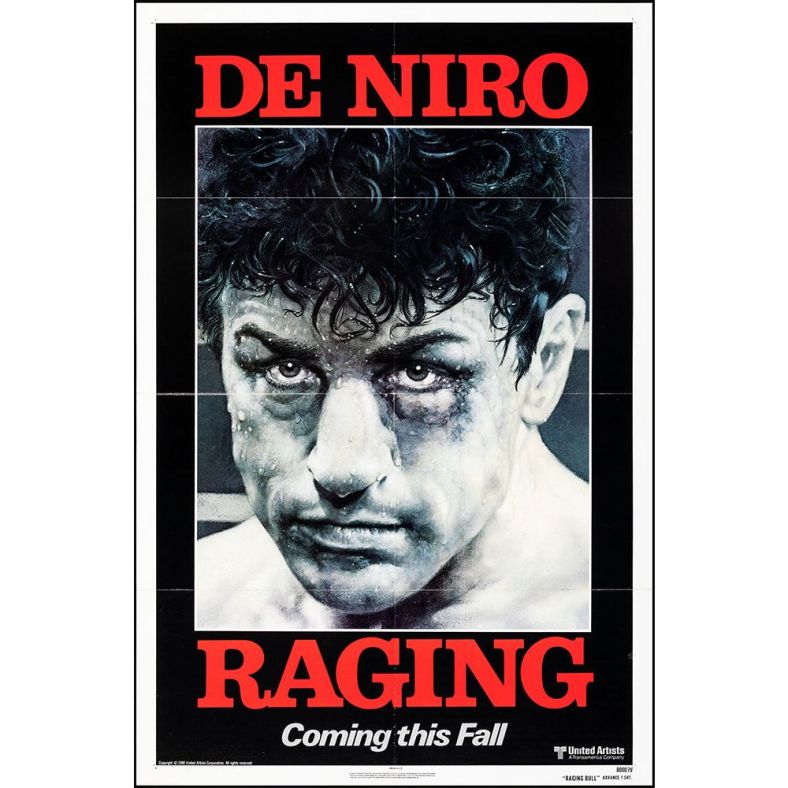
Ever wonder what would happen if you took the world’s angriest man and made him punch people for a living? Meet Jake LaMotta (Robert De Niro), a middleweight boxer whose approach to both fighting and relationships makes Mike Tyson look like a meditation teacher.

Scorsese’s black-and-white masterpiece follows LaMotta through his rise and spectacular face-first fall, chronicling a man who apparently never met a person – including himself – he didn’t want to fight. The film opens in 1941, when Jake is just a up-and-coming boxer whose only notable personality trait is his ability to take a punch better than most people take compliments.

Enter Jake’s brother Joey (Joe Pesci, proving that short men can be terrifying long before Goodfellas), who manages Jake’s career with all the subtlety of a punch to the face. Their relationship is like watching the world’s most violent family counseling session, complete with mob connections and fixed fights. When Jake meets 15-year-old Vickie (Cathy Moriarty), he pursues her with all the charm of a restraining order waiting to happen. They eventually marry, because apparently no one thought to warn her about red flags.

The boxing scenes are shot like violent ballet, with blood spraying in gorgeous slow motion and sounds that make every punch feel like a small car accident. Scorsese films these fights like they’re taking place in hell itself, with smoke filling the ring and flashbulbs popping like tiny explosions. It’s beautiful in the same way a tornado is beautiful – from a very safe distance.

But the real fighting happens outside the ring. Jake’s pathological jealousy turns his life into a never-ending episode of “Who’s Sleeping With My Wife?” (Spoiler alert: probably nobody). He accuses Joey of having an affair with Vickie, which leads to a fight that makes their childhood squabbles look like pillow fights. He beats up his wife’s supposed admirers with the dedication of a man filling out his punch card at a very violent coffee shop.

The film charts Jake’s rise to the middleweight championship, including his famous fights with Sugar Ray Robinson, whom Jake seems to view less as an opponent and more as a personal insult to his existence. But because Jake can’t stop being Jake for five minutes, he gains weight, loses his title, and manages to alienate literally everyone who ever cared about him.

By the 1950s, Jake is reduced to running a sleazy Miami nightclub and performing bad stand-up comedy, which is somehow more painful to watch than any of his boxing matches. He gets arrested for introducing underage girls to male patrons, sending him to prison where, in a moment of pure LaMotta logic, he punches a wall until his knuckles bleed while screaming “Why? Why?”

The film ends with an older, paunchier Jake rehearsing his nightclub act in front of a mirror, reciting Marlon Brando’s famous “I coulda been a contender” speech from On the Waterfront. It’s a moment of crushing irony – unlike Terry Malloy, Jake had actually made it. He just couldn’t stop fighting long enough to enjoy it.

The Verdict

What I Love:

  • De Niro’s performance, which included gaining 60 pounds and presumably losing his sanity
  • Boxing sequences that make actual boxing look like synchronized swimming
  • Michael Chapman’s black-and-white cinematography that makes everything look like a beautiful nightmare
  • Joe Pesci proving that rage isn’t determined by height
  • Dialogue that makes profanity sound like Shakespeare

What Could’ve Been Better:

  • Might make you reconsider your boxing career
  • Will definitely affect your appetite for steak
  • Could make family reunions seem relatively peaceful by comparison

“Raging Bull” is like watching a Greek tragedy where everyone speaks in four-letter words and resolves their conflicts with uppercuts. It’s a masterpiece that makes you grateful for modern anger management techniques.

Rating: 5 out of 5 perfectly cooked steaks (medium rare, or Jake will know)

P.S. – After watching this, you might want to hug your brother. Unless he’s Joe Pesci.

Goal Met: Meditate 50 times or more

I’ve always been fascinated by the idea of meditation – the idea that you could train your mind and bend it to your will through breathing exercises seemed, on it’s face, a bit silly. However two things happened that caused me to reevaluate my ideas.

The first was reading a book called “The brain that changes itself” by Norman Doidge. I forget why I picked up this book specifically, I suspect I was just looking to learn something new and this was on their new release shelf. The book is about neuroplasticity and the science behind how the brain changes itself. The brain essentially rewires itself based on a specific set of criteria as a response to external factors. I found it fascinating and it kicked off a journey down a rabbit hole of books about the brain and how it works (one of the major finds is how myelin works and how intentional practice can help you develop skills very rapidly, which I found super useful to pick up new things). This primed me for being more open to things like meditation as now I could see the pathways in which it could work

The second was Covid-19. That was a stressful time and I really needed a way to manage that stress effectively so I turned to the internet and found some free guided meditations that helped me walk through the process of breathing and being mindful.

I struggled to maintain a practice however, even when I committed to 10 minutes, because my brain is like a sack full of angry cats. Whenever I tried to meditate I’d focus on my breathing and my brain would just open up it’s cabinet of curiosities and start throwing things at me. It wasn’t really anxieties as my stoicism practice kept those pretty much in check but it was just random things that I needed to do, memories of people and places (both good and bad), random facts, ideas for some of the projects I was working on (although I did have a pad and pen to record anything really insightful) what I should make for dinner and who the Yankees are playing this weekend.

Meditation teaches you to simply acknowledge the thought and let it go but that’s hard to do when they are flying at you like angry bees. I found that if I count the breaths and focus on the counting and the breathing that was much more effective and I was able to still my mind for a few minutes at a time. That’s when my brain got worried that it wasn’t in full ADHD mode and did one of two things. It either started making up stuff to fill the space where I’d just start daydreaming something wild and wouldn’t notice for several minutes that it was happening which was alarming or it would simply say ‘naptime!’ and I’d fall asleep.

So this time around I committed to 50 times meditating of 10 minutes or more. That averages out to almost once a week. I know more frequent practice results in better outcomes but I understood how I struggled and given all the other things I needed to accomplish I felt that it was still a worthwhile goal.

Looking at my records (I tracked everything this year) I saw that instead of doing it once a week as I planned I ended up doing it in spurts. There would be a week of doing it every day then two months would pass and then I’d do it for ten days then take another long break. Out of all the goals I finished this year this one was the hardest for me to stick to. I don’t know why – it’s only 10 minutes of my day, it should be easy but for some reason my brain did not like it and would find all sorts of reasons to skip it.

I’m not sure I can sustain a long term practice but I’d still like to find a way to incorporate mindfulness into my daily life as I find even the few times I manage to get a streak doing I do feel more calm and in control.

Goal Met: Eat at Michelin Starred Restaurant

When I was younger I worked in various restaurants as summer jobs and really enjoyed the experience. I know it’s probably the naivete of youth but for a while I considered trying to stage at some fancy restaurants in NYC to build a career as a chef (this was before the food network and the age of the celebrity chef) -I ultimately opted out of that dream and continued to cook for various places at the Jersey shore until one of my friends recruited me to come work in IT support as it paid much better and I could sit all day.

I still loved cooking and continue to pursue it as a hobby and I appreciate a restaurant that gets it right, since I have unfortunately worked at places where cutting corners was gospel. So I’ve always wanted to go eat at a Michelin star restaurant and experience a world class dining experience.

I knew I had to go into NYC so I went to the Michelin guide and  filtered for starred places and it came back with a lot of options. I first wanted to go to Per Se as I’m a huge Thomas Keller fan but I couldn’t find a reservation at a time that worked for my and my wife plus the cost of $500 a person before extras was a major factor, especially coupled with my general dislike of seafood as Keller uses a lot of fish in his tasting menus.

I ultimately decided to Torrisi (https://torrisinyc.com/) was the right option for us (Shocker I picked an Italian restaurant). I preferred A La Carte dining as I could ensure the food I was getting was something I would enjoy and I was able to get a lunch reservation which worked out perfect so we could go during the week while our kids were in school.

The menu was simple – which I like as I’d prefer a few things made with exacting care as opposed to a huge menu. I just feel that allows the chefs to perfect their skills.

We walked in and were greeted warmly by the hostess who seated us promptly even though we were 15 minutes early. The servers were attentive and ensured our drinks were replenished and to check on us to see if there’s anything else we needed. The place was beautiful, located in little Italy in the Puck building. 

The dining room features soaring 17-foot ceilings with original crown molding and ornate brass chandeliers. The walls showcase custom murals depicting New York scenes in muted gold and cream tones.

The space is divided into distinct areas: a curved marble bar with leather stools, banquettes upholstered in deep blue velvet, and intimate tables arranged around a central dining room. Brass accents, mirrored panels, and vintage-style sconces create warmth throughout.

The design blends 1920s glamour with modern Italian-American elements: terrazzo floors, leather-bound menus, and custom wine displays. White tablecloths and fine china maintain formality, while exposed brick walls and ambient lighting create a more relaxed atmosphere.

We decided to each get a pasta dish (they were small) and split an entrée. I had a few cocktails (including the signature Torrisi Spritz which was a play on the standard Aperol spritz) and my wife had some white wine.

They brought out some sourdough bread first – soft open interior with a crackling sesame seed crust this was bread as it ought to be. It came with an herb infused butter that elevated the whole experience. It was served twice – once right after we ordered and again with our pasta for “fare la scarpetta.”

We started with their signature ‘American and Italian hams with zeppole’. I know I thought the same thing, zeppoles? But it was something everyone who went there raved about so we tried it and it was a sublime experience. You wrap the super thin prosciutto around the zeppole and pop the whole thing in your mouth. The salt and fat of the ham plays against the slight sweetness of the zeppole creating a compelling contrast – I just wish they had as many zeppoles as pieces of ham because there were three more slices of ham on the plate and I wanted to keep going.

For the pasta I opted for the classic cheese tortellini as that was the dish they are known for. It was tender fresh pasta with just the right amount of bite and the filling was texturally complex with a strong bite of sharp cheese at the end. The sauce was light and flavorful – I suspect it was just tomatoes cooked very briefly as they tasted super fresh. My wife went with the special which was truffle tortellini in a truffle sauce, topped with shaved truffles. That’s a lot of truffles, I thought to myself as she was ordering but it was delicious and I say that as someone who really doesn’t care for the taste of truffles.

The main was chicken alla griglia (we shared it). Perfectly tender chicken with a crackling skin covered with a sauce fragrant with rosemary and oregano. I was surprised at how well the crust on the chicken held up against the sauce. Chicken can be hit or miss in most restaurants so seeing it done to perfection was great.

After dinner they brought us a sampler of ices to help cleanse our palette; Green apple and lemon were selections we were given. Then they brought out a plate of Italian cookies with our dessert menu. At this point, I was getting pretty full but felt like if we were here for the full experience we should try something off the dessert menu. I knew most people recommended the affagatto but I wasn’t in the mood for that so opted for the almond cheesecake.

They brought out a slice of cheesecake that had a marzipan topping piped onto it – we barely finished it between the two of us due to its richness. I mean, it was great but I felt like I needed a nap when we finished. 

Overall it was a great experience. The food was amazing, the ambience and service were good and I felt like I was getting a Michelin star type of experience.

Next up – let’s see what a two or three star experience is like!

Goal Met: Vegetarianism

This one wasn’t actually that difficult in concept. I’m just not a big meat eater. I do enjoy beef (in all it’s glorious varieties) and chicken and eat them often but only a few times a week, trying to balance them with vegetable heavy meals. I enjoy pork in sausage or bacon form but that’s about it and I don’t eat seafood, veal, lamb or pretty much any other animal. The one thing that I thought might be am issue is my Saturday cheeseburger. It’s a nice little treat at the end of the week that I do look forward to. I doubted I would embrace the ‘lifestyle’ but I do think reducing meat consumption overall is good for my health and the environment so wanted to give it a shot and see how it went.

The first issue is by the time I got around to scheduling this it was well into winter and the vegetable options available were pretty slim. Lots of root vegetables and your standard hydroponic greens along with stuff trucked in from who knows where. You ever have a supermarket tomato in January? It’s enough to make a grown man cry (I took down my tomato garden to make space for my kids to play in the backyard and I hope one day they appreciate that sacrifice).

However, since it was winter it was a perfect time for soups and stews which mostly used canned vegetables since they are designed to be made in the winter. I busted out some favorites like butternut squash soup and minestrone (without the pancetta of course) mixing in some new stews from around the world. Maafe was a big hit.. A sweet potato stew with chickpeas and coconut milk that I had several bowls of.

Pasta was featured prominently as well. Nothing fancy here just the usual pasta with a variety of sauces (tomato and pesto) with bread to scoop up all the sauce. I usually make pasta twice a week or so but it became my go to when I needed something quick for lunch or dinner.

I.. Tried to eat salads. I really did. They have a really nice salad bar at work and full of optimism I created a complex salad with greens, vegetables, and even come microgreens. Maybe it was just the time of year or the fact it’s a corporate cafeteria but the salad was really bland. The greens didn’t taste like much and the vegetables were all kind of listless. I have a personal thing where I just refuse to keep buying food if it isn’t any good so I had to pivot off the salad bar idea.

I knew getting greens was critical so I turned to powdered greens, mixing them into smoothies to take the rough edges off the taste. I will note that those smoothies powered me through the afternoon better than caffeine sometimes which I thought was odd so I double checked the greens and I saw that the one I got had ‘plant caffeine’ so yeah, I’m glad I wasn’t taking them at night because that would have backfired on me.

The only thing that concerned me was how much protein I was taking in. I wanted to ensure that I was getting enough to support my activity level so I used a two fold approach. I got some pea-protein to add to my smoothies (around 30g) and I went all in on the bean train.  I added them to everything. Making a soup? Beans. Nice stew you got cooking.. Beans. Hey is that pasta? OK hold up keep your damn beans off my pasta. Vegetarian Chili? That’s good man.. Load up them beans. Needless to say my poor stomach was very confused at this sudden intake of fiber and started wilding out but after a few days we stomped out our beef (get it?) and things returned to normal.

The two weeks went pretty quick and I found that it wasn’t that big of a life change. I mean, I can still eat bread, pasta, and pizza so really those are the holy trinity for me. I thought that maybe this is something I should be doing?

Then I had a bomb cheeseburger at a restaurant and said ‘Forget all that noise’

Taxi Driver

Ever had insomnia so bad you decided to become a taxi driver and slowly descend into violent psychosis? Meet Travis Bickle (Robert De Niro), a Vietnam vet whose idea of a self-improvement program makes Fight Club look like a mindfulness retreat.

Travis takes a job driving a taxi on New York’s night shift, which in 1976 was about as relaxing as being a rodeo clown with vertigo. He cruises through a Times Square that makes modern-day Times Square look like Disneyland, carrying passengers that would make an Uber driver’s one-star reviews seem quaint. His journal entries reveal a man who sees the city as a cesspool that needs cleaning, though his idea of urban renewal involves significantly more ammunition than most city planners would recommend.

Our sleep-deprived protagonist becomes fixated on two women: Betsy (Cybill Shepherd), a campaign worker for presidential candidate Charles Palantine, and Iris (Jodie Foster), a 12-year-old prostitute. Because nothing says “I’m totally stable” like taking your first date to a Swedish porn film, Travis manages to spectacularly bomb his chances with Betsy faster than you can say “poor choice of venue.” Pro tip: X-rated movies are generally not considered first-date material, unless you’re dating a film critic with very specific interests.

Meanwhile, Travis’s mental state deteriorates faster than a sandwich left in a hot cab. He starts working out, buying illegal guns from sketchy salesmen (played by Steven Prince, who probably didn’t have to act much), and practicing quick-draws in front of his mirror while delivering the now-iconic “You talkin’ to me?” monologue – which, by the way, is the worst self-help affirmation ever.

His apartment turns into what would happen if an army surplus store had a baby with a pharmacy’s worth of uppers. He straps a gun to his arm using a homemade sliding mechanism that would make Q Branch jealous, shaves his hair into a mohawk that would give any barber PTSD, and generally transforms himself into a one-man army whose recruiting officer really should have checked references.

The plot accelerates when Travis fixates on “saving” Iris from her pimp, Sport (Harvey Keitel, rocking a wardrobe that makes most disco outfits look understated). He also decides that presidential candidate Palantine needs to be assassinated, because nothing says “I’m helping” like attempting to shoot a politician. When that plan fails – turns out Secret Service agents don’t appreciate mohawked guys reaching for their pockets – Travis redirects his violent salvation complex toward Sport and Iris’s other exploiters.

The finale explodes into one of cinema’s most notorious bloodbaths, as Travis storms the brothel in a scene that makes The Shining look like a real estate walkthrough. He eliminates Sport, the hotel manager, and Iris’s client in a sequence that’s both horrifying and weirdly balletic, if your idea of ballet involves multiple gunshot wounds. Travis himself is shot several times but keeps going, demonstrating that crazy beats bullets every time.

The film’s coda is a masterpiece of irony: Travis survives and is hailed as a hero by the media for saving Iris. We see him back at work, now famous among his fellow cabbies, even getting a fare from Betsy who seems impressed by his newfound notoriety. But that final look in his rearview mirror suggests that New York’s most unstable cabbie hasn’t exactly found inner peace.

The Verdict

What I Love:

  • De Niro’s performance, which makes other method actors look like they’re doing dinner theater
  • The grimy portrayal of 1970s New York that makes modern tourists seem adorably naive
  • Bernard Herrmann’s last and possibly greatest score, which sounds like jazz having a nervous breakdown
  • Paul Schrader’s script that reads like Dostoevsky after three days without sleep
  • Michael Chapman’s cinematography that makes you want to take a shower, but in a good way

What Could’ve Been Better:

  • Might make you reconsider using ride-share services
  • Will definitely make you suspicious of anyone who owns multiple guns and hair clippers
  • Could affect tourism to New York (though modern Times Square has done that anyway)

“Taxi Driver” is a masterpiece that manages to be both a character study and a slap in the face to anyone who thinks mental health services are adequately funded. It’s like watching a train wreck if the train were consciousness itself, and the track were society’s failed support systems.

Rating: 5 out of 5 possibly imagined cab fares

P.S. – After watching this, you might want to take the bus for a while.

Worldwide Food Tour – Senegal

Maafe has its origins in the Manding (Mande) people, who historically inhabited present-day Senegal, Mali, and Guinea. It is believed to have been created centuries ago, when groundnuts (peanuts) were introduced to Africa through Portuguese traders in the 16th century.

Over time, peanuts became a staple crop in West Africa, leading to the development of rich, peanut-based stews like Maafe. The dish spread across the Sahel region, becoming a fundamental part of the cuisines of Mali, Gambia, Guinea, Nigeria, and Ivory Coast.

While Maafe is most closely associated with Senegal, it is widely popular across Francophone West Africa, with slight variations in ingredients and cooking techniques depending on the region.


What is Maafe?

At its core, Maafe is a peanut-based stew, thickened with tomatoes, spices, and vegetables, and often served with rice, couscous, or fufu. The dish’s rich, nutty flavor is balanced by the acidity of tomatoes, the savoriness of slow-cooked meat, and the earthy warmth of West African spices.

Essential Ingredients of Maafe:

  • Meat (or Protein): Typically chicken, beef, lamb, or even fish. Some vegetarian versions use tofu or chickpeas.
  • Peanut Butter (Groundnut Paste): The defining ingredient, giving the dish its signature creamy texture and nutty richness.
  • Tomatoes & Tomato Paste: Adds depth, acidity, and umami.
  • Onions & Garlic: Provide a strong aromatic base.
  • Vegetables: Often includes carrots, sweet potatoes, cabbage, okra, or potatoes for added heartiness.
  • Spices:
    • Ginger & Bay Leaves – For warmth and fragrance.
    • Chili Peppers or Scotch Bonnet – For a spicy kick (Maafe can be mild or fiery!).
    • Cumin & Coriander – For subtle earthiness.
  • Stock or Water: Helps create the luscious, thick sauce.

Some regional versions add coconut milk for extra creaminess, while others incorporate mustard, tamarind, or fermented locust beans for a deeper umami flavor.


Tasting Notes: A Perfect Balance of Nutty, Savory, and Spicy

A bowl of Maafe is deeply satisfying and complex:

  • The peanut butter gives it a creamy, silky texture, coating every bite with rich, nutty flavor.
  • The tomatoes add a bright acidity, balancing the richness of the groundnuts.
  • The meat is fork-tender, infused with the slow-simmered spices and sauce.
  • The vegetables absorb the flavorful broth, adding natural sweetness and texture.
  • The spices and chili bring a gentle heat, making every bite warming and fragrant.

Maafe’s comforting richness makes it the perfect dish for both everyday meals and festive occasions.


How Maafe is Served

Maafe is traditionally enjoyed as a communal meal, served with a starchy base to soak up the flavorful sauce.

Common Accompaniments:

  1. Steamed White Rice – The most common pairing, allowing the peanut sauce to shine.
  2. Couscous – Popular in Senegal and Mali, giving a light, fluffy contrast to the thick stew.
  3. Fufu (Pounded Yam or Cassava) – A traditional West African choice, perfect for scooping up the sauce.
  4. Bread – Sometimes served with crusty baguette (a French colonial influence).

In Senegal, Maafe is often eaten family-style, with people gathered around a large communal bowl, scooping up the stew with rice or bread.


Beyond Senegal: Maafe’s Influence Across West Africa

While Maafe is most famous in Senegal, it has many variations across West Africa:

  • In Mali, it’s called Tigadegena and often includes more vegetables.
  • In Gambia and Guinea, it is spicier and sometimes made with fish instead of meat.
  • In Nigeria and Ghana, peanut stews are similar but use local spices and ingredients.

No matter the version, the rich, nutty, and deeply comforting essence of Maafe remains the same.


Why Maafe is One of Senegal’s Most Beloved Dishes

Rich & Flavorful – A perfect harmony of peanuts, tomatoes, and spices.
Comforting & Hearty – A warming, satisfying meal that fills you up.
Versatile – Can be made with chicken, beef, lamb, fish, or even vegetarian.
A Dish with History – A centuries-old recipe with deep cultural roots in West Africa.
Perfect for Sharing – A communal dish that brings people together over good food.

Whether you’re enjoying it in Dakar, Bamako, or your own kitchen, Maafe is a taste of West African tradition in every spoonful.