
I Did It.

Wow. That was quite a journey. I’m honestly still processing the fact that I managed to complete everything. Looking back, I’ve spent over two decades setting goals, and the highest I ever reached before was maybe 60% completion—and that was with a modest list of just ten goals. When I first considered taking on this challenge, I almost talked myself out of it, remembering past failures. But turning 50 flipped a switch in me. I figured I might not succeed, but I knew I’d regret it if I didn’t even attempt it. Maybe not the most optimistic mindset to start with, but if this experience has taught me anything, it’s that with discipline and structure, you can fundamentally shift how you approach things.
Coming up with 50 goals was an adventure in itself. The first few were easy—I pulled from old, unfinished goals and added new ones that felt both exciting and challenging. But once I hit the 30-goal mark, I struggled. That’s when I had to shift my perspective. I started thinking about what turning 50 really signified. I reflected on what I had accomplished, what I had always wanted to do but never got around to. And then it hit me: I had spent years assuming there would always be time. But what if there wasn’t? Shouldn’t I seize the moment now, while I still had the energy to truly enjoy it? That realization changed everything. Suddenly, the list filled itself. Visiting my father’s hometown in Italy. Buying my dream guitar. Sipping on really old Scotch. Once I reframed the process, it became much easier to round out the list. I even left a few open slots, which I later filled with “Explore AI” and “Complete a Bob Ross painting tutorial.”


As I got deeper into rounding out the 50, I found myself turning to the internet for inspiration. Seeing what others had on their goal lists helped me refine mine. Some ideas resonated, some didn’t, but the process helped me think outside the box. And ironically, one of my late additions—learning about AI—ended up being a game-changer. AI became an essential tool throughout the year. With a goal of blogging about my experience, I faced an immense workload, closing in on nearly 300 posts. Without AI’s help in researching topics, I would have been buried under the effort. I even used AI to critique my writing, offering an unfiltered, sometimes ego-bruising editorial lens that ultimately improved my work.
To keep myself accountable, I knew I needed rules. Once the 50 goals were set, I committed to not altering them to make things easier. But I’m also pragmatic—life happens. In the early months, I tore something in my shoulder, which derailed my fitness-related goals. So, I built in a contingency: I allowed myself to swap out five goals if necessary. This gave me a degree of flexibility while ensuring I didn’t just swap out challenges for convenience. I ended up using four swaps (documented on my website), and two of them were due to physical limitations rather than avoidance.


So how did I pull this off while managing a full-time job, two small kids, and a marriage? With structure. I built a framework that allowed me to make progress without compromising what truly mattered.
The first rule: priorities first. My family always comes first—no exceptions. I didn’t pursue these goals at the expense of time with my kids or my wife. I still coached my kids’ teams, played with them on weekends, and handled all the usual parenting duties. I made sure my wife and I kept our Friday lunch dates, giving us uninterrupted time together. And work? That stayed a priority too. I enjoy my job and wasn’t about to let this project interfere with my professional commitments. With those priorities locked in, anything else became negotiable.


The second rule: do something every day. Even on chaotic days—work was crazy, the kids had back-to-back activities, and my wife was out of town—I could still do something. Read a few pages of a book. Practice Italian on Babbel for five minutes. Write a quick gratitude journal entry. Even brushing my teeth at night, I could squeeze in a small action. The consistency was the key. After a few months, it became so ingrained that skipping a day felt like a glitch in my system. These small, daily efforts accumulated, creating momentum that accelerated progress over time.


The third rule: find hidden time. It’s there if you look for it. That hour-long commute? Perfect for listening to educational podcasts or checking off an album from my music list. Instead of doom-scrolling my phone during lunch, I’d read, write, or learn something new. Even waiting for my kids to finish practice became an opportunity—reading on my Kindle, researching goals, or sketching ideas. Once I stopped treating time as something to kill and started seeing it as something to use, my productivity skyrocketed.


The final rule: track everything. This was huge. I needed to see my progress at a glance, so I built a spreadsheet with progress bars and a dashboard to keep me motivated. If one goal was lagging, I’d shift focus to bring it up to speed. As the months passed and those bars turned blue, I felt the inertia pulling me forward. That visual reinforcement made a huge difference. I also used OneNote to collect ideas, notes, and drafts, which kept me organized and efficient. These tools gave me a comprehensive view of where I stood at any given moment.


As the year progressed, I started identifying areas of wasted time and replacing them with intentional actions. Little by little, I started to see myself as someone who followed through, rather than someone who set goals only to abandon them. That shift in self-perception was a turning point. Once I hit 75% completion, I could see the finish line. In the last 60 days, I went into overdrive, laser-focused on getting everything to 100%. I don’t think I could have sustained that level of intensity for an entire year, but as I neared the end, it felt like shifting from marathon pace to an all-out sprint.


But of course, there were downsides. Sustaining focus for an entire year was mentally exhausting. Between work, family, and this challenge, there were weeks when I was completely burned out. Fortunately, some of my goals—meditation, hiking, drawing—helped counteract the stress. On particularly rough weeks, I leaned into those activities, taking long hikes with my kids to reset. Still, there were stretches, especially in the summer, where I did nothing, and guilt crept in. Eventually, I realized that guilt was unnecessary. I wasn’t trying to become a productivity guru or a social media influencer—I was just a 50-year-old guy trying to accomplish something meaningful. And as I watched my goals falling one by one, I realized that even with breaks, I was still on track.


Another major downside? Free time took a massive hit. Movies, TV, video games—I barely engaged with any of them. I didn’t play a single hour of video games all year, missed most new film releases, and barely kept up with my sports teams. (Not that the Jets gave me much to miss.) These things might not be “productive,” but they’re enjoyable, and I realized I missed them. Sometimes, you just want to unwind and watch your favorite team blow a late lead.


Ultimately, I learned so much from this experience—not just about discipline and productivity, but about balance, adaptability, and what really matters. There were tough moments, but overall, I’m glad I did it. And now, looking ahead, I’m excited to see where these lessons take me next.
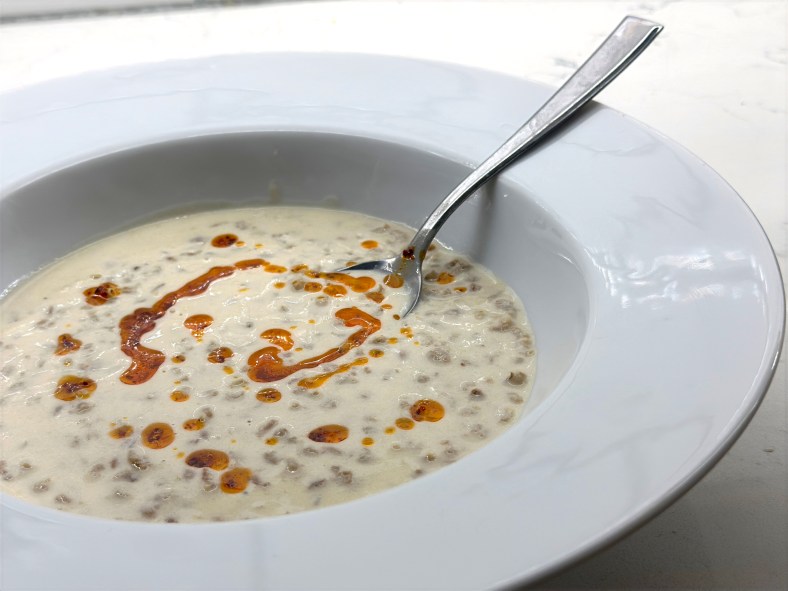

Worldwide Food Tour – Armenia

Tanabour (Թանապուր) is a tangy, creamy, and warming Armenian yogurt soup, made with matzoon (Armenian yogurt), grains, and fragrant herbs. It is a staple of Armenian cuisine, often enjoyed as a comfort food, a winter warmer, or even a light, nutritious meal year-round.

With its delicate balance of tanginess, earthiness, and warmth, Tanabour reflects Armenia’s rich culinary history, where fermented dairy, grains, and herbs play a crucial role. This dish is both deeply traditional and incredibly nourishing, making it a beloved meal across generations.


The History: A Dish Rooted in Armenian Heritage

Tanabour has origins in ancient Armenian cuisine, where dairy-based soups were a way to preserve yogurt and use local grains. The dish likely developed in the rural highlands, where fermented dairy (like matzoon) was a staple of shepherds and villagers.

Historically, Tanabour was often eaten as a fasting dish during Lent, made without meat but still providing protein and sustenance through yogurt and grains. Over time, it became a year-round comfort food, enjoyed both warm in winter and cool in summer.

Today, Tanabour remains a symbol of Armenian home cooking, often made by grandmothers and families for special gatherings or everyday meals.


What is Tanabour?

Tanabour is a creamy, slightly sour soup made from yogurt, grains (like wheat or rice), butter, and aromatic herbs. The tangy yogurt base is balanced by the earthy grains and bright herbs, creating a dish that is both hearty and refreshing.

Essential Ingredients of Tanabour:

  • Matzoon (Մածուն) or Yogurt: The foundation of the soup, providing its signature tanginess.
  • Egg & Flour Mixture: Helps stabilize the yogurt, preventing curdling.
  • Grains: Typically hulled wheat (dzavar), bulgur, or rice, giving the soup texture.
  • Butter: Adds richness and a silky mouthfeel.
  • Garlic: Infuses the broth with depth and aroma.
  • Dried Mint (or Fresh Herbs): A signature flavoring, bringing brightness to the soup.
  • Salt & Black Pepper: To enhance and balance the flavors.

Some variations include chickpeas or lentils, while others use dill or cilantro instead of mint, depending on family traditions.


Tasting Notes: A Creamy, Tangy, and Herbaceous Delight

Tanabour is a dish that balances multiple flavors and textures beautifully:

  • The yogurt base is creamy and slightly sour, providing a refreshing tang.
  • The grains add a gentle chewiness, making the soup filling yet light.
  • The garlic and butter create richness, coating the palate in warmth.
  • The dried mint (or fresh herbs) add a fragrant, slightly cooling contrast, rounding out the dish.

Each spoonful is comforting yet lively, making Tanabour a unique and deeply satisfying soup.


How Tanabour is Served

Tanabour can be enjoyed hot or cold, making it a versatile dish for all seasons.

Traditional Serving Styles:

  1. Warm Tanabour (Winter Version) – Served hot, with melted butter drizzled on top and sometimes with extra grains for heartiness.
  2. Chilled Tanabour (Summer Version) – Served cold, often with a squeeze of lemon juice and fresh herbs for a cooling effect.
  3. With Flatbread or Lavash – Traditional Armenian lavash bread is often torn and dipped into the soup.
  4. With Extra Butter & Garlic – Some families fry garlic in butter and drizzle it over the soup before serving.

Tanabour is light enough to be an appetizer but hearty enough to be a full meal, especially when paired with bread or side dishes.


Why Tanabour is a Timeless Armenian Classic

Rich Yet Refreshing – A creamy yet light dish, perfect for any season.
Nutritious & Filling – Packed with protein, probiotics, and fiber from yogurt and grains.
Deeply Traditional – A dish that connects generations of Armenian families.
Easy to Prepare – Simple ingredients, yet layers of flavor and comfort.
Versatile & Customizable – Enjoy hot or cold, with different grains and herbs.

From a cozy meal on a winter evening to a refreshing bowl on a summer day, Tanabour is a dish that represents Armenia’s love for simple, nourishing food.

Goal Met – 5 a.m. Wake Up Call

I’m not going to lie – this sucked pretty bad. I’m partially to blame, as I waited to long to do this and had to do it in the middle of winter when it was pitch black at 5am and the house was freezing.  This whole idea stemmed from the five am club book that was making its rounds on social media. The book had a whole structure on how to utilize the time breaking it down into discrete segments which might have worked if I had done this in the summer.

I did do some planning however – I made a pitcher of iced tea from some high caffeine tea and had it ready to go so as soon as I woke up I drank a glass of that and a glass of water to help wake my body up.  I stumbled down into my office, the only place I could make some noise without waking up the kids. I did some light stretching to try to get some blood flowing then started working on my curated to do list.

That’s where I started to see some issue – my brain just wasn’t ready for structured work and it took the tea about 40 minutes to really kick in before I felt awake enough to trust what I was doing would be accurate. So I switched to more creative tasks where accuracy wasn’t that necessary.  Notably the short story I was working on – in fact during this week I wrote about 10,000 words which was almost double what I had so far (writers block can be a real pain sometimes) – I settled into a habit where I’d sketch out the next few plot points that I needed to hit then just wrote for an hour or more letting the words just come out. I’d spend the last 30 minutes reviewing what I wrote and making some light edits to strengthen the structure (mostly due to changes made later in the story)

I actually felt really productive in those two hours but getting up at five was a real struggle as I’m not a morning person but oddly enough I never felt the spark to write late at night so I really did have better results with that five am wake up call. I just couldn’t see myself continuing it for any length of time as I really like staying up late – those few hours after the kids go to bed are the prime hours for me to be creative or get tasks done or even relax with a baseball game or even some video game time.  It’s hard to do all that at five am in the morning (possible, but not easy)

I’m glad I gave this a shot  – in fact my body adapted pretty quickly and by the third day I was waking up on my own before the alarms would go off. I tried hard to get to bed by 10 each night but sometimes I got distracted with something and looked up and realized it was 11:30 which means I wasn’t falling asleep until at least midnight – those few times were particularly brutal.

Goal Met: Intermittent Fast for 30 days

Now, I’ve done intermittent fasting (IF) a few times in the past, notably during covid out of necessity to stretch the groceries we had as we were only going one once a month to stock up. It’s a simple thing really – just don’t eat breakfast and stop eating at 6:00 pm every night. The food window was 12-6 and you can easily get all the food you need with a healthy lunch, a sizeable snack and dinner.

I had tried it in fits and starts before then – mostly inspired by a few Netflix documentaries I saw on the health benefits of fasting – specifically around autophagy and its role in disease control and weight loss. Armed with the knowledge that it was not just a diet but a way of aligning with how our bodies worked I did it for over two years until about halfway through 2022. I’m not sure what happened but I just kinda gave up on the idea and started eating breakfast again and sneaking in late night snacks.

I realized with this challenge that yes, I’m 50 now and the risk factors for certain diseases start rising – and I should be leaning into IF / periodic long fasts as a way to help control these risk factors. So I made sure there was a section in the goals for both of these fasting methods.

for the IF I used the free version of the zero app to help track the times. It’s pretty simple interface and allowed me to log fasts with a simple click of a button and it also tracked a countdown to my goal and when I started the different phases in a fast (glucose depletion, fat burning, autophagy). I found it helpful to keep me on track as I’d need to physically get my phone and click the button admitting that I didn’t fast as long as I wanted so it was a nice deterrent. I also used the streaks app to track how many days in a row I was doing (I used this app for most of my 30 day / 2 week goals) and getting to see that streak climb was another deterrent. I mean every little bit helps!

The first few days were filled with morning hunger pangs but on the third or fourth day my body remembers this is something we’re doing and I’m fine. I don’t feel hungry until lunch and I stop craving snacks at night. A week in and it was becoming routine again and something that I automatically did without thinking about it too much.

At the end of thirty days I felt a bit better – not much weight was lost (around 5 pounds) but I wasn’t focusing on lowering my caloric intake too much as I was playing basketball and training for a 5K and running a caloric deficit during this time would have impacted those activities.

I know that the things happening in my body during a fast have longer term metabolic effects so I wasn’t expecting some miracle where I suddenly felt 25 again but I was content with the knowledge that I was doing something good for my body.

After the 30 days I continued as best I could – usually doing IF during the week and enjoying a breakfast on Saturday morning (usually an egg sandwich on a bagel). Yes, there were days when I ate a snack late a night or grabbed some breakfast on the way to work because I was really hungry but overall I’m working IF into my life again and I hope to keep it that way for the foreseeable future.

Goal Met: Banya 4+ times

I’ve been to the Banya (Russian hot sauna) a few times in the past and every time I felt like it really helped my sore back/shoulders and gave me a really overall relaxed feeling. Every time I left I’d say to myself “Man, I can’t wait go back” then, for reasons unknown, I’d never go back. I’ve read up on the plentiful health benefits of using the saunas as well as some health warnings (it is, after-all, a process for shocking your body into a reaction)

I didn’t really start up going until the fall – as going to a hot sauna in the summer just doesn’t feel right. Once the temperature outside started to cool I started making some plans to visit some of the saunas around me to see how they compare to one another.

I started with bear and birch which is a relatively small Banya – the steam room barely fits 8 people and the few times I went I had to wait outside the hot sauna for some space to open up. The first time I went the Banya was a nice temperature but the second time someone ramped it up so hot that I felt like my skin was burning and I couldn’t stay very long (in fact, they opened the door and vented a bunch of heat to try to bring the temperature down to more reasonable levels). The staff was very friendly and helpful and the people there were all very chill and talkative which was nice. I didn’t try the food – but the few dishes that came out of the kitchen looked and smelled awesome.

Second up was BRC in Fair Lawn NJ. This is the Cadillac of Banya in the area. There saunas are huge and there’s a pool, massages, infrared saunas, cryo-tanks, a salt room (all extra of course). The Saunas are always hot and the plunge pool is always absurdly cold. I’ve been here quite a few times and always have a great experience. The food is delicious and they offer free water (a godsend as I don’t need to lug around a gallon bottle with me) – the price keeps creeping up but with all that they offer i still think it’s a great value. It gets very crowded nights and weekends (especially over the winter holiday break) but there’s so much space it’s rare you need to wait for a spot – if the main Banya is full one of the other two saunas is probably available.

Thirdly was the Marlboro Banya – smaller than BRC but bigger than Bear and Birch it had two hot saunas and a more mild traditional sauna. The steam room was kind of small and struggled to keep the steam up (I suspect from the door constantly opening to let people in and out) I really liked the outdoor patio – it was a cold day so I walked right from the sauna outside into the 30 degree weather which was a very fun experience. They had a fire pit going which was nice to chill towards the end and chat with some people.

I can’t rate the Banya at Southampton in PA – I drove all the way out there but there was a power outage and they weren’t admitting anyone so I had to turn around and go back home (ultimately ending up at Bear and Birch since I already had the day off an wanted to make is a sauna day)

So after visiting all these Banya – the question remains, do they work? Sometimes it get a bit uncomfortable as my heart is racing due to the heat but once I cool off I feel much better. I usually sleep like a baby after Banya so there’s that at least. I feel like it really relaxes my muscles and my injuries and various aches and pains are lessened so yes, I feel like it does make a difference and plan on trying to keep up my quarterly visits.