The Pianist

Roman Polanski’s The Pianist is one of those movies that doesn’t just tell a story—it makes you live inside it, smothering you in a slow, methodical descent into hell. If you came looking for a standard World War II drama with sweeping battle scenes, a rousing musical score, and an obligatory moment where someone nobly sacrifices themselves while looking up at the sky, then congratulations—you are in the wrong place. This isn’t a movie about war, heroism, or resistance fighters saving the day. This is about survival, and survival isn’t glorious. It’s humiliating. It’s degrading. It’s watching the world collapse around you while you slowly wither away in the corner, praying no one notices you exist.

Adrien Brody plays Władysław Szpilman, a Polish-Jewish pianist who starts the movie playing Chopin in a Warsaw radio station and ends it looking like a half-dead scarecrow wandering the ruins of civilization. At the beginning, he’s got everything—family, talent, a home, a nice suit. But as the Nazis tighten their grip on Warsaw, all of it gets stripped away, piece by piece, until all that’s left is a man too weak to stand, hiding in the debris like a ghost who hasn’t realized he’s dead yet. Brody is phenomenal here, and not just in the way he physically transforms from a well-fed, confident musician into a skeletal shell of himself. He barely speaks for half the movie, yet you can feel every ounce of his suffering through his eyes. He doesn’t play Szpilman as a grand, defiant survivor—he plays him as a man who keeps existing simply because he has no other choice.

And let’s talk about Polanski’s direction, because it’s surgical in the way it destroys you. The film never indulges in melodrama, never turns Szpilman into some kind of cinematic martyr. Instead, it just follows him, unflinchingly, as he endures horror after horror. One moment, he’s playing music at a party. The next, he’s watching an old man in a wheelchair get thrown off a balcony by German soldiers. A few scenes later, he’s watching his family get herded onto a train, and he knows—without a word being said—that he will never see them again. The violence here isn’t stylized, it isn’t dramatic, it’s just cold, brutal, and matter-of-fact. People are shot in the street like it’s nothing. Families disappear overnight. The world goes mad, and Szpilman can do nothing but drift through it, clutching his hunger and his silence.

By the time we reach the last act of the film, Szpilman has been reduced to a walking corpse, hiding in the ruins of Warsaw, scrounging for scraps like a stray dog. And then, in one of the most quietly devastating scenes in war movie history, he is finally discovered—by a German officer, no less. And what does he do? He plays the piano. He sits at that broken, dust-covered instrument and plays as if the world isn’t burning outside. And somehow, for just a moment, music, the very thing that defines him, becomes his salvation. Because in a world that has taken everything from him—his family, his dignity, his home—his ability to create something beautiful is the only thing he has left.

The Pianist is not an easy watch. It’s not meant to be. It’s the kind of film that leaves you sitting in stunned silence when the credits roll, the kind that makes you feel like you’ve lived through something rather than just watched it. It doesn’t ask for your tears, but it takes them anyway. It’s a masterpiece, yes, but in the most haunting way possible—the kind of masterpiece that lingers in your bones long after the screen goes black.

Heat

Imagine if somebody made a crime thriller that’s actually two movies in perfect balance: a cop movie and a heist movie doing an intricate dance around each other until they collide in an explosion of gunfire and existential crisis. That’s Michael Mann’s “Heat,” a film that treats both sides of the law with such careful attention that you’ll find yourself rooting for everyone and no one at the same time.

Al Pacino plays Lt. Vincent Hanna, a detective who’s married to his job (and also his third wife, but the job is definitely his true love). Robert De Niro is Neil McCauley, a professional thief who lives by the motto “Don’t let yourself get attached to anything you are not willing to walk out on in 30 seconds flat if you feel the heat around the corner.” Spoiler alert: both of these life choices are going to prove problematic.

The film opens with a precision-engineered armored car heist that establishes McCauley’s crew as the Ocean’s Eleven of armed robbery, if Ocean’s Eleven were directed by a perfectionist with a fetish for metallic blue color grading. This brings them to the attention of Hanna’s department, setting up a cat-and-mouse game between two men who might actually be the same cat, just wearing different uniforms.

At its heart, “Heat” is a movie about work-life balance, if your work happens to involve either robbing banks or stopping bank robbers. Both leads are essentially workaholics who happen to be on opposite sides of the law. Their infamous coffee shop scene (the first time Pacino and De Niro ever shared the screen together) plays like the world’s most intense job interview, if job interviews involved discussing your philosophy on murder.

What Makes It Sizzle:

  • The downtown L.A. shootout that redefined what a movie gunfight could sound like (so realistic that the military uses it for training)
  • Michael Mann’s signature style turning Los Angeles into a chrome and steel urban jungle
  • A supporting cast so deep it makes other movies’ supporting casts look like amateur hour
  • Character development that gives everyone, even minor players, clear motivations and stakes
  • The most intense coffee shop conversation in cinema history
  • Dante Spinotti’s cinematography making Los Angeles look like a noir painting come to life

What Makes It Simmer:

  • At nearly three hours, it demands a serious time commitment
  • Some viewers might find the pacing deliberately methodical
  • The domestic drama subplots occasionally feel less engaging than the main story
  • If you’re expecting non-stop action, you might be surprised by how much time is spent on character development

The Verdict:
“Heat” is what happens when you take a crime thriller and treat it with the gravity of a Shakespeare play. It’s a meditation on duality, professionalism, and the cost of dedication wrapped in the clothes of a cops-and-robbers movie. Mann crafts a Los Angeles that feels both real and mythic, where every street corner could be the setting for either a philosophical discussion or a firefight.

The film’s greatest achievement is making you understand and empathize with both sides while never letting you forget that this can only end one way. It’s like watching two grandmasters play chess, if chess pieces were armed with automatic weapons and had complicated home lives.

Rating: 5 out of 5 precision-timed heists

Hard Boiled

If you’ve ever watched an action movie and thought “This needs more… everything,” then John Woo’s “Hard Boiled” is your cinematic all-you-can-eat buffet. This is what happens when you take Hong Kong action cinema, crank it up to 11, break off the dial, and keep cranking anyway.

Chow Yun-fat stars as Tequila (yes, that’s his name, and it’s probably the most normal thing about this movie), a clarinet-playing supercop who apparently attended the “Shoot First, Shoot Again, Maybe Ask Questions While Shooting” School of Law Enforcement. When his partner gets killed in a spectacularly violent teahouse shootout (because in this world, even teahouses aren’t safe), Tequila embarks on a revenge mission that makes Rambo look like a pacifist.

Enter Tony Leung as Alan, an undercover cop so deep in the criminal underworld he probably has to remind himself which side he’s on every morning. Together, they form the kind of buddy-cop duo that doesn’t so much bend the rules as shoot them full of holes while diving sideways in slow motion.

The plot? Well, there’s gun smuggling, triads, and corrupt cops, but let’s be honest – the plot is basically “How many amazing action sequences can we string together before the audience passes out from excitement?” The answer, it turns out, is “a lot.” The finale alone, set in a hospital (because nothing says “careful consideration for public safety” like a extended gunfight in a hospital), is a 40-minute symphony of choreographed chaos that makes you wonder if the film’s budget was just “all the bullets in Hong Kong.”

What Makes It Shoot Straight:

  • Action sequences that redefine what’s possible in action cinema
  • Chow Yun-fat’s ability to make dual-wielding pistols while sliding down stairs look like the most natural thing in the world
  • Tony Leung bringing actual dramatic depth to his role between the explosions
  • John Woo’s masterful direction that turns violence into ballet
  • The hospital sequence that somehow keeps topping itself for a full 40 minutes
  • More slow motion doves than a bird sanctuary having an existential crisis

What Makes It Misfire:

  • The plot can be harder to follow than a bullet trajectory in a mirror maze
  • Some of the dubbing in international versions is… let’s say “enthusiastic”
  • If you’re looking for subtle character development, you might have to look between the explosions
  • The physics are more “poetic” than “actual”

The Verdict:
“Hard Boiled” is what happens when you let action cinema off its leash and feed it nothing but adrenaline and gun powder. It’s excessive, melodramatic, and absolutely glorious. This is a movie where people don’t just dive through windows – they dive through windows while shooting two guns at two different targets while a dove flies past in slow motion… and that’s one of the more restrained scenes.

Is it over the top? Of course it is. The top is a distant memory to this film. “Hard Boiled” looked at the top, scoffed, and then shot it while jumping through the air in slow motion. But that’s exactly why it works. This isn’t just action cinema – it’s action cinema pushed to its logical (and sometimes illogical) extreme.

Rating: 5 out of 5 strategically placed doves

P.S. Try counting the number of bullets fired in this movie. Actually, don’t – you’ll run out of numbers. Also, pay special attention to the matchstick Tequila keeps in his mouth. It’s probably the only thing in the movie that doesn’t explode at some point.

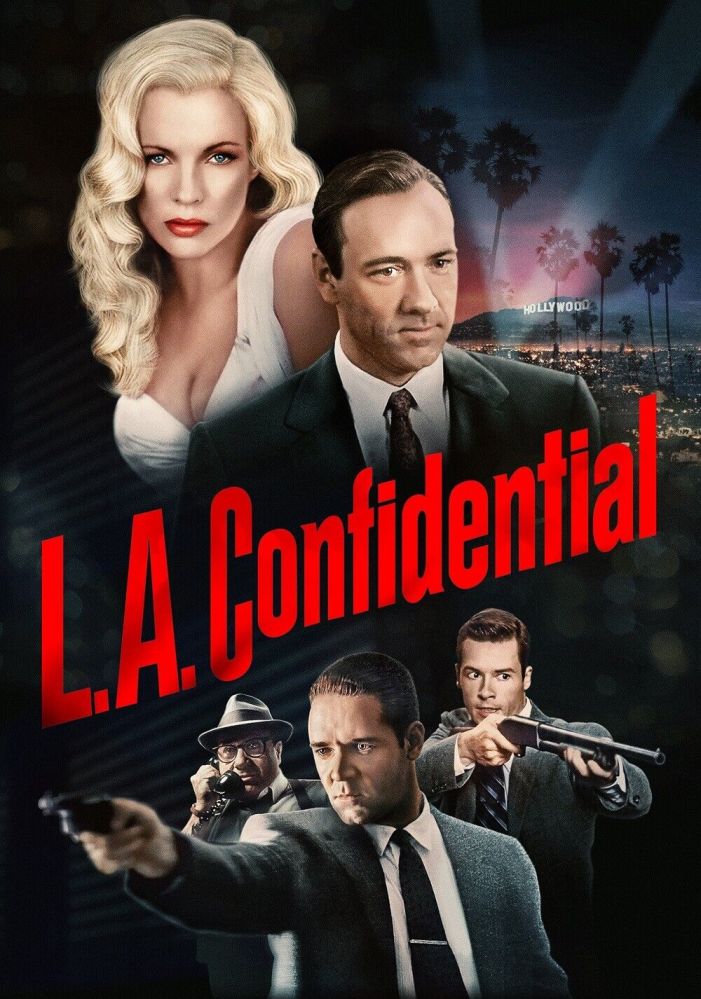
LA Confidential

Welcome to 1950s Los Angeles, where the men are crooked, the women are dangerous, and everyone’s eyebrows are perfectly sculpted. Curtis Hanson’s “L.A. Confidential” is what happens when you take film noir, inject it with Hollywood steroids, and tell it to solve a murder case that’s more twisted than a pretzel in a tornado.

Our trio of troubled cops includes Guy Pearce as Ed Exley, the kind of straight-arrow officer who probably wrote detention slips in kindergarten; Russell Crowe as Bud White, whose anger management technique is to manage to get angry at absolutely everyone; and Kevin Spacey as Jack Vincennes, a cop so slick he makes his own hair gel out of pure swagger. Together, they form the world’s most dysfunctional crime-solving team since somebody thought it was a good idea to give Sherlock Holmes a cocaine habit.

The plot kicks off with the Nite Owl Massacre, a multiple homicide that’s about as straightforward as quantum physics explained by a drunk physicist. What starts as a simple coffee shop shooting spirals into a labyrinth of corruption that involves dirty cops, Hollywood prostitutes (who look like movie stars), movie stars (who act like prostitutes), and enough double-crosses to make a geometry teacher dizzy.

Enter Kim Basinger as Lynn Bracken, a Veronica Lake lookalike who’s caught in the middle of all this mess. She’s the kind of dame that makes smart men stupid and stupid men even stupider – which in 1950s L.A. is really saying something. Her presence in the story adds layers of complexity to both the plot and the already complicated relationships between our three cops, who apparently never got the memo about bros before… well, you know.

The film weaves together so many subplots it should come with a road map and GPS. We’ve got tabloid journalism (Danny DeVito as Sid Hudgens, who never met a scandal he couldn’t make juicier), police corruption (James Cromwell as Captain Dudley Smith, whose Irish brogue could charm the scales off a snake), and a prostitution ring that gives new meaning to the term “plastic surgery.” All of this somehow ties together in a way that makes perfect sense, assuming you’ve been taking detailed notes and perhaps consulted a private detective.

What Makes It Shine Brighter Than a Hollywood Premiere:

  • Dialogue sharp enough to shave with
  • A plot more intricate than a Rube Goldberg machine, but twice as satisfying when it all comes together
  • Period detail so precise you can practically smell the cigarette smoke and casual misogyny
  • Career-defining performances from the entire cast, especially the then-unknown Aussie duo of Pearce and Crowe
  • Brian Helgeland’s screenplay, which somehow makes following three protagonists feel as natural as falling down stairs

What Makes It Shadier Than a Palm Tree at Midnight:

  • You might need to watch it twice to catch all the plot threads (though that’s hardly a punishment)
  • The first hour requires more concentration than defusing a bomb
  • Some viewers might need a flowchart to keep track of who’s betraying whom
  • The authentic period attitudes toward women and minorities might make modern viewers cringe

The Final Verdict:
“L.A. Confidential” is what happens when you take every film noir cliché in the book, feed them through a meat grinder of excellent writing, phenomenal acting, and pitch-perfect direction, and serve them up on a plate garnished with Hollywood corruption and garnished with murder. It’s a movie so good it makes you wish all police procedurals involved corrupt cops, glamorous prostitutes, and Danny DeVito running a scandal magazine.

This is the kind of film that reminds you why people fell in love with movies in the first place. It’s complex without being confusing, stylish without being shallow, and nostalgic without being naive. It’s like Raymond Chandler and James Ellroy had a baby, and that baby grew up to be the coolest kid in film school.

Rating: 5 out of 5 slightly tarnished badges

P.S. Keep an eye out for the scene where Exley interrogates a suspect while pretending to be way more hardboiled than he actually is. It’s like watching a Boy Scout try to impersonate Dirty Harry, and it’s absolutely perfect. Also, count how many times someone lights a cigarette – you could turn it into a drinking game, but you’d be unconscious before the second act.

Fargo

Fargo (1996): You Betcha It’s a Masterpiece

Oh jeez, where do we start with “Fargo”? Ya know, the Coen Brothers could’ve just made a straightforward crime thriller about a kidnapping scheme gone wrong in Minnesota. Instead, they gave us a quirky masterpiece that’s basically what would happen if you dropped film noir into a wood chipper and reassembled it in the Land of 10,000 Lakes.

The story begins with Jerry Lundegaard (William H. Macy, perfecting the art of desperate flop sweat), a car salesman whose financial schemes have landed him in deeper trouble than a moose in quicksand. His solution? Hire two thugs to kidnap his wife so his wealthy father-in-law will pay the ransom. Because what could possibly go wrong with that plan? Everything. Everything could go wrong.

Enter our heroes and villains: Carl Showalter (Steve Buscemi, described memorably as “kinda funny lookin'”) and Gaear Grimsrud (Peter Stormare, who elevates silence to an art form) are the hired kidnappers who turn out to be about as reliable as a chocolate teapot. But the real star is Frances McDormand as Marge Gunderson, the very pregnant police chief who investigates the inevitably botched crime with the kind of cheerful persistence that makes Minnesota Nice seem downright terrifying.

The plot unfolds like a dark comedy of errors written by an evil genius who’s really into regional accents. Bodies pile up, wood chippers get involved (yah, that scene), and through it all, Marge methodically follows the trail of breadcrumbs while stopping occasionally for all-you-can-eat buffets. It’s like watching Lady Macbeth performed at a church potluck, only with more fake blood and “you betchas.”

The Coens craft a world that’s simultaneously absurd and authentic. The Minnesota accents might seem exaggerated until you actually visit Minnesota. The polite small talk in the middle of tense situations isn’t parody – it’s documentary. And the way violence erupts suddenly into this mannered world makes it all the more shocking.

What Works Like a Hot Dish at a Church Supper:

  • Frances McDormand’s Oscar-winning performance as Marge, creating one of cinema’s most unique and compelling detectives
  • The perfect balance of humor and horror that makes the dark moments darker and the funny moments funnier
  • Roger Deakins’ cinematography that turns the white Minnesota landscape into both beautiful backdrop and metaphorical blank canvas for bloodshed
  • The supporting cast of character actors who make every small role memorable
  • Dialogue that’s quotable without being cutesy (“And I guess that was your accomplice in the wood chipper?”)

What’s Shakier Than a Jello Salad:

  • The Mike Yanagita scene still puzzles some viewers (though it actually serves a subtle purpose in the plot)
  • The “based on a true story” claim is about as genuine as Jerry’s loan applications
  • Some viewers might find the accents and mannerisms too heightened
  • The pacing in the middle section requires some patience

The Final Verdict:
“Fargo” is what happens when exceptional filmmakers take genre conventions, regional specificity, and moral commentary and blend them into something wholly unique. It’s a crime story that’s less interested in the mechanics of crime than in the peculiar characters who commit them and the decent folks who clean up afterward.

The film works on multiple levels: as a straight crime thriller, as a dark comedy, as a morality tale about the dangers of greed, and as a celebration/satire of Midwestern values. It’s like a layer cake made of violence, desperation, and Minnesota nice, all frosted with snow and blood.

Rating: 5 out of 5 white Oldsmobile Ciera sedans

P.S. Keep an eye out for the scene where Carl tries to function in a world of excessive Minnesota politeness. His increasing frustration with people who just want to make pleasant conversation while he’s trying to be a hardened criminal is comedy gold. Also, remember: if someone offers you coffee in Minnesota, just say “yah” and save everyone some time.

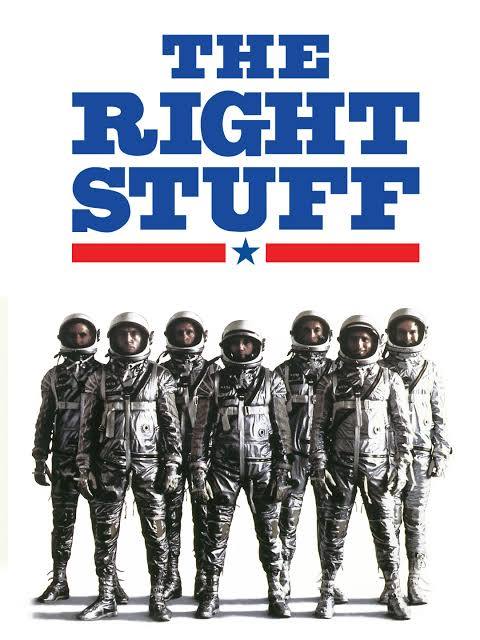
The Right Stuff

Ever wonder what happens when you take a bunch of cocky test pilots, stuff them into experimental aircraft, and tell them to push the limits of human possibility? Well, “The Right Stuff” has your answer, and spoiler alert: it involves a lot of sonic booms and even more swagger.

Based on Tom Wolfe’s bestselling book, this epic chronicles the birth of America’s space program, starting with the sound barrier-breaking exploits of test pilots at Edwards Air Force Base and culminating in the Mercury space program. At its heart is Chuck Yeager (Sam Shepard), the quintessential test pilot who treats breaking the sound barrier like it’s just another day at the office (which, for him, it kind of was).

Enter the Mercury Seven astronauts, led by John Glenn (Ed Harris, sporting a smile that could power a spacecraft) and Gordon Cooper (Dennis Quaid, whose cocky grin should have its own credit). These guys go from being hotshot pilots to America’s first astronauts, though the transition isn’t exactly smooth. Think of it as going from being cowboys of the sky to being spam in a can, as some of them put it.

The film brilliantly captures the absurdity of early spaceflight preparation. Want to be an astronaut? Great! Just let us stick every possible medical instrument into every possible orifice, spin you around until you’re ready to redecorate the centrifuge, and then parade you in front of the press like circus animals. All while your wives (including a stellar Pamela Reed as Trudy Cooper) maintain perfect hair and picture-perfect smiles for the cameras.

Director Philip Kaufman weaves together multiple storylines with the skill of a master storyteller. We bounce between Yeager’s continuing adventures pushing the envelope at Edwards, the Mercury astronauts’ training and missions, and the political circus surrounding the space race. The film manages to be both intimately personal and grandly historical, showing us both the men behind the headlines and the massive governmental machine that turned them into American icons.

What really sets “The Right Stuff” apart is its sense of humor about the whole enterprise. Yes, these men were heroes, but they were also gloriously human. The film captures their competitiveness, their fears, their family struggles, and their occasional bouts of what Tom Wolfe called “maintaining the zipper-down reputation.” It’s three hours and thirteen minutes of American history that never feels like a history lesson.

The Review Stuff:

What Works:

  • The cast is phenomenal across the board, with Sam Shepard’s laconic Yeager and Ed Harris’s earnest Glenn being particular standouts
  • The visual effects, despite being pre-CGI, are still impressive and give a visceral sense of what early test flights and space missions felt like
  • The script balances humor, drama, and historical accuracy with remarkable skill
  • Caleb Deschanel’s cinematography makes both the desert and space look equally magnificent
  • Bill Conti’s score soars as high as the aircraft it accompanies

What Doesn’t:

  • At over three hours, the film can feel a bit long-winded in places
  • Some of the supporting characters get lost in the shuffle
  • The political context of the space race with the Soviets feels somewhat underdeveloped
  • A few of the effects sequences haven’t aged as well as others

The Verdict:
“The Right Stuff” is that rare historical epic that manages to be both informative and entertaining, reverential and irreverent. It’s a testament to both human achievement and human folly, showing us heroes who were all too human and humans who became heroes. While it might be a bit too long for some viewers, it’s a journey worth taking, especially for anyone interested in aviation, space exploration, or just damn good filmmaking.

Rating: 4.5 out of 5 sonic booms

P.S. Keep an eye out for the running gag about the mysterious test pilot deaths being explained away as “crashes into the side of a mountain.” It’s both darkly funny and historically accurate – the government’s go-to explanation for classified mishaps during the Cold War era.

Amadeus

Amadeus: When God’s Favorite Composer Was His Least Favorite Human

Meet Antonio Salieri, a man who had the misfortune of being a pretty good composer in the same era as a certifiable genius. It’s like being a decent amateur juggler who has to follow someone juggling chainsaws while riding a unicycle. Blindfolded.

The film opens with elderly Salieri (F. Murray Abraham) attempting suicide while screaming apologies to Mozart for murdering him. This leads to him being committed to an asylum, where he tells his story to a young priest who probably wasn’t expecting his day to include a feature-length confession about musical jealousy and divine betrayal.

Through Salieri’s incredibly biased narration, we meet Wolfgang Amadeus Mozart (Tom Hulce), whose laugh sounds like a hyena that just discovered nitrous oxide. Mozart arrives in Vienna as the most talented brat in musical history – a genius composer who also happens to be a giggling, cursing, drinking manchild with a thing for potty humor. Imagine if you combined Einstein’s brain with a frat boy’s personality, then gave him a wig.

Salieri, who has dedicated his life to God and music (in that order), can’t handle the fact that the Almighty has chosen to give his divine gift to this “obscene child.” It’s like watching someone who spent decades practicing their craft get upstaged by a natural talent who doesn’t even bother to warm up. Mozart composes masterpieces the way most people doodle – without effort and often while doing something else entirely.

The film follows Mozart’s career in Vienna, where he manages to offend pretty much everyone who could help his career. He’s commissioned to write an opera, and decides the perfect subject would be a comedy about life in a harem, because nothing says “court approval” like sexual innuendo in Turkish costumes. Meanwhile, Salieri plots Mozart’s downfall while simultaneously being the only person who truly appreciates the genius he’s trying to destroy.

Mozart’s life starts to unravel faster than a cheap wig. His father dies (appearing later as a terrifying figure in a mask to commission the Requiem), his wife Constanze (Elizabeth Berridge) leaves him, and he’s reduced to teaching piano lessons to “squealing children” for money. Salieri, seeing his chance, disguises himself as Mozart’s dead father and commissions a Requiem Mass, planning to steal it and reveal it as his own composition at Mozart’s funeral – because nothing says “mentally stable” like planning to premiere your stolen masterpiece over your rival’s dead body.

The film builds to Mozart racing against time and his own deteriorating health to complete the Requiem, while Salieri pretends to help him while actually helping him die faster. It all culminates in one of cinema’s greatest sequences, as Mozart dictates his Requiem from his deathbed to Salieri, who writes it down while probably thinking “I could have written this… okay, no I couldn’t.”

The Verdict

What I Love:

  • F. Murray Abraham making musical jealousy into high art
  • Tom Hulce’s laugh, which should have gotten its own Oscar nomination
  • The most beautiful soundtrack in film history (thanks, Wolfgang)
  • Costume design that makes modern fashion weeks look understated
  • Miloš Forman’s direction making classical music sexy before it was cool

What Could’ve Been Better:

  • Might make you feel bad about quitting those piano lessons
  • Will definitely affect your ability to listen to “Eine Kleine Nachtmusik” without giggling
  • Could make you question every gift you thought God gave you

“Amadeus” is less about historical accuracy and more about the agony of being second-best in a field you’ve dedicated your life to. It’s like a sports movie where the antagonist is the narrator, God is the referee, and Mozart is that guy who shows up without training and breaks all the records.

Rating: 5 out of 5 powdered wigs

P.S. – After watching this, you might want to listen to Mozart’s Requiem. Just don’t commission one yourself.

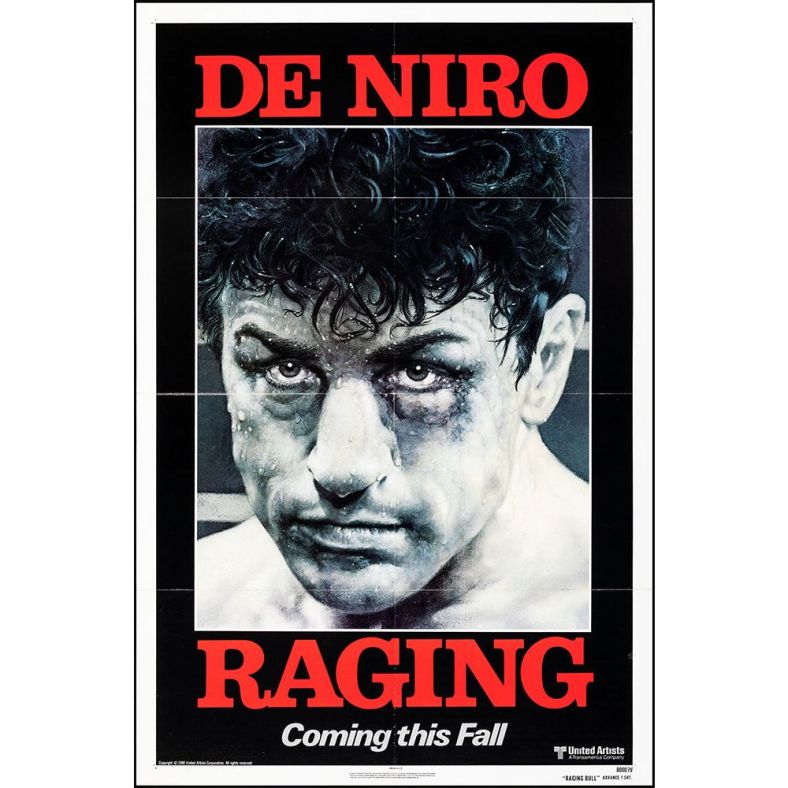
Raging Bull

Ever wonder what would happen if you took the world’s angriest man and made him punch people for a living? Meet Jake LaMotta (Robert De Niro), a middleweight boxer whose approach to both fighting and relationships makes Mike Tyson look like a meditation teacher.

Scorsese’s black-and-white masterpiece follows LaMotta through his rise and spectacular face-first fall, chronicling a man who apparently never met a person – including himself – he didn’t want to fight. The film opens in 1941, when Jake is just a up-and-coming boxer whose only notable personality trait is his ability to take a punch better than most people take compliments.

Enter Jake’s brother Joey (Joe Pesci, proving that short men can be terrifying long before Goodfellas), who manages Jake’s career with all the subtlety of a punch to the face. Their relationship is like watching the world’s most violent family counseling session, complete with mob connections and fixed fights. When Jake meets 15-year-old Vickie (Cathy Moriarty), he pursues her with all the charm of a restraining order waiting to happen. They eventually marry, because apparently no one thought to warn her about red flags.

The boxing scenes are shot like violent ballet, with blood spraying in gorgeous slow motion and sounds that make every punch feel like a small car accident. Scorsese films these fights like they’re taking place in hell itself, with smoke filling the ring and flashbulbs popping like tiny explosions. It’s beautiful in the same way a tornado is beautiful – from a very safe distance.

But the real fighting happens outside the ring. Jake’s pathological jealousy turns his life into a never-ending episode of “Who’s Sleeping With My Wife?” (Spoiler alert: probably nobody). He accuses Joey of having an affair with Vickie, which leads to a fight that makes their childhood squabbles look like pillow fights. He beats up his wife’s supposed admirers with the dedication of a man filling out his punch card at a very violent coffee shop.

The film charts Jake’s rise to the middleweight championship, including his famous fights with Sugar Ray Robinson, whom Jake seems to view less as an opponent and more as a personal insult to his existence. But because Jake can’t stop being Jake for five minutes, he gains weight, loses his title, and manages to alienate literally everyone who ever cared about him.

By the 1950s, Jake is reduced to running a sleazy Miami nightclub and performing bad stand-up comedy, which is somehow more painful to watch than any of his boxing matches. He gets arrested for introducing underage girls to male patrons, sending him to prison where, in a moment of pure LaMotta logic, he punches a wall until his knuckles bleed while screaming “Why? Why?”

The film ends with an older, paunchier Jake rehearsing his nightclub act in front of a mirror, reciting Marlon Brando’s famous “I coulda been a contender” speech from On the Waterfront. It’s a moment of crushing irony – unlike Terry Malloy, Jake had actually made it. He just couldn’t stop fighting long enough to enjoy it.

The Verdict

What I Love:

  • De Niro’s performance, which included gaining 60 pounds and presumably losing his sanity
  • Boxing sequences that make actual boxing look like synchronized swimming
  • Michael Chapman’s black-and-white cinematography that makes everything look like a beautiful nightmare
  • Joe Pesci proving that rage isn’t determined by height
  • Dialogue that makes profanity sound like Shakespeare

What Could’ve Been Better:

  • Might make you reconsider your boxing career
  • Will definitely affect your appetite for steak
  • Could make family reunions seem relatively peaceful by comparison

“Raging Bull” is like watching a Greek tragedy where everyone speaks in four-letter words and resolves their conflicts with uppercuts. It’s a masterpiece that makes you grateful for modern anger management techniques.

Rating: 5 out of 5 perfectly cooked steaks (medium rare, or Jake will know)

P.S. – After watching this, you might want to hug your brother. Unless he’s Joe Pesci.

Citizen Kane

Category: Drama
Starring: Orson Welles

Widely considered one of the greatest movies of all time it was hard to go into this fresh as the move has entered and somehow stayed in the zeitgeist (Rosebud is a classic example) and I have seen this movie before a very very long time ago, so it wasn’t like I was going into it blind. That being said – Welle’s acting is magnetic and draws you into whatever character he’s playing – and the film, even with it’s 1930’s sensibilities, is eminently watchable.

The movie starts with Kane as an old man on his deathbed in a palatial estate called Xanadu – he’s holding a snow globe and as he shuffles off this mortal coil he mutters a single last word “Rosebud” – setting up the mystery of why this great man would choose that as his last words. It’s such a mystery that a newspaper assigns an investigative reporter to do a story on Kane which sets up the framework of the movie.

The reporter (Thompson) tries to talk to Kane’s ex wife – a bitter alcoholic who refuses to speak to anyone about him. He then investigates Kane’s business manager’s office and reads some old records showing how Kane came into his fortune and how he squandered it.

It starts with Kane as a child. His parents have a mining claim that is producing and they arrange for him to go to a boarding school and have his money managed by the aforementioned business manager. When they went to send him off to boarding school – he hits them with the sled he was happily riding before the family broke apart.

When Kane turned 25 he got access to the money and responsibly and sensibly invested it using sound strategies to grow his portfol.. Ahh who are we kidding he wasted almost the entire fortune with poor decisions on booze, news, and flooze(ies).  He buys a newspaper and immediately goes full Murdoch – building influence and power through the press. He marries the niece of the president and seems like he’s riding high.

He decides to run for political office (well that sounds familiar) and during his run he meets a woman (Susan) and begins a torrid affair. He is discovered and because this isn’t 2024 the affair ruins his political career (and marriage). Kane, determined to prove his choice to have an affair was a good one, pushes poor lounge singer Susan into singing opera.  She.. Doesn’t have the vocal range for opera and even though she tells him this he blithely ignores here and builds an entire opera house for her debut – which was as awful as you imagine it was.  Kane’s best friend Leland who runs the arts column for their paper, writes a scathing review of Susan and the opera and Kane finds the review before print and fires Leland but then for some reason publishes the poor review

The reported manages to convince Susan to speak to him and she tells him that she begged him not to have to continue, but Kane makes her and eventually they have a big enough argument that Kane strikes Susan and she leaves him. He’s finally all alone – having driven away everyone who cared for him.

Thompson speaks to the butler who confirms the incident and say Kane went into a rage and only calmed down when he grabbed a snow globe.. At which point he whispers ‘rosebud’

Then the famous ending – where they’re going through his things and burning some of it (I’m not really sure why) and as the camera pans the pile of detritus you see a sled with the name ‘rosebud’ on it.

5/5 – great movie.. Deserves it’s flowers. Welle’s acting is superb and the story (apparently loosely based on Randolph Hurst) is compelling and keeps you interested. I liked the bittersweet ending where you can’t help but feel that Kane is longing for the time in his life when he was truly happy – riding that sled in the snow before his parents sent him away.

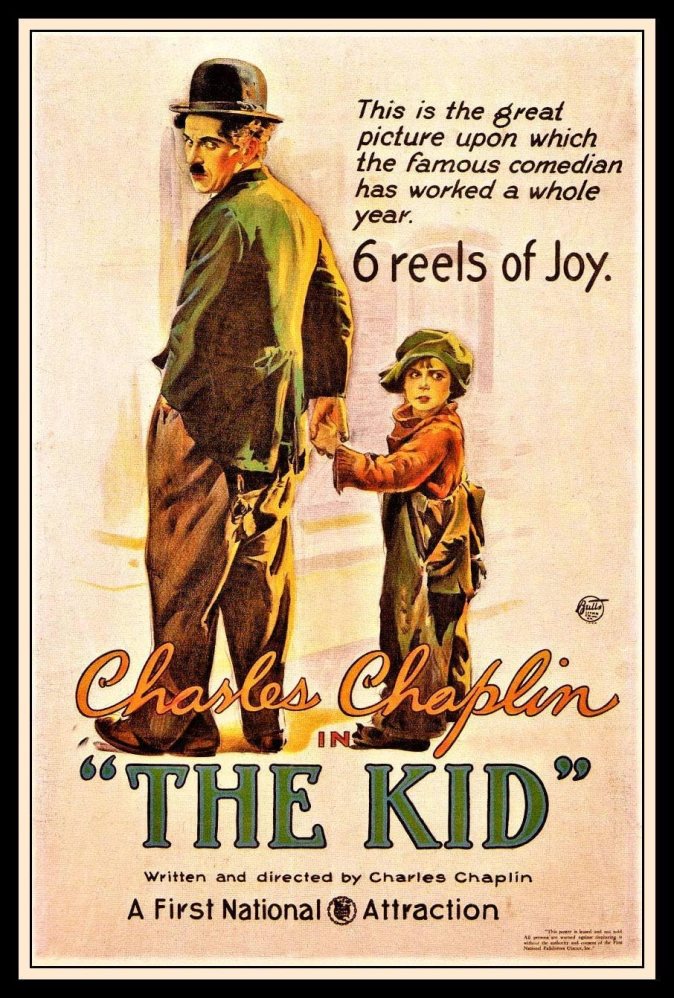
The Kid – 1921

Charlie Chaplin

Silent Movie / Comedy – 1921

3/5 stars

This one starts with an ingénue who has a baby but the father isn’t interested (doesn’t believe it’s his? Who knows with silent movies) so she is desperate to keep her career so she does the unthinkable and abandons the baby in a rich person’s car hoping he can have a better life (leaving a note asking for someone to care for this orphan child).However – the car is promptly stolen by two thugs who race off in the car only to pull over when the baby starts crying – one thug waves the gun at the baby and suggests (via body language) maybe we should you know.. Shoot it? The other thug who isn’t a complete sociopath decides to leave the baby in an alley (arguably an equally poor solution) where Chaplin’s tramp happens to live.

Chaplin stumbles across the baby and tries to leave it but his conscious won’t let him neither will the police officer who patrols the slums. He tries to put the baby in passing mother’s carriage but that backfires as she catches him in the act and Chaplin goes back into his hovel unsure what to do.

5 years pass and they’ve fallen into a  poverty riddled routine where the kids breaks a window with a rock and Chaplin walks around as a window repairman  and they scrape together enough to maybe buy some food (although seeing a coin operated gas meter was illuminating) – all during this time the mother becomes a famous wealthy actress who tries to atone for her guilt by running a charity for children where she unwittingly interacts with her own child – and she gives him a small toy to cheer him up.

The trouble began when a local bully stole the toy and the kid wasn’t taking that shit and threw down like a champion. They got into a proper brawl and the whole hood showed up for the show (not much else going on tbh) – the kid is whopping the bully’s ass but then the bully’s gigantic dad shows up and tells Chaplin if he kid loses he’s going to curb stomp him so Chaplin tries to throw the fight and pronounce the bully the winner but the kid has the heart of a lion and drops the bully with a tyson-esque combo (in reality he looked like Yoda fighting during the clone was) then Gigantor comes for Chaplin but he manages to avoid his punches for a while until he grabs a brick and starts going full mason on the bully’s dad’s forehead.. Eventually goliath falls and they escape back to their hovel.

Shortly afterward the kid gets sick and his mother (still unknowingly) arranges for a doctor to visit – where Chaplin explains that the kid isn’t his and shows the doctor the note. The doctor arranges for an orphanage to kidnap the kid forcefully which honestly is a traumatic scene to watch as a father which sets off a wacky rooftop chase scene where Chaplin rescues the kid and they hide out in a flophouse to figure out what to do. However, during this the mom met with the Dr. who showed her the note Chaplin had and she realizes that the kid is hers! What are the odds! She puts out a 1,000 dollar reward for his return

The owner of the flophouse sees the reward in the paper and grabs the kid to turn him in for the money and when Chaplin wakes up the kid is gone (again, nightmare fuel for dads) and he frantically searches for him before giving up and falling asleep at the door of his hovel which kicks off an LSD fueled fever dream where the people in his neighborhood are devils and angels and he’s flying around doing.. uhh.. I’m not sure. He’s awaken by the police and he thinks he’s going to jail but he’s actually brought to the mansion of the mother who then lets him in (presumably to reunite with the kid)

Fun fact: The actor who played the kid was uncle Fester in the Addams Family TV series!

Not Fun fact: This movie was written shortly after lost a son in childbirth – making is especially poignant.

Really not fun fact: The kid was conceived on a very young actress and Chaplin married her to avoid the scandal and was divorced shortly after – then he did it AGAIN with the girl who played the angel in THIS movie knocking her up at 16. Yikes.