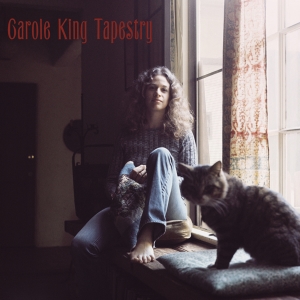
Carole King’s “Tapestry”: When Perfection Sits Down at the Piano and Makes Everyone Else Look Like They’re Just Banging on Pots
Look, I’ve spent years dissecting albums where artists try to convince us that their emotional pain sounds like a timpani being thrown down a stairwell, but sometimes you need to bow down to straight-up songwriting sorcery. “Tapestry” isn’t just an album – it’s a masterclass in how to write songs that make other songwriters want to quit and open a hardware store.
Let’s start with “I Feel the Earth Move,” which kicks off the album with the confidence of someone who knows they’re about to serve you a ten-course meal of musical perfection. The piano riff hits like a freight train wrapped in velvet, and when that chorus drops, it’s like watching someone solve a Rubik’s cube with their eyes closed – you know it’s not magic, but damn if it doesn’t feel that way.
You want to talk structure? Let’s talk about “It’s Too Late.” This is what happens when mathematical precision has a love child with raw emotion. The verse-chorus progression is so perfectly calibrated it should be studied by NASA. The bridge? It doesn’t just bridge – it builds a whole golden gate of emotional resonance. And that jazzy instrumental break? Chef’s kiss. It’s like she’s showing off, but you’re too busy feeling feelings to be mad about it.
“Will You Love Me Tomorrow” takes a song King originally wrote for The Shirelles and transforms it from a teenage diary entry into a universal referendum on human vulnerability. The way she reconstructs her own composition is like watching da Vinci decide to touch up the Mona Lisa and somehow make it better. The arrangement breathes like a living thing, each instrument knowing exactly when to step forward and when to hang back, like the world’s most emotionally intelligent jazz ensemble.
“You’ve Got a Friend” is the kind of song that makes you realize most other songs are just making noise. The melody flows so naturally you’d think it was discovered rather than written, like it was just floating around in the ether waiting for King to pluck it out of the air. The chord progression holds you like your most emotionally available friend during a crisis.
Can we talk about “So Far Away”? Because this is where King proves she can make loneliness sound like a precious metal. The way the melody wraps around those lyrics is like watching an Olympic gymnast stick the landing in slow motion – you know you’re witnessing perfection even if you can’t explain the technical elements.
The production (shoutout to Lou Adler) is cleaner than a surgeon’s instruments but warm like a cup of tea your grandmother made you. Every piano note, every guitar strum, every bass line sits exactly where it needs to be in the mix, creating space for King’s voice to do its intimate conversational dance with your soul.
And that voice – let’s address it. It’s not technically perfect, and that’s exactly what makes it perfect. It’s honest like a handwritten letter, comfortable like your favorite sweater, and more authentic than a farmer’s market in Vermont. When she hits the high notes in “Way Over Yonder,” it’s not about vocal gymnastics – it’s about emotional truth.
“(You Make Me Feel Like) A Natural Woman” closes the first side like a closing argument in a court case where joy is on trial. By this point, resistance is futile. You’re either sobbing, calling your ex, or both.
The crazy thing about “Tapestry” is how it makes absolute perfection seem casual. It’s like watching someone parallel park a truck trailer on the first try while solving a crossword puzzle – the skill level is obscene, but it’s delivered with a shrug and a smile.
Rating: 5 out of 5 Perfect Chord Progressions 🎹
Essential Tracks: The whole damn thing. Picking favorites here is like choosing between breaths.
Technical Masterpieces:
- “Beautiful” for its deceptively complex melodic structure
- “Tapestry” for its novel-worthy narrative compression
- “Where You Lead” for its hook-writing clinic
Final Thought: If this album were a piece of furniture, it would be a perfectly crafted oak desk that somehow also gives great emotional advice and bakes you cookies. They literally don’t make them like this anymore because they can’t. Carole King didn’t just raise the bar with “Tapestry” – she turned it into a limbo stick and made everyone else dance under it.

 50for50tony.me