Everything Everywhere All At Once

If Everything Everywhere All at Once were a person, it would be the most chaotic, over-caffeinated, emotionally unstable, and absurdly wise friend you have—the one who somehow makes you laugh, cry, and question the meaning of life in the span of a single conversation. This movie isn’t just a film; it’s a full-body experience. It grabs you by the collar, hurls you through the multiverse at breakneck speed, and somehow, by the end, makes you believe in the power of googly eyes and a well-placed hug.

At the heart of this madness is Michelle Yeoh, who plays Evelyn Wang, a middle-aged laundromat owner drowning in tax problems, an unraveling marriage, an increasingly distant daughter, and, oh yeah, an unexpected multiversal war where she’s the universe’s last hope. So, you know, a normal Tuesday. Yeoh is a revelation—switching from exhausted immigrant mother to kung-fu master to hot-dog-fingered romantic to literally a rock, all while making you feel every ounce of her existential crisis. It’s like watching an entire lifetime of performances crammed into one movie, and she absolutely owns every second.

And then there’s Ke Huy Quan, who storms back into Hollywood like he never left, delivering one of the most heartbreakingly pure performances as Waymond, Evelyn’s kind, soft-spoken husband who turns out to be the most quietly profound character in the entire film. One minute he’s bumbling with fanny-pack dad energy, the next he’s slicing through goons with said fanny pack, and then, just when you think you have him figured out, he drops the monologue about kindness that shatters your soul into a million pieces. This is the kind of performance that makes you want to hug every nice person you’ve ever met.

And then there’s Stephanie Hsu as Joy/Jobu Tupaki, who, honestly, might be one of the most hilariously terrifying antagonists ever put to screen. She’s nihilism in a glittering Elvis suit, flipping between existential despair and chaotic slapstick, and somehow, amidst all the ridiculousness, she delivers a gut-punch performance about generational trauma, identity, and the all-consuming fear of never being enough. If you thought your mom made you feel guilty, imagine if she could literally fight you across infinite universes.

But let’s talk about how this movie does what it does. The Daniels (Daniel Kwan and Daniel Scheinert) direct this film like two absolute lunatics who somehow got their hands on an A24 budget and decided to use it to make the most emotionally resonant fever dream imaginable. The editing is on another level—flipping between universes, tones, and aspect ratios like it’s no big deal. One moment it’s a high-stakes kung-fu battle, the next it’s a heartfelt conversation between two literal rocks, and somehow, both scenes hit just as hard.

And the action? Gloriously absurd. You will never see another movie where a butt-plug-fueled martial arts battle exists in the same space as an Oscar-worthy meditation on love and acceptance. The fight choreography is top-tier—equal parts Jackie Chan homage and absurdist comedy—because why shouldn’t a fight scene involve a guy using a keyboard like nunchucks?

And let’s not forget the emotional core of it all. Because underneath the hot-dog fingers, the raccoon puppeteering (yes, Raccacoonie is real and magnificent), and the existential bagel of doom, this is a story about a mother and a daughter, about learning to choose love and kindness even when life is messy and incomprehensible. It’s about the small, quiet moments that make existence meaningful—even if you are just a rock on a hill.

By the time the credits roll, you’re left feeling emotionally drained in the best way possible. Everything Everywhere All at Once is absurd, heartfelt, hilarious, existential, and genuinely one of the most original films ever made. It’s a love letter to chaos, to immigrant families, to kindness, and to the fact that sometimes, the only way to fight existential dread is to put googly eyes on everything.
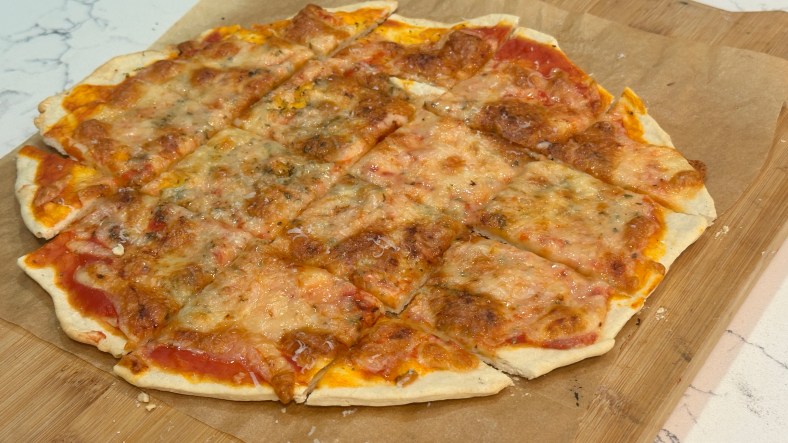
New Haven Apizza

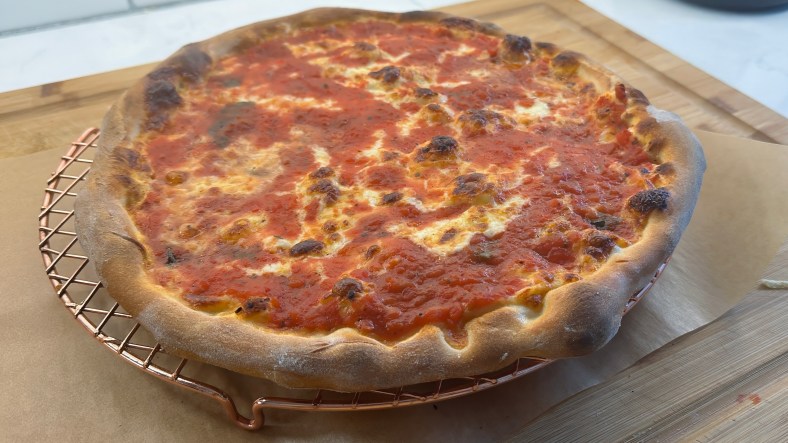
If you think you know pizza but haven’t tried New Haven apizza, prepare for a revelation. This Connecticut-born classic isn’t just a regional variation—it’s an institution. Locals (and pizza purists) will tell you it’s not just pizza; it’s apizza (pronounced ah-beetz, thanks to its Neapolitan dialect roots). And if you’re expecting something soft, foldable, and loaded with cheese, think again. New Haven-style apizza is a blistered, charred, chewy masterpiece that’s as much about texture as it is about flavor.

New Haven’s pizza legacy started with Italian immigrants in the early 20th century, particularly Frank Pepe, the man who put this style on the map. In 1925, Pepe opened Frank Pepe Pizzeria Napoletana, serving up coal-fired pies with his now-famous white clam pizza. Not long after, rival pizzerias like Sally’s Apizza and Modern Apizza emerged, each perfecting their own take on this iconic style. Unlike the more famous New York-style pizza, which leans on a balanced crust-to-topping ratio and a slight crispiness, New Haven apizza is all about the crust—thin, crisp on the bottom, airy inside, and charred to perfection in a coal-fired oven.

Let’s talk about that char. New Haven apizza is intentionally cooked at blistering hot temperatures (sometimes over 600°F), which gives it a signature blackened, crispy exterior. Don’t be alarmed by those dark spots—it’s not burnt; it’s perfectly charred, adding a smoky depth of flavor that’s completely unique. The dough itself is made with high-protein flour, fermented longer than usual to develop complex flavors, and stretched into an irregular, oblong shape—so don’t expect a perfectly round pie.

Then there’s the sauce-to-cheese ratio, which in New Haven is refreshingly sparse. A traditional “plain” apizza (tomato pie) features little more than a thin layer of tangy tomato sauce, oregano, garlic, and a drizzle of olive oil—no cheese unless you ask for it (mootz, short for mozzarella). That’s right, cheese is optional here. Order a plain pie without specifying “mootz,” and you’ll get a saucy, crispy, dairy-free experience that lets the ingredients shine in their purest form. If you do opt for mozzarella, it’s typically applied in moderation rather than covering the entire pizza.

Of course, we can’t talk about New Haven apizza without mentioning its most famous creation: the white clam pie. This local legend, first made at Frank Pepe’s, is an absolute must-try. Imagine a garlicky, olive oil-based pizza topped with freshly shucked littleneck clams, grated pecorino Romano, and a sprinkle of oregano—it’s briny, rich, and utterly addictive. No red sauce, no mozzarella, just pure seafood-meets-charred-dough magic. It might sound unusual, but one bite, and you’ll understand why people drive for hours just to get their hands on it.

Beyond clams, other classic New Haven toppings include hot cherry peppers, sausage, and fresh tomato (which is typically added post-bake for a bright, juicy contrast). But no matter what toppings you choose, the beauty of apizza lies in its balance—crispy, chewy crust, minimalist toppings, and that unmistakable coal-fired flavor.

Despite its deep roots in New Haven, apizza has started making waves beyond Connecticut. Devoted fans and former Yale students have helped spread the gospel of charred pies to other cities, with New Haven-style pizzerias popping up in places like New York, Boston, and even Los Angeles. But for the truest experience, nothing beats the original. Whether you’re biting into a classic tomato pie at Sally’s, indulging in a white clam pie at Pepe’s, or grabbing a crispy, cheesy slice at Modern, one thing is for sure—New Haven apizza is one of America’s greatest contributions to the pizza universe.

So, if you ever find yourself in the Elm City, do yourself a favor: order a large pie, embrace the char, and remember to call it apizza.

St. Louis Style Pizza

If you’ve never had St. Louis-style pizza, get ready for something totally unexpected. This Missouri-born creation defies every traditional pizza rule in the best way possible—starting with the fact that it’s cut into squares, not slices. That’s right, in St. Louis, pizza isn’t served in the familiar triangle shape but instead in a grid of bite-sized squares, thanks to what’s known as the “party cut” or “tavern cut.” But the unique slicing method is just the beginning of what sets this style apart.

First and foremost, the crust is unlike any other. Instead of a chewy, airy dough, St. Louis-style pizza has an ultra-thin, cracker-like crust that snaps rather than bends. There’s no yeast involved, which means the dough stays flat and crispy, giving each bite a satisfying crunch. This makes it one of the few pizzas that you definitely cannot fold—and honestly, you wouldn’t want to. The crisp texture is the backbone of the entire experience.

Then there’s the cheese—and this is where things get really St. Louis. Unlike most pizzas that use mozzarella, St. Louis-style pizza is topped with Provel cheese, a hyper-local blend of cheddar, Swiss, and provolone. Provel is an acquired taste—it’s ultra-melty, creamy, and has a slight smoky, buttery flavor. While some people love its gooey texture, others find it almost too processed. But for St. Louisans, Provel is non-negotiable. You’ll even find it in toasted ravioli, another local specialty. If you order a St. Louis-style pizza outside of Missouri, chances are they’ll swap in mozzarella, but if you want the real deal, it’s gotta be Provel.

As for the sauce, St. Louis keeps things sweet and tangy. Unlike the bright, acidic sauces of Neapolitan or New York-style pizza, St. Louis pizza sauce often has a touch of sugar, creating a slight sweetness that balances the saltiness of the Provel cheese. It’s usually spread in a thin layer, so the sauce never overwhelms the crispy crust.

And finally, we have the toppings. Since the crust is thin and crispy, St. Louis-style pizza can handle a lot of toppings without getting soggy. Popular choices include Italian sausage, pepperoni, mushrooms, onions, and green peppers, though some places get more creative. One classic St. Louis topping combo is bacon and onion, a salty-sweet mix that plays well with the Provel.

While the “who invented St. Louis pizza?” debate continues, one name always comes up: Imo’s Pizza. Founded in 1964 by Ed and Margie Imo, this family-owned business turned the local style into a full-blown institution. Today, Imo’s is to St. Louis what Domino’s is to the rest of America—a citywide staple with dozens of locations serving up thin, crispy, Provel-smothered pies.

Outside of Missouri, St. Louis-style pizza remains a bit of a cult favorite. Some people can’t get enough of the crispy crust and melty Provel, while others struggle to embrace its unconventional approach. But love it or hate it, St. Louis-style pizza is one of the most distinct and proudly regional pizzas in the U.S. It’s not trying to be New York, Neapolitan, or Chicago deep-dish—it’s doing its own thing, unapologetically.

So, if you ever find yourself in St. Louis, forget the debate over whether Provel is real cheese, embrace the party cut, and dive into a crispy, cheesy, square-shaped bite of Missouri’s finest. Just don’t ask for a slice.

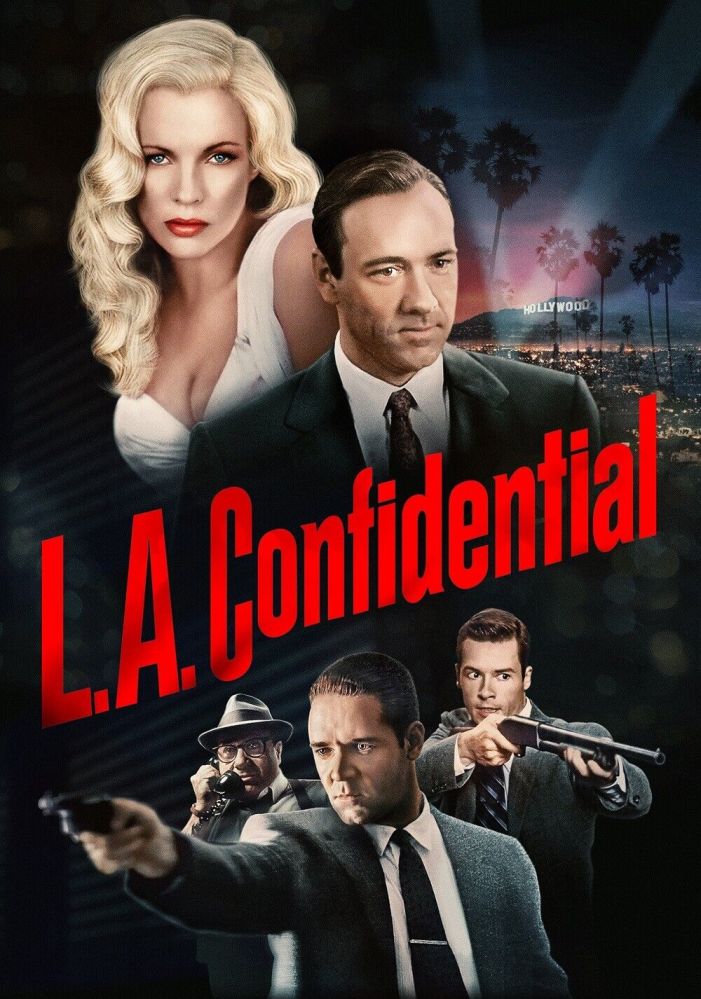
LA Confidential

Welcome to 1950s Los Angeles, where the men are crooked, the women are dangerous, and everyone’s eyebrows are perfectly sculpted. Curtis Hanson’s “L.A. Confidential” is what happens when you take film noir, inject it with Hollywood steroids, and tell it to solve a murder case that’s more twisted than a pretzel in a tornado.

Our trio of troubled cops includes Guy Pearce as Ed Exley, the kind of straight-arrow officer who probably wrote detention slips in kindergarten; Russell Crowe as Bud White, whose anger management technique is to manage to get angry at absolutely everyone; and Kevin Spacey as Jack Vincennes, a cop so slick he makes his own hair gel out of pure swagger. Together, they form the world’s most dysfunctional crime-solving team since somebody thought it was a good idea to give Sherlock Holmes a cocaine habit.

The plot kicks off with the Nite Owl Massacre, a multiple homicide that’s about as straightforward as quantum physics explained by a drunk physicist. What starts as a simple coffee shop shooting spirals into a labyrinth of corruption that involves dirty cops, Hollywood prostitutes (who look like movie stars), movie stars (who act like prostitutes), and enough double-crosses to make a geometry teacher dizzy.

Enter Kim Basinger as Lynn Bracken, a Veronica Lake lookalike who’s caught in the middle of all this mess. She’s the kind of dame that makes smart men stupid and stupid men even stupider – which in 1950s L.A. is really saying something. Her presence in the story adds layers of complexity to both the plot and the already complicated relationships between our three cops, who apparently never got the memo about bros before… well, you know.

The film weaves together so many subplots it should come with a road map and GPS. We’ve got tabloid journalism (Danny DeVito as Sid Hudgens, who never met a scandal he couldn’t make juicier), police corruption (James Cromwell as Captain Dudley Smith, whose Irish brogue could charm the scales off a snake), and a prostitution ring that gives new meaning to the term “plastic surgery.” All of this somehow ties together in a way that makes perfect sense, assuming you’ve been taking detailed notes and perhaps consulted a private detective.

What Makes It Shine Brighter Than a Hollywood Premiere:

  • Dialogue sharp enough to shave with
  • A plot more intricate than a Rube Goldberg machine, but twice as satisfying when it all comes together
  • Period detail so precise you can practically smell the cigarette smoke and casual misogyny
  • Career-defining performances from the entire cast, especially the then-unknown Aussie duo of Pearce and Crowe
  • Brian Helgeland’s screenplay, which somehow makes following three protagonists feel as natural as falling down stairs

What Makes It Shadier Than a Palm Tree at Midnight:

  • You might need to watch it twice to catch all the plot threads (though that’s hardly a punishment)
  • The first hour requires more concentration than defusing a bomb
  • Some viewers might need a flowchart to keep track of who’s betraying whom
  • The authentic period attitudes toward women and minorities might make modern viewers cringe

The Final Verdict:
“L.A. Confidential” is what happens when you take every film noir cliché in the book, feed them through a meat grinder of excellent writing, phenomenal acting, and pitch-perfect direction, and serve them up on a plate garnished with Hollywood corruption and garnished with murder. It’s a movie so good it makes you wish all police procedurals involved corrupt cops, glamorous prostitutes, and Danny DeVito running a scandal magazine.

This is the kind of film that reminds you why people fell in love with movies in the first place. It’s complex without being confusing, stylish without being shallow, and nostalgic without being naive. It’s like Raymond Chandler and James Ellroy had a baby, and that baby grew up to be the coolest kid in film school.

Rating: 5 out of 5 slightly tarnished badges

P.S. Keep an eye out for the scene where Exley interrogates a suspect while pretending to be way more hardboiled than he actually is. It’s like watching a Boy Scout try to impersonate Dirty Harry, and it’s absolutely perfect. Also, count how many times someone lights a cigarette – you could turn it into a drinking game, but you’d be unconscious before the second act.

Once Upon a Time in America

The Longest Game of Criminal Musical Chairs Ever Filmed

Looking for a nice, straightforward gangster movie? Maybe try Goodfellas. Sergio Leone’s final film is what happens when you take a crime epic, throw it in a blender with a pocket watch, and hit the “timeline confetti” button. It’s nearly four hours of past, present, and “wait, when are we now?”

Our story follows David “Noodles” Aaronson (Robert De Niro) through three primary time periods: the 1920s (child gangster edition), the 1930s (successful gangster edition), and 1968 (confused old gangster edition). The film opens with Noodles in 1933 fleeing from gangsters after apparently getting his friends killed and stealing their money. Because that’s what friends are for, right?

Cut to 1968, where an older Noodles returns to New York after receiving a mysterious letter. He looks like he’s spent the last 35 years trying to figure out what exactly happened in this movie, and honestly, same. He visits a still-operating speakeasy run by Fat Moe (Larry Rapp), whose sister Deborah (Elizabeth McGovern) was the love of Noodles’ life – at least when he wasn’t too busy ruining everything.

Through a series of flashbacks more complex than a quantum physics textbook, we learn about young Noodles (Scott Tiler) and his childhood friend Max (Rusty Jacobs). They start their criminal career in Manhattan’s Lower East Side, where they meet Patsy and Cockeye, forming a gang that makes the Little Rascals look like model citizens. Their early adventures include setting a rival’s newspaper stand on fire, which seems like a lot of effort to avoid reading the morning news.

Young Noodles goes to prison for killing a rival gang member, and when he gets out, he reunites with his now-grown friends. Adult Max (James Woods) has become more ambitious than a Silicon Valley startup founder, leading the gang into bigger scores during Prohibition. The adult gang’s operations are successful enough to make them rich, but Max keeps pushing for more, because apparently being a wealthy criminal during the Depression isn’t enough of an achievement.

The film weaves through their rise to power, complicated by Noodles’ obsession with Deborah and Max’s increasingly risky schemes. There’s a subplot about a union leader named Jimmy O’Donnell that’s more confusing than trying to assemble IKEA furniture without instructions. Meanwhile, Noodles’ relationship with Deborah goes about as well as you’d expect from someone whose emotional intelligence is somewhere between a rock and a slightly smaller rock.

Everything supposedly culminates in a betrayal in 1933 that leads to the deaths of Max, Patsy, and Cockeye. But because this is Leone, nothing is what it seems. In 1968, Noodles discovers that Max faked his death, stole the gang’s money, and became a powerful political figure named Secretary Bailey. It’s like the worst high school reunion surprise ever.

The Verdict

What I Love:

  • A narrative structure that makes Christopher Nolan say “maybe that’s a bit complicated”
  • Ennio Morricone’s score that makes even scenes of people walking seem epic
  • De Niro proving he can brood in multiple decades
  • James Woods at peak James Woods-iness
  • Cinematography that makes New York look like a beautiful dream, even when it’s a nightmare

What Could’ve Been Better:

  • Might require a flowchart to follow the timeline
  • Will definitely affect your ability to tell what year it is
  • Could make you suspicious of any childhood friend who seems too ambitious

This is a film that treats time like a suggestion rather than a rule. It’s less “Once Upon a Time” and more “Several Times at Once in America.” At nearly four hours long, it’s the kind of movie that makes Lord of the Rings look like a TikTok video.

Rating: 5 out of 5 opium-induced time jumps

P.S. – If you’re planning to watch this, maybe take notes. Or better yet, bring a professional timekeeper.

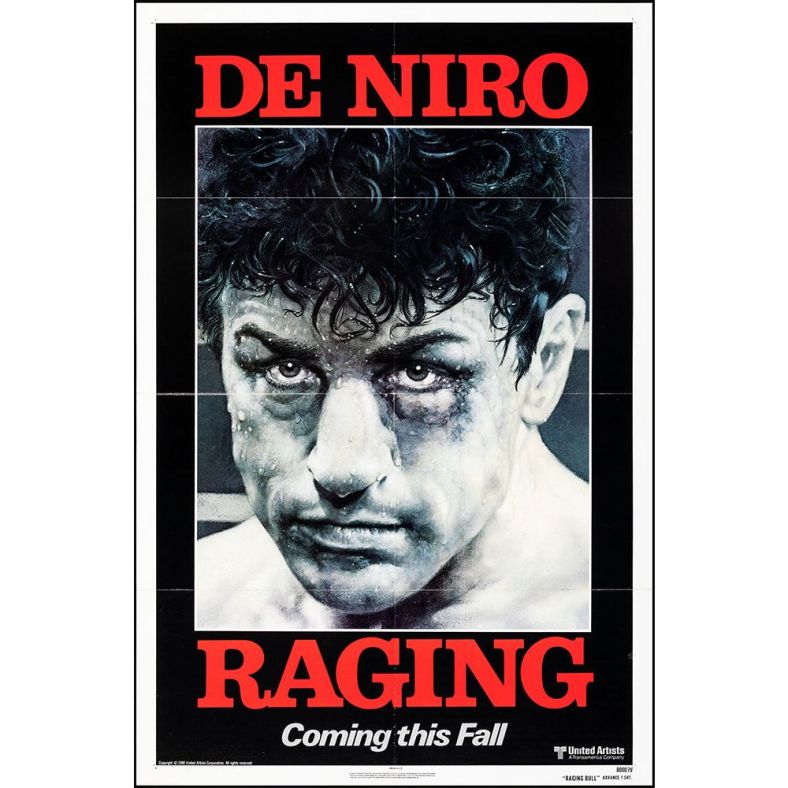
Raging Bull

Ever wonder what would happen if you took the world’s angriest man and made him punch people for a living? Meet Jake LaMotta (Robert De Niro), a middleweight boxer whose approach to both fighting and relationships makes Mike Tyson look like a meditation teacher.

Scorsese’s black-and-white masterpiece follows LaMotta through his rise and spectacular face-first fall, chronicling a man who apparently never met a person – including himself – he didn’t want to fight. The film opens in 1941, when Jake is just a up-and-coming boxer whose only notable personality trait is his ability to take a punch better than most people take compliments.

Enter Jake’s brother Joey (Joe Pesci, proving that short men can be terrifying long before Goodfellas), who manages Jake’s career with all the subtlety of a punch to the face. Their relationship is like watching the world’s most violent family counseling session, complete with mob connections and fixed fights. When Jake meets 15-year-old Vickie (Cathy Moriarty), he pursues her with all the charm of a restraining order waiting to happen. They eventually marry, because apparently no one thought to warn her about red flags.

The boxing scenes are shot like violent ballet, with blood spraying in gorgeous slow motion and sounds that make every punch feel like a small car accident. Scorsese films these fights like they’re taking place in hell itself, with smoke filling the ring and flashbulbs popping like tiny explosions. It’s beautiful in the same way a tornado is beautiful – from a very safe distance.

But the real fighting happens outside the ring. Jake’s pathological jealousy turns his life into a never-ending episode of “Who’s Sleeping With My Wife?” (Spoiler alert: probably nobody). He accuses Joey of having an affair with Vickie, which leads to a fight that makes their childhood squabbles look like pillow fights. He beats up his wife’s supposed admirers with the dedication of a man filling out his punch card at a very violent coffee shop.

The film charts Jake’s rise to the middleweight championship, including his famous fights with Sugar Ray Robinson, whom Jake seems to view less as an opponent and more as a personal insult to his existence. But because Jake can’t stop being Jake for five minutes, he gains weight, loses his title, and manages to alienate literally everyone who ever cared about him.

By the 1950s, Jake is reduced to running a sleazy Miami nightclub and performing bad stand-up comedy, which is somehow more painful to watch than any of his boxing matches. He gets arrested for introducing underage girls to male patrons, sending him to prison where, in a moment of pure LaMotta logic, he punches a wall until his knuckles bleed while screaming “Why? Why?”

The film ends with an older, paunchier Jake rehearsing his nightclub act in front of a mirror, reciting Marlon Brando’s famous “I coulda been a contender” speech from On the Waterfront. It’s a moment of crushing irony – unlike Terry Malloy, Jake had actually made it. He just couldn’t stop fighting long enough to enjoy it.

The Verdict

What I Love:

  • De Niro’s performance, which included gaining 60 pounds and presumably losing his sanity
  • Boxing sequences that make actual boxing look like synchronized swimming
  • Michael Chapman’s black-and-white cinematography that makes everything look like a beautiful nightmare
  • Joe Pesci proving that rage isn’t determined by height
  • Dialogue that makes profanity sound like Shakespeare

What Could’ve Been Better:

  • Might make you reconsider your boxing career
  • Will definitely affect your appetite for steak
  • Could make family reunions seem relatively peaceful by comparison

“Raging Bull” is like watching a Greek tragedy where everyone speaks in four-letter words and resolves their conflicts with uppercuts. It’s a masterpiece that makes you grateful for modern anger management techniques.

Rating: 5 out of 5 perfectly cooked steaks (medium rare, or Jake will know)

P.S. – After watching this, you might want to hug your brother. Unless he’s Joe Pesci.

Prince – Purple Rain

When Prince Turned Minnesota Purple

Released: June 25, 1984

In 1984, while everyone else was worried about Big Brother watching them, Prince was busy creating an album so monumentally sexy that it made George Orwell’s dystopian predictions seem quaint by comparison. “Purple Rain” isn’t just an album—it’s what happens when unstoppable ambition meets unlimited talent and a seemingly unlimited collection of ruffled shirts.

The album kicks off with “Let’s Go Crazy,” which begins with what sounds like a funeral sermon and ends up being the most energetic eulogy in history. It’s the only church service that transitions into a guitar solo so explosive it probably violated several noise ordinances. The song serves as both a mission statement and a warning: buckle up, this isn’t going to be your typical pop record.

“Take Me With U” follows, featuring Apollonia in a duet that makes you believe in love, even if that love involves matching motorcycle outfits. It’s the kind of song that makes you want to hop on a Purple Rain-era Honda and ride off into the Minneapolis sunset, preferably while wearing at least three different types of lace.

Then there’s “The Beautiful Ones,” where Prince manages to make vocal cord shredding sound like an art form. The song builds from a gentle falsetto to a scream that probably had insurance adjusters checking nearby buildings for structural damage. It’s a master class in dynamics, desire, and how to make synthesizers sound like they’re having emotional breakdowns.

“Computer Blue” starts with the immortal lines “Wendy? Yes Lisa. Is the water warm enough? Yes Lisa.” Which either means something deeply profound or proves that Prince could make literally anything sound cool. The song then launches into a technological funk workout that makes most prog rock bands sound like they’re playing with Fisher-Price instruments.

“Darling Nikki” was so scandalous it made Tipper Gore create the Parents Music Resource Center, which is honestly a better endorsement than any review could provide. It’s the kind of song that makes you understand why some people thought rock music was Satan’s doing, and also why Satan might have pretty good taste in music.

The album’s second half opens with “When Doves Cry,” a song that rewrote the rules of pop music by removing the bass line, which in 1984 was like removing the wheels from a car and somehow making it run better. It’s funk denial at its finest, creating a new genre that nobody has quite figured out how to replicate because, well, they’re not Prince.

“I Would Die 4 U” is either a love song, a messianic declaration, or both. Only Prince could make spiritual ambiguity this danceable. The track flows seamlessly into “Baby I’m A Star,” which isn’t so much a statement as it is a fact being reported to the universe. It’s Prince at his most confident, which is saying something for a man who regularly wore high heels on stage and made them look completely reasonable.

Finally, there’s “Purple Rain,” a power ballad so perfect it makes other power ballads want to quit and become accountants. It’s gospel, rock, soul, and funk all having a religious experience at the same time. The guitar solo alone should have its own wing in the Rock and Roll Hall of Fame. It’s the sound of someone reaching musical nirvana while simultaneously inventing a new color.

⭐⭐⭐⭐⭐ (5/5 stars)

Final Thoughts: “Purple Rain” is what happens when an artist operating at the peak of their powers decides to show off every single thing they can do in the span of nine songs. Its only flaw might be that it raised the bar so high that Prince had to spend the rest of his career competing with himself, which he somehow managed to do successfully for three more decades. The album is a masterpiece of ambition, execution, and sheer audacity. It’s the sound of someone who knows they’re the coolest person in the room, even if that room is the entire world. If aliens ever land and ask what Earth music was like, just play them “Purple Rain.” Though you might want to skip “Darling Nikki” depending on their cultural sensitivities. Then again, if they can’t handle Prince at his most provocative, do we really want to make first contact?

Bob Dylan – Blood on the Tracks

Dylan’s Beautiful Bummer of a Breakup Album

Released: January 20, 1975

If heartbreak had a sound, it would be Bob Dylan’s voice cracking on side one of “Blood on the Tracks.” Following his separation from his wife Sara, Dylan created what might be history’s most eloquent version of the “It’s not you, it’s me… but actually it’s definitely you” conversation. Think of it as the singer-songwriter equivalent of drunk-texting your ex, if your drunk texts were somehow worthy of the Nobel Prize in Literature.

The album opens with “Tangled Up in Blue,” a masterpiece that somehow makes getting dumped sound like an epic adventure worthy of Homer. Dylan jumps through time like a quantum physicist with relationship issues, proving that even when you’re telling a story about love gone wrong, chronological order is optional. The song has more perspectives than a cubist painting, with Dylan switching from first to third person like he’s trying to convince himself it all happened to somebody else.

“Simple Twist of Fate” follows, and there’s nothing simple about it except Dylan’s ability to rip your heart out in under five minutes. It’s the kind of song that makes you want to call everyone you’ve ever dated and apologize, even if you don’t know what for. The harmonica solo sounds like it’s being played by someone who just found out their dog died, and I mean that as the highest compliment.

“You’re a Big Girl Now” might be the most patronizing title since “Baby, It’s Cold Outside,” but the song itself is a stunning admission of vulnerability. When Dylan sings “I can change, I swear,” you can almost hear every therapist in America collectively sighing. This is followed by “Idiot Wind,” which might be the most elaborate way anyone has ever said “Well, you’re stupid too!” after a breakup. It’s like a diss track written by Shakespeare—brutal, poetic, and occasionally incomprehensible.

“You’re Gonna Make Me Lonesome When You Go” is the sound of someone trying to be cool about an impending breakup and failing miserably. It’s like telling someone “I’m totally fine with this” while ugly-crying into your pillow. The country-tinged arrangement is so sweet it almost masks the fact that Dylan is basically saying “Thanks for the future trauma!”

“Meet Me in the Morning” proves that even Bob Dylan gets the blues, though his version involves more obscure literary references than most. It’s followed by “Lily, Rosemary and the Jack of Hearts,” an epic tale that makes Game of Thrones seem straightforward by comparison. It’s either a complex metaphor for love and loss or Dylan just really wanted to write a cowboy story. Either way, it’s magnificent.

“If You See Her, Say Hello” is the sound of someone pretending to be over their ex while clearly not being over their ex. It’s like running into them at the grocery store and acting totally casual while secretly hoping they notice how well you’re doing (spoiler alert: Dylan was not doing well).

The album closes with “Buckets of Rain,” which feels like Dylan finally reaching the acceptance stage of grief, though in typical Dylan fashion, he gets there by way of surrealist imagery and references to chicken shacks. It’s either profound or nonsensical, and somehow it’s both at the same time.

⭐⭐⭐⭐⭐ (5/5 stars)

Final Thoughts: “Blood on the Tracks” is the sound of a master songwriter turning personal pain into universal art. It’s like reading someone’s diary, if that someone happened to be the greatest lyricist of the 20th century. The album’s only flaw might be that it’s so good it makes your own breakup songs sound like nursery rhymes in comparison. Dylan doesn’t just wear his heart on his sleeve here—he takes it out, examines it under a microscope, and then describes it in terms so poetic they make Leonard Cohen sound like a greeting card writer. It’s the kind of album that makes you grateful for great art while simultaneously making you hope you never go through what it took to create it. If you’re going through a breakup, this album is either the best or worst thing you could possibly listen to. Possibly both.