
Goal Met – 5 a.m. Wake Up Call

I’m not going to lie – this sucked pretty bad. I’m partially to blame, as I waited to long to do this and had to do it in the middle of winter when it was pitch black at 5am and the house was freezing.  This whole idea stemmed from the five am club book that was making its rounds on social media. The book had a whole structure on how to utilize the time breaking it down into discrete segments which might have worked if I had done this in the summer.

I did do some planning however – I made a pitcher of iced tea from some high caffeine tea and had it ready to go so as soon as I woke up I drank a glass of that and a glass of water to help wake my body up.  I stumbled down into my office, the only place I could make some noise without waking up the kids. I did some light stretching to try to get some blood flowing then started working on my curated to do list.

That’s where I started to see some issue – my brain just wasn’t ready for structured work and it took the tea about 40 minutes to really kick in before I felt awake enough to trust what I was doing would be accurate. So I switched to more creative tasks where accuracy wasn’t that necessary.  Notably the short story I was working on – in fact during this week I wrote about 10,000 words which was almost double what I had so far (writers block can be a real pain sometimes) – I settled into a habit where I’d sketch out the next few plot points that I needed to hit then just wrote for an hour or more letting the words just come out. I’d spend the last 30 minutes reviewing what I wrote and making some light edits to strengthen the structure (mostly due to changes made later in the story)

I actually felt really productive in those two hours but getting up at five was a real struggle as I’m not a morning person but oddly enough I never felt the spark to write late at night so I really did have better results with that five am wake up call. I just couldn’t see myself continuing it for any length of time as I really like staying up late – those few hours after the kids go to bed are the prime hours for me to be creative or get tasks done or even relax with a baseball game or even some video game time.  It’s hard to do all that at five am in the morning (possible, but not easy)

I’m glad I gave this a shot  – in fact my body adapted pretty quickly and by the third day I was waking up on my own before the alarms would go off. I tried hard to get to bed by 10 each night but sometimes I got distracted with something and looked up and realized it was 11:30 which means I wasn’t falling asleep until at least midnight – those few times were particularly brutal.

Worldwide Food Tour – Senegal

Maafe has its origins in the Manding (Mande) people, who historically inhabited present-day Senegal, Mali, and Guinea. It is believed to have been created centuries ago, when groundnuts (peanuts) were introduced to Africa through Portuguese traders in the 16th century.

Over time, peanuts became a staple crop in West Africa, leading to the development of rich, peanut-based stews like Maafe. The dish spread across the Sahel region, becoming a fundamental part of the cuisines of Mali, Gambia, Guinea, Nigeria, and Ivory Coast.

While Maafe is most closely associated with Senegal, it is widely popular across Francophone West Africa, with slight variations in ingredients and cooking techniques depending on the region.


What is Maafe?

At its core, Maafe is a peanut-based stew, thickened with tomatoes, spices, and vegetables, and often served with rice, couscous, or fufu. The dish’s rich, nutty flavor is balanced by the acidity of tomatoes, the savoriness of slow-cooked meat, and the earthy warmth of West African spices.

Essential Ingredients of Maafe:

  • Meat (or Protein): Typically chicken, beef, lamb, or even fish. Some vegetarian versions use tofu or chickpeas.
  • Peanut Butter (Groundnut Paste): The defining ingredient, giving the dish its signature creamy texture and nutty richness.
  • Tomatoes & Tomato Paste: Adds depth, acidity, and umami.
  • Onions & Garlic: Provide a strong aromatic base.
  • Vegetables: Often includes carrots, sweet potatoes, cabbage, okra, or potatoes for added heartiness.
  • Spices:
    • Ginger & Bay Leaves – For warmth and fragrance.
    • Chili Peppers or Scotch Bonnet – For a spicy kick (Maafe can be mild or fiery!).
    • Cumin & Coriander – For subtle earthiness.
  • Stock or Water: Helps create the luscious, thick sauce.

Some regional versions add coconut milk for extra creaminess, while others incorporate mustard, tamarind, or fermented locust beans for a deeper umami flavor.


Tasting Notes: A Perfect Balance of Nutty, Savory, and Spicy

A bowl of Maafe is deeply satisfying and complex:

  • The peanut butter gives it a creamy, silky texture, coating every bite with rich, nutty flavor.
  • The tomatoes add a bright acidity, balancing the richness of the groundnuts.
  • The meat is fork-tender, infused with the slow-simmered spices and sauce.
  • The vegetables absorb the flavorful broth, adding natural sweetness and texture.
  • The spices and chili bring a gentle heat, making every bite warming and fragrant.

Maafe’s comforting richness makes it the perfect dish for both everyday meals and festive occasions.


How Maafe is Served

Maafe is traditionally enjoyed as a communal meal, served with a starchy base to soak up the flavorful sauce.

Common Accompaniments:

  1. Steamed White Rice – The most common pairing, allowing the peanut sauce to shine.
  2. Couscous – Popular in Senegal and Mali, giving a light, fluffy contrast to the thick stew.
  3. Fufu (Pounded Yam or Cassava) – A traditional West African choice, perfect for scooping up the sauce.
  4. Bread – Sometimes served with crusty baguette (a French colonial influence).

In Senegal, Maafe is often eaten family-style, with people gathered around a large communal bowl, scooping up the stew with rice or bread.


Beyond Senegal: Maafe’s Influence Across West Africa

While Maafe is most famous in Senegal, it has many variations across West Africa:

  • In Mali, it’s called Tigadegena and often includes more vegetables.
  • In Gambia and Guinea, it is spicier and sometimes made with fish instead of meat.
  • In Nigeria and Ghana, peanut stews are similar but use local spices and ingredients.

No matter the version, the rich, nutty, and deeply comforting essence of Maafe remains the same.


Why Maafe is One of Senegal’s Most Beloved Dishes

Rich & Flavorful – A perfect harmony of peanuts, tomatoes, and spices.
Comforting & Hearty – A warming, satisfying meal that fills you up.
Versatile – Can be made with chicken, beef, lamb, fish, or even vegetarian.
A Dish with History – A centuries-old recipe with deep cultural roots in West Africa.
Perfect for Sharing – A communal dish that brings people together over good food.

Whether you’re enjoying it in Dakar, Bamako, or your own kitchen, Maafe is a taste of West African tradition in every spoonful.

Goal Met: Visit my family’s hometown [Day 1]

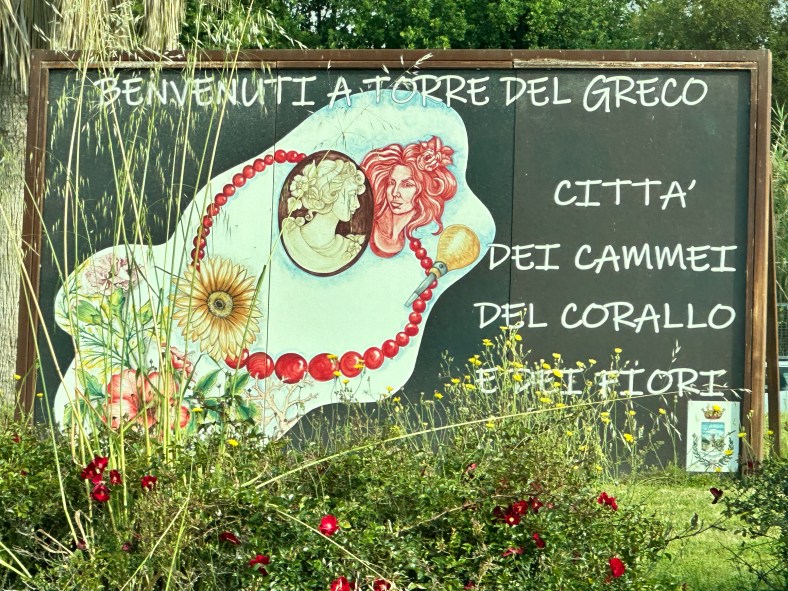
My father is an immigrant from a town near Naples called ‘Torre Del Greco’ or Tower of the Greek in English. I’ve seen old black and white photos of the place and have heard a few stories but I’ve always wanted to go to there. Especially since I have family there I’ve met only once, or extended family I’ve never met at all. It’s not really a tourist hot spot so the couple of times I’ve been to Italy it didn’t make sense to find my way there but I knew this bucket list item needed to be done this year. It’s one of the ones I truly wanted to check off my list.

So I reached out to my dad and convinced him to go back (it has been close to 15 years for him), be the de facto tour guide and help me to meet all my extended family that still live in this beautiful region. We booked the flight (step-mom decided to tag along which was great) arranged all the visits and were lucky enough that my dad’s cousin insisted we stay with her at her town home in downtown Torre Del Greco (right by the port).

We landed in Naples International after our red eye flight. It was a relatively small airport all things considered and we met my dad’s cousin’s son Fabio who then drove us to her townhouse where we decompressed from the long flight with some espresso and Italian cookies (which will be a theme the whole week) which was needed because we immediately left the place to go visit some more family.

But first – we had to stop for a pastry and a coffee! We went to one of Samina’s favorite pastry shops where I got a cornetto filled with nutella and some more coffee (even ordered in Italian which I was inordinately proud of). I also determined during my stay here that I really need to lean into Italian pastry making – something I’ve struggled with in the past but after a week of eating there I’m determined to master

We then stopped by the house of more relatives – Mary Ann and her son Rafaele (who will come into this story later) and we had more coffee and cookies as my dad caught up with everyone. I struggled to understand a lot of it because although I was learning Italian, they were speaking a thick dialect commonly used in Naples. Still, I managed to get the gist of the conversation and it was a lovely time. I explained that I wanted to see where my dad grew up and explore the town and Rafaele quickly volunteered to drive us around and show me all the places from their childhood.

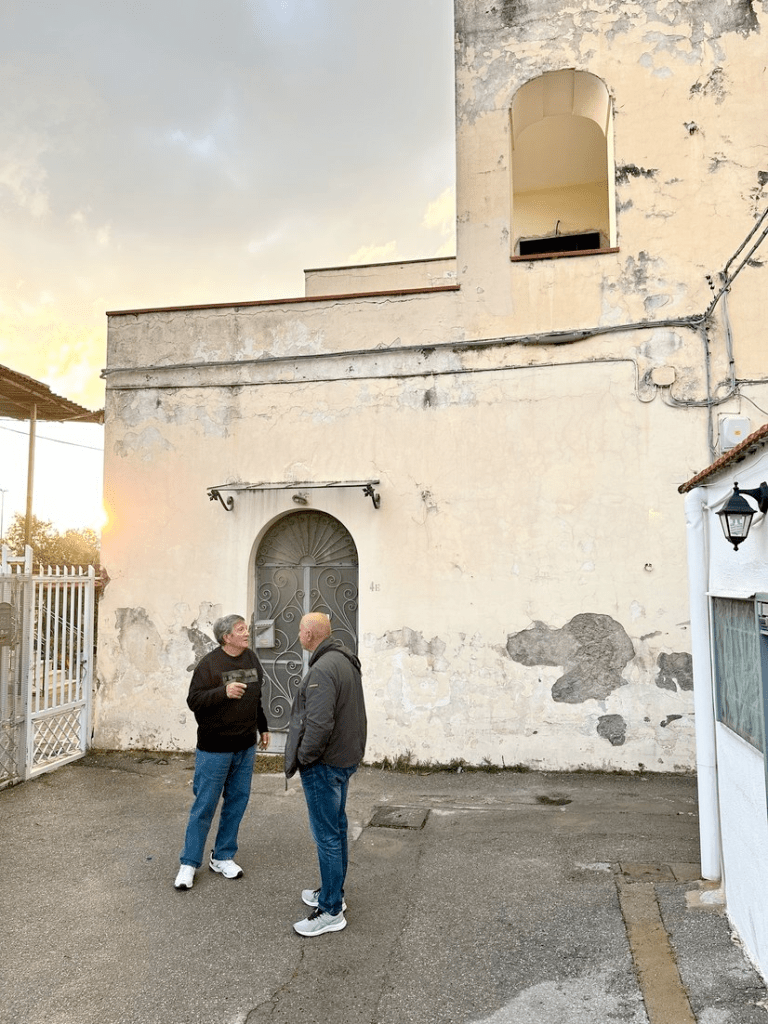
We started with the apartment my dad grew up in – it was along a winding road and up the mountain a bit then down a very small lane.

Oh, I should note that Mt. Vesuvius is everywhere you look in this town it’s a prominent part of the history of the town and I spent a lot of time on it but that’s for a different part of this story.

We then visited the church they went to which seemed abandoned which is a shame because there’s an organ in there that my grandfather helped pay for and there’s a plaque thanking him and I really wanted to see it – however I didn’t want to break into a church so I settled for just looking in.

We then visited a bigger church where the priest that serviced my dad’s church was based and where they had some of the bigger celebrations. It has a statue of padre pio – the patron saint of the area and kind of a big deal (I remember my great aunt had a picture of him on her nightstand) this church was also a bit run down but seemed active and the grounds were well maintained.

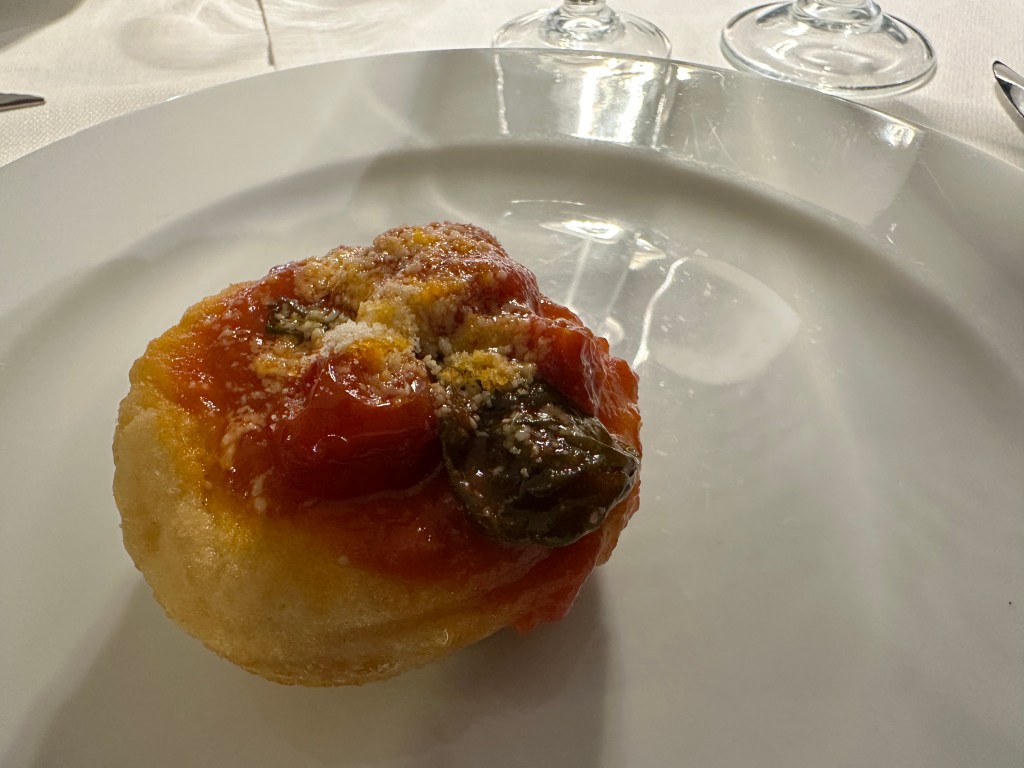
Having run around the town all day we decided to all go out to dinner so they brought me to a pizza place that I swear was called ‘New York Pizza’ – I thought they were messing with me but they insisted the pizza was good. I was very excited to have my first real neapolitan pizza in southern Italy and they made an amazing margherita pizza and I was exposed to the wonders of the pizza fritte (which I’m still going to try to make this year as one of my 50 pizzas)

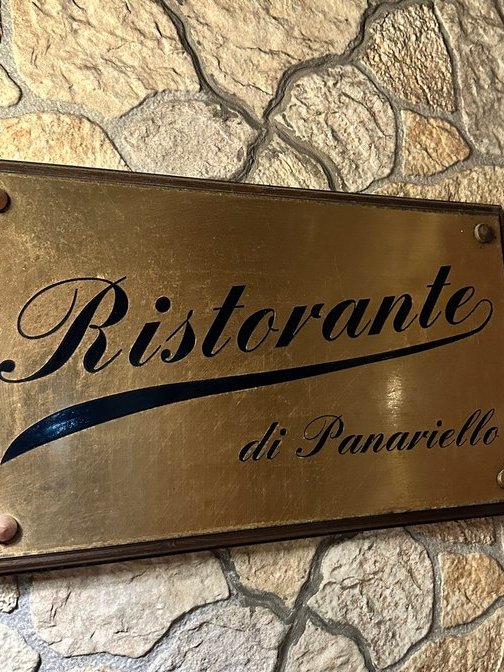
Now very tired from a long flight and a long day we walked out of the pizza place and I was stopped short by a large gold sign that took me a few seconds to process – did I somehow own a pizza place in Italy? Was I destined to be a pizzaolo?

General Notes and observations from day 1:

In Torre Del Greco is there’s lots of ‘death sign’s everywhere – when someone dies, they make a big poster of them with a photo and some details and then stick on a random wall in town. Some are just paper, others are legit plaques. It’s a bit – strange, but who am I to judge local customs?

Barely slept during the flight in – because I was seated next to a literal giant who took up all the available space and made it extremely difficult to get any sleep.  I did manage a quick nap in the middle of the day due to some downtime waiting for the crew at Ann Marie’s to assemble. That nap helped quite a bit as we ended up getting dinner at 9:00 pm at night. 

The roads are a mix of cobbles and concrete blocks with the rare paved road. The cars are all small compact versions (Fiat 500 is the most popular) and there’s nary a stoplight to be found – the cars all just kind of go and figure it out on the fly. Although, I did witness a few accidents – small bumper scrapes (probably from the very very narrow roads that we had to traverse). Mt. Vesuvius is ever present but the rainy weather obscured  the top of the mountain. The islands of Capri and Ischerra are clearly visible from the port area and the sea looks beautiful (if a bit choppy)

The Scooters.. oh man. They are a menace – weaving in and out of traffic with absolute disregard for the very idea of traffic laws. Kids hanging off the sides of scooters. Three people riding on a vespa. weaving in and out of traffic in very tight margins. I’m guessing it’s just the way it is in this part of the world but it sure is nerve wracking to watch!